Employment in IDA Ireland client companies across the Mid-West has increased by 18% over the past five years, according to figures provided to Clare TD Mr Joe Cooney.
Mr Joe Cooney TD.
There are now 28,125 people directly employed by 158 IDA client companies across Tipperary, Limerick and Clare, A further 22,500 jobs are estimated to be supported indirectly in the region. Co, Clare accounts for 67 of the companies, employing 6,136 people directly and supporting an estimated 4,909 indirect jobs.
The Department of Enterprise, Tourism and Employment said IDA Ireland recorded 55 facilitated site visits across the three Mid-West counties during 2025. Co.Tipperary recorded only three visits; while Limerick recorded the highest number with 33 visits, followed by Co. Clare with 19 visits. A further 17 visits were recorded across the region in the first quarter of 2026, including two in Tipperary, nine in Limerick and six in Clare.
Deputy Cooney said the increase in employment demonstrated the continued strength of the Mid-West in attracting foreign investment. “An 18% increase in employment among IDA client companies across the Mid-West over the past five years is very positive news for the region, he said. “It shows that the Mid-West is continuing to attract and retain major international employers and that the region has the skills, infrastructure and business environment needed to support high-value jobs.”
He said Co. Clare was playing a significant role in that growth, with more than 6,000 people now directly employed by IDA client companies in the county.
The Department said the Mid-West had attracted significant investment across technology, life sciences, international financial services, and engineering and industrial technologies. It said the availability of suitable property and strategic sites remained critical to attracting new investment.
The Department also cautioned that IDA site visits were only one measure of investor interest and did not necessarily translate into an investment. Potential investors may visit more than one county or return to a location more than once, while final decisions on where to locate an investment are made by individual companies. The Department said IDA Ireland’s regional strategy aims to secure 550 foreign direct investment projects outside Dublin between 2025 and 2029. Deputy Cooney said continued investment in infrastructure, skills and enterprise supports would be important if the Mid-West is to build on the growth of recent years.
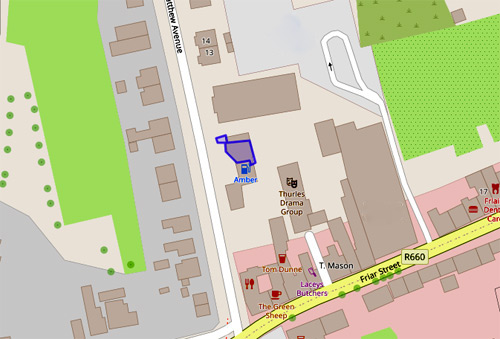
Rasbee Limited has applied to Tipperary County Council for permission to introduce an off-licence and pizza takeaway at the existing Inver service station on Mathew Avenue in Thurles.
The proposed development would occupy a 96-square-metre corner unit within the service station shop. Plans include a designated area for the sale of beer and spirits for consumption off the premises, along with an in-store pizza takeaway facility and associated site works.
Ten car-parking spaces are identified as serving the property, and the council recorded the application as received and validated on July 28th 2026 under Article 28 of the Planning and Development Regulations 2001. Its validity remains dependent on the site notice meeting the relevant regulatory requirements. A site inspection is due to take place during the statutory assessment period. Submissions or observations received up to and including August 31st will be considered, with a decision scheduled for September 21st.
Planning Application Location Outlined In Blue.
Application records can be checked through the Tipperary County CouncilHERE(File Number: 2660735)
Any new takeaway would enter a crowded Thurles food market. If approved, the proposed pizza facility would join an already substantial food-service sector in Thurles. Current online directories identify Thurles already has a sizeable selection of restaurants, cafés, hotels and Takeaway businesses. Online directories list several dozen food-serving establishments across the town itself and surrounding area, with at least eight businesses specifically listed as Takeaways.
While our figures are approximate, and some businesses appear in both categories. Nevertheless, they indicate that the proposed outlet would enter a competitive local market in which customers already have a broad range of dine-in, collection and delivery options. Whether the development would contribute to the closure of an existing business cannot be established from the planning application. Competition alone does not mean closures are inevitable, and the proposed facility may attract passing trade associated with the service station, rather than relying entirely on town-centre customers.
However, the possibility of further closures cannot be dismissed. The Restaurants Association of Ireland reported that 150 restaurants closed nationally during the first quarter of 2025, attributing the losses to rising operating costs. The association has identified labour, food, energy, insurance and taxation as significant pressures on food-led businesses. The Government subsequently restored the 9% VAT rate for food-led hospitality from July 2026, offering some relief to the sector.
Against that background, an additional takeaway could place further pressure on some established operators, particularly where businesses compete for the same evening pizza and fast-food trade. It would nevertheless be speculative and potentially unfair to suggest that any named Thurles restaurant or takeaway is likely to close without evidence from the businesses concerned.
We learn from press reports that Ireland’s tourism agencies have spent more than €1 million paying influencers to promote holiday destinations, since the beginning of 2025.
That is a substantial amount of public money and it deserves more than impressive claims about followers, views and “audience reach.” It deserves transparent evidence that these campaigns generated additional visitors, bookings and revenue. Tourism has certainly improved. Ireland welcomed more than 3.2 million overseas visitors during the first half of 2026; 15% more than in the same period of 2025. Their spending increased by 18% to €2.6 billion.
Those are encouraging figures, but they do not prove that influencer marketing produced the recovery. Tourism is affected by airline capacity, ferry connections, weather, exchange rates, prices, consumer confidence and many other forms of advertising. An influencer reaching millions of social-media accounts is not the same as delivering millions of tourists. A view is not a booking, a “like” is not a hotel stay, and a follower is not necessarily a prospective visitor.
This distinction is particularly important for Tipperary. The county’s tourism performance during 2025 was positive but mixed. Sixty per cent of tourism businesses reported growth and 14% remained stable, while 26% experienced a decline. Attractions and activity providers performed well, with 82% growing or maintaining attendance.
However, accommodation businesses had a more difficult experience: 34% reported a decline, while shorter stays and later bookings remained significant problems. Much of Tipperary’s strength also came from domestic residents and day-trippers. An impressive 94% of attractions maintained or increased their Ireland-based visitors.
That is good news, but it does not demonstrate that paid influencer visits generated significant additional tourism. In fact, favourable weather, local engagement, repeat visitors and domestic day trips were identified as important reasons for Tipperary’s performance.
Tipperary does has a tourism product that should be capable of selling itself internationally: the Rock of Cashel, Cahir Castle, Lough Derg, the Glen of Aherlow, the Galtee Mountains, Holycross Abbey and a rich combination of history, food, outdoor recreation and authentic rural communities. The county’s challenge is not simply attracting social-media attention. It is converting interest and day trips into overnight stays, encouraging visitors to explore beyond the best-known locations and ensuring that tourism spending reaches local accommodation providers, restaurants, shops and communities.
There is a legitimate place for digital creators in modern tourism promotion. Social media influences approximately 23 – 24% of potential visitors looking for holiday inspiration. However, recommendations and online searches are even more influential.
The biggest reason people choose Ireland is not celebrity endorsement. It is the country itself. Tourism Ireland’s research shows that scenery is the leading reason for choosing Ireland, cited by 33% of potential visitors. It is followed by Culture, Sightseeing and History. Historic Sites, Food and Drink, Walking, Hiking and Nature have exceptionally broad appeal. The public should therefore be asking whether enough money is being invested directly in the things visitors actually come to experience: heritage conservation, trails, public transport, visitor facilities, signage, accessibility, accommodation capacity and effective booking systems.
The strongest criticism is not that every influencer campaign is wasteful. We do not have the evidence to make that claim. The problem is that the agencies have not publicly demonstrated the opposite.
After spending more than €1 million, reporting enormous audience reach is inadequate. The agencies should now publish, for every major campaign: The total fee and associated travel costs. The audience and markets targeted. Engagement from relevant prospective visitors. Confirmed bookings or attributable visitor spending. Cost per booking and return on public investment. Honest regional results, including overnight stays generated in counties such as Tipperary. (Remembering no establishment likes to report decline.)
If those measurements show that influencer marketing works, the agencies will have a strong case for continuing it. If they cannot produce them, taxpayers are entitled to question whether public money is supporting tourism, or merely subsidising attractive trips and highly polished social-media content.
Ireland’s tourism recovery is welcome. Tipperary’s attractions are showing real resilience. But neither development gives tourism agencies a blank cheque.
Publicity is not performance. Reach is not revenue. Public money must produce measurable public value.
Payments to Tipperary’s 40 county councillors climbed to almost €1.83 million during 2025, with Thurles representative Mr Sean Ryan, (Fianna Fáil), finishing among the five highest-paid elected members in the county.
Figures published through Tipperary County Council’s public payments register show that councillors across the county’s five municipal districts received a combined €1,828,735.43 during the year. That represents an increase of €86,658 compared with the corresponding total for 2024.
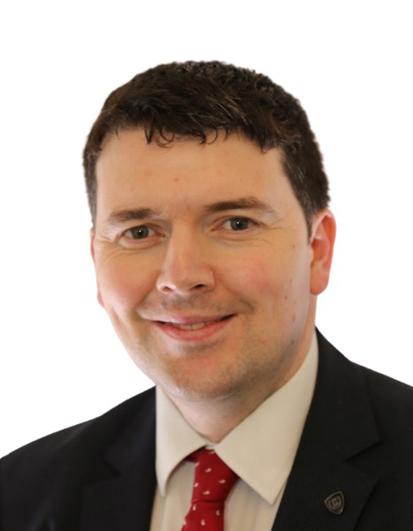
Fianna Fáil Cllr Mr Sean Ryan
The published amount covers more than expenses in the everyday sense. The council’s register includes councillors’ basic remuneration, annual allowances, vouched local-representation expenses, additional payments for holding senior council positions, training and conference costs, and payments from external bodies.
Fianna Fáil councillor Mr Sean Ryan was the highest-placed Thurles representative in the countywide rankings. He received €54,226.22 in total during 2025, making him Tipperary’s fourth-highest-paid councillor. His overall payment included the standard councillor’s salary of €30,932, together with the various allowances and expenses available to elected representatives. Cllr Mr Ryan also received an additional €6,000 for serving as Chair of one of Tipperary County Council’s strategic policy committees. Strategic policy committees (SPC), help develop and review council policy in areas such as housing, roads, planning, economic development and community services. Their Chairs take on responsibilities beyond the ordinary workload of a councillor and consequently qualify for an additional allowance. The prominent position of Thurles councillor Mr Sean Ryan in the rankings, reflects the additional payment attached to his SPC chairmanship, as well as the security allowance recorded during the year. His total was almost €3,000 higher than that of the councillor immediately below him in the top five.
Cllr Mr Ryan was also one of only two Tipperary councillors recorded as receiving a security-related allowance during the year, claiming €2,750 in the third quarter of 2025.
Note:“Security allowances”are intended to help local representatives pay for measures designed to improve their personal safety. Eligible measures can include CCTV systems, intruder alarms and panic buttons installed at a councillor’s home.
The other recipient was Clonmel Fine Gael councillor Mr John Fitzgerald, who received a security payment of €2,777.75 during the final quarter. Cllr Fitzgerald ranked fifth overall, with total payments of €51,971.83.
Tipperary’s highest-paid councillor in 2025 was Fianna Fáil’s Mr John Carroll, who received €60,644.22. Cllr Carroll became Cathaoirleach of Tipperary County Council in June and received €6,923.10 in connection with that office during the year. His total also included the basic annual remuneration of €30,932, annual allowances of €6,958 and €1,577.23 through the Local Representation Allowance, (LRA). The LRA is a vouched scheme through which councillors can recover qualifying costs incurred while carrying out their work as public representatives.
Fine Gael councillor Mr Declan Burgess was narrowly behind Cllr Mr Carroll, receiving €60,580.61. Cllr Burgess, who had been the county’s highest-paid councillor in 2024, received €13,846.20 in Cathaoirleach allowances relating to his period in the Chair before Cllr Mr Carroll’s election. His 2025 payments also included almost €31,000 in basic remuneration, annual expenses of €5,834 and €3,248 under the LRA scheme. His total increased from €59,114.09 in 2024.
Ms Mary Hanna Hourigan occupied third place, with payments totalling €55,201.47. Alongside her €30,932 basic remuneration, she received €6,253 under the LRA, annual expenses of €6,549 and a €6,000 allowance for Chairing a strategic policy committee.
At the opposite end of the table, Carrick-on-Suir Fianna Fáil councillor Ms Amy Goldsboro received the lowest total, at €34,388.39.
Independent councillor Mr Micheál Lowry was the second-lowest recipient, with €37,743.48. Ms Pamela Quirke O’Meara received €38,635, Ms Louise Morgan Walsh was paid €39,019, and Mr Joe Hannigan received €39,205.
Fine Gael’s Ms Peggy Ryan, representing the Thurles Municipal District, received €42,076.44 in total payments during 2025. The council’s quarterly registers show the total included her basic remuneration, annual and local-representation allowances, payments connected with chairing the Thurles Municipal District from June, and payments from the Southern Regional Assembly. For example, she received €1,384.62 as an MD chair allowance in Q3 and €1,615.39 in Q4. She also recorded external-body payments of €474.58 in Q3 and €794.15 in Q4. Note:“External-body payments” are payments councillors receive from organisations outside Tipperary County Council on which they serve as council representatives. They generally relate to attendance, travel or subsistence, rather than additional council salary.
That places her outside the five highest-paid councillors but above several representatives at the lower end of the countywide table.
More than 11,000 people had their jobseeker payments reduced during 2025, after failing to meet engagement requirements set by Ireland’s employment services.
Figures released by the Department of Social Protection show that 11,082 claimants were placed on reduced payment rates last year. This represented a 129%increase on the 4,838 cases recorded in 2024.
Under the penalty system, a standard weekly jobseeker payment of €254 can be reduced by €90 to €164. Payments may be restored once the claimant resumes contact and cooperation with Intreo or another relevant employment-support service. Failure to attend scheduled appointments accounted for most of the reductions.
A total of 4,986 people were penalised after missing an activation review meeting, having already failed to attend an earlier appointment. Another 3,717 claimants received reduced payments after failing, without an accepted reason, to attend a follow-up one-to-one meeting. A further 2,144 reductions related to missed appointments connected with other employment-activation programmes. Smaller numbers were penalised for failing to participate in agreed education, training or employment measures. These included 17 people who left an education, training or development course without good cause and 45 who withdrew from a prescribed employment programme. Payments were also reduced in 23 cases where claimants did not agree to actions forming part of their personal progression plans. Other cases involved refusing to take part in training, education or designated employment schemes.
Jobseeker’s Allowance recipients made up the overwhelming majority of those affected, accounting for 10,097 reductions. A further 694 people were receiving Jobseeker’s Benefit, while the remainder were claiming through transitional arrangements or supports for formerly self-employed workers. The Department of Social Protection said reduced rates are not imposed immediately but are used as the final stage of a process intended to encourage claimants to engage with employment services and make use of available assistance.
According to the department, the normal payment rate is reinstated as soon as a person resumes engagement with the relevant service. Officials said the purpose of the measure is to encourage jobseekers to cooperate with services designed to help them find employment, access training and improve their prospects of returning to work.
This website uses cookies to improve your experience. We'll assume you're ok with this, but you can opt-out if you wish.AcceptRead More
Privacy & Cookies Policy
Privacy Overview
This website uses cookies to improve your experience while you navigate through the website. Out of these, the cookies that are categorized as necessary are stored on your browser as they are essential for the working of basic functionalities of the website. We also use third-party cookies that help us analyze and understand how you use this website. These cookies will be stored in your browser only with your consent. You also have the option to opt-out of these cookies. But opting out of some of these cookies may affect your browsing experience.
Necessary cookies are absolutely essential for the website to function properly. This category only includes cookies that ensures basic functionalities and security features of the website. These cookies do not store any personal information.
Any cookies that may not be particularly necessary for the website to function and is used specifically to collect user personal data via analytics, ads, other embedded contents are termed as non-necessary cookies. It is mandatory to procure user consent prior to running these cookies on your website.





Recent Comments