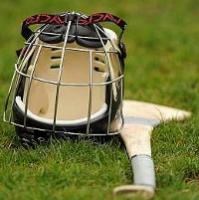
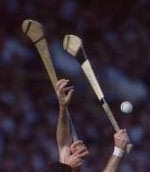
Thurles Sarsfields are back on top of Tipperary club hurling after an impressive eight-point victory over neighbouring rivals Moycarkey-Borris at FBD Semple Stadium. This victory brings a nine-year wait for county honours to an end, securing a remarkable 37th Tipperary Senior Hurling Championship title for the Thurles club.
In front of a crowd of 9,398, Pádraic Maher’s side delivered a commanding performance, combining clinical attacking play with outstanding defensive organisation.
Dream start for Sarsfields. The contest could hardly have begun better for Sarsfields, with Eoin Purcell finding the net just 11 seconds after throw-in. The lightning-fast goal immediately put Moycarkey-Borris on the back foot, and Sarsfields quickly established control. With Kieran Rossiter, Aidan McCormack and Purcell making their presence felt, the Thurles men raced into a 1-05 (8pts) to 0-01 (1pt) advantage. Moycarkey-Borris, appearing in their first county final since 1984, battled back when Joe Maher struck a fine goal in the 23rd minute. However, Sarsfields responded confidently and carried a commanding 1-12 to 1-05 lead into half-time.
Defensive steel seals the title. Moycarkey-Borris began the second half with renewed determination, with Joe Maher and Killian Cantwell reducing the deficit. But any hopes of a dramatic comeback were quickly extinguished. Paddy Creedon produced an excellent score to spark another dominant spell for Sarsfields, with Euan Murray and the outstanding Purcell adding further points.
At the other end, the Sarsfields defence remained disciplined and organised, repeatedly frustrating Moycarkey’s attempts to build momentum. One of the most memorable moments arrived when corner-back Paul Maher landed a superb point from near the Old Stand sideline.
There was also a huge reception for Tipperary captain Ronan Maher, who returned to championship action following his ankle injury and contributed a late free.
A special day for sarsfields veteran The triumph was particularly memorable for goalkeeper Patrick McCormack. At 42 years of age, the experienced netminder celebrated his ninth county senior hurling medal, having now started an extraordinary 15 county final encounters, including replays. His achievement reflects the experience and dedication that have helped Sarsfields bridge the gap between their previous championship-winning generation and this emerging team.
Purcell leads a new generation. Eoin Purcell’s excellent attacking display earned him Man-of-the-Match honours, while Pádraic Maher marked a major milestone in his managerial career, by guiding Sarsfields back to the summit of Tipperary hurling.
For Moycarkey-Borris, the defeat will be disappointing, but reaching their first county final in 42 years represents significant progress for the club. For Thurles Sarsfields, however, this was a day to remember. Nine years after their four-in-a-row success in 2017, the famous blue and white colours are once again flying proudly over Tipperary hurling. With county title number 37 secured, attention now turns towards the Munster Club Championship on November 15th next.
Referee: C. O’Donovan (Burgess).
Thurles Sarsfields: P McCormack; P. Maher (0-01), D. Maher, H. Fogarty; K. Loughnane, Conor Stakelum, Cian Stakelum; D. Rossiter (0-01), E. Murray (0-02); A. McCormack (0-04, 4f), D. Stakelum, A. Stakelum (0-02); E. Purcell (1-04), P. Creedon (0-01), K. Rossiter (0-03). Subs: S. Maher for H. Fogarty, J. Armstrong for S. Maher (Temporary), and for Cian Stakelum (Permanent), R. Maher for P. Creedon , T. Maher for A. McCormack and R. Stapleton for K. Rossiter.
Moycarkey-Borris: R. Shelly; K. Hayes, T. Hayes, T. Ryan; K. Cantwell (0-01f), E. Hayes, P. Molloy; S. Walsh, N. Heffernan (0-01); J. Maher (1-01), J. Egan, D. Costigan; M. Hackett (0-03), K. Morris (0-02, 2f), J. Hayes (0-03). Subs: P. Melbourne for T. Ryan, K. Cummins for P. Molloy, R. Darmody for N. Heffernan, K. O’Reagan for J. Hayes, B. Maher for T. Hayes and B. Flanagan for S. Walsh.
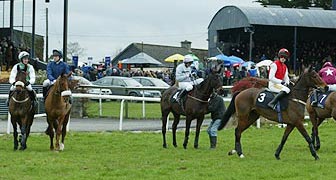
Race Horse trainer, Mr Ray Hackett, has been fined a total of €4,250 following a positive test for cobalt returned by Nowwhatdoyouthink, after the gelding won a maiden hurdle at Thurles in March 2025.
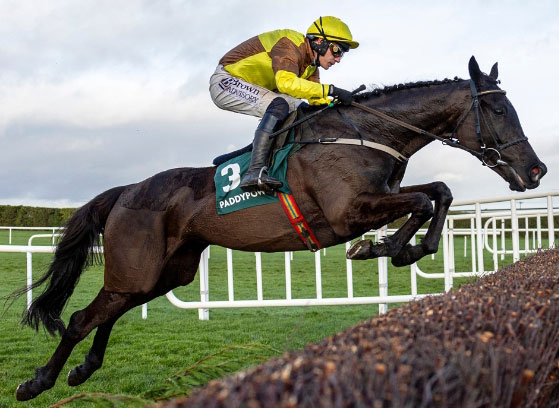
Nowwhatdoyouthink subsequently developed into a high-class chaser for Mr Hackett, winning a Grade 3 contest at Cork and finishing third in the Grade 1 Champion Novice Chase at Punchestown. He was later sold privately and transferred to Gordon Elliott, making his first start for his new trainer when finishing fourth in the Galway Plate in July.
The positive sample was taken after Nowwhatdoyouthink won the ThurlesRaces.ie Maiden Hurdle on March 6th, 2025. Analysis detected cobalt, with a subsequent B sample also confirming its presence.
During an IHRB investigation, Mr Hackett explained that Growvite Sheep, an over-the-counter supplement containing cobalt, had been administered to racehorses in his care in an effort to maintain their condition. Mr Hackett said he had not realised the product’s use needed to be entered in his Medicines Register. He told the Referrals Committee that he has since changed his feeding practices and no longer uses the supplement.
The committee found Mr Hackett in breach of several rules relating to prohibited substances and medicines records. Nowwhatdoyouthink was disqualified from his Thurles victory, with Joueuse Royale promoted to first place.
Hackett was fined €1,000 in relation to the prohibited-substance breach, €1,500 and €1,000 for separate breaches of Rule 148, and a further €750 over deficiencies relating to the Medicines Register, bringing the total to €4,250.
Harnett successful on appeal. Mr Paddy Harnett was partially successful in his appeal against a nine-day suspension imposed for improper riding at Clonmel on September 16.
Harnett informed the Appeals Body that he believed his saddle had slipped during the closing stages. After considering the evidence, the panel concluded that his riding was at the severe end of careless riding rather than meeting the threshold for improper riding. His suspension was consequently reduced from nine days to six.
French-bred and Irish-trained two-time Cheltenham Gold Cup winner ‘Galopin Des Champs’ died on Tuesday, September 1st 2026, aged 10, after suffering a severe leg injury in a field, just five days following his retirement.
Mr Ruby Walsh confirmed that vets attended immediately, but X-rays showed damage that could not be repaired. The much-loved gelding had joined the Walsh family to begin a new equestrian career.
Trained by Mr Willie Mullins and owned by Ms Audrey Turley; ‘Galopin Des Champs’ enjoyed an outstanding racing career, winning 15 of his 26 starts and earning approximately €2.3 million in prize money. His 12 Grade One victories included consecutive Cheltenham Gold Cups in 2023 and 2024, alongside three Irish Gold Cups between 2023 and 2025.
His death has left his owners, carers and racing fans mourning a remarkable champion. Mr Mullins described the loss as heartbreaking for everyone connected with him.
Galopin Des Champs leaves a lasting legacy and memories of unforgettable triumphs on the racecourse.
Lieutenant Henry Richard Power of Littleton, Pocklington and the Royal Flying Corps.
Irish athletics is presently enjoying one of the most remarkable periods in its history. At the European Athletics Championships in Birmingham this August, Ireland secured four individual medals: gold for Mark English in the 800 metres and Kate O’Connor in the heptathlon, silver for Rhasidat Adeleke in the 200 metres, and bronze for Andrew Coscoran in the 5,000 metres. Their achievements offer a timely reason to remember an earlier Irish sporting talent: Henry Richard Power of Ballydavid House, a gifted high jumper and all-round athlete whose promising career was cut short by the First World War.
In the churchyard of St Mary’s at Littleton, County Tipperary, an intricately carved Celtic cross preserves the memory of the Power family of Ballydavid House. Among the names associated with that memorial is Lieutenant Henry Richard Power, athlete, university student, infantry officer and Royal Flying Corps observer, whose life ended during an aerial battle over the North Sea in August 1917. His story links a vanished Irish country house with an old Yorkshire school, the playing fields of Dublin University and the dangerous skies of the First World War.
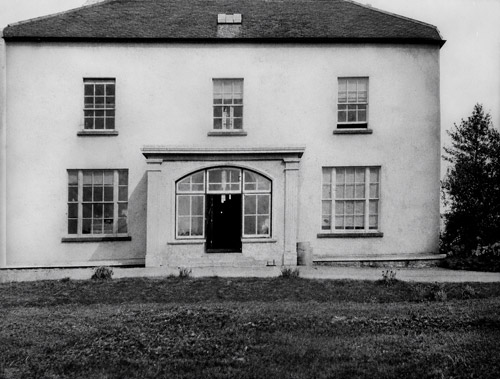
Former Ballydavid House Littleton, Thurles, since demolished in 1963.
The Power family of Ballydavid House Henry belonged to a prominent local family long associated with Ballydavid House, Littleton which stood near the crossroads village of Littleton, approximately five miles east of Thurles. The house occupied an elevated position and was approached through an avenue planted alternately with green and copper beech trees. Henry’s father, James Michael Power, was baptised at Moycarkey, County Tipperary, on February 4th 1861. His mother, Maria Louise Houghton, was baptised in the Hanover Square district of London on April 11th 1867. Although James was Roman Catholic and Maria belonged to the Church of Ireland, they married in Paddington, London, on February 4th, 1888. They had two sons: James Houghton Power, born around 1888, and Henry Richard Power, born at 21 Lower Mount Street, Dublin, on August 1st 1893.
The religious composition of the household was recorded clearly in the 1901 Irish census. At Ballydavid were: James Michael Power, aged 40, head of the household and Roman Catholic (RC); Maria Louise Power, aged 34, his wife and a member of the Church of Ireland (C of I); James Houghton Power, aged 12, their elder son and a member of the Church of Ireland; Henry Richard Power, aged seven, their younger son and also a member of the Church of Ireland.
The family’s position in the Littleton community rested not only upon ownership of Ballydavid House, but upon a longer tradition of employment, farming and participation in local affairs. The house and its tree-lined avenue formed an imposing presence in the village landscape.
The brothers at Pocklington. Both Power brothers were sent to Pocklington School in the East Riding of Yorkshire. Founded in 1514, Pocklington was already a school of considerable age and reputation, when Henry entered it in May 1908. School records place him there until December 21st 1911. The 1911 census found the 17-year-old Henry boarding at the school, although his birth year was entered as 1894 rather than 1893. Henry soon distinguished himself as an athlete. He was selected for the school’s Gymnastics VIII and developed particular ability in the high jump. The Michaelmas 1911 issue of the Pocklington School Magazine reported enthusiastically upon his performance at the Thurles sports: “H. R. Power, a student of Pocklington School, Yorkshire, has recently performed a great feat by clearing 5ft. 8in. in a running jump at the Thurles Sports in Co. Tipperary.”
The magazine described the young Irishman as “a grand and determined jumper” who appeared capable of reaching the highest level. It also praised him as an accomplished all-round gymnast, especially proficient in strength exercises. During the preceding school term, he had cleared five feet six inches in the high jump and finished second in the school gymnastics competition. The writer predicted that Power might attend Durham University and establish himself in university athletics. “Durham” was almost certainly an error for “Dublin” University, for Henry subsequently entered Trinity College in Dublin.
Athlete and student at Trinity College. At Trinity College, Henry continued to excel in sport. He represented Dublin University in intervarsity competition and won the high jump. His athletic ability was not confined to a single event; he also placed second in the shot put and competed in several other disciplines. In June 1914 he finished second in the high jump at the Irish Amateur Athletic Association championships at Ballsbridge. Contemporary reports regarded him as one of Ireland’s most promising jumpers. A later obituary recalled that at his final university sports he cleared five feet nine and a half inches. For an amateur athlete of the period, competing without modern equipment or specialised training methods, it was an impressive achievement.
Henry also served in the Dublin University Officers’ Training Corps. The experience prepared him for the very different life that began when Europe descended into war.
From the Royal Irish Rifles to the Flying Corps In October 1915 Henry received appointment as a second lieutenant on probation in the 3rd Reserve Battalion of the Royal Irish Rifles. His rank was subsequently confirmed in September 1916. Accounts of his infantry service differ over whether he served with the 13th or 14th Battalion, but contemporary newspaper reports indicate that he saw active service during the Battle of the Somme in 1916. The experience would have brought him into one of the most destructive campaigns of the war. In January 1917 he transferred to the Royal Flying Corps. He trained as an observer, a demanding role that combined aerial reconnaissance, navigation, photography and the operation of a Lewis machine gun. Henry initially served with No.18 Squadron before joining No. 48 Squadron. The latter had an important place in aviation history: it was the first operational squadron equipped with the Bristol F.2 Fighter.
Although commonly known as the Bristol Fighter, the F.2B was a two-seat aircraft. Its pilot operated a forward-firing gun, while the observer occupied the rear cockpit with a flexible Lewis gun. Effective cooperation between the two men was essential. The observer had to watch the sky constantly, communicate with the pilot and defend the aircraft against attacks from behind.
The Gotha Raids. By 1917 Germany had begun using Gotha heavy bombers to attack targets in Britain. These raids represented a disturbing new development in warfare. Civilians far from the trenches could now be reached by formations of large aircraft crossing the North Sea. On August 22nd 1917, German Gothas carried out a raid against the Kent coast. As the bombers turned homeward, British aircraft based in France and Belgium rose to intercept them. Ten Sopwith Camels of No. 4 Squadron, Royal Naval Air Service, went after German fighters protecting the raiders. Other aircraft from No. 3 Squadron searched for the bombers, while No. 66 Squadron dispatched six Sopwith Pups. Six Bristol Fighters of No. 48 Squadron also took to the air.
Henry Power flew as observer in Bristol Fighter A7219, piloted by John Herbert Towne Letts. Thirty miles out from Nieuport The Bristol Fighters encountered the returning Gothas approximately thirty miles off Nieuport and at an altitude of about 15,500 feet. Letts brought A7219 within roughly 200 yards of the enemy formation and opened fire. He made repeated attacks while Henry worked the Lewis gun from the observer’s cockpit. The British crews were operating far out over the sea, at great height and against heavily armed bombers capable of returning concentrated fire. During the running engagement Henry was struck by an enemy bullet. As he collapsed, the barrel of his Lewis gun swung forward and struck Letts on the head. Despite suffering an injury and concussion, Letts retained control of the Bristol Fighter. He fired a green signal flare to indicate that he was breaking off and returning to base. The other British pilots apparently interpreted the flare as an instruction for the whole formation to withdraw. Letts succeeded in nursing the damaged aircraft back to its aerodrome. Nothing, however, could be done for his observer. Henry Richard Power was dead when they landed. He was just 24 years old.
Burial at Zuydcoote Henry was buried in Zuydcoote Military Cemetery in northern France, in Plot I, Row A, Grave 7. The cemetery lies near the Belgian frontier and contains many men who died at casualty-clearing stations established in the Dunkirk area. Henry’s grave records his service with the Royal Flying Corps and his connection with the Royal Irish Rifles. A notice published on 5 October 1917 described him as the younger son of the late James Power and Mrs Power of Ballydavid House. It recalled his education at Pocklington, his studies at Trinity College and his reputation as one of Ireland’s most promising athletes. It also recorded that he had performed “very good service” after transferring to the Flying Corps.
His father had died at Ballydavid on January 21st 1912. His elder brother, Second Lieutenant James Houghton Power, served with the Royal Field Artillery during the war and survived the fighting, but died at Ballydavid on February 10th 1919, aged only 30 years. (Note: Shaving cream and a straight edge were used to highlight faded lettering on Celtic cross headstone.) Maria Louise Power had therefore lost her husband and both of her sons within a seven year period.
Remembered in Ireland, England and France. Henry Richard Power is commemorated in numerous places associated with his family, education and military service. At Littleton, his name appears on the First World War memorial inside St Mary’s Church. He is also remembered on the Power family’s magnificent Celtic cross in the adjoining churchyard. At Pocklington School, “H. R. Power” was inscribed upon the dark-oak war memorial unveiled in July 1921. The memorial, decorated with carved soldiers, the white rose of Yorkshire and elements of the school arms, honoured former pupils who had died in the war. Henry is also included in the school’s Roll of Honour preserved in All Saints’ Church, Pocklington. His name appears in Trinity College Dublin’s war records and in Ireland’s Memorial Records 1914–1918. He is recorded in the Royal Irish Rifles Roll of Honour, preserved in the Irish Regiments Chapel at Westminster Cathedral. As a casualty of the early air war, Henry is commemorated at the Museum of Army Flying at Middle Wallop and in the Royal Flying Corps and Royal Air Force Book of Remembrance in St Clement Danes Church, London. In France, his name forms part of the Ring of Remembrance at Notre-Dame-de-Lorette. The great elliptical memorial bears the names of almost 580,000 men of many nationalities who died in northern France during the First World War, presented alphabetically and without distinction of rank, religion or nationality.
The passing of Ballydavid. Ballydavid House remained in the Power family’s possession until 1940. After the death of Maria Louise Power, responsibility for the property passed to her sister Anne Houghton, who had devoted much of her life to the Stewart Institution in Cork. Following Anne’s death in 1950, the house entered a period of decline. It changed ownership several times and was eventually judged unsafe. In 1963 Ballydavid House was demolished. Much of its masonry was reportedly used as rubble filling during construction of a new wing at St Patrick’s College, Thurles, between 1963 and 1965. (The once nearby apple orchard is Littleton new Cemetery today.) The house stood approximately where Littleton’s Roman Catholic Church (Church of Our Lady & St Kevin) now stands. Some of the old beech trees from its avenue still survive.
A young life between two worlds. Henry Richard Power’s story belongs equally to Ireland and Yorkshire. He was born in Dublin and raised at a Tipperary country house, yet important years of his youth were spent at Pocklington School. He became known not for soldiering but for athletics: a determined high jumper and gymnast whom his school believed capable of reaching the summit of Irish and university sport. War carried him from the playing field to the Somme and then into the still-new world of military aviation. On 22 August 1917, thirty miles out over the sea, his life ended in the rear cockpit of a Bristol Fighter while pursuing the bombers that had attacked England. His grave at Zuydcoote, his name on the memorials of Pocklington and Trinity College, and the carved Celtic cross at Littleton connect the scattered places of his short life.
While Ballydavid House itself is gone. Henry’s name remains.
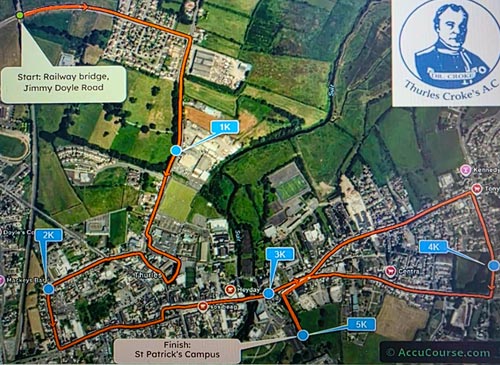
The Thurles Crokes A.C. Streets of Thurles 5K Road Race will take place on Sunday, 16th August 2026, from 10:00am to 11:30am.
Traffic Notice and Route: Streets of Thurles 5K Road Race.
Traffic restrictions and diversions will be in place throughout Thurles town for the duration of this popular event. Motorists should expect delays and are advised to allow extra time for their journeys or use alternative routes where possible.
This website uses cookies to improve your experience. We'll assume you're ok with this, but you can opt-out if you wish.AcceptRead More
Privacy & Cookies Policy
Privacy Overview
This website uses cookies to improve your experience while you navigate through the website. Out of these, the cookies that are categorized as necessary are stored on your browser as they are essential for the working of basic functionalities of the website. We also use third-party cookies that help us analyze and understand how you use this website. These cookies will be stored in your browser only with your consent. You also have the option to opt-out of these cookies. But opting out of some of these cookies may affect your browsing experience.
Necessary cookies are absolutely essential for the website to function properly. This category only includes cookies that ensures basic functionalities and security features of the website. These cookies do not store any personal information.
Any cookies that may not be particularly necessary for the website to function and is used specifically to collect user personal data via analytics, ads, other embedded contents are termed as non-necessary cookies. It is mandatory to procure user consent prior to running these cookies on your website.



Recent Comments