A new €3.9 million national funding initiative has been launched to support innovative cybersecurity research, protect critical infrastructure and strengthen Ireland’s ability to respond to emerging digital threats.
The Research Ireland-Cyber Security Innovation Challenge 2026 was announced by Minister of State at the Department of Justice, Home Affairs and Migration, Ms Catherine Ardagh TD, in partnership with Research Ireland and the National Cyber Security Centre (NCSC). The programme aims to bring together researchers, industry specialists and public sector organisations to develop practical solutions to some of Ireland’s most pressing cybersecurity challenges.
With cyberattacks becoming increasingly sophisticated and disruptive, the initiative represents a significant investment in strengthening national security, safeguarding businesses and protecting essential public services. The funding programme will concentrate on five priority areas: improving national cyber threat detection and response capabilities, supporting Ireland’s transition to post-quantum cryptography, strengthening cybersecurity preparedness among small and medium-sized enterprises (SMEs), enhancing the protection of critical national infrastructure, and encouraging disruptive ideas capable of transforming cybersecurity practices.
Successful research teams will initially qualify for funding of up to €50,000 during a Concept Phase, allowing them to assess proposed solutions, validate their ideas and establish multidisciplinary partnerships. Projects demonstrating strong potential may subsequently advance to a Seed Phase, receiving up to €200,000 to develop and test their solutions further. The programme will culminate in a competitive Prize Phase, with one winning team eligible for a €1 million award to support advanced development and move its innovation closer to practical deployment.
Minister Ms Ardagh emphasised the importance of investing in research and innovation to protect Ireland’s economy, national security and increasingly digital society. The initiative is intended to encourage collaboration across academic, industrial and government sectors, while developing solutions capable of addressing real-world threats. The NCSC has identified the growing complexity and frequency of cyber incidents as major challenges requiring stronger detection, prevention, response and recovery capabilities. Particular attention will be given to preparing Ireland for emerging technological risks, including advances in quantum computing that could undermine existing encryption systems.
Research Ireland has also highlighted the value of interdisciplinary research, stakeholder engagement and practical innovation in delivering lasting improvements to national cyber resilience. Beyond strengthening Ireland’s cybersecurity capabilities, the programme is expected to encourage research collaboration, support technological advancement and create opportunities for innovative solutions benefiting businesses, public institutions and wider society.
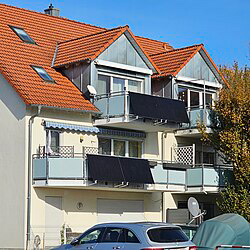
We recently looked into why small plug-in solar systems, sometimes called balcony solar, are widely available in countries such as Germany but are still difficult to use in Ireland.
Irish households are paying some of the highest electricity prices in Europe. Eurostat reported that Ireland had the highest household electricity price in the EU in the second half of 2025, at €40.42 per 100 kWh compared with an EU average of €28.96. At prices like these, people should have access to every safe and affordable way of reducing the amount of electricity they have to buy from the grid.
Balcony Solar
Small plug-in solar systems will not solve Ireland’s energy-cost problem, but they could give households a simple and relatively low-cost way to generate some of their own electricity. If certified 800-watt systems can be used safely elsewhere in Europe, Ireland should move quickly to establish clear standards, simple registration and approved products so Irish consumers can benefit too.
The answer is surprisingly simple. The solar panels themselves are not the problem. The main issue is how our electrical and grid rules currently treat them. In Germany, households can buy small solar kits, often around 800 watts, connect an approved micro-inverter and register the system through a simplified process. Some of these complete systems are sold by retailers such as Lidl for only a few hundred euro.
In Ireland, however, a small plug-in system is currently treated much more like a conventional solar installation. Grid-connected solar generally has to comply with ESB Networks requirements, Irish electrical standards and microgeneration connection rules. That makes a €300–€500 DIY solar kit far less practical here.
The good news is that Ireland is now actively examining the issue. The Department of Climate, Energy and the Environment has been considering plug-in mini-solar, together with ESB Networks and other relevant bodies. Safety issues, including how electricity flows back through household circuits are part of that work. Nobody is suggesting that electrical safety should be ignored. But other European countries have shown that small solar systems can operate within clear limits, using approved equipment and appropriate registration.
For Ireland, the important questions are now straightforward:
What maximum output should be allowed?
What safety standards should the inverter meet?
What electrical protections are required?
Can consumers register an approved system through a simple online process?
Once those questions are settled, Ireland can publish clear rules so consumers and retailers know exactly where they stand. Small plug-in solar will not replace rooftop solar farms or large home PV systems. But it could give people living in apartments, rented homes or houses, where a full solar installation isn’t practical, another way to generate some of their own electricity. It could also lower the entry cost of solar from several thousand euro to a few hundred euro.
Ireland has already spent considerable time examining this technology. The next useful step is for the Government, ESB Networks, CRU, NSAI and Safe Electric to complete that work and publish a clear, safe framework.
If an approved 800-watt solar kit can be safely used by households elsewhere in Europe, Ireland deserves a clear answer on how, and under what conditions, the same technology can be used here.
Let’s get the rules settled and give Irish consumers clarity.
Tipperary County Council is inviting residents, businesses and organisations to help shape a new Digital Strategy for Co. Tipperary.
Since the previous strategy was launched in 2018, technology has changed significantly. The Council is now reviewing how people and organisations across the county use digital technology and where further support may be needed.
Two confidential online surveys are now open and cover topics including:
The consultation is open until October 14th 2026 at 4:30pm. Your feedback will help Tipperary County Council better understand the county’s digital needs and inform future policies and supports.
For further information, please contact: Ms Kathleen Prendergast, MSc MBA (Administrative Officer / Economic Development Officer Economic, Community and Rural Development Section) Address: Tipperary County Council Civic Offices, Tipperary Town, Co. Tipperary (Eircode E34 WD51)
Thousands of Vodafone Ireland customers were left without broadband on Saturday after a major service interruption affected users across the country.
The disruption began at approximately 3.16pm yesterday August 29th, with outage-monitoring website Downdetector recording 31,498 reports as the problem escalated. Customers in several counties including Tipperary, Dublin, Cork, Galway, Clare, Limerick, Louth and Cavan, reported losing their internet connections. Some users also experienced poor mobile-data service and Vodafone’s 1907 refusing to answer calls.
The outage prompted a wave of complaints on social media, with many customers searching for information about when their connections would return. Vodafone acknowledged the problem in an online statement, confirming that service interruptions were affecting its broadband network. The company said its technical teams were working to restore connectivity and apologised for the inconvenience caused.
Shortly after 11.15pm, Vodafone announced that broadband service had been restored and connections were returning to affected customers. However, this morning in areas of Tipperary no services were restored, confirmed by their recorded voice over on 1907 contact phone number. The incident has also renewed concerns among some customers in Thurles, Co. Tipperary, who say their broadband frequently fails during periods of heavy rain. While Saturday’s disruption was a nationwide network incident, recurring weather-related outages in one locality could indicate a separate problem involving local lines, cabinets or water entering damaged connections.
However, the service operated by Vodafone in areas of Tipperary are most certainly seen as totally unreliable.
Australia’s current social media experience offers Ireland an important warning.
More than 80% of Australian children aged 10–15 were still using social media three months after its under-16 restrictions took effect. Some retained existing accounts, supplied false ages or shifted towards messaging and gaming services. Parental awareness of children’s online activity also declined.
Ireland is considering age restrictions while developing a digital age-verification mechanism. However, copying Australia’s blanket ban could reproduce the same problems: circumvention, displacement to less-regulated services, intrusive identity checks and reduced communication between teenagers and parents. Ireland should instead build upon its existing regulatory system, which combines the EU Digital Services Act, the Online Safety and Media Regulation Act 2022 and Coimisiún na Meán’s Online Safety Code.
Ireland should undertake several connected measures:
Expand digital and media literacy throughout primary and secondary education, including lessons on algorithms, misinformation, cyberbullying, privacy and reporting harmful material.
Require social-media companies to make minors’ accounts private by default and prevent unknown adults from contacting them.
Prohibit targeted advertising, location sharing and commercial profiling involving children.
Restrict addictive design features such as endless scrolling, autoplay, streaks and overnight notifications.
Give minors a chronological-feed option instead of automatically placing them under engagement-maximising recommendation systems.
Require independent audits of platforms’ algorithms, age-assurance measures and child-safety outcomes.
Introduce privacy-preserving age checks that confirm an age bracket without revealing a child’s full identity or retaining identification documents.
Provide accessible guidance for parents while involving young people directly in policy design.
Ireland already requires certain platforms serving under-16s to offer parental controls, including tools for screen time, privacy, content and contact management. The next step is to ensure that these protections are switched on automatically and independently tested, rather than leaving families to locate and configure them.
Young people should also be treated as participants in the solution. Ireland’s 2026 Youth Forum on Online Safety brought together approximately 100 people aged 10–17, offering a useful model for continuing consultation. Government of Ireland Policies developed with children are more likely to reflect how they actually use technology and how they might evade ineffective controls.
Australia currently shows that an age barrier alone cannot eliminate young people’s social-media use. Ireland’s more appropriate course is therefore regulated, progressively independent access; strong default safeguards for younger users, increasing autonomy with age, sustained education and enforceable duties placed on the companies that design and profit from these platforms.
This website uses cookies to improve your experience. We'll assume you're ok with this, but you can opt-out if you wish.AcceptRead More
Privacy & Cookies Policy
Privacy Overview
This website uses cookies to improve your experience while you navigate through the website. Out of these, the cookies that are categorized as necessary are stored on your browser as they are essential for the working of basic functionalities of the website. We also use third-party cookies that help us analyze and understand how you use this website. These cookies will be stored in your browser only with your consent. You also have the option to opt-out of these cookies. But opting out of some of these cookies may affect your browsing experience.
Necessary cookies are absolutely essential for the website to function properly. This category only includes cookies that ensures basic functionalities and security features of the website. These cookies do not store any personal information.
Any cookies that may not be particularly necessary for the website to function and is used specifically to collect user personal data via analytics, ads, other embedded contents are termed as non-necessary cookies. It is mandatory to procure user consent prior to running these cookies on your website.



Recent Comments