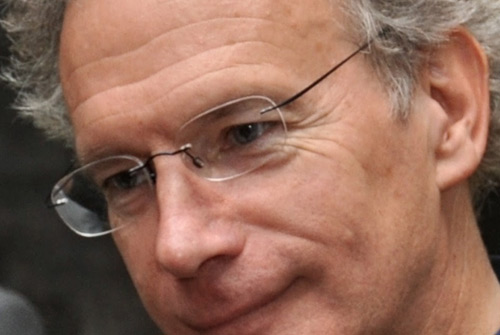
Irish journalist, literary editor, and drama criticMr Fintan O’Toole.
The fifth annual “Circling The Square”, Poetry and Music Festival gets underway in Thurles, Co. Tipperary, this coming Friday evening, 16th October 2026, at 6:30pm.
The much-anticipated three-day festival, running from Friday 16th to Sunday 18th October, promises yet another wonderful celebration of poetry, literature and live music in the heart of Thurles Town.
Established to honour the life and literary legacy of the late Thurles poet and critic Dennis O’Driscoll(1954–2012), the festival has grown into one of Ireland’s most highly regarded literary gatherings, attracting acclaimed poets, writers and musicians.
Saturday’s programme continues at The Source Arts Centre, Cathedral Street, Thurles, (Eircode E41 A4E8), featuring an impressive line-up of poets and musicians, together with a special discussion entitled Fieldwork: ‘The Public Life of Seamus Heaney‘, involving Mr Fintan O’Toole, (Latter biographer of Seamus Heaney), Mr Mick Heaney(Latter son of poet Seamus Heaney), and Mr Declan O’Driscoll(Latter brother of the late poet Dennis O’Driscoll).
This will be followed by readings from poets Maija Mäkelä, Adam Wyeth, Katie Donovan, Stephen Sexton and Catriona O’Reilly, plus music by classical flautist Emma Roche.
With a rich combination of poetry, music and warm Tipperary hospitality, “Circling The Square” promises to be yet another memorable cultural occasion for Thurles and its environs. Everyone is warmly invited to support this wonderful celebration of literature and the arts in Thurles, Co. Tipperary.
Further information and ticket details for Saturday’s events are available HERE – {Tel- 0504 90204}
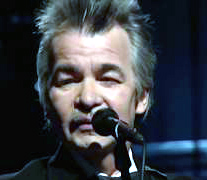
Lyrics and Vocals: The late American singer and songwriter of country-folk music John E. Prine (1946–2020)
John Prine.
One of the things that made John Prine such a wonderful songwriter was his ability to take something completely ridiculous and turn it into something funny, thoughtful, and strangely moving. The song hereunder came about because John was genuinely annoyed when scientists decided that Pluto wasn’t a planet any more. He figured Pluto had been doing a perfectly good job for years, and it seemed a bit unfair to suddenly demote the poor thing. But underneath the humour, there’s something deeper here about a world that’s always changing, people who think they know everything, and the comfort of having your own little place to escape to. Only John Prine could bring all that together in one song.
The Lonesome Friends of Science.
The Lonesome Friends of Science.
The lonesome friends of science say, “The world will end most any day”. Well, if it does, then that’s okay, ‘Cause I don’t live here anyway. I live down deep inside my head, Where long ago I made my bed. I get my mail in Tennessee, My wife, my dog, and my family. Now poor planet Pluto now, He never stood a chance no how, When he got uninvited to, The interplanetary dance. Once a mighty planet there, Now just an ordinary star, Hangin’ out in Hollywood, In some ol’ funky sushi bar. The lonesome friends of science say, “The world will end most any day”. Well, if it does, then that’s okay, ‘Cause I don’t live here anyway. I live down deep inside my head, Where long ago I made my bed. I get my mail in Tennessee My wife, my dog, and my kids and me. The Vulcan lives in Birmingham. Sometimes he just don’t give a damn. His head is full of bumblebees, His pride hangs down below his knees. Venus left him long ago, For a guy named Mars from Idaho. The Vulcan sent a wedding gift, Three-legged stool and a wheelchair lift. The lonesome friends of science say, “This world will end most any day”. Well, if it does, then that’s okay, ‘Cause I don’t live here anyway. I live down deep inside my head, Where long ago I made my bed. I get my mail in Tennessee My wife, my dog, my kids and me. Those bastards in their white lab coats, Who experiment with mountain goats, Should leave the universe alone, It’s not their business, not their home. I go to sleep and it never rains. My dog predicts hurricanes, She can smell a storm a mile away, That’s all the news we have today. The lonesome friends of science say, “The world will end most any day”. Well, if it does, then that’s okay, ‘Cause I don’t live here anyway. I live down deep inside my head, Where long ago I made my bed. I get my mail in Tennessee, My wife, my dog, my kids and me.
Lyrics: American contemporary Christian music songwriter, singer, and worship pastor Cory Asbury, American country music songwriter Tom Douglas, and Grammy-winning Australian songwriter, producer, and drummer Paul Mabury. Vocals:Cory Asbury.
Cory Asbury.
There are some people we carry with us, no matter how far apart life may take us. The song hereunder is a beautiful reminder that goodbye doesn’t always have to mean the end; that we can entrust the people we love into God’s hands, hold them in our hearts, and look forward with hope to the day our paths will once again cross.
Until We Meet Again
Until We Meet Again.
May the road rise up to meet you, the wind be at your back, May the sun shine warm upon you, may there be nothing that you lack, And may your heart be forgiving even when they do you wrong, And let your lonely soul be filled with a song. Until we meet again, I know you’re in good hands, The road may wind, and the river, she bends, But I’ll hold you in my heart, Until we meet again. In this land of milk and honey, don’t forget the hungry child, Hey, man, it’s only money, love’s the one thing you can’t buy. May the rain fall soft upon your fields, bless the fruit of the vine, Heaven gather all your tears and turn them into wine. Until we meet again, I know you’re in good hands, The road may wind, and the river, she bends, But I’ll hold you in my heart, Until we meet again. Until we meet again. Let’s don’t say goodbye, Just say, “God speed”, my friend, Until we meet again, I know we’re in good hands. The road may wind, and the river, she bends. I’ll hold you in my heart, Until we meet again. Until we meet again.
“Two roads diverged in a yellow wood, And sorry I could not travel both And be one traveler, long I stood And looked down one as far as I could To where it bent in the undergrowth;“
(Extract from poem “The Road Not Taken”, by the late Robert Frost, (1874-1963).
Wildflowers.
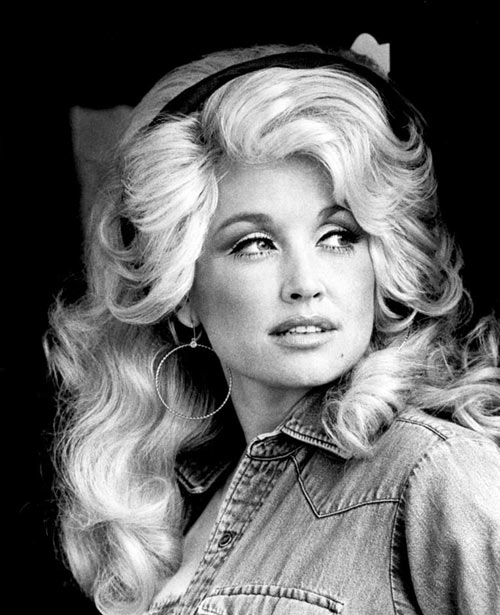
Lyrics and Vocals: American singer-songwriter, actress, and businesswoman, the late great Dolly Rebecca Parton Dean (née Parton)[1946 – 2026].
The Late Ms Dolly Parton.
Like Robert Frost’s poem above, Ms Dolly Parton’s song “Wildflowers” is also a gentle celebration of independence and the courage to seek and find a place where you can grow. Written by Ms Parton this song uses the image of a wildflower to explore leaving familiar ground and following your own road. Its central image offers a hopeful way of thinking about belonging. Sometimes, growth means venturing beyond the place where you began.
Wildflowers.
Wildflowers.
The hills were alive with wildflowers and I, Was as wild, even wilder than they. For at least I could run, They just died in the sun, And I refused to just wither in place. Just a wild mountain rose, Needing freedom to grow, So I ran fearing not where I’d go. When a flower grows wild, It can always survive, Wildflowers don’t care where they grow, And the flowers I knew, In the fields where I grew, Were content to be lost in the crowd. They were common and close, I had no room for growth, And I wanted so much to branch out, So I uprooted myself from my home ground and left, Took my dreams and I took to the road. When a flower grows wild, It can always survive, Wildflowers don’t care where they grow. I grew up fast and wild, And I never felt right, In a garden so different from me I just never belonged, I just longed to be gone, So the garden one day set me free. I hitched a ride with the wind, And since he was my friend, I just let him decide where we’d go, When a flower grows wild, It can always survive, Wildflowers don’t care where they grow. Just a wild rambling rose seeking mysteries untold, No regret for the path that I chose, When a flower grows wild, It can always survive, Wildflowers don’t care where they grow. Wildflowers don’t care where they grow.
Lyrics and Vocals: American singer-songwriter, actress, and businesswoman, the late great Dolly Rebecca Parton Dean (née Parton)[1946 – 2026].
Late Dolly Parton Dean (née Parton)[1946 – 2026].
Dolly Parton’s lesser-known “Chicken Every Sunday” carries a proud message about dignity, belonging and the hurt of being judged by money. Its young narrator faces a wealthy family’s disapproval, while her mother reminds her that humble circumstances never make anyone inferior. The Sunday chicken dinner becomes a symbol of a home sustained by care, shared pleasures and self-respect. To my ears, the song’s deepest meaning lies in that refusal to feel ashamed; a modest life has value, and nobody’s wealth gives them the right to look down on yours.
Chicken Every Sunday.
Chicken Every Sunday.
Just because all my dresses are just cotton hand-me-downs, His family calls me the lower class. ‘Cause we’re only poor folks on the other side of town, They won’t let him walk up my path.
But my mama says, “Don’t worry when they say those things about you, You remember you’re just as good as him. Just because they got that big house sitting way up on the hill, Why, you don’t have to look up to them”.
[Chorus]
“We’ve got chicken every Sunday and the preacher comes around, And every Saturday morning, daddy takes us all to town, And we go to the picture show, have picnics on the ground, Oh, if that’s the lower class, then I’m glad that’s what I am”.
‘Cause my mama don’t belong to the ladies social set, And my daddy can’t afford the country club. His folks look down on me and they won’t let us date, ‘Cause they think that I’m not good enough.
But my mama says, “Forget him, honey, he ain’t worth it all, And if anything, you’re too good for him. Just because they got money and a big fine house, Why, we won’t take no sass off of them”.
This website uses cookies to improve your experience. We'll assume you're ok with this, but you can opt-out if you wish.AcceptRead More
Privacy & Cookies Policy
Privacy Overview
This website uses cookies to improve your experience while you navigate through the website. Out of these, the cookies that are categorized as necessary are stored on your browser as they are essential for the working of basic functionalities of the website. We also use third-party cookies that help us analyze and understand how you use this website. These cookies will be stored in your browser only with your consent. You also have the option to opt-out of these cookies. But opting out of some of these cookies may affect your browsing experience.
Necessary cookies are absolutely essential for the website to function properly. This category only includes cookies that ensures basic functionalities and security features of the website. These cookies do not store any personal information.
Any cookies that may not be particularly necessary for the website to function and is used specifically to collect user personal data via analytics, ads, other embedded contents are termed as non-necessary cookies. It is mandatory to procure user consent prior to running these cookies on your website.




Recent Comments