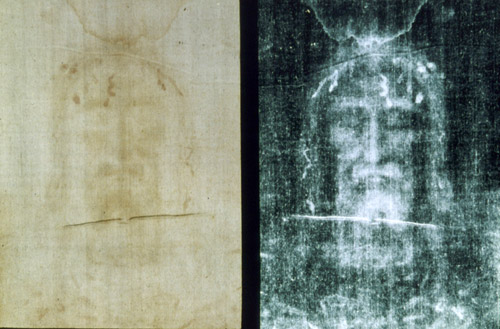
The Shroud of Turin, a 14-foot linen cloth bearing the image of a man, remains one of Christianity’s most debated relics. Many believers regard it as the burial cloth of Jesus Christ.
Radiocarbon testing conducted in 1988 dated the tested material to the medieval period. Other researchers have continued investigating whether biological traces might reveal more about the cloth’s history.
What the Reported Research Found. According to the supplied report, a study published in Scientific Reports in July 2026 examined 12 samples collected during a 1978 investigation. Researchers led by Professor Gianni Barcaccia of the University of Padua used advanced DNA sequencing to explore their biological contents.
The Shroud of Turin.
The team detected several human maternal lineages, including H33, (ancient human maternal DNA), a rare lineage found today among some Near Eastern populations, particularly the Druze, (latter a close-knit, Arabic-speaking people united by both a shared ethnic background and a common religious faith), group of about one million people living primarily in Syria, Lebanon, and Israel.. Salt-loving microorganisms were also identified. These findings raised questions about whether the cloth encountered saline conditions during storage, travel or flax processing. They do not establish that it was kept near the Dead Sea.
Centuries of Handling Leave Their Mark. Contamination was a major obstacle. A maternal lineage dominant in three samples matched that of Professor Pierluigi Baima Bollone, who collected the material in 1978. Researchers considered handling by Bollone, or a close relative, a likely explanation. The samples also contained common skin bacteria and a complex mixture of mitochondrial DNA variants, indicating contact with numerous people. This makes it extremely difficult to isolate genetic material from anyone who may originally have been wrapped in the cloth. The Near Eastern H33 lineage had also appeared in the team’s 2015 research, so its detection was not entirely new.
Biological Traces Tell a Complicated Story. Beyond human DNA, researchers reported fungi, plants, animals and Mediterranean coral. Plant traces included crops originating in the Americas, such as maize, tomatoes, potatoes, peppers and peanuts. Their presence suggests that at least some biological material accumulated in later centuries. No identified plant was exclusive to the Levant, (a subregion of West Asia along the Eastern Mediterranean that forms part of the Middle East), and the researchers could not determine precisely where or when the various traces reached the cloth. Protein testing reportedly identified no ancient biological material. Dating of two loose threads reflected documented repairs rather than establishing the age of the original linen.
What the Evidence Canand Cannot Show. The reported findings offer clues about the Shroud’s exposure to people and environments over time. However, DNA associated with a region does not establish where the cloth was made, its age or the identity of anyone it covered. The researchers could not determine whether the Shroud originated in medieval Europe or approximately 2,000 years ago.
For believers, it remains an object of profound religious significance. Scientifically, this research does not prove that it wrapped Jesus or corroborate his resurrection.
Pre-deceased by his younger son, Conor, (April 24th 2007), brother Tim and sister Kate; Mr Morrissey passed away peacefully in the presence of his loving family, while in the care of staff at St Joseph’s Unit, Bantry General Hospital, Cork
His passing is most deeply regretted, sadly missed and lovingly remembered by his sorrowing family; loving wife Eileen (née Martin), son Paddy and daughter Jo (Lloyd), daughter-in-law Bunny, son-in-law Adam, five grandchildren Hannah, Conor, Eddie, Jimmy and Winnie, brother Nicholas, brother-in-law Harry, sisters-in-law Ursula and Ursula, extended relatives, neighbours and a large circle of friends.
For those persons who would wish to attend Requiem Mass for Mr Morrissey, but for reasons cannot, same can be viewed streamed live online, HERE.
The extended Morrissey and Martin families wish to express their appreciation for your understanding at this difficult time, and have made arrangements for those persons wishing to send messages of condolence, to use the link shown HERE.
Recognised primary and post-primary schools are invited to apply for funding to bring sustainability learning to life, through practical projects during the 2026/27 school year.
The Department of Education and Youth’s Education for Sustainable Development (ESD) up to 2030 funding call, offers grants of €1,000 to €2,500, with a total funding allocation of €1 million. Funding is competitive, and not all applications may be successful.
Building a More Sustainable Future Together Ireland’s National Strategy on Education for Sustainable Development, ESD to 2030, aims to equip every learner with the knowledge and skills to contribute to a sustainable future. The strategy recognises three connected dimensions of sustainability; protecting the environment, supporting social wellbeing and inclusion, and using economic resources responsibly. It encourages learners to put their knowledge into practice in their schools, homes and communities.
Five Pathways to Meaningful Change. Projects must support one or more of the strategy’s five priority action areas:
Advancing Policy: Embedding sustainability in education policies and planning.
Transforming Learning Environments: Developing a whole-school approach to sustainability.
Capacity Building of Educators: Strengthening the knowledge and skills of teachers and school leaders.
Empowering and Mobilising Youth: Creating opportunities for young people to take action.
Accelerating Local Level Action: Connecting schools and communities through shared sustainability initiatives.
Priority will be given to projects that include local action and/or capacity building for educators.
What Makes a Strong Application? Projects must support the implementation of ESD to 2030 and help school management, staff and/or students develop knowledge and skills for sustainable development.Applications will also be assessed on features such as curriculum links, a whole-school approach, practical action, peer learning, community engagement, volunteering and outdoor learning. Connections to the Sustainable Development Goals, inclusion of disadvantaged learners and learners with disabilities, and clear plans for monitoring progress will strengthen proposals. Other considerations include whether the project receives other public funding, whether the school has previously received ESD to 2030 funding, and whether it has adopted and published a Sustainability Policy Statement.
Projects do not need to meet every assessment criterion, but greater consideration will be given to applications meeting several of them.
Planning How the Grant Will Be Used Funding should support activities within the school. The call identifies funding for school use rather than fees for external services or programme providers as an assessment consideration.
Infrastructure costs, such as solar panels, insulation and energy-efficient lighting, are not covered. Successful schools must use the grant for the approved purpose during the 2026/27 school year. Any change requires the department’s explicit agreement in advance, and unspent funding must be returned.
Sharing Progress and Embedding Sustainability Successful applicants must report on the work completed and how the funding was spent. The application form requires an update by the end of May 2027, and an evaluation template will be provided. Schools that already have a Sustainability Policy Statement will receive priority. Remember to include the school’s full name, location and roll number in all correspondence. The department will acknowledge applications within five working days. If no acknowledgement arrives within that period, contact the department promptly to confirm receipt.
Submit Your Application by 23 October. Completed application forms must be emailed to ESD@education.gov.ie by 6:00pm on Friday, 23 October 2026.
Applicants will be notified of the outcome before the end of November 2026, with funding issued shortly afterwards. This is an opportunity for schools to turn sustainability education into practical action, strengthen community connections and give learners an active role in shaping a more sustainable future.
Funded schools without one must develop and publish a statement by the end of the 2026/27 school year and include its website link in their report.
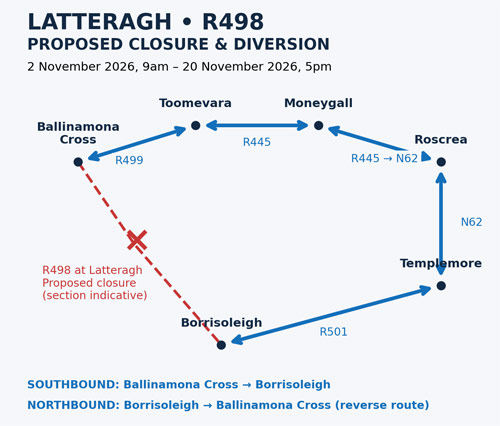
Tipperary County Council proposes to close the R498 at the Latteragh realignment works, affecting motorists travelling between Nenagh and Thurles.
When Would The Road Close? From 9:00am on Monday, 2nd November 2026, until 5:00pm on Friday, 20th November 2026, to facilitate construction of the realignment project.
Southbound Diversion Traffic will divert at Ballinamona Cross, following: R499 to Toomevara → R445 towards Moneygall → N62 via Roscrea and Templemore → R501 to Borrisoleigh.
Northbound Diversion Traffic will divert in Borrisoleigh village, following the same route in reverse. Diversions will be fully signposted.
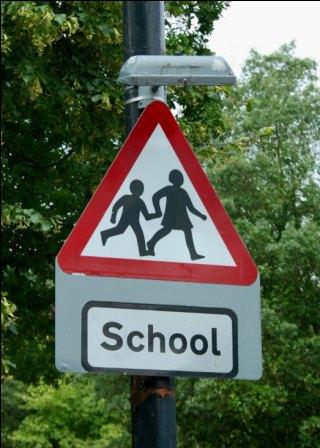
Allow Extra Time The diversion could bring additional traffic and delays around Borrisoleigh, particularly during school drop-off and collection times. Parents, teachers, commuters and other road users should allow extra journey time and follow the diversion signs.
“Two roads diverged in a yellow wood, And sorry I could not travel both And be one traveler, long I stood And looked down one as far as I could To where it bent in the undergrowth;“
(Extract from poem “The Road Not Taken”, by the late Robert Frost, (1874-1963).
Wildflowers.
Lyrics and Vocals: American singer-songwriter, actress, and businesswoman, the late great Dolly Rebecca Parton Dean (née Parton)[1946 – 2026].
The Late Ms Dolly Parton.
Like Robert Frost’s poem above, Ms Dolly Parton’s song “Wildflowers” is also a gentle celebration of independence and the courage to seek and find a place where you can grow. Written by Ms Parton this song uses the image of a wildflower to explore leaving familiar ground and following your own road. Its central image offers a hopeful way of thinking about belonging. Sometimes, growth means venturing beyond the place where you began.
Wildflowers.
Wildflowers.
The hills were alive with wildflowers and I, Was as wild, even wilder than they. For at least I could run, They just died in the sun, And I refused to just wither in place. Just a wild mountain rose, Needing freedom to grow, So I ran fearing not where I’d go. When a flower grows wild, It can always survive, Wildflowers don’t care where they grow, And the flowers I knew, In the fields where I grew, Were content to be lost in the crowd. They were common and close, I had no room for growth, And I wanted so much to branch out, So I uprooted myself from my home ground and left, Took my dreams and I took to the road. When a flower grows wild, It can always survive, Wildflowers don’t care where they grow. I grew up fast and wild, And I never felt right, In a garden so different from me I just never belonged, I just longed to be gone, So the garden one day set me free. I hitched a ride with the wind, And since he was my friend, I just let him decide where we’d go, When a flower grows wild, It can always survive, Wildflowers don’t care where they grow. Just a wild rambling rose seeking mysteries untold, No regret for the path that I chose, When a flower grows wild, It can always survive, Wildflowers don’t care where they grow. Wildflowers don’t care where they grow.
This website uses cookies to improve your experience. We'll assume you're ok with this, but you can opt-out if you wish.AcceptRead More
Privacy & Cookies Policy
Privacy Overview
This website uses cookies to improve your experience while you navigate through the website. Out of these, the cookies that are categorized as necessary are stored on your browser as they are essential for the working of basic functionalities of the website. We also use third-party cookies that help us analyze and understand how you use this website. These cookies will be stored in your browser only with your consent. You also have the option to opt-out of these cookies. But opting out of some of these cookies may affect your browsing experience.
Necessary cookies are absolutely essential for the website to function properly. This category only includes cookies that ensures basic functionalities and security features of the website. These cookies do not store any personal information.
Any cookies that may not be particularly necessary for the website to function and is used specifically to collect user personal data via analytics, ads, other embedded contents are termed as non-necessary cookies. It is mandatory to procure user consent prior to running these cookies on your website.





Recent Comments