Application Ref: 2660918. Applicant:Dennis O’Reilly. Development Address: Mill Road , Turtulla, Thurles, Co. Tipperary. Development Description: A ground floor kitchen and back kitchen and toilet and upstairs bedroom and living space (2008) and previously converted attic space (1992) and upgraded wastewater treatment system (2015). Status: N/A. Application Received: 18/09/2026. Decision Date: N/A. Further Details:http://www.eplanning.ie/TipperaryCC/AppFileRefDetails/2660918/0.
Application Ref: 2660912. Applicant:Tipperary GAA. Development Address: Dr Morris Park Townspark, Glengarriff, Bawnanattin and Garryvicleheen (Townlands), Thurles, Co. Tipperary. Development Description: The extension of the existing training facility comprising: (a) The construction of 3 no. grassed playing pitches, supporting ball stop netting, sprinkler irrigation system, associated well and water storage tanks, and floodlighting with associated diesel generator / diesel storage tank (b) Demolition of existing hurling wall and the construction of 2 no. new hurling walls, all-weather track and training areas (c) The upgrading of 2 no. existing site entrances from Childers Park Road, including demolition of boundary wall and northern entrance kiosk, entrance widening, and provision of new grated vehicular and pedestrian accesses, including facility signage (d) Extension and reconfiguration of internal facility layout and vehicular / pedestrian circulation routes to include campus walkway, new bus, car, motorcycle and bicycle parking facilities (e) All ancillary site development including landscaping, biodiversity enhancement areas, boundary treatments, lighting, surface water drainage infrastructure, and associated works. Status: N/A. Application Received: 17/09/2026. Decision Date: N/A. Further Details:http://www.eplanning.ie/TipperaryCC/AppFileRefDetails/2660912/0.
Application Ref: 2660495. Applicant:Philip Ryan & Claire Hayes. Development Address: No. 77 Kennedy Park, Thurles, Co. Tipperary. Development Description:(a) The demolition of existing garage, (b) construction of a single-storey pitched roof extension to the rear and side of the existing dwelling, (c) alterations to existing external elevations to include changes to windows and openings to accommodate proposed new extension and internal layouts, (d) all associated site works. Status: Conditional. Application Received: 22/05/2026. Decision Date: 11/09/2026. Further Details:http://www.eplanning.ie/TipperaryCC/AppFileRefDetails/2660495/0.
Application Ref: 2560882. Applicant: Gary Loughnane. Development Address: Parnell Street, Thurles, Co. Tipperary. Development Description: Change of use of existing ground floor from barber shop/retail to living accommodation and all associated site works. Protected Structure Reference Number: RPS 18. Status: Refused. Application Received: 08/09/2025. Decision Date: 14/09/2026. Further Details:http://www.eplanning.ie/TipperaryCC/AppFileRefDetails/2560882/0.
Pre-deceased by his sister Biddy, infant brother, infant sister and brother Paddy aged 12 years; Mr Ahearne passed away peacefully at his place of ordinary residence, surrounded by his loving family.
His passing is most deeply regretted, sadly missed and lovingly remembered by his sorrowing family; loving wife Jill, daughters Úna (Ryan-Bawn) and Mary (Ahearne-Gaughan), sons Rody and Denis, daughters-in-law Lyndsey and Becky, sons-in-law Martin and Pat, grandchildren Jill, Patrick, Ellie, Molly, Diarmúid, Conor, Hannah, Rachael, Abbey, Beth, Caitlain and Emily, niece Mary (Quirke), nephews Liam, Rodger and PJ (White), extended relatives, neighbours and friends.
Requiescat in Pace.
Funeral Arrangements.
The earthly remains of Mr Ahearne will repose at Hayes Funeral Chapel, Clonoulty, Tipperary, (Eircode E25 TX26), on Friday afternoon, September 25th from 5:00pm until 7:00pm, same evening. His remains will be received into the Church of Jesus Christ Our Saviour, Rossmore, Tipperary, (Eircode E25 RK72), on Saturday morning, September 26th, to further repose for Requiem Mass at 11:30am, followed by interment, immediately afterwards in the adjoining graveyard.
For those persons who would wish to attend Requiem Mass for Mr Ahearne, but for reasons cannot, same can be viewed streamed live online, HERE.
The extended Ahearne family wish to express their appreciation for your understanding at this difficult time, and have made arrangements for those persons wishing to send messages of condolence, to use the link shown HERE.
A 15-year-old boy has been sentenced to six months’ detention for offences across Tipperary, Limerick and Clare, including stealing a vehicle and petrol from a service station in Cahir, Tipperary.
The teenager admitted unlawfully taking a vehicle from Woodview Service Station in Lisava, Cahir, on December 1st 2024. He also pleaded guilty to stealing €25.96 worth of petrol from the same premises that day.
At Ennis District Court, he pleaded guilty to seven car thefts, one attempted car theft, stealing a bicycle and stealing petrol. Videos posted on TikTok and Snapchat helped Gardaí identify him in connection with several offences.
Appearing by video link from Oberstown, the teenager received six-month sentences to run concurrently with each other and with the sentence he is already serving.
Mr Justice Adrian Harris acknowledged positive engagement with probation services while in detention, but warned that further offending would result in less leniency.
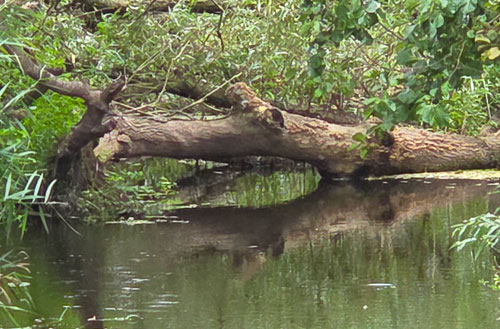
Cllr. Jim Ryan deserves congratulations for taking the lead in demanding action on the condition of the River Suir in Thurles, and for securing a commitment that large fallen trees lying across the river will be removed as soon as possible.
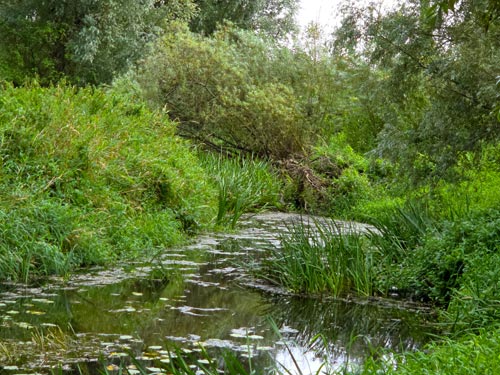
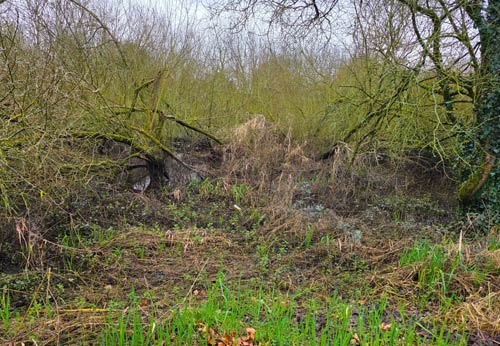
At Monday’s Thurles District meeting, Cllr. Ryan pressed for a commitment to tackle the extensive weeds and reeds. Local representatives were presented with an outline rehabilitation plan for the river, with details expected to be finalised later this month.
River Suir, Thurles Town Centre.
Mr Fran Igoe of the ‘River Basin Management Service’, (formerly LAWPRO), explained that dredging or cutting vegetation alone is unlikely to resolve the underlying problems. Excess nutrients entering the river from agricultural run-off and other sources are contributing to the growth, and these causes must be addressed if improvements are to last.
LAWPRO’s recent change of name to the River Basin Management Service also deserves scrutiny. The stated justification is that the new title better reflects its expanded work and its role in coordinating Ireland’s River Basin Management Plan. However, the organisation confirms that its mission, structure and responsibilities remain unchanged. Residents are entitled to ask what the rebranding cost and what practical benefit it will bring to places such as Thurles.
Due to neglect, dredging can only be the answer to the Thurles, River Suir problem.
“This clearer name may help explain the service’s role, but its success must be judged by measurable improvements in water quality, effective coordination and delivery of promised action on the river Suir”, stated Cllr Ryan.
Nevertheless, concerns about the river’s condition deserve clear answers. Kick-sampling tests reportedly found little or no river-life activity. “Residents need to know what the findings mean and what measures, including any appropriate vegetation management, will form part of the rehabilitation plan”, he continued.
Refresh Thurles Tidy Towns volunteers who this week removed bottles and cans; whose presence on the riverbed had reportedly been well documented as sitting there for two years, after Cllr Ryan highlighted the problem. Disappointingly, further dumping was reported this morning. The council must now provide a suitable litter bin and arrange regular collection to support the efforts of these volunteers.
Deplorable state of River Suir permitted and acknowledged by Tipperary Co. Co..
With water levels rising, there are concerns that substantial work could be delayed until next spring or early summer. Any machinery access must also be carefully planned to protect the newly laid tarmac footpaths along the river bank.
European and Irish public funding already supports farmers in protecting waterways through ACRES, Farming for Water EIP and TAMS grants for measures such as buffer zones, fencing and alternative livestock drinking supplies. Payments depend on eligibility and approved actions, rather than simply owning riverside land.
“Residents are entitled to ask how these supports are being used in the Suir catchment and what measurable improvements they are delivering”, said Cllr. Ryan.
The commitment given to Cllr. Ryan to remove fallen trees is indeed a welcome step; but residents now need a clear timetable and a rehabilitation plan that delivers lasting improvements long term.
Pre-deceased by her parents Jim and Kathleen; Mrs Moran passed away peacefully, following a long illness borne with dignity and great strength.
Her passing is most deeply regretted, sadly missed and lovingly remembered by her sorrowing family; loving husband Dermot and son David, daughters Sarah and Emma, son-in-law Fran, daughter-in-law Zaira, adored grandmother, brothers Pierce, James and John, sisters Denise and Judy, brothers-in-law, sisters-in-law, nieces, nephews, extended relatives, neighbours and a wide circle of friends.
Rest In Peace.
Funeral Arrangements.
The remains of Mrs Moran will repose at Fanagans Funeral Home, Dundrum, Co. Dublin, (Eircode D14 F3X2), on Friday afternoon, September 25th, from 5:00pm until 7:00pm, same evening. Her remains will be received into the Victorian Chapel, Mount Jerome, 158 Harold’s Cross Road, Harold’s Cross, Dublin, (Eircode D6W HY98), on Saturday afternoon, September 26th, for a funeral service at 2:30pm.
For those persons who would wish to attend the funeral service for Mrs Moran, but for reasons cannot, same can be viewed, streamed live online, HERE.
The extended Moran and Molony families wish to express their appreciation for your understanding at this difficult time, and have made arrangements for those persons wishing to send messages of condolence, to use the link shown HERE.
Note Also: Complimentary car parking is available at the old Dundrum Shopping Centre (Lidl) car park entrance on Dundrum Village Main Street (not Dundrum Town Centre Car Park). Tickets to exit car park, free of charge, available on request at Fanagans Funeral Home, Dundrum.
This website uses cookies to improve your experience. We'll assume you're ok with this, but you can opt-out if you wish.AcceptRead More
Privacy & Cookies Policy
Privacy Overview
This website uses cookies to improve your experience while you navigate through the website. Out of these, the cookies that are categorized as necessary are stored on your browser as they are essential for the working of basic functionalities of the website. We also use third-party cookies that help us analyze and understand how you use this website. These cookies will be stored in your browser only with your consent. You also have the option to opt-out of these cookies. But opting out of some of these cookies may affect your browsing experience.
Necessary cookies are absolutely essential for the website to function properly. This category only includes cookies that ensures basic functionalities and security features of the website. These cookies do not store any personal information.
Any cookies that may not be particularly necessary for the website to function and is used specifically to collect user personal data via analytics, ads, other embedded contents are termed as non-necessary cookies. It is mandatory to procure user consent prior to running these cookies on your website.






Recent Comments