Minister for Justice Mrs Helen McEntee TD has welcomed the passage of the Judicial Appointments Commission Bill 2022 through its final stages in Seanad Éireann.
The Bill, when enacted, will lead to the biggest reform in how judges are appointed in a quarter of a century, through the establishment of a new Judicial Appointments Commission.
The Commission will replace the Judicial Appointments Advisory Board (JAAB) and will recommend persons for appointment as judges by the President on the advice of the Government under the Constitution.
It will also recommend persons for nomination by the Government to international courts outside the State.
Minister McEntee said: “This represents an important step forward in the reform of the judicial appointments process, as committed to in my Justice Plan 2023. The recognised excellence of our judges and judiciary will be further enhanced by the provisions of this Bill, which introduces a new recommendation and appointments process and ensures that judicial selection is conducted in a modern, open and transparent way. The new legislation will ensure that anyone who wishes to be considered for appointment to judicial office, including serving judges, will apply to the Commission and undergo the same application and interview processes. Furthermore, the establishment of a new, independent Judicial Appointments Commission will ensure that the selection of nominees for judicial office will be through fair and open competition from the widest range of possible candidates. This Bill follows a substantial process of consultations, in particular with the Attorney General, the European Commission and the Chief Justice. It also takes into account key aspects of a comprehensive pre-legislative scrutiny report prepared by an Oireachtas Committee.”
The Chief Justice will chair the Commission, which will comprise of an equal number of lay members and judge members.
In addition, the Bill provides for the following:
Three persons will be recommended for a vacancy and an additional two recommendations for a second and additional vacancy (e.g. seven recommendations for three vacancies).
Any person who is to be recommended to the Minister should have been interviewed, and therefore the Minister has provided accordingly.
The Bill contains a requirement for the Commission to publish a Diversity statement relating to the objective that membership of the judiciary should reflect the diversity of the population as a whole.
A provision has also been inserted in the Bill that requirements for judicial appointment will reflect the need for candidates to undergo judicial training or continuous professional development.
Minister McEntee added: “The enactment of this legislation will enable the continued appointment of excellent judges, which are a cornerstone of a strong, independent judiciary This independence is important in ensuring public confidence in the courts to uphold the law. I look forward to working with all members of the Houses of the Oireachtas to bring this legislation to enactment as soon as possible.”
An invitation has been sent out by Irish Green Party politician Mrs Catherine Martin, T.D. [Minister for Tourism, Culture, Arts, Gaeltacht, Sport / Media and Chair of the National Famine Commemoration Committee], inviting all schools in Ireland to observe a minute of silent reflection.
Note the above Double Ditch was removed during the month of March. We now ask the question: Where was the Green Party TD Malcolm Noonan, and Leader Eamon Ryan TD, when we contacted both of them on numerous occasions for assistance, in an attempt to save the Thurles Great Famine Double Ditch? To date Mr Eamon Ryan TD has never replied. See HERE and HERE and HERE and HERE and HERE and HERE and HERE, etc. etc.
In her invitation Mrs Martin writes:- [Now Read & Weep.]
“In May 2008, the Government decided to inaugurate an annual National Famine Commemoration Day in memory of all those who died and emigrated during the Great Famine. This year’s National Famine Commemoration will take place in Milford, Co. Donegal at 2:00pm on Sunday 21st May, in the presence of the President of Ireland Michael D. Higgins.
There is no other event in our history that can be likened to the Great Famine either for its immediate impact or its legacy. That legacy includes a strong appreciation among Irish people of issues such as food security and a strong commitment to humanitarian aid and relief. I invite you to arrange for all staff and pupils at your school to observe a minute of silent reflection on Friday, 19th May in memory of all those who suffered loss during the Famine – loss of life, loss of family, loss of home and loss of country. This minute of silence should take place ideally at midday, but can take place at whatever time suits individual schools on the day. I would ask also during this minute of silence that your staff and pupils also remember those who are suffering famine and hunger today, particularly the children and young people living in parts of the world currently afflicted by chronic hunger, poverty and disease. It will be a very special and dignified tribute to those who died during the Great Famine and I would like to thank you most sincerely for your support in this regard. If you would like to discuss the matter further, please feel free to contact Ronan Nestor on 085 800 2899 or at faminecommemoration@tcagsm.gov.ie. Yours sincerely, Catherine Martin, T.D. [Minister for Tourism, Culture, Arts, Gaeltacht, Sport and Media Chair of the National Famine Commemoration Committee.]
Shame on the Green Party and its membership, together with Thurles Municipal District Council officials, and local elected councillors who wasted taxpayers money in order to destroy our local history and a guaranteed Thurles tourist attraction.
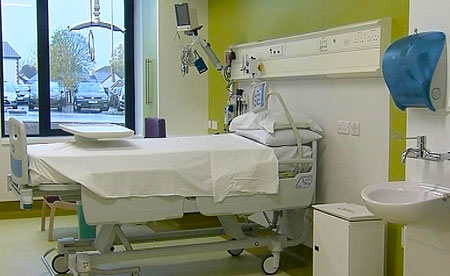
The Government has accepted a Private Members Motion tabled in Dáil Éireann today, Wednesday, May 17th, 2023 by Clare TD Mr Michael McNamara and members of the Independent Group, seeking the implementation of a range of measures aimed at reducing pressure on overcrowded Hospital Emergency Departments across the country.
The Motion called for the expansion of Medical Assessment Units (MAU) and Local Injuries Units (LIU) at Tier 2 hospitals such as Nenagh, Co. Tipperary,Ennis, and St. John’s to 24-hours, 7-days-a-week; the delivery of an electronic health system to replace paper-based health records without further delay; and the appointment of designated medical officers in every nursing home thus ensuring that patients in nursing homes can access treatment by primary care teams.
The Government confirmed to the Dáil today it had accepted the Motion and looked forward to implementing the proposals.
Deputy McNamara said the basis for the Motion was the ongoing overcrowding in Irish hospitals, with 2022 seeing a record 121,000 patients being left without a bed, and the ongoing record overcrowding being experienced across the country during 2023.
The Co. Clare TD has welcomed the Government’s acceptance of the Motion and its commitment to implementing the proposal; to expand the LIUs and MAUs at Model 2 Hospitals, which he said would help to alleviate pressure on Emergency Departments.
“LIUs deliver efficient, expert treatment to tens of thousands of patients with minor injuries every year and have been of crucial assistance in relieving pressure on Emergency Departments during the pandemic,” he explained. “Furthermore, MAUs play an integral role in Emergency Department avoidance, providing a vital and timely service to GPs and patients. Approximately 10% of MAU cases may require admission to the hospital, and the majority will be discharged, with a follow-up review in the unit within 48 hours.”
Deputy McNamara also welcomed the Government’s commitment to procuring and rolling out a system of electronic health record keeping, across the country.
“Ireland remains a laggard in Europe for digitisation in the health system and the introduction of electronic health records. The use of such technology could significantly reduce triage times in Emergency Departments,” he stated.
The Clare TD said he hoped the Government would soon move to appoint designated medical officers in every nursing home and ensure that patients in nursing homes can access treatment by primary care teams.
“There remains a lack of a specific national structure or control for clinical oversight of the care of people admitted to nursing homes and they have difficulty accessing treatment by primary care teams. This lack of such oversight and care can result in unnecessary presentations at Emergency Departments,” he noted.
Responding to Deputy McNamara today, Health Minister Stephen Donnelly commented, “The Motion calls for measures to tackle overcrowding in our hospitals quite rightly. We know it’s a problem …The current situation in too many of our emergency departments on too many days of the week is simply not acceptable.”
He added, “The Independent Deputies who tabled this motion quite rightly point to Medical Assessment Units and Local Injury Units. The Urgent Care Plan is looking at these and is looking at expanding provision across these.”
Junior Minister Ms Mary Butler said, “The Motion tabled by the Independent Deputies calls for targeted investment in electronic health records nationally and I agree with that wholeheartedly. It calls for the expansion of MAUs and Local Injury Units at Tier 2 Hospitals. In doing so my Independent colleagues have acknowledged several areas where significant progress has been made, which is primarily as a result of an unprecedented expansion in our public healthcare capacity. This Government has invested in people, and we will continue to do so.”
Ms Butler continued, “We accept the motion from the Deputies, and we look forward to implementing what is in the motion. One area that we really need to make progress with quickly is in relation to e-health piece, especially in relation to homecare and CAMHS teams”.
Contrary to what I thought; this female Jackdaw photographed hereunder, working on Kickham Street, Thurles, is not suffering from Bird Flu symptoms and hence she is not attempting to blow her nose.
No, truth is that due to the failure to employ a sufficient number of employees with which to deliver services, Thurles Municipal District Council officials supported by Thurles elected councillors and Tipperary Co. Council have decided to teach Jackdaws to pick up “indiscriminate littering” from under parked cars, where a recently purchased mechanical street sweeper has failed to reach. Read HERE. Same project, if successful could lead to less drains becoming blocked within the town and leave areas more litter free, before the arrival of King Charles III to Thurles, expected next month.
King Charles III, as you are probably aware, has been invited by councillors to visit the grave of his ancestor Lady Liz of Thurles, despite nobody knowing where she is buried, since no grave site exists. [Don’t tell Alison O’Reilly in the Cork Examiner Newspaper.]
This new experiment with Jackdaws, if proven successful, could see a reduction in the Councils already badly depleted workforce, leading to a reduction in the amount of Local Property Tax paid by Thurles householders, who get absolutely nothing in return for their forced annual generosity.
Jackdaw collecting litter in Kickham Street, Thurles. Pic: George Willoughby.
Now, all humour aside and speaking of ‘Local Property Tax’; I was sick of not being replied to by local Fianna Fáil TD Mr Jackie Cahill and his friend Independent TD Mr Michael Lowry; so one year ago, I wrote to the Fianna Fáil leader, the then Taoiseach Mr Micheál Martin and his coalition partner, the Fianna Gael leader and now Taoiseach Mr Leo Varadkar.
My reason for communicating with both men, was the possibility of acquiring the possible acquisition of a waiver in relation to this same Local Property Tax (LPT), due to the failure by Tipperary Co. Council to sort out, over the previous 5 year period, the road surface and drainage issues effecting every home on Kickham Street.
As everyone is aware, Kickham Street remains the busiest road, both for exiting and accessing Thurles town. I had pointed out that Tipperary Co. Council officials were trying to make the homes of residents uninhabitable. A link shown HERE, was forwarded, in the vain hope that same would achieve even some reaction.
The office of Mr Leo Varadkar as expected, failed to reply, while the office of Mr Micheál Martin sent a prompt notification to me, redirecting my communication to the then Minister for Finance, Mr Paschal Donohoe TD.
The reply came from Mr Alex Costello (Private Secretary to the Minister for Finance) on April 12th, 2022 at 09:22am.
Dear Mr Willoughby.
The Minister for Finance, Mr Paschal Donohoe TD, has asked me to refer to your recent email, addressed to the Taoiseach, Mr Micheál Martin TD, concerning a waiver of Local Property Tax. Your correspondence was passed to Minister Donohoe for attention and direct reply to you, in view of his responsibility for the Local Property Tax.
Local Property Tax (LPT) proceeds collected by the Revenue Commissioners are subsequently transferred to the Local Government Fund which comes under the responsibility of the Minister for Housing, Local Government and Heritage. The funds are ultimately redistributed to local authorities in accordance with Government policies on funding allocations. Annual LPT allocations to local authorities are published on the Gov.ie website HERE
LPT along with other revenue streams is used to fund essential local services such as, public parks; libraries; open spaces and leisure amenities; planning and development; fire and emergency services; maintenance and cleaning of streets and street lighting – all benefiting citizens directly. LPT income supplements income from commercial rates, from the provision of goods and services and from other Government grants. All of a local authority’s LPT allocation is used to help provide services within the local authority area. The benefits of these services accrue to all members of society. The decisions on and implementation of these services are matters for each individual local authority and the councillors for each.
The LPT legislation provides for exemptions from LPT in relation to properties that are unoccupied for an extended period due to illness of the owner; purchased or adapted or built for use by incapacitated persons; used by a charity or public body providing special needs accommodation; owned by charities for recreational services; registered nursing homes; properties certified as having pyritic damage; properties constructed using defective concrete blocks; properties fully subject to commercial rates and properties of North-South implementation bodies. As you can see there is no LPT exemption in relation to the circumstances outlined in your correspondence.
The Programme for Government commits to requiring each council to publish an annual statement of accounts to all homeowners and ratepayers, giving a breakdown of how revenue was collected and how it was spent. Information on individual local authority expenditure is generally available from their respective websites including Annual Budget documents and Annual Financial Statements and Annual Reports. In addition, the Annual Service Delivery Plan is prepared in accordance with Section 134 (A) of the Local Government Act 2001 which requires that each local authority prepare such a plan. The plan sets out the principal services that the local authority intends to deliver in the relevant year and is to be consistent with the provisions in the local authority budget of the expenditure estimated to be necessary for the local authority to carry out its functions during the local financial year to which that plan relates. The Annual Service Delivery Plan of Tipperary Co. Council is at this link HERE A number of councils also publish documents outlining how LPT monies are spent in their area or divisions thereof and the effects of local variation decisions. An example is at this link HERE. [No it is not, for same has been moved with no forwarding address.]
The Local Authority Performance Indicator Report is published annually by the independent National Oversight and Audit Commission (NOAC) to provide independent oversight of the local government sector. This is a matter for the Minister for Housing, Local Government and Heritage. The NOAC reports present the performance of local authorities for a wide range of services. The performance indicators are categorised by local government functions: housing, roads, water, waste/environment, planning, fire services, library/recreational, youth/community, corporate, finance and economic development. NOAC’s report for 2020 is accessible HERE.
I hope the foregoing is of assistance.
Yours sincerely Alex Costello, (Private Secretary to the Minister for Finance).
So there you go folks, I relate to you all this, in the event that you might want to review your voting preferences, come next elections.
Over the next day or two tune in for “Kickham Street, Thurles, Co. Tipperary Saga Part 4”.
Members of the Tipperary farming community attending Thurles Mart, should please take note.
Works, we are informed will commence, between Glasheen’s Pub and the Traffic Lights at Lidl, beginning on Monday May 15th, continuing until Wednesday May 17th inclusive, with contractors operating between the hours 7:00am and 7:00pm each day, during the estimated resurfacing time-frame.
This road surface had become seriously damaged by heavy machinery during the construction and installation of the town’s first set of traffic lights and the demolition of the Erin Foods factory and subsequent erection of the new building, now occupied by the German International discount retail chain ‘Lidl’; latter who operate over 12,000 stores across Europe.
Blocked drain & sunken footpath on Clongour Road, Thurles.
Hopefully a survey has been undertaken in advance of this now scheduled work on Clongour Road; noting that a blocked drain, first notified to Thurles Municipal District Council officials and local councillors in February 2022, still remains choked.
Here also exists a sunken footpath, close to the junction, where water gathers every time it rains. [See picture above]. Will this now be a case rather like St. Patrick’s cemetery where the road surface exists above the pavement, devoid of proper kerbing; the surface to be dug up later, wasting taxpayer’s valuable money? See Here.
Meanwhile, travelling south on Slievenamon road in Thurles, latter which converges west unto Clongour Road; same small carriageway stretch constructed and surfaced less than two year old on the N62; has already subsided. [See picture hereunder].
Collapsed new road surface on Slievenamon Road [N62] found close to Thurles traffic lights and the junction of Clongour Road.
Same road, Slievenamon Road, has already been repaired in relation to two other areas of subsidence, ignoring, for some reason, the pictured above three other areas of collapse, just a few meters from the repairs.
Details of the upgrade to Clongour Road was notified to Thurles.Info by Mr Joe MacGrath (Chief Executive of Tipperary County Council), through his Secretary Ms Evelyn Harty, and can be found published HERE.
The link to this post has been forwarded to Ms Sharon Scully(Thurles Municipal District Administrator) and Mr Joe MacGrath(Chief Executive, Tipperary Co. Co.).
This website uses cookies to improve your experience. We'll assume you're ok with this, but you can opt-out if you wish.AcceptRead More
Privacy & Cookies Policy
Privacy Overview
This website uses cookies to improve your experience while you navigate through the website. Out of these, the cookies that are categorized as necessary are stored on your browser as they are essential for the working of basic functionalities of the website. We also use third-party cookies that help us analyze and understand how you use this website. These cookies will be stored in your browser only with your consent. You also have the option to opt-out of these cookies. But opting out of some of these cookies may affect your browsing experience.
Necessary cookies are absolutely essential for the website to function properly. This category only includes cookies that ensures basic functionalities and security features of the website. These cookies do not store any personal information.
Any cookies that may not be particularly necessary for the website to function and is used specifically to collect user personal data via analytics, ads, other embedded contents are termed as non-necessary cookies. It is mandatory to procure user consent prior to running these cookies on your website.








Recent Comments