Archives

It Happened On This Day: 173 years ago.

“How can men feel themselves honoured by the humiliation of their fellow beings?” – Mahatma Gandhi.

A ‘Great Famine Walk’ between Louisburgh and Doolough, Co. Sligo, takes place every year to commemorate what history records as the “Doolough Tragedy”.

Today, here in Thurles, as the last piece of our Great Famine heritage (1845-49) is finally eradicated from the face of this earth, supported by Mr Seamus Hanafin, (Fianna Fáil Councillor) and others, we remember that 173 years ago, on this same day, (Friday March 30th, 1849), two officials of the Westport Poor Law Union arrived in Louisburgh, southwest Co. Mayo.

“Doolough Tragedy” In ár gcroíthe go deo.

Their purpose for coming, was to inspect people who were in receipt of outdoor food relief and to verify that same should continue to receive it.

This inspection, did not take place as scheduled and the two officials moved on to Delphi Lodge, considered more suitable to accommodate, worthy inspecting officials.

The lodge today is situated some 12 miles (19 kilometres), south of Louisburgh, on the southwest corner of Clew Bay in County Mayo. It was here they chose, to spend a night or two.

Delphi Lodge was first built in the 1830’s by the Marquis of Sligo as a hunting/fishing lodge. The family seat was Westport House, near Westport, County Mayo. [Family titles included – Baron Mount Eagle, of Westport in the County of Mayo (created 10 September 1760), Viscount Westport (in 1768) and Earl of Altamont (in 1771)].

It is stated that the building was named ‘Delphi’ based on the area’s similarity to the home of the “Oracle” in Greece, latter an important shrine, built around a sacred spring, and regarded as the ‘omphalos’ (meaning the centre or navel) of the world.

Over the next 120 years, it was used throughout by the family or on occasion leased out to British army officers and members of the protestant clergy.

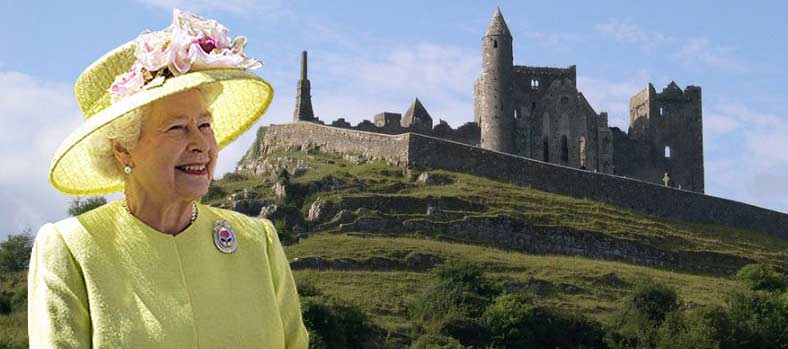
In 1903 Delphi Lodge was visited by King Edward VII, and in 1995 by a recent visitor to Tipperary, last week, Prince Charles.
This house eventually fell slowly into semi-dereliction until rescued in 1985,
by Mr Peter Mantle, together with investors, who restored the Lodge, its Cottages and Fishery.

Meanwhile, 173 years ago, the several hundred people who had gathered for this now delayed inspection, were consequently instructed to appear at Delphi Lodge, at 7:00am the following morning. The lodge was then owned by Mr George John Browne [1820–1896] 3rd Marquess of Sligo. The ultimatum in the inspectors instruction stated that if they wished to continue receiving their relief, they should be present to be examined.

For much of the night and day that followed, hundreds of Irish people, same destitute, starving and in a weakened and infirm state, had to undertake what for them was an extremely fatiguing 12 mile journey, in extremely cold, wet and windy weather.

In a letter written to the “Mayo Constitution” newspaper, [Published January 3rd, 1828 – May 11, 1872], a short time later; we learn that the bodies of seven persons, including women and children, were subsequently discovered on the roadside, between Delphi Lodge and Louisburgh, which overlooks the shores of Doolough lake, and that nine or ten more people never reached their homes.

Other sources claim that the total number of dead numbered 20 people, while local people claim that the number who died along the way exceeded all previous reports.

Co. Sligo has chosen to hold on to its strong history; on the other hand, Thurles Councillor Mr Seamus Hanafin and Tipperary County Council Officials have decided to destroy Tipperary history, without the consent of Thurles residents.

RTÉ Investigates Tipperary Co. Council.

First, there are the problems with Dublin city councillors. It seems that current and former Dublin city councillors, together owe more than €146,000 to Dublin City Council in overpaid travel expenses. Same was discovered in an investigation by the Local Government Auditor, (Nosy interfering Busybodies).

Inner Relief Road, Archaeological Survey, Click HERE

This 2021 audit identified that councillors, for this Dublin local authority, had been overpaid their annual travel rate, by €48.42 every month, but only as far back as January 2018, amounting to €581.10 a year and a total of €2,324.40 for politicians who had served on Dublin City Council since 2018.

Sure, for God’s sake it was only taxpayers money, and sure taxpayers couldn’t give a f..k. I mean if taxpayers had been fooled into voting “them’s individuals” into office in the first place, they must have expected they would be taken advantage of; lest you forget the F.F. brown envelope planning era.

It has been a tough few days for Tipperary Co. Council this week also. On Wednesday last “RTÉ Investigates” journalist Con Corrigan, “deliberately picked on”, our beloved Tipp authority, daring to accuse them of ‘Project Costs Over-runs, [ See HERE ].

Well as all our readers are aware Thurles.Info, were the first to highlight the waste by Tipperary Co. Council engineers.

It appears that a project known as the Suir Blueway, stretching from Clonmel to Carrick On Suir (Not to be confused with the Thurles River Suir Brownway); the former, incorporating a walking and cycling trail along the River Suir in south Tipperary, was initially budgeted for €1.3, then (like the National Children’s Hospital), it became €2m, but ultimately costs eventually closed at €3.7m.

The final costs increased a mere 84% only, on the original budgeted amount; that’s according to documents released to RTÉ Investigates, under freedom of information.

Anyway, the RTÉ Investigates episode didn’t upset Tipperary Co. Council’s Chief Executive Mr Joe MacGrath, who went missing from work on Friday last.

(I should explain that we at Thurles.Info have a habit of sending emails to those we write about – well they might want to accuse us of telling ‘porkies’).

Well Holy God, shock of shocks, the night before last, after 3 years and numerous emails sent, didn’t we actually get a reply, for the very first time, (despite no intervention by the Standards In Public Office Commission), from Mr Joe MacGrath. Well I nearly died.

He stated, quote “Please re-send your email to evelyn.harty@tipperarycoco.ie or contact her at Tel 0818 06 5000. I am away from my office with limited access to emails.”

Then it struck me, this was one of those “Automatic Replies”, latter being doled out normally from every government office in Dublin, but same rarely replied to after that. [Sure you know yourself, in the Public Service half are still working from home and the other half are not working at all, at all].

Anyway, my first thoughts were, why don’t they buy Joe one of those new-fangled Mobile Phone contrivances; called ear phones or eye phones, whatever.
My understanding is that they can now be put to vibrate silently in your trousers pocket, and when activated they can read, and let you see your emails off of a screen, on one side of the device.

Well to cut a long story short, on the same Friday, I had to go over to Cashel and Cahir; (NCT Business in Cahir, then off to buy a 3 scone and tea at Mikey Ryans in Cashel). On the way didn’t I get a call from an old school friend of mine, Charley. Hadn’t seen him in years and he was over visiting here, having brought the wife Camilla on a junket.

Listen, anyway as I’m chatting to Charlie, who did I spy out of the corner of my eye, but some one, the spitting image of Joe, edging in to have a selfie taken with Camilla. Still I can’t be totally sure it was him and since he doesn’t answer his emails, its a waste of time trying to find out.

Anyway, what I really want to talk about and show all our readers, is the pdf of the Thurles Inner Relief Road which ended up destroying the only remaining piece of visible great faminr history in Thurles.
Same document failed to highlight the Great Famine Double Ditch; Public Right of Way; Mass path and Great Famine connection in its regurgated survey info, undertaken by Mr F. Coyne, BA MIAI, despite having surveyed the sections of land on both sides of this 5ft in width, Great Famine, 176 year old Double Ditch.

So Mr MacGrath, if you are reading this email, the Archaeological Impact Statement for the inner relief can be found HERE, by you, Mr Ger Fogarty and indeed the rest of the interested world.

[Mr Ger Fogarty will note that the survey was undertaken in 2013, while Lions Club survey was undertaken in 2018.]

We have already sent this and other documents to “RTÉ Investigates”, then again they might not use the information, but not to worry, we will.

I think the time has come for raised Thurles voices and the digging up of discarded, hidden bodies.

Last Morsels Of Thurles Towns Rich History Lost In Shadows Of Tar & Cement.

“If the Government is to restore public confidence in its ability to stop abuse or misuse of power, it needs to accelerate efforts to promote transparency and accountability in public office.”
Approximately, half of the Great Famine Double Ditch, the last morsels of Thurles Towns rich history is now gone for ever, courtesy of “cute hoorism” by local councillors and their attempts at self promotion.
Picture shows the base for the new inner relief road being installed. You can see from this picture that this new housing, in no way, impeded on this piece of national heritage.
Pic. G. Willoughby.

Before I discuss the current situation regarding the loss of the Great Famine Double Ditch now and over the coming days and weeks, I would like to make the following statement known, to a shocked 5 to 8 thousand daily readers of Thurles.Info.
I, George Willoughby, as a former proud member of the hugely respected Thurles Lions Club, wholeheartedly continue to support Thurles Lions club and their magnificent organisation in every possible respect, both in their past charitable efforts and in any future ventures.
Thurles Lions Club are an organization comprised of members that give selflessly to Thurles town and its environs. They are collectively motivated simply and solely by a desire to do good and to genuinely help others.
They are not currently and never have been, motivated by self promotion like our current local councillors, and millionaire chasing local politicians.
They never have and never will use and abuse causes which seek only self promotion.

Tar & Cement – Author Verdelle Smith.
“Many years later, tired at last
I headed for home to look for my past
I looked for the meadows, there wasn’t a trace
Six lanes of highway had taken their place
Where were the lilacs and all that they meant
Nothing but acres of tar and cement.
Yet I can see it there so clearly now
Where has it gone?
Yes I can see it there so clearly now
Where has it gone?”.

How Councillor Mr Seamus Hanafin [See last paragraph on Mr Hanafin’s Facebook page, dated February 20th 2022], went on to, quote, “acknowledge and thank Thurles Lions Club, who have been to the fore in this project” remains a total mystery to the Lions Club members with whom I spoke.

This evening March 25th, 2022, I wrote/sent the following email to the editor of the Tipperary Star, Mr Noel Dundon.

The text reads as follows:-
To Mr Dundon,
It is with regret that I must now insist that no further photographs (being my intellectual property) either taken in the past, or photographs from my current social media pages and websites, are to be used in any of your publications.
As you will be aware 99% of pictures taken and published in the Tipp Star in the past 40 years, were given to your publications totally free of charge.

However, recently you promoted Councillor Seamus Hanafin in an article which I find totally untrue.  It claimed that Thurles Lions Club was involved in the Thurles River Walk path project, suggesting that the club were involved in the loss of the Great Famine Double Ditch.

In publishing this article you used my picture/image of Thurles River Walk, firstly without crediting the author and secondly using details in your text that I regard as untrue.

This picture must now be removed from all on line publications immediately.

From recent talks with Thurles Lions Club members, no funding came from the Lions club organisation, for these projects and as a former Lions Club member and strong supporter of International Lionism, I find that their name is now being used incorrectly in relation to recent lost heritage; lost to the business people of Thurles, its residents and Thurles Tourism.

It is with regret therefore that I can no longer commit to allowing any of my work to be used in your local papers/editorials. 
Previous permissions granted are now fully rescinded.
It is also disappointing to note that at no time over the past 3 years did any of your publications, despite being approached, attempt to support Thurles people in retaining now defunct heritage; instead deciding to churn out the effluvium sent to you by local councillors and politicians.
From next week I personally will no longer purchase your weekly publication, in protest.

I remain,
Yours Sincerely

George Willoughby.

In the next few days Thurles.Info will be discussing my dealings over the past 3 years with our Government Departments; that of Heritage, National Parks & Wildlife Service, latter in their failure in protection, granted by Section 40 of the Wildlife Act, while under the governance of Green Party Minister for State Mr Malcolm Noonan, and finally the National Monument service, and Tipperary Co. Council’s Heritage Office, all of which are no longer fit for purpose in modern Ireland.

Part Of Thurles Historic Great Famine Double Ditch Completely Eradicated.

“Our heritage is about our past, our present and our future and contributes greatly to the quality of life in our urban and rural communities. It is shared by all and is fully inclusive. Interaction with our heritage not only provides physical and mental health benefits but contributes to overall well-being, while biodiversity is an essential component in the functioning of our environment”. Mr Joe MacGrath, Chief Executive, Tipperary County Council.

“The aim of the plan is to connect the citizens of Tipperary to their heritage and to make it an integral part of everyday life at the core of our communities”Cllr Siobhán Ambrose, Tipperary County Council.

“Our heritage is a precious asset and one we must look after. Part of looking after it is to raise awareness of what it is and its value to us as citizens of Tipperary.”Cllr Roger Kennedy, Tipperary Heritage Forum.

See HERE just in case we have misquoted any of the 3 persons above named.

Historic Thurles Double Ditch Eradicated
Pic. G.Willoughby

As the sun sank slowly on our western shores today, yet another piece of Thurles history, namely the Great Famine Double Ditch, has been totally and wantonly obliterated; without the consent of the electorate, and sanctioned by those we elected to serve both our town and county.

Our report on March 4th, 2022 (which can be viewed HERE) was accurate in its assessment with regards the removal of “Whitethorn”. The workforce involved were instructed to remove the 5ft high common hedgerow trees, to facilitate the removal of their lower trunks today, by heavy machinery. The law of the land stipulates that it is an offence to destroy vegetation on uncultivated land, between the 1st of March and the 31st of August each year. [as set out in Section 40 of the Wildlife Act 1976; as amended by the Wildlife (Amendment) Act 2000; and the Heritage Act 2018].

Mr Seamus Hanafin in particular who attempted, on radio and social media, to stage a personal PR stunt, together with his colleagues and council officials, and certain individuals within Thurles Lions Club, should now feel both guilt-ridden and deeply ashamed of their actions in this matter.

We know when councillors and politicians are telling lies – their lips move.

Under the Roads Act 1993, it was the responsibility of the local authority, in this case Tipperary Co. Council, to protect the public’s right to access this Public Right of Way, Mass path and Historical Artifact.

Where a local authority proposes to extinguish a public right of way it is required that the local authority (Tipperary Co. Council) must publish a notice in a newspaper circulating in the area specifying the place and times (being a period not less than four weeks) where a map indicating the right of way proposed to be extinguished, may be inspected.

Affix a copy of such notice in a prominent position at each end of the public right of way proposed to be extinguished and leave it in place for a period or periods which shall in aggregate, be not less than fourteen days.

Afford an opportunity to persons making objections or representations and who so request in writing, to state their case at an oral hearing conducted by a person appointed by the local authority and consider the report and any recommendation of the person so appointed.

None of the above regulations were adhered to by Tipperary Co. Council (Joe MacGrath Chief Executive) or indeed Thurles Municipal Council (Ms Sharon Scully, Thurles District Administrator).

Elected public representatives must now answer for this total, wanton, destruction of this Great Famine cultural and historic artifact, which saved the lives of some 80 starving families, here in Thurles, Co. Tipperary, in 1846.

A copy of this report (by email) has been forwarded to:- joe.macgrath@tipperarycoco.ie; sharon.scully@tipperarycoco.ie; micheal.lowry@tipperarycoco.ie and seamus.hanafin@northtippcoco.ie, dated March 24th, 2022.

Did Tales Of Ireland Influence Writing Of Margaret Munnerlyn Mitchell?

The Atlanta, Georgia US born Margaret Munnerlyn Mitchell (Pen name, Peggy Mitchell, November 8th,1900 – August 16, 1949) was an American journalist and author who provided us with that great 1939 epic historical romance novel, “Gone With The Wind”; same being one of those golden American pieces of literature that readers and later film goers, worldwide, can truly never forget.

She too had been born into a family with ancestry not unlike that of her novels heroin, namely Scarlet O’Hara.

Philip Fitzgerald, Margaret Mitchell’s maternal great-grandfather, had emigrated from near Fethard, Co. Tipperary, same then a fortified, small walled town, shortly after the 1798 Rebellion.

The family were seen as Catholic refugees attempting to evade oppression. Philip Fitzgerald eventually settled on a slaveholding plantation, near Jonesboro, Georgia, US, where he had one son and seven daughters with his wife, Elenor McGahan, who herself was from an Irish Catholic family.

Margaret Mitchell’s grandparents, Annie Fitzgerald and John Stephens had married in 1863; her parents, father Eugene Muse Mitchell, an Attorney, was descended from Scotch-Irish and French Huguenots, while her mother, Mary Isabel or “Maybelle” Stephens, was of Irish-Catholic ancestry, and were both married at her parents mansion home on November 8th, 1892. For the young Margaret Mitchell, (latter regarded as a ‘Tomboy’); Annie Fitzgerald/Stephens, her grandmother, (latter often regarded as both vulgar and a tyrant), existed a great source of eye-witness information, when it came to stories of the American Civil War.

Published in 1936, her only novel ‘Gone With the Wind’, turned the 4 feet 11 inches tall Margaret Mitchell immediately into an instant celebrity; earning her the Pulitzer Prize in 1937. In the same year Mitchell sold the movie rights to film producer David O. Selznick for $50,000, (Equivalent value today of $838,615 or approx. €747,296), latter being the most ever paid for a film manuscript at that period in time.

The film version, a four-hour epic, starring Vivien Leigh and Clark Gable, both being portrayed as ill-fated lovers Scarlett O’Hara and Rhett Butler came out just three years later; winning a record-breaking nine Academy Awards in 1940.
Today more than 30 million copies of Margaret Mitchell’s Civil War Novel have been sold worldwide and same has been translated into 27 different languages.

We will never know just how much of her novel contained tales about Fethard, here in Co. Tipperary, learned from the knees of her parents and grandparents, for alas, on August 11th, 1949, Margaret Mitchell was struck by a car while crossing a street to attend a theatre engagement and, sadly, died five days later.

So how much ancestral Irish influence came to the fore in the fictional imagery of Peggy Mitchel’s mind, when she wrote “Gone with the Wind” ?

Rhett Butler: Would her grandparents have talked largely about the Butler lands which stretched from Co. Kilkenny across Tipperary to Cashel and Cahir? Would they have spoken of Cahir Castle, Co. Tipperary?
Cahir Castle, winner of the European Film Commissions Network (EUFCN) Location Award in 2021; is one of the largest remaining castles in Ireland. Today, sited a mere 23 minute drive from Fethard, on an island in the river Suir in Co. Tipperary; Cahir Castle had been built in the 13th century, before being granted to James Butler, then newly created Earl of Ormond, for his loyalty to Edward III, in the late 14th century.

Scarlett O’Hara: The name O’Hara has held a distinguished place in Ireland for centuries, mentioned in the Annals of the Four Masters, (latter compiled between 1632 and 1636). The current spelling of O’Hara is an anglicized pronunciation of the original Irish ‘Ó hEaghra’, meaning “descended from Eaghra”, latter a 10th century Irish chief.

Plantation Tara : Tara is the name of the fictional plantation in the state of Georgia, in this historical novel “Gone with the Wind.”
There is little doubt that Mitchell modelled the fictional Tara Plantation after local plantations and establishments existing before the US Civil War, particularly the Clayton County plantation on which her maternal grandmother, Annie Fitzgerald Stephens (1844–1934), daughter of the Irish immigrant Philip Fitzgerald (1798–1880) and his American wife, Eleanor Avaline “Ellen” McGhan (1818–1893), was born and raised.
Tara is also an anglicization of the Irish name ‘Teamhair’. The Old Irish form is ‘Temair’. It is believed this comes from common Celtic, ‘Temris’ and means a ‘sanctuary’ or ‘sacred space’ cut off for only ceremony.
‘Tara’ was once also the capital of the inauguration place and seat of the High Kings of Ireland. The name also appears in Irish mythology. According to the aforementioned Annals of the Four Masters, five ancient roads or ‘slighe’ (Ways) meet at Tara, linking it with all the four provinces of Ireland.