|
|
A dedicated ‘Cataract Centre’ has been formally opened this morning at Nenagh Hospital, Nenagh, North Co. Tipperary; same which aims to reduce cataract waiting list procedures by over 2,000 by the end of next year.
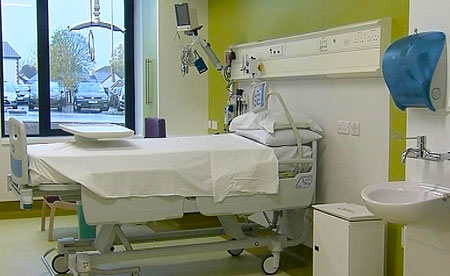 Presently the facility will only opened only one day of each week, during which time it can only provide 12 procedures per week, however the HSE have stated that it is expected that the centre will open five days a week by early 2019, with 2000 procedures completed by the end of that same year. Presently the facility will only opened only one day of each week, during which time it can only provide 12 procedures per week, however the HSE have stated that it is expected that the centre will open five days a week by early 2019, with 2000 procedures completed by the end of that same year.
An investment of some €1 million has now succeeded in equipping two theatres and associated recovery rooms, matching only one other available and dedicated centre, namely the Royal Victoria Eye and Ear Hospital, on Adelaide Road, Co. Dublin.
Waiting lists nationally for people who need ophthalmic procedures remain extraordinary high, with 41,224 people waiting for outpatient or surgical procedures at the end of September last.
Dr. Marie Hickey Dwyer, herself a Consultant Ophthalmic Surgeon at Nenagh Hospital, and previously a past President of the Irish College of Ophthalmology, stated that this long awaited new clinic will give more capacity to tackle long waiting lists.
In the mid-west region alone over 4,200 people are waiting for an initial eye clinic appointment, and almost 1,000 more are waiting for a simple one day case procedure.
Nenagh Hospital gets new 18-bed end of life care unit.
A new 18-bed medical unit made up of 16 single room units, and one two-bed unit; same aimed at providing end of life care for patients, was also opened at Nenagh hospital today.
The facility is named the ‘Gloster Suite’, in line with the wishes of the late Mrs Alice Gloster, of Rathnaleen, Nenagh, Co. Tipperary, who left a large bequest to the Friends of Nenagh Hospital Group, to assist in the funding of this new unit.
 Pic (1): “Quinn Brothers Foursome”. Left – Right: John, Martin, Michael & Billy. Pic (2): “Edel with Medals” together with Martin, Edel & Michael (Note: John & Billy had to fly back to Azerbaijan.) Four Quinn brothers from the village of Holycross, Thurles, Co. Tipperary, ran the SSE Airtricity Dublin Marathon last weekend in support of the Irish Cancer Society. Their goal was to raise as much funding as possible for Irish Cancer Research.
This project was very close to their heart, given the fact that their sister Edel is terminally ill with multiple myeloma; latter a cancer arising from plasma cells, a type of white blood cell which is made in the bone marrow.
Through the help of the Irish Cancer Research, Edel continues to battles bravely against her illness. Edel is very well known is the community having worked for many years with “Inclusive Opportunities” in Thurles, before being struck down by this illness.
It is most certainly a record to have four brothers from the same family and from the same village of Holycross to run in the Dublin City Marathon; if not a record for the county of Tipperary itself.
The brothers ran very well in the marathon with some impressive times. Billy (3hrs-23 mins), Michael (3hrs-57mins), Martin (4 hrs) and John (4hrs-51mins). However, they also managed to raise well over 12,500 Euro and are not completely finished yet.
Between the four brothers and three of their wife’s, they have completed over 41 marathons in the past few years.
Congratulations to all four brothers on their truly massive achievement.
Mr Cornelius Traas, an Irish apple farmer, whose business operates from Moorstown, Cahir, Co Tipperary, will be giving away 6,000 apples to school children this year, to help them celebrate Halloween.
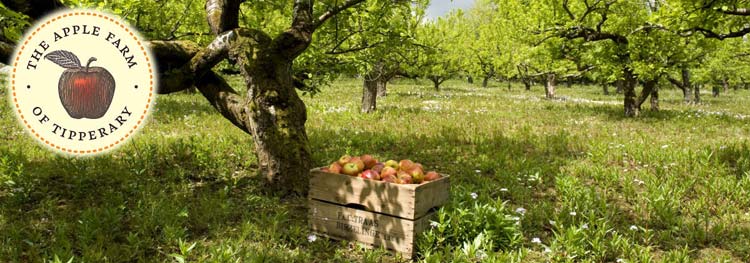
Over the last 20 years, Mr Traas has already given away well over 120,000 eating apples to Irish primary school children, a tradition which his parents first introduced. This year, children and their teachers in some 32 primary schools will collect apples, same representing around 200 children in each school together with their teachers.
The desire to grow fruit saw the Traas family initially move from the Netherlands to Ireland in the late 1960’s. Previous generations of the Traas family had been growing fruit in Holland, since the 1800’s, but it became difficult to find new land there for further fruit production. Willem and Ali Traas then decided to pack a bag and make the move to Ireland. They choose farm land, between Cahir and Clonmel on the main Limerick-Waterford road. For the first few years of their occupation, as well as establishing new apple and plum orchards, the family also grew tulips, dried peas, grain crops and strawberries.
Mr Traas himself recalls that when he was at school in Cahir in the 1970’s and 80’s, the apples grown by his parents were very popular with his classmates. From time to time he would bring a few extra to school, and swap them for sweets that were in the ownership of other children.
His parents used to send him and his brother into school with a box of apples to share with other students in other classes and this practise was continued every year right up until his Leaving Cert year.
Regrettably, less than 10% of apples eaten today here in Ireland are actually Irish apples.
Note:- The Apple Farm is not just about Apples only. From a shop within ‘The Apple Farm’ complex you can acquire Apple Juice and Apple Jelly; Strawberries (in season) and Strawberry jam; Raspberries (in season); Plums and Plum Jam; Pears; Cherries; Sparkling Juice; Real Irish Cider; Cider Vinegar and finally there is a spacious Camping & Caravan Park catering for up to sixty people per night, operating from May through to September.
An American judge Suzanne Bolanos has denied Monsanto’s request for a new trial and has further upheld a jury verdict against the Bayer subsidiary Monsanto in a case regarding the cancer danger of some of its weed killer products. A jury in the case found the company’s glyphosate-based[1] weed-killers, including RoundUp, (widely used here in Ireland), responsible for a man’s terminal cancer.
Earlier this year the first study of exposure in adults to glyphosate, the most commonly used pesticide in Ireland, had found that the general population is being subjected to low exposure from this chemical, but “within acceptable EU safety limits”. Roundup has continued to be licensed for use in Ireland in spite of the earlier US courts decision to award a school groundsman who claimed it contributed to his terminal cancer.
[1]Glyphosate is a broad-spectrum systemic herbicide used to kill weeds, especially annual broadleaf weeds and grasses that compete with crops.
 In 2015, the cancer unit of the World Health Organisation classified glyphosate as “probably carcinogenic to humans.” However, later in 2017, the US Environmental Protection Agency concluded that a decades-long assessment of the risks associated with the use of glyphosate, was not carcinogenic in humans. In 2015, the cancer unit of the World Health Organisation classified glyphosate as “probably carcinogenic to humans.” However, later in 2017, the US Environmental Protection Agency concluded that a decades-long assessment of the risks associated with the use of glyphosate, was not carcinogenic in humans.
This evaluation will now influences decisions in the case of some 8,000 other such upcoming lawsuits in the USA.
Monsanto, in denying the allegations, had previously asked Judge Bolanos to throw out the entire previous verdict or to order a new trial. The Judge, in her ruling, did cut the previous $289 million (€253m), punitive damages award by $200 million; back to $78 million to comply with the law regarding how such damage awards must be calculated.
Bayer, a German company, which had purchased Monsanto recently for $63 billion, is adamant that decades of scientific studies have concluded that glyphosate is safe for human use, and in a statement said. “The courts decision to reduce the punitive damage award by more than $200 million is a step in the right direction, but we continue to believe that the liability verdict and damage awards are not supported by the evidence at trial or the law and plan to file an appeal with the California Court of Appeal”.
 The Food Safety Authority of Ireland (FSAI) have recorded that nine Enforcement Orders in total were served on Food Businesses operating nationally during last month, (September 2018). The Food Safety Authority of Ireland (FSAI) have recorded that nine Enforcement Orders in total were served on Food Businesses operating nationally during last month, (September 2018).
Eight Closure Orders and one Prohibition Order were served on food businesses for breaches of food safety legislation, pursuant to the FSAI Act, 1998 and the EC (Official Control of Foodstuffs) Regulations, 2010, during this period. The Enforcement Orders were issued by environmental health officers from the Health Service Executive (HSE).
Some of the reasons for these Enforcement Orders included:- No allergen information available for customers; Dead and live crawling insects found on the premises; A live rat emerging from the drain when the tap at a kitchen sink was turned on; No wash hand basin in raw meat preparation area; Food being prepared in a storage shed; Dirt and black mould engrained on chopping boards and a food preparation block; No pest-proofing system in place; Foul odour emanating from the drain servicing an operating dishwasher; Rust, mould and dirt on an ice machine; Foods stored in dirty containers with accumulations of old former food debris and dirt; Food stored beyond their declared / stated use-by dates; A build-up of food debris under floor mats; Open bags of ready-to-eat salad being stored on the floor; Four flies observed in dough mixture; Numerous flies and crawling insects observed on surfaces of bakery equipment.
Amongst these closure orders served nationally was an order on a Bengal Indian Food-stall, latter found casually trading in the vicinity of Semple Stadium, Thurles, Co. Tipperary. The reasons given for this closure was the absence of water for washing food; including food utensils and hands. Also observed were dirty chopping boards and no protective clothing being worn by staff. Inspectors also reported inadequate refrigerated storage for foodstuffs and provisions which were found being stored in an uncovered state on the ground.
|
Support Us Help keep Thurles.info online by donating below. Thank you.
Total Donated 2026: €300.00
Thank You!
Daily Thurles Mass Livestream
|





Recent Comments