In all over 70 objections have now been lodged against a €30m Tipperary Solar Farm scheme granted permission by Tipperary County Council. The solar farm was expected to produce in the region of 25 Megawatts of renewable energy, same sufficient, if fully achieved, to power 6,406 homes per year.
Some 26 parties are now appealing the council decision to An Bord Pleanála, with the Larry Goodman owned organic meat producer, “Good Herdsmen” understood to be one of these parties appealing.
Just last month, Tipperary County Council granted planning permission to a company known as “Renewable Energy Systems” for this development. Same is situated at Rathduff, Thomastown Demesne, South Co Tipperary, within 3km of Bansha village and 7.5km east of Tipperary town. Planning permission was granted after Tipperary County Council’s project planner concluded that it would not have any adverse impact on the character of the area or indeed on any adjoining properties in the vicinity of the development.
Not surprisingly, the founder and Managing Director of the ‘Good Herdsmen’, Mr John Purcell, who operate’s a 350-acre organic farm adjacent to the proposed site of this solar farm has claimed, in an objection, that the planned solar farm will indeed have an adverse effect their business.
Managing Director Mr Purcell has stated that the solar panels proposed would have the potential to cause a catastrophic visual impact on the area and would ruin the image that nature and his own organic farm have created, thus killing the vision of everything he has established todate. He claims that the promoters of this solar farm propose to metamorphose 107 acres of Golden Vale land, latter the richest farmland in Europe, into what he calls “a sea of plastic and metal panels”.
ABP’s organic beef brand, “Good Herdsmen” operating their factory in Cahir, currently employ 20 personnel with a further 6 employed on its organic farm, toiling on its day to day operations.
Others to appeal this County Council decision include:- South Tipperary Solar Farm Concern Group; Margaret Kennedy; Caitriona Bn Ui Annraghain;, Caroline and John Bourke; Denis Pollard Jnr; Maria Bailey; Michael & Mary Joyce; Chris Bailey;, VESI Environmental Limited and Carol, Emma and Daisy Welsh.
A decision on this appeal is expected by the end of August 2022.
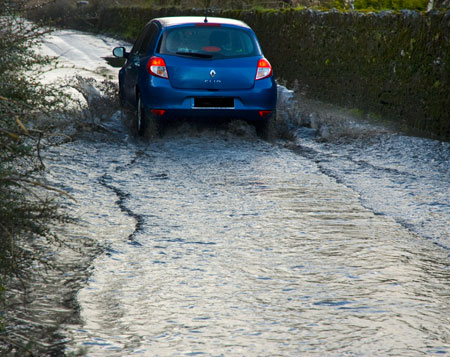
The Minister of State with responsibility for the Office of Public Works, Mr Patrick O’Donovan, has announced the approval of Tipperary County Council’s application under the Office of Public Works’ Minor Flood Mitigation Works and Coastal Protection Scheme.
Under this scheme, the Office of Public Works (OPW) has approved funding of €77,400 to construct a new, 315-metre-long surface water storm drain, including manholes, chambers and civils works, with outfall to existing open drain at Holycross, Thurles, Co. Tipperary.
The Minor Flood Mitigation Works and Coastal Protection Scheme was introduced by the Office of Public Works back in 2009.
The purpose of the scheme is to provide funding to Local Authorities to undertake minor flood mitigation works or studies to address localised flooding and coastal protection problems within their administrative areas. The scheme generally applies where a solution can be readily identified and achieved in a short time frame.
Under the scheme, applications are considered for projects that are estimated to cost not more than €750,000 in each instance. Funding of up to 90% of the cost is available for approved projects. Applications are assessed by the OPW, having regard to the specific economic, social and environmental criteria of the scheme, including a cost benefit ratio.
Works that are normally the responsibility of the local authorities will generally not be considered for OPW funding. Where such works would also mitigate the risk of flooding to properties, partial funding may be considered by OPW.
The Local Authorities must be satisfied that the works will not have a significant impact on flood risk elsewhere.
The commencement and progression of any works, for which funding is approved, is a matter for each Local Authority concerned.
A Must View for all Elected Representatives in Co. Tipperary.
Dr. Anthony Leiserowitz
The Environmental Protection Agency (EPA) is delighted to welcome Dr. Anthony Leiserowitz, founder and Director of the Yale Program on Climate Change Communication and a Senior Research Scientist at the Yale School of the Environment.
The public lecture will take place on tomorrow, Thursday 28th, at 7:15 pm at the EPIC Museum Dublin and will also be streamed online.
This lecture forms part of the National Dialogue on Climate Action. Dr. Anthony Leiserowitz will consider the role of the public, consumers and political will as an enabler of climate actions.
While there is an ample supply of climate solutions to support the transition to climate neutrality and resilience, sufficient demand has been lacking. Drawing on recent international surveys, including here in Ireland, Dr. Leiserowitz will provide an overview of how changing public beliefs, attitudes, and behaviours can both compel and constrain climate action by governments, companies, and individuals. Ms Laura Burke, EPA Director General said, “We are delighted to welcome Dr. Anthony Leiserowitz, a leading international expert on public climate change and environmental beliefs, attitudes, policy preferences and behaviour, and also expert on the psychological, cultural, and political factors that shape them. The EPA has worked closely with Dr. Leiserowitz and his team on our Climate Change in the Irish Mind study. This valuable project will help to understand how Irish people perceive this environmental challenge, and this can fundamentally change how we all communicate on the topic. The findings demonstrate that the Irish people overwhelmingly recognise the threat, feel personally affected by it and want to see real change.” She further added “Effective public engagement on climate action is essential as Ireland designs and implements actions to reduce greenhouse gas emissions across all economic sectors by 51% by 2030”.
You can register for this free event HERE. The event will also be recorded and uploaded to the EPA YouTube channel, following this event. You can also follow the discussion on Twitter using the hashtag #ClimateLecture2022 Further information: Ms Emily Williamson, EPA Media Relations Office 053-9170770 (24 hours) or media@epa.ie
The Lord God then took the man and settled him in the garden of Eden, to cultivate and care for it. And God said, “See, I have given you every herb that yields seed which is on the face of all the earth, and every tree whose fruit yields seed; to you it shall be for food. Also, to every beast of the earth, to every bird of the air, and to everything that creeps on the earth, in which there is life, I have given every green herb for food”; and it was so”.[Book of Genesis].
There is only one ‘Earth’ as we know it and in the last 50 years, the human population has doubled, our global economy has quadrupled and global trade has increased ten times.
Presently, 1.6 Earths would be required to meet the demands that we as humans now make on mother nature each year.
Here in Thurles and elsewhere engineers, fronted by pointless, powerless elected local representatives, continue to make changes to our ecosystem without the consent of our local community. Some do so knowingly, others are negligent through wilful ignorance and a lack of basic biodiversity education.
Biodiversity encompasses the millions of species resident on our planet, from our plant life; our animals, to the fungi and bacteria and the genetic diversity among them.
The very air we breathe, the water and food we consume all rely on biodiversity. Thus when one of these components are changed or removed, then the entire system becomes affected, thus producing a positive or, worse still, a negative consequence on our communities.
Think about it for a moment. Nature provides us with our oxygen, it purifies the water we drink, it ensures fertile soil, and it produces the variety of foods we require to stay healthy and to resist the abnormal condition that negatively affects our bodies. With growing everyday knowledge, it offers substances for developing medicines and even helps mitigate the impact of climate change by storing carbon and regulating local rainfall.
It is therefore with great disappointment, over the past 12 days we have watched the destruction of biodiversity at Lady’s Well in Thurles and the total disregard for Section 40 of the Wildlife Act, by Green Party Minister Mr Malcolm Noonan and his staff at the National Parks & Wildlife Service, latter who were warned in advance of this intended destruction.
Tarmac now appears to be the order of the day, removing the naturally occurring Bluebells, Primroses, Dandelines, Daffodils, Cowslips, Woodland Violets, Cow Parsley, Cuckoo Flower, Buttercups, Yellow Iris, Brassica, all evident for the enjoyment of the leisurely walker. Gone also are the 3 seats, so enjoyed by the unhurried elderly visitor.
The main purposes of introducing Section 40 of the Wildlife Act, was to protect bird life during the nesting season, to help prevent forest fires, and to protect vegetation and wildlife habitats during the months of growth and reproduction. A closed period between March 1st and August 31st was set out in this legislation, during which a prohibition remains in place on the destruction of any vegetation on “land not then cultivated” and of any vegetation growing in a ditch or hedge.
We have a situation here in Thurles where Tarmac is being put everywhere except in our street surface potholes.
Like so many other laws in Ireland, in the words of William Shakespeare, (Hamlet) same are, to our shame, “more honoured in the breach than in the observance.”
Destruction of Biodiversity on the Thurles Lady’s Well Right-of-Way & now destroyed Double Ditch Right-of-Way, are being denounced in Social Media threads. The threads begun by Thurles.Info and carried by @ThurlesHour demonstrate the growing feelings of lovers of our local environment and the distrust of County Councils and their officials.
Some of the remarks hereunder posted on Twitterby other people.
“County councils across Ireland don’t seem to ‘get’ nature.”
“Thurles Municipal District council got funding to design, secure planning & construct a river walk from Thomond Road to Turtulla. Landowner consent was not forthcoming. They decided to spend the money asap – removing all trees, laying down tarmac on the route of the Double Ditch!”
Biodiversity & Heritage Destroyed By Tipperary County Council & Irish National Parks and Wildlife Service, Without Any Local Consultation.
“Local authority greenway. No environmental oversight. Asphalt laid up to river. Token 2m buffer. Chain-link/welded mesh fencing down the side to ensue no critters pass. Eventually all these will need to be taken out, and the riverbanks restored.”
“Greenways are like a lottery win for quarry owners.”
“Wrecking the place.”
“What would a riverside greenway look like if it were ecologically sound? Is there an acceptable set back distance or preferred material?”
“This is happening along any path that is designated a Greenway.”
Thurles.Info now asks WHY?
Meanwhile: Attempts to contact Malcolm Noonan’s Office via email [Mos MOS@housing.gov.ie via mail3.itservices.gov.ie & malcolm.noonan@oireachtas.ie], between Sat, 22nd August 2020, and Thursday, 24th February, 2022, and on numerous other recorded occasions, fell on deaf ears. Currently staff at his constituency address; The Parade, Co. Kilkenny, do not even answer phone calls. In the past two years despite numerous attempts we have received only two “Automated Email Replies” from his office.
A Chara, Automatic reply: Destruction of Thurles Heritage Thank you for contacting the departmental office of Malcolm Noonan, T.D., Minister of State for Heritage and Electoral Reform. Your email will be reviewed and a response will issue in due course, should one be required. Le gach dea-ghuí, Malcolm Noonan Office of the Minister of State for Heritage and Electoral Reform
Our dealings with Mr Eamon Ryan TD have been equally ignored. Again we were sent 1 Automatic reply on Wed, 6th April 2022 and 4 on Mon, 11th April, despite being contacted only once, on each of the afore mentioned dates by myself. (So 4 staff opened it and decided to ignore the content.)
Automatic reply: Destruction of Thurles Heritage A chara, Many thanks for your email. As I am sure you can appreciate, I receive a large volume of emails on a daily basis. Your issue is important to me and myself or one of my team will be back to you as soon as possible. In the meantime, if you have a query relating to the below areas, you might find the following email addresses helpful: Matters related to Dublin Bay South constituency: eamon.ryan@oireachtas.ie Matters related to the Dept of Environment, Climate, Communications networks: minister.ryan@decc.gov.ie Eamon Ryan TD Minister for Environment, Climate, Communications and Transport.
Despite our email communications being civil, we have never spoken or received even one, single, reply from staff at Mr Eamon Ryan’s department. We did explain our problem on one occasion to a member of Mr Malcolm Noonan’s, Kilkenny Staff, who confirmed that they had received my emails in the past, but could not explain why they were not replied too.
Meanwhile, our dealings with staff at National Parks and Wildlife Service were equally disappointing. Early communications stated from NPWL stated, “Please note that if these works are part of development covered by planning permission then they are exempt from Section 40 of the Wildlife Act. John will update you on his findings in due course.”
Then NPWS service claimed they granted verbal permission to Tipperary Co. Council in late February on the grounds it was a road or other structure. Quote “However, it should also be noted that the clearance of vegetation in the course of road or other construction works or in the development or preparation of sites on which any building or other structure is intended to be provided is exempted under Section 40.”
The truth is, there was No Road; No new ConstructionWorks; No other new structures; just a small, yet valuable piece of 176 year old Thurles Heritage.
National Parks and Wildlife Service have further confirmed that because of “work stress”, they had forgotten to recognise the Mill Road address we had reported and identified in relation to breaches of Sect 40 of the Wildlife Act. Thus when asked for documentation they then confirmed, quote: – (A) “Communication between Tipperary County Council and a named Wildlife Ranger was only verbal, there is no written documentation.“ (B) “Any written communication between Tipperary County Council and the builder is in their possession, National Parks and Wildlife Service do not have same.” (C) “Furthermore any request for such information needs to follow the AIE process.“ [Latter AIE referred to is “Access to Information on the Environment”]
“Our heritage is what we have inherited from the past, to value and enjoy in the present, and to preserve and pass on to future generations. In helping shape our identity, our heritage becomes part of what we are. Our expression of this identity shows others what we value; it highlights our values and priorities. Our heritage provides clues to our past and how our society has evolved. It helps us examine our history and traditions and enables us develop an awareness about ourselves. It helps us understand and explain why we are the way we are.”
The above are not my words but the words of the Irish Heritage Council, See HERE .
Then this evening, April 20th 2022, out of the blue, we received an email in pdf format. Yes, readers I fool you not, after almost two years of waiting, it arrived from staff at Minister Malcolm Noonan’s Office, set in the form of a standardised letter, sent with the permission of Ms Danielle McDonnell, (Private Secretary to Minister Malcolm Noonan T.D.); signed by a person in his constituency office in Co. Kilkenny, latter yet another member of staff authorised to act on behalf of the same Ms Danielle McDonnell.
Mr Noonan’s almost two year old delayed communication read. Dear Mr. Willoughby, On behalf of Mr. Malcolm Noonan, T.D. Minister of State for Heritage and Electoral Reform, I wish to refer to your emails regarding the removal of a hedgerow by Tipperary County Council at Mill Road, Thurles. The works in question were carried out to facilitate the upgrade of an existing pathway. In this instance the National Parks and Wildlife Service are satisfied that these works did not constitute a breach of Section 40 of the Wildlife Act. Yours sincerely, P.P. Danielle McDonnell (Private Secretary to Minister Malcolm Noonan T.D.).
Remarkably, Minister Malcolm Noonan’s dictated communication, failed to explain in his long awaited communicated, why Tipperary Co. Council and builders were given permission to destroy irreplaceable Thurles history, which as we previously stated, was a certain sure attraction for foreign and domestic tourism.
Same has been destroyed despite every Irish Government department; Elected Tipperary Politician and double jobbing Local Councillor, being warned exactly what was going to happen, since 2019.
So, Minister Noonan, I totally reject your recent delayed communication. I continue to seek your explanation as to why, based on historic evidence (See page 6) and a falsified Archaeological Impact Statement, that two Green Party politicians; namely you Sir and Mr Eamon Ryan failed to communicate; to fully investigate this piece of Thurles heritage and now choose to protect the Department of National Parks and Wildlife Service?
According to the Heritage Council,Quote “An important part of their work is to encourage local communities to take responsibility for and participate in the development and conservation of their heritage. Such projects help generate a greater sense of pride and belonging in the local area through increased participation…and sheer enjoyment! Cultural tourism and activity holidays on our natural landscapes and countryside continue to grow, outperforming all other tourism sectors.”
Both of you gentlemen must now reply to the question being asked, WHY?
This website uses cookies to improve your experience. We'll assume you're ok with this, but you can opt-out if you wish.AcceptRead More
Privacy & Cookies Policy
Privacy Overview
This website uses cookies to improve your experience while you navigate through the website. Out of these, the cookies that are categorized as necessary are stored on your browser as they are essential for the working of basic functionalities of the website. We also use third-party cookies that help us analyze and understand how you use this website. These cookies will be stored in your browser only with your consent. You also have the option to opt-out of these cookies. But opting out of some of these cookies may affect your browsing experience.
Necessary cookies are absolutely essential for the website to function properly. This category only includes cookies that ensures basic functionalities and security features of the website. These cookies do not store any personal information.
Any cookies that may not be particularly necessary for the website to function and is used specifically to collect user personal data via analytics, ads, other embedded contents are termed as non-necessary cookies. It is mandatory to procure user consent prior to running these cookies on your website.






Recent Comments