|
|
Ecological – the set of relationships existing between individual animal, plants, or single-celled life forms and their environment.
Thurles Shopping Centre are rightly proud of their new Eco-Friendly renovations surrounding their shopping centre complex.
They strive to be even more eco friendly for 2022 and are looking for your help.
To celebrate, Thurles Shopping Centre are running an Art Competition for children aged 12 years and under.
Competition: What To Do.
First pick up an entry form leaflet from Thurles Shopping Centre.
The competition itself is to design a wall mural to fit in with a theme for Thurles Shopping Centre, based on “Wildlife”.
Do remember on completion of your chosen design; fill out your Name, Age, Address and Parent Contact Phone Number.
Next, place your entry form into the Box provided in the central Mall area within the Shopping centre; easily located in the area between the Eason bookshop & An Post offices.
Prizes
Winner will receive a €250 voucher for Thurles Shopping Centre.
Plus, the winning Artwork will be enlarged and painted on the wall at the River Walk entrance at Thurles Shopping centre.
€11.7 million funding for research to support the development and implementation of environmental policies in Ireland.
The EPA is inviting proposals from the research community to help address climate change and other emerging, complex environmental problems. €11.7 million is available for new research projects.
Ms Laura Burke, (EPA Director General) said, “EPA-funded research is essential to improving national understanding of our environment, the challenges it faces and responses to these challenges. The EPA funds research that seeks to address knowledge gaps, provide robust evidence to inform policy and support the implementation of environmental policies in Ireland. This supports an evidence led approach to policy-making based on excellent science and information.”
Highlighting the importance of a clean, healthy and well-protected environment for health, wellbeing and quality of life, the EPA is calling for proposals across four interconnected research areas. Topics include the following overarching and interrelated themes:
- Climate science, adaptation, scenarios, resilience and policy response.
- Improving knowledge on greenhouse gas and air emission inventories.
- Health in industrial regulation and in assessment.
- Chemicals, hazardous substances and radiation in our environment.
- Innovative approaches to environmental monitoring.
- Land use knowledge, assessment and environmental risk.
- Opportunities and barriers in climate action and in circular economy.
- Raw materials and resources substitution and efficiency.
The EPA Research Programme is a Government of Ireland initiative funded by the Department of the Environment, Climate and Communications. This Research Call is designed to support the development and implementation of environmental policies in Ireland.
Dr Alice Wemaere, (EPA Research Manager), said, “We are delighted to be working in partnership with a number of organisations, including the Department of Agriculture, Food and the Marine; the Geological Survey Ireland and Met Éireann, to co-fund environmental research and address key environmental challenges. We are also pleased to announce two Open topics covering the potential for use of satellite data in environmental monitoring and assessment and the role of the environment in development and transmission of antimicrobial resistance.”
As part of its wide range of functions, the EPA manages an environmental research programme that delivers essential scientific support for environmental policy development, implementation and broader decision making. The EPA has been funding research in Ireland since 1994 and is currently funding more than 200 on-going research projects.
Further details about the 2022 EPA Research Call are available HERE.
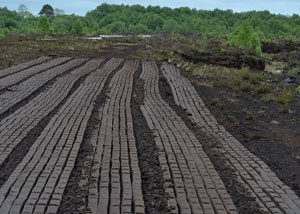
The Environmental Protection Agency (EPA) welcomes the Order of the High Court today, which has required Harte Peat to cease the extraction of peat in the particular areas outlined in the judgment of Ms Justice Phelan – which was delivered recently.
The EPA notes that the Court imposed a limited, conditional stay on the taking effect of the Order, to allow Harte Peat to lodge an appeal of the judgment, which it must do before April 27th, 2022.
The judgment and resultant Order has upheld the EPA’s position that the extraction of peat from an area greater than 50 hectares requires an Integrated Pollution Control licence from the EPA. This must be in place before any extraction of peat and any associated works such as drainage can take place.
Commenting on the Judgment EPA Director of the Office of Environmental Enforcement, Dr Tom Ryan, noted, “This judgment emphasises the importance of compliance with existing environmental regulations for the protection of the environment and confirms that operators cannot continue to extract peat in an uncontrolled and environmentally damaging way.
The unlawful extraction of peat causes enormous damage to the environment by destroying unique habitats that support biodiversity and carbon sinks that can play an important role in the fight against climate change.”
Dr Ryan warned, “Peat operators need to take heed of the judgment, respect the rule of law and the importance of compliance with existing regulations and be aware that if they unlawfully extract peat the EPA will take similar enforcement actions against them.”
- Government Department reporting on 2020 procurement shows that there was a low level of inclusion of green criteria in Public Procurement.
- This represents an opportunity to significantly increase the public spend on goods and services that include green criteria. The EPA will work with Government Departments to progress this work in 2022 and beyond.
- Many Government Departments are currently working to address this by including green criteria in their procurement processes.
The Environmental Protection Agency (EPA) has today published its first report on the use of Green Public Procurement by Government Departments. Under the Climate Action Plan, lead responsibility was assigned to the EPA to report on Government Department Green Public Procurement (GPP) activity annually, starting in 2020.
In response, the EPA has compiled the first report on GPP activity by Government Departments.
The report – which is for 2020 – shows that, of the total reported spend of over €322 million on contracts over €25,000, only 17% (approximately €53 million) included green criteria.
The reported spend is for Government Department contracts only, and excludes agencies affiliated to those Government Departments. The priority sectors for reporting by Government Departments were: Transport, Construction, Energy, Food and Catering Services, Cleaning Products and Services, Textiles IT Equipment and Paper.
Launching the report Ms Laura Burke, (EPA Director General), said:
“The purchasing power of Ireland’s government sector has significant potential to reduce emissions and protect our environment while saving money over the full lifecycle of goods and services.
Government commitment to green purchasing sends a powerful signal to the market that the Government requires goods, services and works that make the most positive contribution to our environment and can save money over their full lifecycle. It promotes innovation in the marketplace for goods and services with a reduced environmental impact.
The low level of implementation of Green Public Procurement reported by Government Departments is a missed opportunity to purchase more resource-efficient, less polluting goods, services and works within the marketplace.”
The report sets out recommendations for Government Departments to ensure that they will be able to meet the 2023 requirement in the Programme for Government ‘Our Shared Future’ that all procurement using public funds will need to include green criteria.
The report ‘Green Public Procurement: Monitoring and Reporting by Government Departments, 2020 Reference Year’ is now available on the EPA website and presents an overview of the monitoring and reporting requirements of GPP in Government Departments, the process used to collate data, a summary of the findings and recommendations.
The report shows some progress by Departments in actively working to include Green Public Procurement in their processes, as reported in their 2020 Annual Reports.
However, further work is needed to improve the use of and reporting of Green Public Procurement in 2022 and beyond. The EPA will work directly with Government Departments and other stakeholders, including the Office of Government Procurement, to share learnings and recommendations and to support training requirements to ensure the progression of this work. Both guidance and training for the public sector on Green Public Procurement are available from the EPA.
For Further Information Contact: Emily Williamson, EPA Media Relations Office, Tel: 053-9170770 (24 hours) or email media@epa.ie.
One of Ireland’s most widespread garden birds, the Jackdaw (Name in Irish – Cág), is a small dark grey crow with a lighter nape and neck side, which clearly contrasts with a blackish forehead. These birds have very sturdy legs and strong beaks; are highly intelligent and in nature are social, both foraging and roosting with other bird life.
Measuring 34–39 centimetres (13–15 in) in length, Jackdaws forage in large flocks during the winter months, most often in the company of other species of crows.
The common name for the Jackdaw comes from two separate words: ‘Jack’ meaning “rogue” as it is a well-known, they steal shiny objects in particular, and ‘daw’, which is an imitation of their vocal call.
Jackdaws feed on a wide variety of foods includes small vertebrates, carrion, other birds eggs given the opportunity, fruit, seeds and food scraps. Their nesting areas include abandoned ruins, coastal cliffs, chimneys and woodlands, where they build simple nests of sticks.
Mr Jack Daw, pictured above, however, has obviously got wind of the soft and resilient body moulding, memory, foam mattress. With that knowledge he spent some time, today, tearing to shreds, a sheet of tissue paper. No doubt attempting to ensure that wife would have no sharp twigs sticking into her undercarriage.
Note also, in this particular case the bird has unusual grey feather markings. Possibly he is the son of another Jackdaw, who sadly died last year, and who had also displayed quite an array of grey feathers.
|
Support Us Help keep Thurles.info online by donating below. Thank you.
Total Donated 2026: €300.00
Thank You!
Daily Thurles Mass Livestream
|






Recent Comments