But Which Counties Are Affected?
Bovine tuberculosis (TB) has been confirmed in pig herds on nine farms across five counties in Ireland during 2026, raising fresh questions about the spread of the disease, its impact on pig farmers, and the need for greater transparency over where infections have occurred.
The Department of Agriculture, Food and the Marine (DAFM) confirmed the cases in a report published on 21 October 2026. Laboratory testing identified the infection as Mycobacterium bovis, the bacterium responsible for bovine TB, a disease more commonly associated with cattle.
Although TB has occasionally been detected in Irish pigs over the years, the Department has acknowledged an increase in infections during 2026.
However, one important detail remains unanswered: which five counties are affected?
How Was TB Detected in the Pigs?
Unlike cattle, which are subject to a national TB testing programme, pigs are generally not routinely tested for tuberculosis while on farms. Instead, infections are usually discovered during post-mortem veterinary inspections at meat processing plants.
Where suspicious lesions are found, samples undergo laboratory examination to determine whether Mycobacterium bovis is present.
According to the Department, most infected pigs do not display obvious clinical symptoms, meaning infection may remain undetected until slaughter.
Following detection, affected farms may be required to undertake herd testing under veterinary supervision. Testing involves a skin test similar to that used in cattle, with results assessed approximately 72 hours later. Pigs confirmed to be infected are subsequently slaughtered.
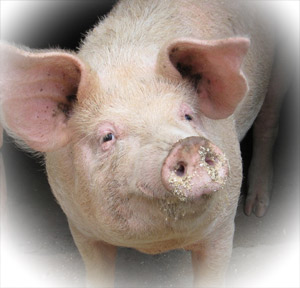
Nine Farms Affected – A Significant Development.
Ireland has approximately 300 pig farms, and the identification of infection on nine farms therefore represents around 3% of the country’s pig farms.
While that does not mean 3% of Irish pigs are infected, the number of affected farms is significant enough to warrant further investigation. The report also indicates that one of the affected farms experienced particularly extensive infection throughout its herd.
For pig producers operating in an already challenging economic environment, the consequences of TB infection can be substantial.
An additional concern is compensation.
Unlike cattle farmers, pig producers do not contribute to the national bovine TB levy, and the Department has indicated that there is currently no equivalent compensation arrangement for affected pig farmers. This raises questions about the financial support available where infection results in the removal of animals.
Which Five Counties Have Been Affected?
Despite confirming that nine pig herds in five counties have tested positive, the Department has not publicly identified those counties in the reporting examined for this article.
Knowing the geographical distribution would help farmers and veterinary professionals better understand the situation.
It would also allow comparisons with the established distribution of bovine TB in cattle.
For example, cattle TB statistics for the 12 months ending August 31st 2025 identified particularly high herd incidence in veterinary districts covering North Tipperary, Wicklow, Meath and Dublin.
Five veterinary districts across the above four counties recorded herd incidence above 10%, with both east and west Wicklow included.
However, it is essential to emphasise that there is currently no evidence establishing that these are among the five counties affected by TB in pigs. Cattle TB incidence statistics cannot be used to identify the locations of pig herd infections.
The publication of a county-level breakdown by the Department would remove this uncertainty without requiring the identification of individual farms.
Could There Be a Link Between TB in Cattle and Pigs?
This is one of the most interesting aspects of the Department’s findings. The Department confirmed that whole-genome sequencing of Mycobacterium bovis isolates from infected pigs, has identified close genetic relationships with TB strains circulating locally.
That finding suggests that the infection in pigs is connected to the wider regional epidemiology of bovine TB. However, a close genetic relationship does not establish the precise route of transmission.
Bovine TB can affect several mammalian species, and possible transmission pathways require careful veterinary and epidemiological investigation.
The important questions include whether infections are associated with local cattle, wildlife, contaminated environments or other sources. Establishing the source of infection is particularly important if further cases are to be prevented.
Is There a Risk to Consumers?
The Department has confirmed that pigs passing the required ante-mortem and post-mortem meat inspections are considered fit for human consumption.
Where suspicious lesions are identified during inspection, further laboratory investigation is undertaken. Although bovine TB is a ‘zoonotic disease’, meaning it can infect humans, the discovery of infected animals should not automatically be interpreted as evidence that contaminated pork has entered the food supply. The existing veterinary inspection system plays an important role in detecting potentially infected animals and protecting food safety.
TB Remains a Major Challenge for Irish Agriculture.
The emergence of additional infections in pigs comes against the background of continuing efforts to control bovine TB in Ireland’s cattle population. In a parliamentary response on October 8th 2026, the Minister for Agriculture, Food and the Marine reported that national cattle herd TB incidence had declined to 5.40% for the 12 months ending September 27th 2026, compared with 6.08% one year, previously. Although this represents an improvement, TB remains a significant animal health and financial challenge.
The Government introduced additional measures during 2026 under its Bovine TB Action Plan, including changes to cattle movement testing and disease-control requirements.
The detection of TB in pigs illustrates that the disease is not exclusively a cattle issue and that wider animal health surveillance remains important.
Questions That Still Need Answers
The Department’s confirmation provides valuable information, but several questions deserve further clarification:
- How many of the nine affected farms are located in each county?
- Were the cases linked to nearby cattle TB outbreaks or wildlife reservoirs?
- Have veterinary investigations identified the likely source of infection?
- Will compensation or other financial assistance be considered for affected pig producers?
- Which five counties recorded confirmed TB infections in pigs during 2026?
The above are reasonable questions in the public interest. County-level information could be provided without disclosing the identity or exact location of individual farms.
Conclusion: More Information Is Needed
The confirmation of bovine TB on nine pig farms across five Irish counties is an important development for the country’s pig sector. It also highlights the importance of post-slaughter surveillance, veterinary investigation and cooperation between farmers and the Department of Agriculture.
The reported genetic relationship between strains detected in pigs and those circulating locally deserves further scientific attention.
However, the geographical distribution of the cases remains unclear. Identifying the five affected counties would be a useful first step towards understanding the scale and potential sources of the problem. Until those details are released, speculation about the location of affected pig herds would be premature.





Leave a Reply