A significant residential development in Clonmel has been thrown into uncertainty following the collapse of its developer, in what is shaping up to be a major blow to the town’s housing ambitions.
Construction work on the Coleville Road site, latter a planned 122-unit housing scheme, had already stalled in recent weeks. Now, the situation has escalated further, with Torca Developments Limited among a group of companies placed under provisional liquidation by the High Court.
The development forms part of the wider Torca Homes network, where a total of 20 associated companies have been deemed insolvent. Of these, 13 have entered court-appointed provisional liquidation, while the remaining seven are expected to follow through voluntary liquidation proceedings.
Local Impact and Community Concerns. The collapse has raised immediate concerns for prospective homeowners, particularly those who had already committed deposits. Local people described the situation as a serious setback for both the town and buyers: The key concern now is safeguarding deposits and ensuring the project can be revived under new ownership.
Despite the setback, there remains cautious optimism. The site’s prime location, on the southern bank of the River Suir and close to the town centre, continues to make it attractive for future investment, especially given the strong demand for housing in the region.
A Promising Development Now in Limbo Originally granted planning permission for 115 homes, the scheme was later expanded following approval from An Bord Pleanála in late 2024.
The revised proposal included: 122 residential units (up from 115). A mix of houses, duplexes, and apartments. A childcare facility with capacity for 33 children. Expanded car and cycle parking.
Community-focused features such as: Bike parking areas. Soft play spaces. Shared communal areas and quiet seating zones.
The project had been designed as a modern, sustainable community aimed at families and individuals alike, making its current halt all the more significant.
What Happens Next? With provisional liquidators now in place, the immediate priority will be securing assets and assessing whether the development can be transferred or sold to a new builder. For Clonmel, Co. Tipperary the hope is clear, that this stalled project will not remain idle for long, and that a new developer will step in to complete what was one of the town’s most important housing schemes in recent years.
Recent news articles have shed light on a troubling reality; fraud is becoming increasingly common across Ireland, and in many cases still go unreported. While scams have long existed, the scale and sophistication of fraudulent activity today make it a serious and evolving threat that affects people from all walks of life.
What’s particularly concerning is not just how widespread fraud has become, but how often it goes unspoken. Many victims feel embarrassed, unsure of what to do, or even doubtful that reporting the incident will make a difference. As a result, countless cases remain hidden, allowing criminals to continue operating with little resistance.
Fraud is no longer limited to obvious or easily identifiable schemes. Modern scams can be highly convincing, most often involving social media through fake emails, phone calls, or websites that closely mimic legitimate organisations such as banks, delivery services, or even government agencies. With the rise of digital banking and online services, fraudsters have more opportunities than ever to exploit trust and access sensitive information.
It’s important to recognise a simple truth; fraud can happen to anyone. No level of education, awareness, or caution makes a person completely immune. Scammers rely on manipulation, urgency, and psychological pressure, not just technical tricks. They are skilled at creating scenarios that feel real and demand immediate action, catching people off guard.
Because of this, the conversation around fraud needs to shift. Instead of focusing on blame or embarrassment, there should be greater emphasis on awareness, support, and prevention.
If you’ve been affected by fraud, it’s crucial to understand that reporting it is one of the most effective ways to combat the problem.
By contacting your financial provider as soon as possible, you increase the chances of limiting financial loss and preventing further unauthorised activity. Banks and financial institutions have dedicated teams that can respond quickly to suspected fraud, freeze accounts, and investigate suspicious transactions.
Equally important is reporting the incident to An Garda Síochána. While it may seem like a small step, every report contributes to a broader understanding of how fraud operates in Ireland. This information helps authorities identify patterns, track criminal networks, and develop strategies to prevent future scams.
Reporting fraud doesn’t just help you, it helps others. When scams go unreported, criminals remain free to target more victims using the same tactics. By speaking up, you play a role in disrupting these schemes and making it harder for fraudsters to succeed.
Education also plays a key role in prevention. Staying informed about common scams, being cautious with unsolicited communications, and taking time to verify requests for personal or financial information can significantly reduce risk. Simple actions, such as double-checking a sender’s email address or contacting a company directly through official channels, can make a big difference.
However, even the most careful individuals can be caught out. That’s why creating an environment where people feel comfortable reporting fraud is essential. Open conversations help remove stigma and encourage others to come forward if they experience something similar.
Fraud is a growing challenge, but it’s not one we are powerless against. Through awareness, vigilance, and a willingness to report incidents, individuals and communities can work together to reduce its impact. The more we talk about it, the harder it becomes for fraud to thrive in silence.
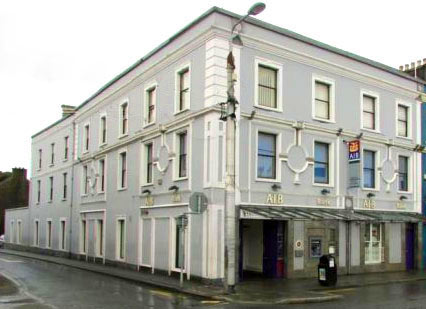
Tipperary County Council has announced a series of temporary road closures in Thurles to allow for painting maintenance works in the town centre. The N62 on O’Donovan Rossa Street in the town will be closed at AIB Bank corner on three consecutive Sundays; 17th, 24th, and 31st May 2026, between 6:00am and 8:00pm each day.
Same closure is necessary to facilitate painting works to the exterior of the A.I.B. bank building. While these works are relatively short-term, some disruption to traffic in the area is expected during the specified hours.
Motorists travelling through Thurles town will be diverted via Cúchulainn Road and onto Parnell Street, while heavy goods vehicles will be rerouted along Jimmy Doyle Road. As with similar roadworks across the county, clearly signposted diversion routes will be in place to help minimise disruption and keep traffic moving safely.
Drivers are advised to plan ahead, allow extra travel time, and follow all local signage, while the works are underway.
Forty years on from the events of April 26th, 1986, the Chernobyl disaster remains one of the defining catastrophes of the modern age; an event that reshaped attitudes to nuclear power, exposed systemic political failures, and left a human and environmental legacy that endures to this day.
In the early hours of that morning, Reactor 4 at the Chernobyl Nuclear Power Plant; then part of the Soviet Union, now in Ukraine, exploded during what was supposed to be a routine safety test. A combination of flawed reactor design and critical operator errors triggered a runaway reaction. At 1:23am, the reactor core was blown open, releasing vast quantities of radioactive material into the atmosphere.
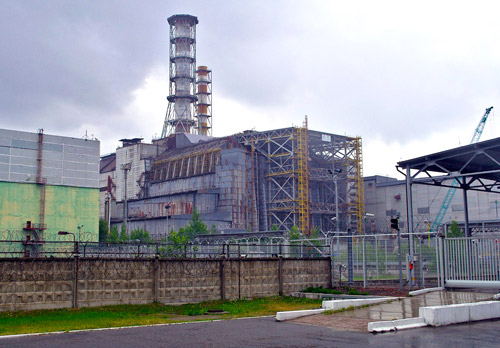
Chernobyl, forty years on from the events of April 26th, 1986.
The explosion lit up the night sky above the nearby city of Pripyat, but confusion reigned. Firefighters rushed to the scene believing they were tackling a conventional blaze. In reality, many were exposed to lethal doses of radiation within minutes. In the days that followed, the Soviet authorities delayed evacuation and initially downplayed the scale of the disaster.
The official death toll was listed as just 31, but that figure has long been disputed. Many estimates suggest that tens of thousands, perhaps more, suffered long-term health consequences, including increased cancer rates across Ukraine, Belarus and beyond. Radioactive fallout spread across Europe, carried by wind and weather patterns, reminding the world that nuclear accidents do not respect borders.
Yes, Ireland was affected by Chernobyl, but only lightly, while radioactive fallout did reach the country and caused temporary increases in radiation, the overall impact was limited and far less severe than in areas closer to the disaster. These effects in Ireland were influenced heavily by rainfall. Where it rained, radioactive particles were washed out of the air and deposited onto the land. Some western and northern counties (such as Galway, Mayo and Sligo) saw higher levels because of heavier rain. However, overall contamination levels were much lower than in mainland Europe.
Impact on Irish food and farming. The main concern in Ireland was agriculture, particularly milk and livestock. Low levels of radioactive iodine were detected in milk, though they were far below the extreme levels seen elsewhere in Europe. Some farmland and livestock were contaminated after animals grazed on affected grass. In later years, radioactivity lingered in certain upland sheep, especially in the west and northwest, although it was not considered a major health risk.
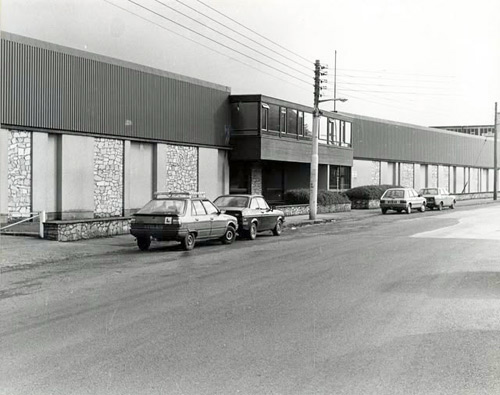
Phoenix Yarns, Thurles, now the site of Thurles Shopping centre.
However, it did help to bring about the closure of Phoenix Yarns, here in Thurles. Yarn sold to Russia was paid for by vegetables sent for sale in Belgium from Russia. Vegetables were then no longer acceptable in Europe and sales of yarn to Russia came to an abrupt end.
One of the most remarkable aspects of the disaster was the vast human effort required to contain the disaster. Around 700,000“liquidators” – soldiers, engineers, miners and volunteers, were mobilised to limit the damage. They cleared radioactive debris, built a concrete sarcophagus around the destroyed reactor, and prevented further explosions that could have rendered large parts of Europe uninhabitable. Many paid for this work with their health or their lives.
Beyond the immediate devastation, Chernobyl exposed deeper truths about governance and secrecy. The Soviet system’s reluctance to admit failure contributed to delays that worsened the crisis. The disaster became a symbol of the dangers of suppressing scientific truth in favour of political control; a lesson that continues to resonate in discussions about energy, transparency and environmental risk.
Four decades later, the site itself remains a stark reminder. The surrounding “Exclusion Zone” is still largely uninhabited, though nature has begun to reclaim the area in unexpected ways. Chernobyl has also become a powerful cultural reference point, explored in documentaries, literature and drama.
One of the most acclaimed portrayals is the 2019 television drama Chernobyl, which brought renewed global attention to the disaster. The series dramatizes both the human stories and the systemic failures behind the catastrophe, highlighting the bravery of those who responded and the consequences of misinformation.
Notably, Irish talent played a significant film role in bringing these stories to life. Ms Jessie Buckley portrayed the character of ‘Lyudmilla Ignatenko‘, the wife of a firefighter who was among the first responders. [Film can be viewed currently on SKY GO]. Her performance captured the personal tragedy experienced by families caught in the disaster’s wake. Ms Buckley, who attended the Ursuline Convent in Thurles during her school years, has since become one of Ireland’s most celebrated actors, earning major international awards.
She appeared alongside Barry Keoghanwho played the role of ‘Pavel‘ another central figure in the story, together with Michael McElhatton who played the role of ‘Prosecutor Andrei Stepashin‘; Jared Harris(son of the Limerick-born actor Richard Harris), who played scientist ‘Valery Legasov‘; and Michael Colgan who appeared in the miniseries as ‘Mikhail Shchadov‘; each of their excellent performances helping to humanise a disaster often discussed in abstract terms.
As we mark forty years since Chernobyl, its legacy remains complex. It is a story of technological failure, but also of courage; of political secrecy, but also of truth eventually emerging. Above all, it serves as a warning, about the consequences of ignoring expertise, underestimating risk, and placing ideology above reality.
In remembering Chernobyl, we are not just looking back at history. We are being reminded of responsibilities that remain urgent today.
The number of individuals accessing emergency homeless accommodation has reached a record high, highlighting ongoing pressures within the housing system despite recent rental reforms.
New figures show that 17,517 people were using emergency accommodation in the final week of March, up from 17,308 the previous month. This total includes 11,946 adults and 5,571 children, both representing the highest levels recorded to date.
Tánaiste Mr Simon Harris acknowledged the severity of the situation, stating that homelessness in Ireland “is far too high” and emphasizing that the level of child homelessness “cannot be accepted.” He confirmed that a targeted action plan addressing child and family homelessness is expected to be published shortly.
The latest data reflects a 46% increase in homelessness since the removal of the pandemic-era ban on no-fault evictions in April 2023, when the total stood at 11,988 people. The upward trend has continued steadily in the years and months since.
Officials note that the figures account only for those in emergency accommodation and do not include individuals sleeping rough or those housed in settings such as hospitals, asylum centres, or domestic violence shelters.
This report marks the first assessment since the introduction of new rental regulations in March, including reforms around six-year tenancies. The government maintains that these measures are designed to enhance tenant security and encourage housing supply. However, critics argue the changes could lead to rising rents and increased eviction-related homelessness.
Under the updated rules, landlords with four or more tenancies are prohibited from issuing no-fault evictions for new leases starting from March. Smaller landlords may still terminate tenancies under specific conditions—such as financial hardship or accommodating a family member—but are restricted from resetting rent levels until the six-year tenancy period concludes.
The government has reiterated its commitment to addressing the housing crisis, with further policy measures anticipated in the coming weeks.
This website uses cookies to improve your experience. We'll assume you're ok with this, but you can opt-out if you wish.AcceptRead More
Privacy & Cookies Policy
Privacy Overview
This website uses cookies to improve your experience while you navigate through the website. Out of these, the cookies that are categorized as necessary are stored on your browser as they are essential for the working of basic functionalities of the website. We also use third-party cookies that help us analyze and understand how you use this website. These cookies will be stored in your browser only with your consent. You also have the option to opt-out of these cookies. But opting out of some of these cookies may affect your browsing experience.
Necessary cookies are absolutely essential for the website to function properly. This category only includes cookies that ensures basic functionalities and security features of the website. These cookies do not store any personal information.
Any cookies that may not be particularly necessary for the website to function and is used specifically to collect user personal data via analytics, ads, other embedded contents are termed as non-necessary cookies. It is mandatory to procure user consent prior to running these cookies on your website.






Recent Comments