Pressure is growing on the Government to address Ireland’s high fuel and energy costs ahead of Budget 2027.
More than 1,000 people attended a public meeting in Moate, Co Westmeath, where organisers warned that further protests could follow if the Budget does not deliver meaningful reductions in fuel costs. Among the demands raised was the complete abolition of the carbon tax on fuel, alongside further reductions in other fuel taxes and additional support for households, farmers, hauliers and businesses struggling with rising costs.
The debate comes as motorists continue to face significant prices at the pumps. September figures from AA Ireland showed petrol averaging around €1.87 per litre and diesel around €1.94 per litre. The Government has already introduced temporary excise reductions and postponed some planned tax increases. However, those measures are temporary, and decisions on what happens next are expected to form part of Budget 2027, on October 6th. Representatives of the haulage sector have also warned that further fuel protests cannot be ruled out, if businesses continue to face unsustainable diesel costs.
With the Budget approaching, the key questions now are whether existing fuel-tax reductions will be extended, whether further relief will be introduced, and what decision will be made on carbon-tax measures.
For households and businesses depending heavily on fuel, the outcome could have a significant impact on costs heading into the winter.
The Cost-of-Living Crisis And Its Impact On Mental Health.
We need to stop pretending that the cost-of-living crisis is only about money. It is about stress. It is about anxiety. It is about lying awake at night wondering how the next electricity bill will be paid. It is about standing in a supermarket adding up the cost of groceries before reaching the checkout. It is about parents cutting back on their own needs so their children do not go without. It is about people working hard, doing everything they were told they were supposed to do, and still feeling as though they are falling further behind.
Increasingly, all of the above is becoming a mental health crisis. Yes, the growing cost-of-living crisis is having consequences that reach far beyond household finances. It is increasingly affecting people’s mental health, emotional wellbeing, and sense of security.
Recent research from St Patrick’s Mental Health Services found that almost three-quarters of more than 1,000 adults surveyed, identified the cost of living as the leading factor negatively affecting their mental health. The same research found that 92% of respondents believe there is a worrying level of anxiety in society.
These findings should be taken seriously. Behind these statistics are individuals and families facing the daily pressure of rising food prices, rents, energy bills, housing costs, childcare expenses, and other essential living costs. For many people, financial stress is no longer an occasional concern. It has become a constant presence in their everyday life. This pressure can have a profound impact on mental wellbeing. Financial insecurity can affect sleep, concentration, relationships, confidence, and a person’s sense of hope for the future. People may continue going to work, caring for their families, and carrying out their daily responsibilities, while privately struggling with anxiety and fear.
It is important that we continue encouraging people to seek support when they are struggling with their mental health. Counselling, professional services, community supports, family networks, and open conversations all have an essential role to play. However, we must also recognise that mental health does not exist separately from the daily circumstances in which people live. It is difficult to reduce anxiety when someone is unsure how they will pay their rent or mortgage. It is difficult to manage stress when a household is choosing between heating, food, childcare, and other essentials. It is difficult to tell people simply to “look after themselves” without acknowledging the real and continuing financial pressures many are experiencing.
For some people, anxiety is a direct response to difficult and uncertain circumstances. That means our conversations about mental health must also include honest discussions about housing, wages, energy costs, food prices, childcare, poverty, and financial security. There are encouraging signs that more people are willing to seek help for mental health difficulties, and that progress should be welcomed. No person should ever feel ashamed for admitting that they are struggling or for asking for support. At the same time, too many people continue to suffer in silence. Some do not want to worry their families. Others feel embarrassed about financial difficulties or believe they should simply be able to cope. Many appear outwardly well while carrying significant stress privately.
We need a culture in which people feel able to say, without shame, “I am struggling,” or “The financial pressure is becoming too much.” We also need to recognise that meaningful responses to mental health difficulties cannot focus solely on helping people cope with pressure. We must also address the conditions contributing to that pressure. People need accessible mental health services, strong community supports, secure housing, financial stability, and the dignity of knowing that working hard should provide a reasonable standard of living. This is not about creating fear or hopelessness. It is about acknowledging the reality facing many people and responding with compassion, seriousness, and practical action.
The question we should be asking is not only, “Why are so many people experiencing anxiety?” We must also ask what pressures people are being expected to carry every day and what can be done to reduce them.
The cost-of-living crisis is not simply an economic issue. It is a social issue. It is a family issue and increasingly, it is a mental health issue. We must continue to support those who are struggling, encourage open conversations about mental health, and work towards a society in which people can live with greater security, dignity, and hope for the future.
Political Parties And Their Response To Concerns. The pressure created by the cost of living should also encourage the public to look carefully at how political parties respond to these concerns. Governments must ultimately be judged on the decisions they make, the measures they implement, and the results those measures produce. Opposition parties, meanwhile, have an important responsibility to challenge Government policy and present alternatives, but those alternatives should be examined with the same seriousness. Promises made in opposition can sound attractive, particularly when households are under severe financial pressure, but voters are entitled to ask whether those commitments have been properly costed, whether they can realistically be delivered, what trade-offs would be required, and how they would be funded over the longer term.
Ireland already has mechanisms through which political parties can have proposals independently costed by the Department of Finance and Department of Public Expenditure, while the Parliamentary Budget Office also provides independent analysis of fiscal and budgetary proposals.
For that reason, public debate on the cost-of-living crisis should not become simply a competition over which parties can make the largest or most appealing promise. The same standard of scrutiny should apply to everybody seeking political power; those in Government should be questioned about what they have actually delivered and whether existing policies are working, while those seeking to replace them should be challenged to demonstrate that their alternatives are financially sustainable and practically achievable.
Previous analysis of Irish election manifestos has shown that substantial spending commitments can be made across both Government and Opposition parties and that questions can arise about whether the total package of promises fits within prudent fiscal limits.
When families are already experiencing financial stress and anxiety, political debate should therefore be grounded not only in promises, but in true credible figures, realistic implementation plans and an honest explanation of the choices and the consequences involved.
Could Bats Delay the Demolition of 52 Homes Overlooking the Rock of Cashel, in Co. Tipperary?
Plans to demolish 52 partially completed homes overlooking the Rock of Cashel are expected to move forward shortly, but first, an ecologist must determine whether bats are residing in the abandoned buildings.
Tipperary County Council says a bat survey will be carried out within the coming weeks at Ballypadeen, Cashel with demolition expected to begin soon afterwards. The unfinished properties have stood derelict for almost 20 years and were originally intended as holiday accommodation, connected to a proposed hotel development that was never completed.
The survey is more than a simple environmental formality. All bat species in Ireland are strictly protected. Under Irish and European nature conservation law, it can be an offence to deliberately kill or disturb bats or to damage or destroy their breeding sites and resting places. Those protections can apply even where demolition has otherwise been approved.
Back in August 2024 aspeciesofPipistrelles Batcaused similar delays in the erection of a €3.4 million project in Cathedral Street, Thurles. View HERE Pics: G. Willoughby.
So what happens if bats are found? The answer depends on how the buildings are being used. An ecologist will look for evidence of roosts, identify the species present and assess their activity. A building occasionally used by one or two bats may present a very different ecological issue from a maternity roost or an important seasonal resting place. If demolition would disturb protected bats or destroy a roost, the works may require a special derogation from the National Parks and Wildlife Service under Regulation 54. The National Parks and Wildlife Service (NPWS) states that works which would kill or capture bats, destroy their roosts or disturb them during important stages of their life cycle, cannot proceed without such permission where a derogation is required. However, A derogation does not necessarily mean the demolition would be stopped permanently.
Instead, conditions can be imposed on when and how the work takes place. Similar Irish cases have included restrictions on demolition during sensitive periods, ecological supervision, careful removal of roofs and other potential roosting areas, and the provision of alternative bat roosts or bat boxes. The timing of the Cashel survey could therefore become important. Different bat species use buildings differently throughout the year, and a survey represents conditions at a particular point in time. In some cases, further surveys or mitigation measures may be required before demolition can proceed.
The controversy surrounding Ballypadeen extends well beyond bats. The 52 units were originally approved as tourism accommodation linked to a proposed hotel development. Construction started in 2006, but stopped the following year following a planning dispute. After years of legal engagement, a mediated settlement was reached 19 years later, in July 2025. Tipperary County Council says the site lies on un-zoned and unserviced land outside Cashel’s settlement boundary and that technical assessments identified significant defects in the unfinished buildings. The council has estimated that adapting them for residential use would cost about €24 million.
Critics, including developer Liam Campion and Independent TD Mattie McGrath, have questioned the decision to demolish partly built three-bedroom properties during Ireland’s current housing shortage. The council maintains the old argument that its decision must comply with planning law, policy and the sustainable development of the area.
For now, however, the next chapter in this long-running Cashel saga may depend on something very small indeed. Before the bulldozers arrive, the bats, if they are there, must first be accounted for.
Recognised primary and post-primary schools are invited to apply for funding to bring sustainability learning to life, through practical projects during the 2026/27 school year.
The Department of Education and Youth’s Education for Sustainable Development (ESD) up to 2030 funding call, offers grants of €1,000 to €2,500, with a total funding allocation of €1 million. Funding is competitive, and not all applications may be successful.
Building a More Sustainable Future Together Ireland’s National Strategy on Education for Sustainable Development, ESD to 2030, aims to equip every learner with the knowledge and skills to contribute to a sustainable future. The strategy recognises three connected dimensions of sustainability; protecting the environment, supporting social wellbeing and inclusion, and using economic resources responsibly. It encourages learners to put their knowledge into practice in their schools, homes and communities.
Five Pathways to Meaningful Change. Projects must support one or more of the strategy’s five priority action areas:
Advancing Policy: Embedding sustainability in education policies and planning.
Transforming Learning Environments: Developing a whole-school approach to sustainability.
Capacity Building of Educators: Strengthening the knowledge and skills of teachers and school leaders.
Empowering and Mobilising Youth: Creating opportunities for young people to take action.
Accelerating Local Level Action: Connecting schools and communities through shared sustainability initiatives.
Priority will be given to projects that include local action and/or capacity building for educators.
What Makes a Strong Application? Projects must support the implementation of ESD to 2030 and help school management, staff and/or students develop knowledge and skills for sustainable development.Applications will also be assessed on features such as curriculum links, a whole-school approach, practical action, peer learning, community engagement, volunteering and outdoor learning. Connections to the Sustainable Development Goals, inclusion of disadvantaged learners and learners with disabilities, and clear plans for monitoring progress will strengthen proposals. Other considerations include whether the project receives other public funding, whether the school has previously received ESD to 2030 funding, and whether it has adopted and published a Sustainability Policy Statement.
Projects do not need to meet every assessment criterion, but greater consideration will be given to applications meeting several of them.
Planning How the Grant Will Be Used Funding should support activities within the school. The call identifies funding for school use rather than fees for external services or programme providers as an assessment consideration.
Infrastructure costs, such as solar panels, insulation and energy-efficient lighting, are not covered. Successful schools must use the grant for the approved purpose during the 2026/27 school year. Any change requires the department’s explicit agreement in advance, and unspent funding must be returned.
Sharing Progress and Embedding Sustainability Successful applicants must report on the work completed and how the funding was spent. The application form requires an update by the end of May 2027, and an evaluation template will be provided. Schools that already have a Sustainability Policy Statement will receive priority. Remember to include the school’s full name, location and roll number in all correspondence. The department will acknowledge applications within five working days. If no acknowledgement arrives within that period, contact the department promptly to confirm receipt.
Submit Your Application by 23 October. Completed application forms must be emailed to ESD@education.gov.ie by 6:00pm on Friday, 23 October 2026.
Applicants will be notified of the outcome before the end of November 2026, with funding issued shortly afterwards. This is an opportunity for schools to turn sustainability education into practical action, strengthen community connections and give learners an active role in shaping a more sustainable future.
Funded schools without one must develop and publish a statement by the end of the 2026/27 school year and include its website link in their report.
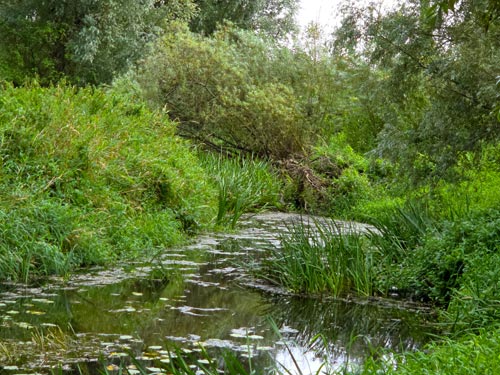
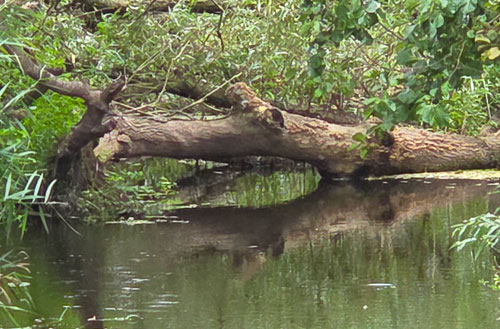
Cllr. Jim Ryan deserves congratulations for taking the lead in demanding action on the condition of the River Suir in Thurles, and for securing a commitment that large fallen trees lying across the river will be removed as soon as possible.
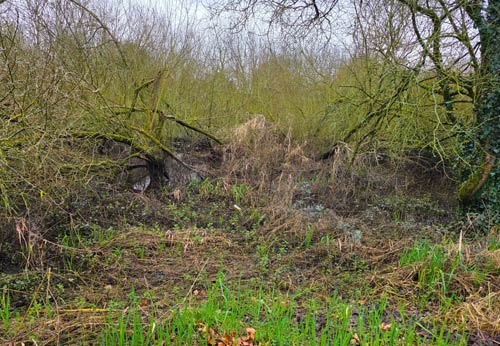
At Monday’s Thurles District meeting, Cllr. Ryan pressed for a commitment to tackle the extensive weeds and reeds. Local representatives were presented with an outline rehabilitation plan for the river, with details expected to be finalised later this month.
River Suir, Thurles Town Centre.
Mr Fran Igoe of the ‘River Basin Management Service’, (formerly LAWPRO), explained that dredging or cutting vegetation alone is unlikely to resolve the underlying problems. Excess nutrients entering the river from agricultural run-off and other sources are contributing to the growth, and these causes must be addressed if improvements are to last.
LAWPRO’s recent change of name to the River Basin Management Service also deserves scrutiny. The stated justification is that the new title better reflects its expanded work and its role in coordinating Ireland’s River Basin Management Plan. However, the organisation confirms that its mission, structure and responsibilities remain unchanged. Residents are entitled to ask what the rebranding cost and what practical benefit it will bring to places such as Thurles.
Due to neglect, dredging can only be the answer to the Thurles, River Suir problem.
“This clearer name may help explain the service’s role, but its success must be judged by measurable improvements in water quality, effective coordination and delivery of promised action on the river Suir”, stated Cllr Ryan.
Nevertheless, concerns about the river’s condition deserve clear answers. Kick-sampling tests reportedly found little or no river-life activity. “Residents need to know what the findings mean and what measures, including any appropriate vegetation management, will form part of the rehabilitation plan”, he continued.
Refresh Thurles Tidy Towns volunteers who this week removed bottles and cans; whose presence on the riverbed had reportedly been well documented as sitting there for two years, after Cllr Ryan highlighted the problem. Disappointingly, further dumping was reported this morning. The council must now provide a suitable litter bin and arrange regular collection to support the efforts of these volunteers.
Deplorable state of River Suir permitted and acknowledged by Tipperary Co. Co..
With water levels rising, there are concerns that substantial work could be delayed until next spring or early summer. Any machinery access must also be carefully planned to protect the newly laid tarmac footpaths along the river bank.
European and Irish public funding already supports farmers in protecting waterways through ACRES, Farming for Water EIP and TAMS grants for measures such as buffer zones, fencing and alternative livestock drinking supplies. Payments depend on eligibility and approved actions, rather than simply owning riverside land.
“Residents are entitled to ask how these supports are being used in the Suir catchment and what measurable improvements they are delivering”, said Cllr. Ryan.
The commitment given to Cllr. Ryan to remove fallen trees is indeed a welcome step; but residents now need a clear timetable and a rehabilitation plan that delivers lasting improvements long term.
This website uses cookies to improve your experience. We'll assume you're ok with this, but you can opt-out if you wish.AcceptRead More
Privacy & Cookies Policy
Privacy Overview
This website uses cookies to improve your experience while you navigate through the website. Out of these, the cookies that are categorized as necessary are stored on your browser as they are essential for the working of basic functionalities of the website. We also use third-party cookies that help us analyze and understand how you use this website. These cookies will be stored in your browser only with your consent. You also have the option to opt-out of these cookies. But opting out of some of these cookies may affect your browsing experience.
Necessary cookies are absolutely essential for the website to function properly. This category only includes cookies that ensures basic functionalities and security features of the website. These cookies do not store any personal information.
Any cookies that may not be particularly necessary for the website to function and is used specifically to collect user personal data via analytics, ads, other embedded contents are termed as non-necessary cookies. It is mandatory to procure user consent prior to running these cookies on your website.







Recent Comments