The cheerful online mischief-makers (View “Meanwhile in Ireland” Here), Ireland’s digital equivalent of a lad leaning over a pub counter saying, “I’m only telling you what everyone else is thinking”, have declared Thurles “a quiet railway town that feels dead on non-match days.”
This is precisely the sort of reckless investigative journalism we feared.
For generations, the people of Thurles have worked tirelessly to create the impression that absolutely nothing happens here. It is one of Ireland’s most successful covert operations, surpassed only by the mystery of where county councils store road signs before deploying eleven thousand of them around a tiny pothole.
Now meanwhile in Ireland, that lovable online hornet with a laptop, has come dangerously close to exposing the entire scheme.
Yes, Thurles looks quiet. That is the point. The objective is simple: keep excessive tourism at bay.
We have seen what happens when a perfectly pleasant Irish town is discovered by lifestyle journalists. First come the travel bloggers. Then come the ring lights. Before long, somebody is charging €19 for avocado on a roofing slate and describing Liberty Square as “Thurles’s answer to Montmartre*.”
[* Montmartre, for the benefit of “Meanwhile in Ireland” website, is a historic hilltop neighbourhood in northern Paris known for its steep cobblestone streets, artistic heritage, and the iconic Sacré-Cœur Basilica.]
We cannot allow this.
Every resident therefore receives extensive anti-tourism training.
When an unfamiliar car enters town, locals are instructed to look mildly inconvenienced. Anyone asked, “Is there much to do around here?”, must stare thoughtfully into the middle distance and reply: “Depends what you’d call doing.” This is not rudeness. It is perimeter security.
The Traffic Is a Defensive Installation.
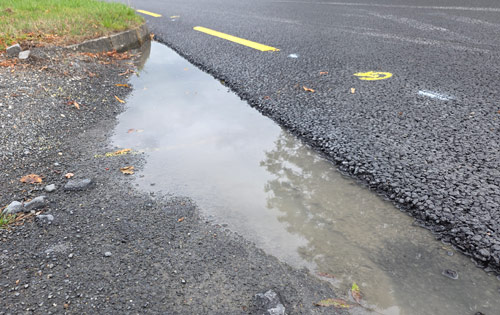
“Meanwhile in Ireland” website; our nation’s premier supplier of lists designed to start arguments in family WhatsApp groups, also mentions traffic congestion and poor road surfaces.
Again, allow me to inform you this is deliberate. Those cars are not stuck. They have been strategically positioned by the Thurles Tourism Deterrence Unit.
The road surfaces, meanwhile, are calibrated to shake loose anyone carrying a selfie stick, a drone or a notebook containing the phrase “ten authentic experiences.”
If your suspension survives Liberty Square, you may proceed, but you will be monitored.
The cleverest part of the operation is that nobody can prove the congestion was planned, because even the people allegedly planning it, have been trapped in the traffic since 2017.
“Dull and Dated,” Says “Meanwhile in Ireland”
Correct. Absolutely. Please tell everyone.
Do not notice that Liberty Square has witnessed centuries of Irish life. Ignore Hayes’ Hotel, where the GAA was founded in 1884. Pay no attention to the architecture, history or independent businesses.
Most importantly, do not enter the building containing the official Thurles visitor-information point. That would only give you ideas.
The apparently vacant buildings are decoys.
Behind one of them are six musicians, a retired county hurler, two women organising a fundraiser, a committee discussing another committee and a man capable of explaining the entire history of Tipperary politics without even drawing breath. We cannot disclose which building. National security.
“Meanwhile in Ireland” website, having peered briefly over the digital hedge with all the forensic rigour of a man reviewing a pub through its letterbox; has declared the place empty. Excellent. The camouflage is working.
“Nothing to Do After Dark”
This is our favourite accusation.
Yes, there is allegedly nothing to do after dark, apart from theatre, comedy, music, dance, cinema and exhibitions at The Source Arts Centre, which describes itself as Tipperary’s cultural and entertainment venue. But apart from all the entertainment, there is no entertainment.There are also pubs, restaurants, community events, racing and the occasional conversation that begins with the weather and ends four hours later with a frame-by-frame analysis of the 2001 Munster hurling championship.
If you hear laughter coming from a crowded pub, it is probably a recording.
If you see people leaving a performance, they are actors portraying an audience.
If thousands turn up for the Liberty Music Festival, kindly assume they are commuters whose train has been severely delayed.
“Meanwhile in Ireland” may be Ireland’s cheekiest electronic parish newsletter, but even it cannot expect us to believe several thousand people accidentally wandered into a music festival.
Cold and Unwelcoming?
Naturally, Thurles people are exceptionally friendly, which is precisely why they must sometimes pretend otherwise.
A genuinely warm welcome could trigger a catastrophic chain reaction:
A visitor enjoys Thurles.
The visitor tells friends.
The friends arrive.
A travel magazine publishes “Ten Secret Irish Towns You Must Visit.”
Liberty Square acquires an oat-milk queue visible from space.
Consequently, friendliness must be rationed.
A local may give you directions, recommend somewhere to eat, explain the history of the GAA and ask who your people are, but this should not be mistaken for hospitality.
They are gathering intelligence.
If somebody buys you a pint, you have penetrated the inner defences. Do not mention it to “Meanwhile in Ireland”. They will turn it into “Ten Irish Towns Where Strangers Recklessly Purchase Beverages.”
Semple Stadium: The Approved Distraction
We admit that maintaining the dead-town illusion becomes difficult on match days, when Semple Stadium fills and Thurles temporarily produces enough noise to alter migratory bird patterns.
That is why outsiders are encouraged to believe the stadium is our only attraction.
While everyone is watching the hurling, residents quietly enjoy everything else: the River Suir, local walks, cafés, shops, arts, history and the reassuring absence of tour guides waving umbrellas.
There is even Lár na Páirce, the museum of Gaelic games, in the town where the GAA began. Naturally, we tell tourists it is merely a sophisticated warehouse for elderly sliotars.
The wider tourism authorities describe Thurles as a town blending sporting heritage, culture, scenery and history. But what would they know? They have presumably never assembled a slideshow entitled Ireland’s Most Miserable Places while rubbing their hands together like cartoon landlords.
A Warning About the Surrounding Area.
Under no circumstances should visitors use Thurles as a base for exploring Holycross Abbey, Cabragh Wetlands or the wider Tipperary countryside. The scenery is terribly scenic. The history is excessively historic. The wetlands contain birds that refuse to perform on demand and have shown no interest whatsoever in becoming Instagram influencers. You would hate it.
Our Official Response to Meanwhile in Ireland
So, to our friends at website “Meanwhile in Ireland” that delightful digital gobshite, forever throwing verbal fireworks into quiet towns and running away giggling we say this:-
You are completely correct.
Thurles is miserable.
There is nothing here.
Please encourage your readers to continue directly to somewhere with a souvenir leprechaun every nine metres.
Do not stop for coffee.
Do not attend a show.
Do not explore the town.
Do not enter a good pub.
Above all, do not ask a local about hurling unless you have cleared the remainder of your afternoon and possibly the following morning.
And definitely do not discover that Thurles is a warm, lively, historic and deeply characterful Irish town that simply has no interest in dressing itself up like a theme park for anyone’s approval.
Nothing to see here.
Move along for God’s sake now; before somebody offers you a pint.





Recent Comments