Approximately 150 fish, mostly brown trout, have died in a stretch of the River Suir in the Templemore area.
The incident is understood to have been discovered around August 10th, 2026 during the week ending August 12th, 2026, reportedly by a staff member of the River Basin Management Service, latter the organisation formerly known as the Local Authority Waters Programme, or LAWPRO. The change of name is confirmed HERE.
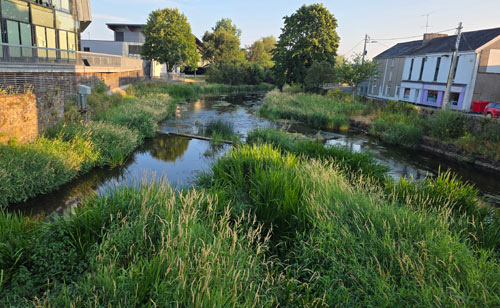
At the time of writing, no official report establishing the cause of the deaths has been published. However, an initial examination reportedly suggested that the fish may have died from oxygen depletion, same associated with extensive aquatic vegetation and restricted flow. Dense reed growth is clearly visible along sections of the upper Suir, including from Barry’s Bridge in the heart of Thurles town centre. Nevertheless, visible vegetation does not prove what killed the fish.
The public requires evidence; dissolved-oxygen records, water and fish sample results, the extent of the affected stretch and an assessment of any pollution, temperature, flow or habitat factors.
Could dense vegetation deplete oxygen? It is scientifically plausible that excessive aquatic growth could contribute to dangerously low dissolved-oxygen levels. Plants, algae and microorganisms respire continuously, consuming oxygen. During daylight, photosynthesis can replace or exceed that consumption. At night, photosynthesis stops while respiration continues, causing dissolved oxygen to fall. Surveys undertaken confirms that plant, microbial and algal respiration reduces dissolved oxygen at night, while daylight photosynthesis increases it.
The risk is greatest where vegetation is abundant and the water is warm, shallow, slow-moving or stagnant. Dense growth can restrict mixing, while bacteria and fungi decomposing dead plant material consume additional oxygen, as observed when Thurles Municipal District undertook the strimming of rushes last year, leaving same in the water to rot. Warm water also holds less dissolved oxygen.
We can confirm that the above public meeting will take place, as stated above. Perhaps Minister of StateMr Kevin Moran, Independent TD Mr Michael Lowry, together withCouncillor Mr Micheál Lowry should receive invitations.
The US Environmental Protection Agency identifies excessive plant growth, nighttime respiration, decomposition, high temperatures and reduced flow as possible contributors to oxygen depletion. Emergent reeds can transport atmospheric oxygen through their stems, so their direct withdrawal of oxygen from the water may be less significant than that of submerged vegetation or algae. A dense reed bed may still create locally oxygen-poor conditions by slowing the flow and trapping decomposing organic material.
A healthy, fast-flowing river is continually re-aerated by turbulence. If oxygen depletion caused this fish kill, the investigation must determine what combination of vegetation, nutrient enrichment, low flow, temperature and decomposition produced it.
Testing must occur at the correct timeand a single daytime oxygen reading would be inadequate. Dissolved oxygen generally reaches its lowest level shortly before sunrise, following a night of respiration without photosynthesis. Monitoring should therefore be continuous or conducted immediately before dawn. Measurements should be taken inside dense vegetation, in nearby open water and both upstream and downstream. Temperature, flow, pH, weather conditions and readings close to the sediment should also be recorded.
Salmonids, including brown trout, are particularly sensitive to low oxygen. The investigation must establish whether oxygen depletion caused this incident rather than merely presenting it as a possibility.
Thirteen years of warnings As stated in a recent post on Thurles.Info, the deterioration of the River Suir cannot credibly be described as sudden or unforeseeable. For more than a decade, residents, anglers and environmental campaigners have raised concerns about pollution, excessive vegetation, restricted flow, sediment, litter and neglect. These concerns were documented in “River Suir Crisis—Thirteen Years of Warnings, But Still No Coordinated Action”.
Section ofUpper River Suir, viewed from Thurles Park in the heart of Thurles town centre, last week. Picture: G. Willoughby
13 years to late; the Minister of State Mr Kevin “Boxer” Moran recently visited sections of the Suir in Thurles and Holycross following representations from Independent TD Michael Lowry. It was stated that the Office of Public Works would support an application by Tipperary County Council under the enhanced Minor Flood Mitigation Works Scheme. Support for an application is welcome, but it is not a restoration programme. The public has not been shown the precise work proposed, the scientific evidence supporting it, the environmental assessments required, the anticipated cost and timetable or the body responsible for delivery and monitoring.
Political videos, visits and announcements cannot substitute for accountable work. Councillor Micheál Lowry, Deputy Michael Lowry and every other representative addressing the issue must be judged by measurable results. The same standard must apply to Tipperary County Council.
Reeds may be a symptom-not the underlying cause. The problem cannot be reduced to reeds, bulrushes or appearance. Previous catchment assessments have identified excess phosphorus from sources including wastewater, animal waste and fertilisers as a significant pressure. Nutrient enrichment can encourage excessive plant growth, while respiration and decomposition may subsequently reduce oxygen.
Low summer flows, high temperatures, pollution, sediment, obstructions and vegetation may interact. Removing reeds without identifying why they proliferated risks treating a symptom, while leaving the underlying causes untouched. Clearance without ecological assessment could also damage habitat or transfer problems downstream.
Any intervention must therefore be based on catchment science and agreed with the relevant environmental and fisheries authorities.
Too many agencies and too little accountability
Responsibility is divided among Tipperary County Council, the River Basin Management Service, Inland Fisheries Ireland, the EPA, the OPW, Uisce Éireann, the National Parks and Wildlife Service, Landowners and Angling organisations. That complexity cannot provide cover for delay or buck-passing.
The public should now be told:
which organisation is leading the investigation;
when and where the fish were discovered;
how many fish and species were affected;
when oxygen, temperature and flow were measured;
what samples were collected;
whether pollution sources were investigated;
when laboratory results will be available;
and which agency will publish the findings.
Community initiatives, including proposals to remove bulrushes or establish a River Suir trust, may make a valuable contribution. However, volunteers and anglers cannot be expected to replace statutory responsibility.
Publish the findings This fish kill must mark a turning point. The responsible agencies should provide a published scientific assessment, laboratory and monitoring results, continuous oxygen and temperature monitoring at vulnerable locations, investigation of pollution and nutrient sources, an environmentally assessed vegetation-management programme and a costed river restoration plan.
Responsibilities, deadlines and progress reports must be made public. The cause of this fish kill should not be prejudged; but uncertainty cannot become an excuse for inaction. After thirteen years of warnings, the questions are who will take responsibility, what the evidence shows and how quickly a credible recovery programme will begin.
The deteriorating condition of the River Suir cannot be treated as a new discovery.
For years, residents, anglers and environmental campaigners have raised concerns about pollution, excessive vegetation, restricted flows and the general neglect of the river through Thurles and surrounding areas. Yet meaningful, coordinated action by elected representatives, Tipperary County Council and the responsible State agencies has been painfully slow. VIEW HERE and note date, November 7th 2013.
Note the dates of the following links published over the past 13 years
Recent statements and a carefully produced publicity videos may create the impression of decisive political intervention. But inspections, promises and political photo opportunities are not substitutes for an agreed restoration programme, clear accountability and work on the ground.
Ministerial Visit Raises More Questions Than It Does Answers. Minister of State Mr Kevin Moran recently visited sections of the Suir in Thurles and Holycross following representations from Independent TD Mr Michael Lowry. Not for the first time Deputy Lowry says the Office of Public Works will support an application from Tipperary County Council, under the enhanced Minor Flood Mitigation Works Scheme. The expanded scheme reportedly allows councils to seek 95% funding for eligible works costing up to €2 million.
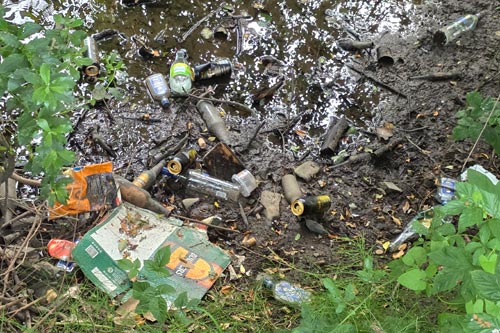
Pictures of the River Suir bed not shown in “Team Lowry’s” promotional video. The litter remains almost six weeks after the Liberty Music Festival, with no proper clean-up and no bin near “Wino’s Corner” despite repeated requests to Tipperary County Council.
All such commitments is welcome, but it remains only a commitment to support an application. The public has not yet been given a detailed proposal identifying:- The exact works to be undertaken. The evidence that those works will improve the river. The environmental assessments required. The project’s anticipated cost and timetable. The agencies responsible for delivering and monitoring it.
After years of warnings, the people of Tipperary are entitled to something more substantial than another announcement.
Where Have Our Representatives and Council Officials Been? The present condition of the Suir did not develop overnight. Local representatives and council officials have had ample opportunity to inspect the river, consult anglers and environmental groups, engage the relevant agencies and develop a long-term plan. Instead, the response has too often appeared fragmented and reactive.
Councillor Micheál Lowry and his father, Deputy Michael Lowry TD, are now drawing attention to conditions that local campaigners say have been evident for more than a decade. Their intervention must therefore be judged by what it delivers, not by the number of statements, videos or the ministerial visits it generates.
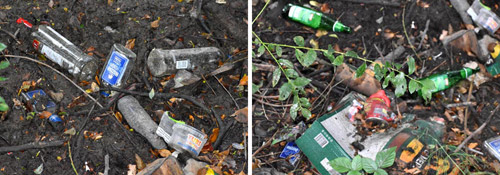
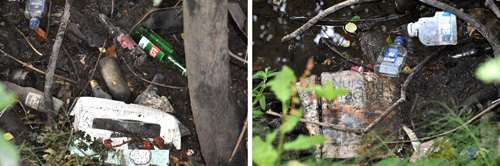
Other pictures of the River Suir bed not shown in “Team Lowry’s” promotional video. The litter remains in the river, together with 6 Supermarket trollies, almost six weeks after the Liberty Music Festival, with no proper clean-up and no bin near “Wino’s Corner” despite repeated requests to Tipperary County Council.
It should be noted:Thurles Town Park bye-laws were formally made by Tipperary County Council acting through the Templemore–Thurles Municipal District, and they came into operation on March 1st 2016. Available evidence indicates that those bye-laws then regulated alcohol consumption in the park, but this bye-law today remains totally ignored by all and sundry.
The same standard must be applied to Tipperary County Council. If the Council intends to seek OPW funding, it should publish its proposal and explain how any vegetation removal, blockage clearance or flood-related work will be reconciled with water quality, fisheries and habitat protection.
This Is More Than a Question of Appearance The problem cannot be reduced to reeds, bulrushes or an untidy riverbank. The Suir catchment covers approximately 3,500 square kilometres. Catchments.ie has previously identified excess phosphorus from sources including wastewater, animal waste and fertilisers as a major water-quality pressure. Excess nutrients can drive eutrophication, damaging aquatic habitats and reducing ecological quality. Catchments.ie’s Suir assessment also shows why pollution sources vary across the catchment and require targeted measures rather than a single cosmetic response.
Low summer flows, pollution, heavy plant growth, sediment and physical obstructions may interact, but they are not necessarily the same problem. Removing vegetation without identifying the underlying causes will not, by itself, restore the river. Any intervention must be scientifically informed and developed with the relevant environmental and fisheries authorities.
Too Many Agencies—and Too Little Accountability Responsibility for the Suir is spread across numerous organisations, including: Tipperary County Council. The River Basin Management Service, (formerly LAWPRO). The Environmental Protection Agency. Inland Fisheries Ireland. The Office of Public Works. Uisce Éireann. The National Parks and Wildlife Service. Local landowners, anglers and recreational organisations.
This above complicated structure cannot continue to provide cover for delay and buck-passing. The public needs to know which body is leading the response, what each agency is responsible for and when measurable improvements will be delivered. The failure to prominently involve or even acknowledge the River Basin Management Service in recent Lowry political presentations is particularly difficult to understand.
Community Initiatives Must Be Supported; but Properly Coordinated. The Cashel, Golden and Tipperary Anglers Association is reportedly considering seeking assistance to hire specialist equipment to remove bulrushes from parts of the riverbed. Separately, NoreVision is reported to be progressing proposals for River Suir and River Barrow trusts. Such trusts could help communities undertake practical restoration, education and awareness projects, provided they have appropriate scientific guidance, sustainable funding and constructive relationships with public agencies. Community organisations can make an enormous contribution, but volunteers should not be expected to compensate indefinitely for failures of statutory responsibility.
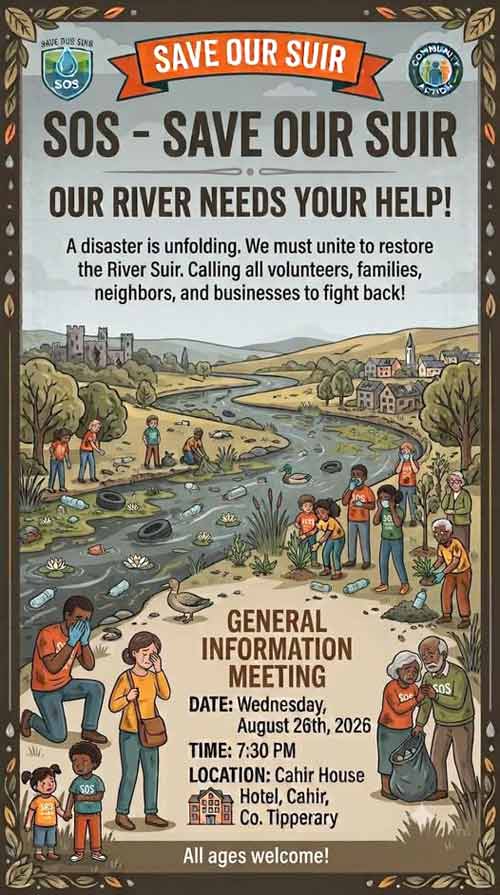
Public “Save Our Suir” Meeting in Cahir. A public information meeting is scheduled following a recent committee meeting of the Cashel, Golden and Tipperary Anglers Association. Date: Wednesday, August 26th, 2026. Time: 7:30pm. Venue: Cahir House Hotel. Tel.: 052 7443000. Admission: Open to all. Note: I could not independently locate an official online notice confirming the above event, thus intending attendees should check the organiser’s latest announcement before travelling.
The “Save Our Suir” proposed meeting offers residents, anglers, landowners, recreational users and environmental campaigners an opportunity to hear what is being proposed and to demand answers from those responsible.
The Suir Needs a Plan; NOT Another Vote Catching Publicity Exercise. The River Suir is an ecological, recreational and economic asset belonging to the entire community. Its future cannot be protected through disconnected funding announcements, short-term clearance projects or political sound-bites.
Those attending any Cahir meeting should demand: A published, science-based assessment of the river’s condition. Identification and investigation of pollution sources. A costed restoration and maintenance programme. A clear division of responsibility among the Council and State agencies. Meaningful consultation with anglers, environmental specialists, landowners and residents. Public reporting against firm delivery dates.
After years of warnings, elected representatives and council officials must be held accountable for the absence of effective action. The question is no longer whether the River Suir is under pressure. The question is who will take responsibility and how soon tangible work will begin.
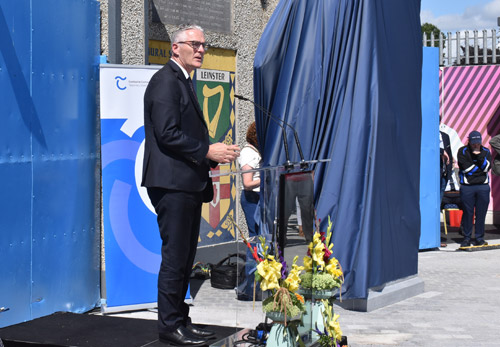
GAA President Jarlath Burns has pledged to do everything within his power to help secure a brighter future for Semple Stadium, during the remainder of his term in office.
The Armagh native made the commitment at the unveiling of the new “Ár gCluichí Féin” statue at the historic Thurles venue yesterday.
With Semple Stadium having fallen behind many of the country’s more modern grounds, the need for significant investment and redevelopment is now widely recognised. Addressing those in attendance, Mr Burns spoke passionately about the responsibility facing the GAA and its leadership over the coming decade. He said the stadium must receive the funding required to ensure future generations can continue to take pride in one of the Association’s most iconic venues. Mr Burns pledged that, during his remaining months as Uachtarán Chumann Lúthchleas Gael, he would work to honour Semple Stadium and help restore it to the standard envisioned by pioneering figures such as Tom Semple.
His powerful five-minute address left a lasting impression on the audience. Speaking without notes, his exceptional command of the Irish language, natural eloquence and strength as a public speaker, held those present in awe.
His remarks were a fitting and memorable tribute to Semple Stadium’s remarkable past, as well as a strong statement of intent regarding its future.
Rain has returned to Thurles this evening, Monday, July 27th 2026, after an unusually long dry spell.
Met Éireann’s provisional summer records show that much of County Tipperary experienced sustained dry conditions through the first three weeks of July, while the nearby Gurteen weather station had recorded a notably wet June. On the available evidence, the last proper measurable rain in the Thurles area appears to have fallen around June 30th, making this evening’s rainfall the first significant rain for almost four weeks.
“Singin’ In The Rain”.
Lyrics: American lyricist and a Hollywood film producer, the late Arthur Freed[Grossman](1894–1973). Vocals: American dancer, actor, singer, director and choreographer, the late Gene Kelly(Eugene Curran Kelly)(1912–1996) latter whose parents were both of second generation Irish decent. [Derry on his mother’s side (Harriet Catherine Curran), and possibly Co. Clare (but not conclusively) on his father’s side (James Patrick Joseph Kelly)]
Late GreatGene Kelly. (Eugene Curran Kelly)(1912–1996).
Few songs capture the pleasure of a rainy evening as perfectly as “Singin’ in the Rain,” famously performed by Gene Kelly in the 1952 musical film of the same name. First introduced decades earlier, the song became immortal through Kelly’s joyful performance as he dances along a rain-soaked street, splashing through puddles and turning an ordinary downpour into an expression of happiness and romance. The sequence remains one of the most recognisable moments in cinema history.
I’m singin’ in the rain, just singin’ in the rain, What a glorious feelin’, I’m happy again. I’m laughin’ at clouds so dark up above, The sun’s in my heart and I’m ready for love. Let the stormy clouds chase everyone from the place, Come on with the rain, I’ve a smile on my face. I walk down the lane with a happy refrain, Just singin’, singin’ in the rain.
Dancing in the rain, I’m happy again.
I’m singin’ and dancin’ in the rain. I’m dancin’ and singin’ in the rain.
The Local Authority Waters Programme, commonly known as LAWPRO, has now officially become the River Basin Management Service, marking a new chapter in the organisation’s work to protect and restore water quality across Ireland.
The service works on behalf of Ireland’s 31 local authorities and is funded by the Department of Housing, Local Government and Heritage. It supports the protection of rivers, lakes, estuaries, groundwater and coastal waters through scientific catchment assessments, community engagement and coordinated local-authority action. Although the organisation has adopted a new name and visual identity, its mission, structure and responsibilities remain unchanged. The new title is intended to provide a clearer description of its role in supporting Ireland’s national water-quality objectives and the implementation of river basin management plans.
Established in 2016, the organisation has worked with local authorities, government agencies, farmers, landowners, volunteers, environmental organisations and community groups to identify pressures affecting water quality and develop suitable local responses.
Unsatisfactory state of the River Suir, in Thurles town centre, yesterday. Pic; G. Willoughby.
Minister for Housing, Local Government and Heritage Mr James Browne, TD, welcomed the announcement. He said the new name reflects the organisation’s important role in coordinating and supporting the protection and restoration of water bodies as Ireland prepares its next Water Action Plan. The River Basin Management Service will continue carrying out catchment-science assessments, helping local authorities implement national water policy and providing financial assistance to community organisations working to improve their local waters.
Community participation has been central to the organisation’s activities. Since its establishment, approximately €7.5 million has been awarded to 1,208 projects through the Community Water Development Fund and Catchment Support Fund. Further support has been provided through the Small Grants and Events Scheme and annual Heritage Week funding. These programmes enable communities to organise water-awareness events, citizen-science initiatives, biodiversity projects, environmental surveys and other activities that benefit local rivers, lakes and coastal areas. The organisation’s work is particularly relevant to communities along the River Suir, including Thurles, where residents have raised concerns about declining water quality, excessive aquatic vegetation and changes affecting fish and other wildlife.
At a public meeting in County Tipperary in November 2025, attendees highlighted concerns about the River Suir from Thurles upstream. Issues discussed included nutrient pollution, excessive weed growth and reductions in fish and aquatic life. The meeting also heard that scientific assessments were being conducted across the wider Suir catchment to identify the main pressures affecting its waters.
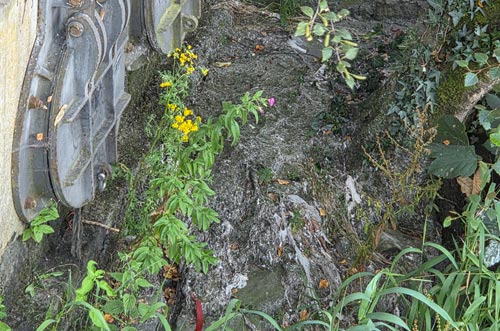
Despite all the talking, no serious effort by Tipperary Co. Council to halt effluent flowing from drainage pipes, easily visible from Thurles Town centre.
Such assessments demonstrate the importance of combining scientific evidence with local knowledge. Information from residents, anglers, farmers and community groups can help specialists understand changes within a river and determine which measures are most likely to improve its ecological condition.
Mr Anthony Coleman, Director of Services at the River Basin Management Service, confirmed that the organisation will continue operating as the same local-authority shared service. Its work will remain focused on catchment science, community engagement, partnership development, funding support and collaborative action. The service will maintain a science-led approach to identifying environmental pressures and targeting solutions. Its specialists examine water bodies and surrounding landscapes to establish which activities may be affecting water quality and where intervention is most urgently needed.
It will also continue developing its Nature-based Solutions programme and the Blue Dot Catchments Programme, which supports the protection of Ireland’s highest-quality waters. In addition, it will coordinate the Farming for Water European Innovation Partnership and expand training programmes for local-authority staff.
By adopting the Local Government Ireland identity, the River Basin Management Service is strengthening its connection with the local-government sector and aligning itself with other shared services. While its name has changed, its central commitment remains the same; bringing together science, local authorities and communities to protect Ireland’s waters and create healthier catchments for future generations.
This website uses cookies to improve your experience. We'll assume you're ok with this, but you can opt-out if you wish.AcceptRead More
Privacy & Cookies Policy
Privacy Overview
This website uses cookies to improve your experience while you navigate through the website. Out of these, the cookies that are categorized as necessary are stored on your browser as they are essential for the working of basic functionalities of the website. We also use third-party cookies that help us analyze and understand how you use this website. These cookies will be stored in your browser only with your consent. You also have the option to opt-out of these cookies. But opting out of some of these cookies may affect your browsing experience.
Necessary cookies are absolutely essential for the website to function properly. This category only includes cookies that ensures basic functionalities and security features of the website. These cookies do not store any personal information.
Any cookies that may not be particularly necessary for the website to function and is used specifically to collect user personal data via analytics, ads, other embedded contents are termed as non-necessary cookies. It is mandatory to procure user consent prior to running these cookies on your website.




Recent Comments