The Stench of Neglect: River Suir in Thurles Suffocates in Waste.
A Waterway Left to Fester: Apparent Pollution, Institutional Neglect and an Inexcusable Failure to Act.
The early images in the video immediately below are visually consistent with sewage-contaminated water, inadequately treated wastewater, detergent-bearing grey-water, or another organic effluent. The foam could indicate surfactants, while the grey colour and sludge may indicate suspended solids and decomposing organic matter. It does not resemble clean surface-water run-off.
However, a photograph alone cannot conclusively identify the slowly flowing substance in a river now almost static. Proper investigation should include samples from the suspected discharge point and locations upstream and downstream. Relevant analyses include dissolved oxygen, BOD, COD, ammonia, orthophosphate, suspended solids, E. coli, conductivity and surfactants. EPA material confirms that BOD, dissolved oxygen, ammonia, nitrate and phosphorus are central indicators of organic contamination, and that pollution-incident sampling should cover downstream, discharge-point and upstream locations.EPA sampling procedure
This slide-show above, however, presents a disgusting and deeply alarming picture; grey, foaming liquid and foul-looking sludge accumulating in what should be a living watercourse. Its exact composition must now be determined by laboratory testing, but its visible condition is wholly incompatible with the clean, healthy river environment the public is entitled to expect.
This river is neither a sewer nor a dumping ground. If analysis confirms an unlawful discharge, its source must be stopped, the damage remediated and every available enforcement power used.
Continued neglect after documented notification would be indefensible, a betrayal of the waterway, its wildlife and the community these authorities and representatives are supposed to serve.
Reminder
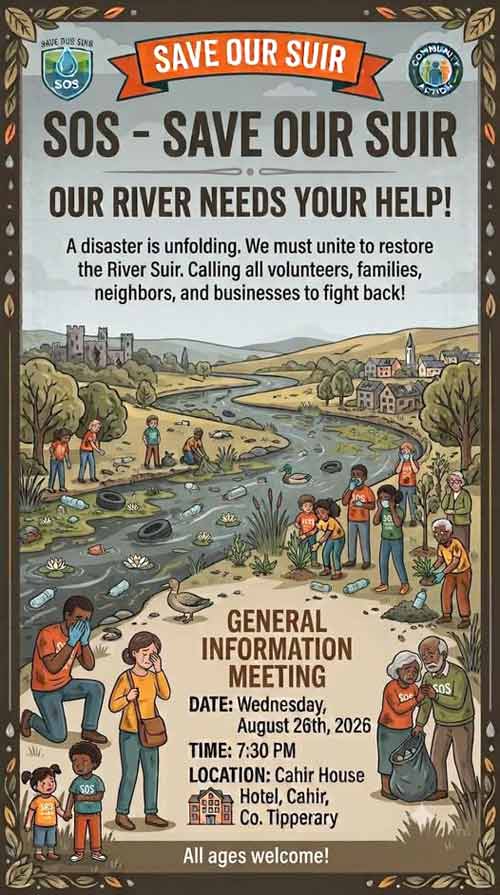
We can confirm that the above public meeting will take place, as stated above.
Thirteen years of warnings As stated in a recent post on Thurles.Info, the deterioration of the River Suir cannot credibly be described as “sudden” or “unforeseeable”. For more than a decade, residents, anglers and environmental campaigners have raised concerns about pollution, excessive vegetation, restricted flow, sediment, litter and neglect. These concerns were documented in “River Suir Crisis—Thirteen Years of Warnings, But Still No Coordinated Action”.
Now, 13 yearslater; the Minister of State Mr Kevin “Boxer” Moran recently visited sections of the Suir in Thurles and Holycross following representations from Independent TD Michael Lowry. It was stated that the Office of Public Works would support an application by Tipperary County Council under the enhanced Minor Flood Mitigation Works Scheme. However, I can confirm from recent discussions with varying responsible bodies, that they are not aware of any recent communication. Support for an application is welcome, but it is not a restoration programme. The public has not been shown the precise work proposed, the scientific evidence supporting it, the environmental assessments required, the anticipated cost and timetable or the body responsible for delivery and monitoring.
Political videos, visits and announcements by politicians and councillors cannot substitute for accountable work. Councillor Micheál Lowry, Deputy Michael Lowry and every other representative addressing the issue must be judged by measurable results. The same standard must apply to Tipperary County Council officials. [ Which begs the question; “Where were all the other local elected councillors when a recent promotional video, capturedby Mr Lowry TD, was uploaded unto social media.” ]
The missing ingredient for the River Suir is not more talk, it is delivery.We need clear answers:
► What works will be carried out? ► When will they begin? ► Who is responsible for delivery? ► Has the funding application now been submitted? ► What section of the river will be prioritised first? ► How will pollution and damaging discharges be reduced? ► How will progress be measured and reported publicly?
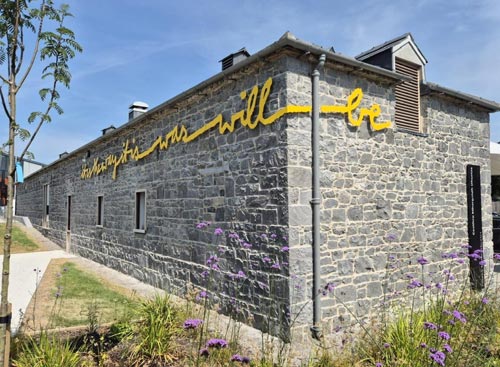
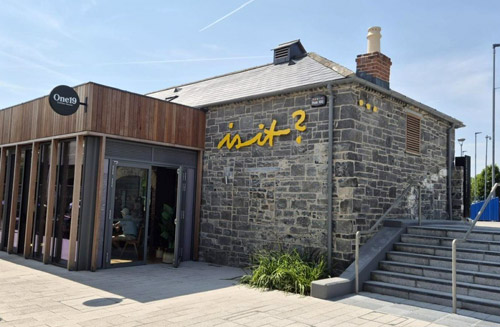
A striking ribbon of yellow now sweeps around the new café at Thurles Market Quarter, carrying with it the voices of the past, the questions of the present and the possibilities of tomorrow.
Thurles.Info has already highlighted the work of talented artist Ms Anja Buchheister, despite previously being unable to identify the artist by name. Our sincere thanks, therefore, to Ms Esther Griffin, (Research Assistant with the Tipperary Arts Office), for bringing the artists name and her magnificent new public artwork, once again, to our attention.
Thurles Market Quarter. Pic: Anja Buchheister.
Created by artist Ms Anja Buchheister, “Flowing Places” is far more than an architectural embellishment. It is a compelling meditation on memory, change and our relationship with place. Wrapped around a building once belonging to the farmyard of nearby St Patrick’s College, the artwork transforms a historic structure into a living conversation between generations.
Cut from powder-coated metal, its words unfold in an endless, thought-provoking sequence: “it is the way it is … was … will be … is it? …”
With this playful reversal of a familiar expression, Ms Buchheister challenges passive acceptance. Is a place simply what it is – or is it also what it was, what it may become and what its community chooses to make of it?
Thurles Market Quarter. Pic: Anja Buchheister.
The artist’s research reached deep into Thurles itself. Old maps and conversations with local residents revealed layers of memory embedded in the former old early 19th century agricultural machinery sheds. These recollections helped shape an artwork that honours the people who came before, while recognising that every landscape remains in motion. Like the nearby River Suir, the words flow continuously around the building. There is no fixed beginning and no final conclusion; only an invitation to pause, remember and imagine.
Originally from Wolfenbüttel, Germany, Ms Buchheister now works from her studio in Templetuohy, Thurles. Drawing on her training in sculpture and graphic design, she has created a poetic intervention that is simultaneously bold and delicate, deeply local and universally resonant.
“Flowing Places” is a magnificent addition to Thurles Market Quarter; an artwork that does not merely occupy public space, but awakens it. It celebrates heritage without trapping it in the past and turns an evolving corner of Thurles into a landmark of curiosity, creativity and civic pride.
Commissioned by Tipperary County Council under the Per Cent for Art Scheme and developed with Thurles Municipal District, the work stands as a powerful reminder that public art can do more than decorate a place, it can give that place a voice.
What Is Celtic Knotwork? Discover This Ancient Irish Art at Cashel Library.
Celtic knotwork is a decorative art form made from continuous lines or bands woven over and under one another to create intricate interlacing patterns. These striking designs are closely associated with early Irish art and can be found in illuminated manuscripts, including the Book of Kells, as well as on carved stone monuments and historic metalwork.
Discover how these beautiful patterns are constructed at a free Celtic Knotwork art workshop for adults in Cashel Library.
Date: Tuesday, 18 August 2026 Time: 2:30–4:00 pm Venue: Cashel Library, Friar Street, Cashel Note: Free – but booking is essential
Led by artist Cher Gleeson, the workshop will introduce participants to Celtic design and help everyone create a finished artwork to take home. Cher has more than 25 years of experience in community arts and education, and learners of all abilities are welcome.
Note: Places are limited. Please Tel: 062 63825 to reserve your place.
People wishing to attend the above event can locate the Cashel Library building; situated on Friar Street, Lady’s Well, Cashel, Co. Tipperary, HERE. (Eircode E25 K798).
Nenagh Gaol Has Not Been Closed to Visitors for 100 Years – New Project Concerns a Separate Cell Block
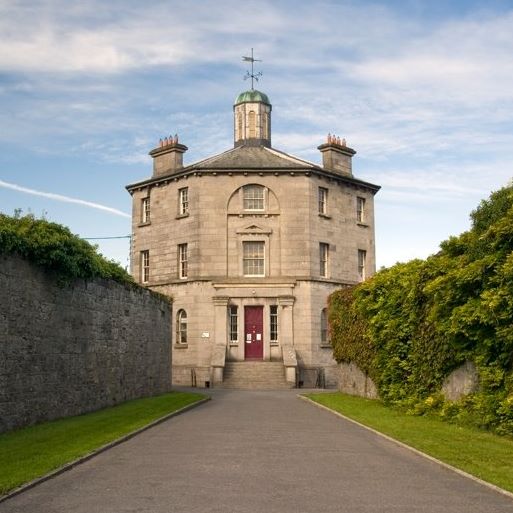
Nenagh Gaol, Co. Tipperary.
A recent press report [Irish Independent shown here] announcing a new exhibition at Nenagh Gaol could give readers the mistaken impression that the entire historic site has been closed to the public for more than a century. That is not the case.
Nenagh Heritage Centre, situated within the former gaol complex, has welcomed thousands of visitors since 1984. It occupies the former Governor’s House and Gatehouse, where visitors can already explore the site’s history and see the condemned cells associated with the 17 men executed there between 1842 and 1858.
The new proposed development relates specifically to a separate three-storey cell block that has not previously formed part of the public visitor experience. Tipperary County Council’s planning documents describe this building as a former cell block currently used as a council storage area. The project will conserve and adapt this previously inaccessible block, connect it with the existing Heritage Centre and introduce a new visitor exhibition, featuring interpretation and audio-visual displays.
Therefore, while it may be correct to say that this particular cell block is being opened to visitors for the first time in more than 100 years, it is inaccurate to suggest that Nenagh Gaol or its Heritage Centre has been closed throughout that period.
There is also a difference in the figures being reported. The official eTenders notice gives the estimated contract value as €110,000 excluding VAT, rather than just under €130,000.
Tourists in the area are encouraged to visit this historic venue, which historically housed those sentenced to death by public hanging. See link shown HERE
We learn from press reports that Ireland’s tourism agencies have spent more than €1 million paying influencers to promote holiday destinations, since the beginning of 2025.
That is a substantial amount of public money and it deserves more than impressive claims about followers, views and “audience reach.” It deserves transparent evidence that these campaigns generated additional visitors, bookings and revenue. Tourism has certainly improved. Ireland welcomed more than 3.2 million overseas visitors during the first half of 2026; 15% more than in the same period of 2025. Their spending increased by 18% to €2.6 billion.
Those are encouraging figures, but they do not prove that influencer marketing produced the recovery. Tourism is affected by airline capacity, ferry connections, weather, exchange rates, prices, consumer confidence and many other forms of advertising. An influencer reaching millions of social-media accounts is not the same as delivering millions of tourists. A view is not a booking, a “like” is not a hotel stay, and a follower is not necessarily a prospective visitor.
This distinction is particularly important for Tipperary. The county’s tourism performance during 2025 was positive but mixed. Sixty per cent of tourism businesses reported growth and 14% remained stable, while 26% experienced a decline. Attractions and activity providers performed well, with 82% growing or maintaining attendance.
However, accommodation businesses had a more difficult experience: 34% reported a decline, while shorter stays and later bookings remained significant problems. Much of Tipperary’s strength also came from domestic residents and day-trippers. An impressive 94% of attractions maintained or increased their Ireland-based visitors.
That is good news, but it does not demonstrate that paid influencer visits generated significant additional tourism. In fact, favourable weather, local engagement, repeat visitors and domestic day trips were identified as important reasons for Tipperary’s performance.
Tipperary does has a tourism product that should be capable of selling itself internationally: the Rock of Cashel, Cahir Castle, Lough Derg, the Glen of Aherlow, the Galtee Mountains, Holycross Abbey and a rich combination of history, food, outdoor recreation and authentic rural communities. The county’s challenge is not simply attracting social-media attention. It is converting interest and day trips into overnight stays, encouraging visitors to explore beyond the best-known locations and ensuring that tourism spending reaches local accommodation providers, restaurants, shops and communities.
There is a legitimate place for digital creators in modern tourism promotion. Social media influences approximately 23 – 24% of potential visitors looking for holiday inspiration. However, recommendations and online searches are even more influential.
The biggest reason people choose Ireland is not celebrity endorsement. It is the country itself. Tourism Ireland’s research shows that scenery is the leading reason for choosing Ireland, cited by 33% of potential visitors. It is followed by Culture, Sightseeing and History. Historic Sites, Food and Drink, Walking, Hiking and Nature have exceptionally broad appeal. The public should therefore be asking whether enough money is being invested directly in the things visitors actually come to experience: heritage conservation, trails, public transport, visitor facilities, signage, accessibility, accommodation capacity and effective booking systems.
The strongest criticism is not that every influencer campaign is wasteful. We do not have the evidence to make that claim. The problem is that the agencies have not publicly demonstrated the opposite.
After spending more than €1 million, reporting enormous audience reach is inadequate. The agencies should now publish, for every major campaign: The total fee and associated travel costs. The audience and markets targeted. Engagement from relevant prospective visitors. Confirmed bookings or attributable visitor spending. Cost per booking and return on public investment. Honest regional results, including overnight stays generated in counties such as Tipperary. (Remembering no establishment likes to report decline.)
If those measurements show that influencer marketing works, the agencies will have a strong case for continuing it. If they cannot produce them, taxpayers are entitled to question whether public money is supporting tourism, or merely subsidising attractive trips and highly polished social-media content.
Ireland’s tourism recovery is welcome. Tipperary’s attractions are showing real resilience. But neither development gives tourism agencies a blank cheque.
Publicity is not performance. Reach is not revenue. Public money must produce measurable public value.
This website uses cookies to improve your experience. We'll assume you're ok with this, but you can opt-out if you wish.AcceptRead More
Privacy & Cookies Policy
Privacy Overview
This website uses cookies to improve your experience while you navigate through the website. Out of these, the cookies that are categorized as necessary are stored on your browser as they are essential for the working of basic functionalities of the website. We also use third-party cookies that help us analyze and understand how you use this website. These cookies will be stored in your browser only with your consent. You also have the option to opt-out of these cookies. But opting out of some of these cookies may affect your browsing experience.
Necessary cookies are absolutely essential for the website to function properly. This category only includes cookies that ensures basic functionalities and security features of the website. These cookies do not store any personal information.
Any cookies that may not be particularly necessary for the website to function and is used specifically to collect user personal data via analytics, ads, other embedded contents are termed as non-necessary cookies. It is mandatory to procure user consent prior to running these cookies on your website.




Recent Comments