One Council Restores History While Another Erases It – The Loss of Thurles’s Famine Double Ditch.
The decision by Dún Laoghaire-Rathdown County Council to spend approximately €660,000plus VAT restoring a historic ha-ha wall in Marlay Park (latter a sunken landscape boundary that uses a hidden trench and a vertical retaining wall), has understandably generated debate. The 197-metre structure, believed to date from the early nineteenth century, was designed to separate landscaped gardens from grazing animals without interrupting views across the estate. Much of its original locally sourced granite survived beneath vegetation, but the wall had fallen into disrepair. Restoration required specialist conservation work, dismantling and rebuilding sections of dry-stone wall, repairing the ditch and incorporating drainage infrastructure. The original contract was valued at €625,398 excluding VAT, with the final estimate rising to €660,374 following delays, unsuitable ground material, severe weather and difficulties obtaining appropriate stone.
Local construction professionals and taxpayers are entitled to question whether that represents value for money. Public bodies must explain how costs are calculated, why projects exceed their initial budgets and whether procurement arrangements adequately protect the public purse. Dún Laoghaire-Rathdown County Council has already faced criticism over the €753,528 cost of works at an entrance to Deerpark in Mount Merrion. That project is frequently described as the construction of “14 steps”, although the council says it also included a wheelchair-accessible ramp, retaining walls, granite paving, seating, landscaping, pedestrian crossings, road resurfacing, drainage, traffic-signal equipment and other public-realm works. The criticism of these costs is legitimate. Nevertheless, one important fact should not be forgotten: Dún Laoghaire-Rathdown County Council recognised that an historic structure was worth preserving.
That approach stands in painful contrast to what happened in Thurles.
The Thurles Great Famine Double Ditch was regarded locally as a rare surviving famine-era landscape feature. Local historical accounts date its construction accurately to 1846 and associate it with relief work provided to men and boys during the Great Famine. Rather than representing the landscaped elegance of a wealthy Dublin estate, this Double Ditch recalled hunger, poverty and the desperate struggle of local families to survive. It was not simply an old embankment. It was a physical connection with one of the darkest periods in Irish history. For generations, the route was also described locally as a public walkway and Mass path. Campaigners argued that it formed part of the social history of Thurles and should have been incorporated into a protected heritage trail.
Despite repeated warnings, the entire section of the Double Ditch was cleared in March 2022 supported by local councillors, as part of works connected with as yet a non existent, only proposed Thurles inner relief road. Contemporary photographs and local reporting showed mature vegetation being removed and the historic landscape feature being levelled by machinery.
Historic Thurles Double Ditch Eradicated in 2022. Pic. G.Willoughby.
Once such a structure is destroyed, it cannot truly be recreated. A replica might reproduce its approximate appearance, but it cannot restore the original stones, soil, boundaries and physical connection with the people who constructed it during the Great Famine.
This is the real loss suffered by Thurles. Tipperary County Council regularly speaks about protecting heritage and connecting communities with their past. Yet the treatment of the Double Ditch demonstrates the gulf that can exist between heritage policies and decisions taken on the ground. Roads and development are necessary, but heritage protection does not require a complete rejection of progress. It requires imagination, consultation and a willingness to examine alternative designs before destruction becomes inevitable.
The contrast between the two councils is striking. In Dublin, hundreds of thousands of euro are being spent restoring an aristocratic landscape feature. In Thurles, a structure associated with ordinary people surviving the Great Famine was treated as totally expendable. The Marlay Park bill deserves detailed scrutiny. So does every major publicly funded project. But the principle of conserving historic structures should be welcomed.
Led by the denials of elected councillors; mainly Mr Michaél Lowry (Non Party), Mr Sean Ryan (FF) and Mr Seamus Hanafin (FF), together with senior council officials, through wilful ignorance, self-deception, blind persistence and despite knowing better oversaw this reckless destruction. Thus the tragedy in Thurles is that the debate never reached the question of restoration costs.
The Double Ditch was not protected long enough for restoration to become an option. Dún Laoghaire–Rathdown County Council may reasonably be criticised for excessive costs. Tipperary County Council should be criticised for allowing irreplaceable local history to be destroyed.
One council appears willing to spend too much preserving history. The other did too little before all of that history was totally eradicated and lost forever.
Neither approach represents good stewardship of public money or public heritage, and the waste continues without the consent of the Irish taxpayer.
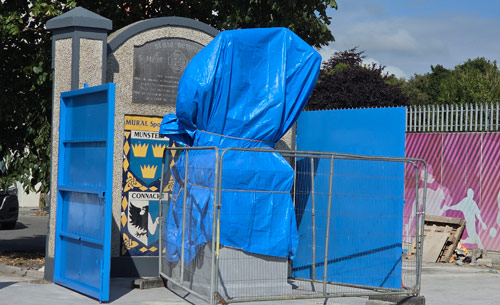
A striking new bronze artwork planned and in place at the entrance to FBD Semple Stadium in Thurles; celebrating Tipperary’s unique place in the history of Gaelic games.
The permanent public artwork was commissioned by Tipperary County Council in partnership with Tipperary GAA and the management of FBD Semple Stadium. It is installed near the stadium entrance, and expected to create a new landmark for supporters, visitors and the wider Thurles community.
Set to be unveiled; artwork celebrating Thurles as birthplace of the GAA. Pic: G. Willoughby.
Rather than honouring one individual player or official, we understand the sculpture is intended to represent Gaelic games more broadly. The original commission sought a bronze design featuring male and female sporting figures, reflecting the traditions of hurling, camogie, Gaelic football and ladies’ football.
The location is particularly significant. The Gaelic Athletic Association was founded in Hayes’ Hotel, Thurles, on November 1st 1884, while the Ladies Gaelic Football Association was also established in the town in 1974. The artwork will therefore recognise Thurles not only as one of Ireland’s great sporting towns, but as the birthplace of organisations that have shaped Irish community life for generations.
Semple Stadium itself has played a central role in that history. It is the home of Tipperary hurling and football and one of the country’s most famous GAA venues. The stadium was named after Mr Tom Semple in 1971 and hosted the historic 1984 All-Ireland Hurling Final, during the GAA’s centenary celebrations.
Full public details of the completed sculpture, including the selected artist and the formal unveiling arrangements, have not yet been clearly published on the council’s official project page.
When unveiled, the new bronze tribute should provide a lasting reminder of Thurles’ proud contribution to Ireland’s national games.
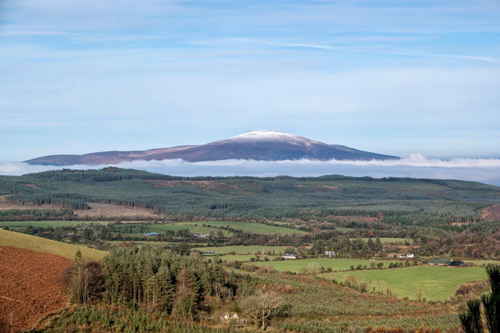
Emergency services are continuing efforts to contain a wildfire burning on Slievenamon mountain in County Tipperary.
Slievenamon is one of County Tipperary’s most important natural and cultural landmarks, rising prominently above the surrounding plains and serving as a valued destination for walking, recreation and appreciation of the county’s landscape. Its importance extends far beyond scenery: the mountain contains prehistoric burial remains, is deeply connected with Irish mythology and the stories of Fionn mac Cumhaill, and inspired Charles Kickham’s song “Slievenamon,” widely regarded as Tipperary’s unofficial county anthem. As a place where nature, archaeology, folklore and local identity come together, protecting Slievenamon is essential for preserving biodiversity, heritage and a powerful symbol of belonging for generations to come.
Firefighters withdrew from the mountain overnight because darkness, difficult terrain and limited visibility made operations unsafe. Crews maintained a presence in the area and continued monitoring the fire throughout the night.
Overnight fog helped subdue the blaze, while firebreaks established during Monday’s operation limited its spread. However, the fire remains active, and officials say there is still considerable work to be done.
Crews from Clonmel, Cahir and Carrick-on-Suir are assessing the affected area and developing a plan to safely return to the mountain. Aerial assessment is also being used to establish the extent of the fire and any possible impact on nearby forestry.
Emergency services have said there is currently no imminent threat to residential properties. Members of the public are being asked to avoid the affected area, follow all instructions from emergency personnel and exercise extreme caution during the continuing warm and dry conditions.
People should not light fires or disposable barbecues grills in or near forests, grasslands or upland areas. Any sign of fire should be reported immediately by calling 112 or 999.
Where Tipperary Childhood Can Run Free – A Magical Day at Leahy’s East Cork Open Farm.
There are childhood days that disappear almost as soon as they are over, and then there are days that seem to glow in children’s memory for years. A family visit to Leahy’s Open Farm in the green countryside of East Cork belongs firmly in the second category. For families travelling from Tipperary, the journey to Dungourney feels like the beginning of the adventure. Familiar streets gradually give way to winding country roads, hedgerows, open fields and the soft colours of rural Ireland. By the time the farm comes into view, everyday routines already feel far behind. Yet it is when children discover the play areas that the true magic begins.
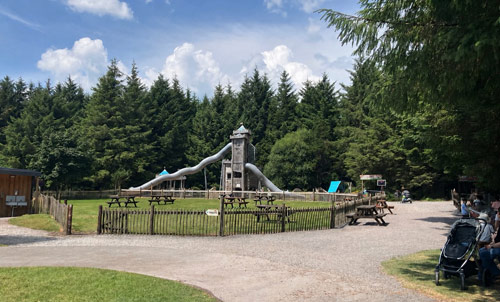
Playground Made for Big Imaginations. Pic: G. Willoughby.
A Playground Made for Big Imaginations Leahy’s is not simply a place where children look at animals and move quietly from one enclosure to another. It is a place created for movement, curiosity and joyful noise. Across the farm, play spaces invite young visitors to climb, race, dig, slide and explore. Adventure trails stretch ahead like secret pathways, while climbing towers challenge children to rise a little higher and become a little braver with every step. The playgrounds feel less like ordinary equipment and more like stages for childhood stories. A wooden tower becomes a castle. A bridge becomes a crossing over a mysterious valley. A slide becomes a thrilling escape route from an imaginary dragon. Sure, Parents may see timber, ropes and platforms, but children see entire worlds waiting to be conquered.
The Thrill of the real Digger Park For many young visitors, the Digger Park is where dreams suddenly become real. Here, children can take control of real machinery and experience the irresistible satisfaction of scooping, lifting and moving earth. Small hands grip the controls in safety with serious concentration. Faces light up when the bucket finally rises. For a few exciting minutes, they are no longer visitors to a farm; they are builders, engineers and expert machine operators with important work to complete. It is hands-on play at its best; exciting, physical and wonderfully absorbing. This attraction is especially memorable because it offers something children do not often experience elsewhere. They are not merely pressing buttons on a screen or watching someone else having fun. They are participating, experimenting and discovering what they can do.
Laughter on the Barrel Train. Then comes the Barrel Train, rumbling along its route with a cheerful collection of passengers. Children climb aboard with bright eyes and waving hands, ready to be carried around the farm. As the little carriages follow one another, laughter drifts across the countryside. Parents stand nearby, smiling as the train passes, cameras raised to capture expressions of complete delight. The ride may last only a short while, but to a child it can feel like a grand journey through a faraway land. It is one of those simple family experiences that asks for nothing more than everyone being present; children laughing, parents watching and a day unfolding without hurry.
Indoor Adventures When the Rain Appears. Irish skies have a habit of changing their minds, but rain does not have to end the adventure at Leahy’s Farm. The Play Barn and other indoor attractions provide plenty of space for energetic children to continue exploring. When showers tap against the roof, families can step inside rather than packing up and heading for home. The covered play areas also give the day a pleasant rhythm. Children can race around outdoors while the weather is bright, retreat indoors when the clouds gather and return to the fresh air when the sun reappears. This mixture of indoor and outdoor entertainment makes the farm particularly reassuring for parents planning a full day away from home.
Gentle Moments Among the Excitement. Although the play areas are filled with action, Leahy’s also offers quieter moments. Between climbs and train rides, families can wander through the farm, meet its animals (friendly Alpacas, Goats, Sheep, Donkeys, Horses, Rabbits, Snakes, Pigs and Chickens) while discovering displays celebrating Irish rural life. The farm museum introduces visitors to tools, machinery and traditions from earlier generations, adding a sense of heritage to the day.
There is something lovely about watching a child move from the excitement of a playground to the gentle wonder of meeting an animal. One moment they are racing towards a climbing tower; the next, they are standing perfectly still, fascinated by a goat, donkey or rabbit. These contrasts give this farm its special character. Adventure and education sit naturally beside one another, without the day ever feeling organised like a classroom lesson.
Homemade Ice cream. Pic: G. Willoughby.
A Sweet Ending to the Adventure. After hours of climbing, digging, running and exploring, there is still one final pleasure to enjoy. Leahy’s is also known for its ice cream and chocolate experiences, offering families a suitably sweet conclusion to their visit.
Tired children can sit down with a treat, while parents enjoy a well-earned pause and talk about the day’s favourite moments. Perhaps it was the Barrel Train. Perhaps it was the biggest slide, the diggers or the animals. Every child will carry home a different memory. For Tipperary families searching for more than an ordinary afternoon out, Leahy’s Open Farm offers space to reconnect, play and make memories together. Its playgrounds are not simply places to burn off energy. They are places where confidence grows, imaginations awaken and childhood is allowed to run gloriously free.
Long after the muddy shoes have been cleaned and the final photographs have been shared, the laughter of that East Cork adventure will still feel wonderfully close.
RATE Leahy’s East Cork Open Farm with regards Enjoyment and Value for Money: An exceptional 10/10 rating – something increasingly rare in Ireland today.
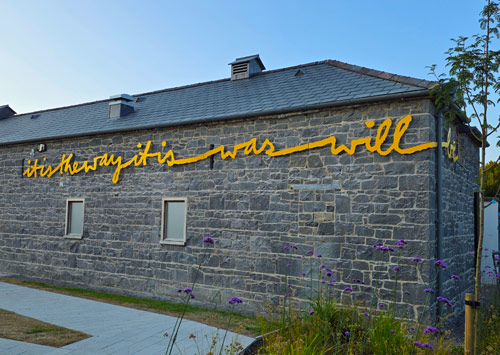
The above words are placed so beautifully and appropriately that it would be difficult to imagine a better setting.
Written in glowing golden script across the weathered limestone, the inscription seems almost to float upon the old walls; not merely as a sign, but as a quiet conversation between what has been, what is now and what is still to come. This striking artwork adorns the carefully restored 1849 stone old farm building in what is now Thurles Market Quarter. Once a modest agricultural shed, shaped by work, weather and generations of local life, it has now been lovingly reborn as ONE19 Coffee House & Restaurant.
West side of “One19 Restaurant”, Cathedral Street,Thurles, Co. Tipperary.
Its transformation has thankfully not erased its past. Instead, the old stone, the traditional form of the building and the marks of age have been allowed to remain, lending great warmth and authenticity to its new life. What was once a place of labour has become a place of welcome; a setting for coffee, food, conversation, friendship and new memories.
Its location gives the inscription an even deeper resonance. The building stands between two other landmarks, both woven into the spiritual and educational heritage of Thurles: the Cathedral of the Assumption and the former St Patrick’s College, now part of Mary Immaculate College. In such surroundings, the words/phrase naturally carry an almost sacred rhythm. They are not a direct quotation from Scripture, yet they gently recall the ancient Christian doxology:-“As it was in the beginning, is now, and ever shall be, world without end.” They also echo the language of the Book of Revelation, which describes God as the one “who is and who was and who is to come.”
Yet the sentiment has travelled beyond religious tradition and into popular culture. A closely related line, “That’s the way it is, was and will be”, introduces the established order of Sneetch society in the 2017 musical adaptation of Dr. Seuss’s “The Sneetches”. Dr. Seuss’s original 1961 story, later adapted for television in 1973, ultimately challenges the belief that society must always remain as it has been. The ‘Sneetches’ learn that inherited divisions are neither natural nor permanent and that even “the way it was”, can be changed.
The wording also appears with a more playful and satirical flavour in the 1974 comedy film “The Groove Tube”, where a fictional television newscaster signs off: “And that’s the way it is, was, and will be.” There, the phrase humorously imitates the certainty and authority of traditional television news.
Placed upon this restored building, however, the words take on a gentler and more romantic meaning. The stone remembers farm carts, tools, harvests and working hands. Today, those same walls shelter laughter, conversation and the aroma of freshly brewed coffee and hastily produced food. Tomorrow, they will hold stories belonging to generations not yet born.
The way it was: A humble building serving the life of the land. The way it is: A beautifully renewed gathering place in the heart of Thurles. The way it will be: A cherished part of Thurles town’s story for many years to come.
At dusk, when the golden lettering shines against the cool grey stone, it feels as though the building itself is speaking. Not mourning what has passed. Not resisting what has changed. Simply acknowledging that the past, present and future can inhabit the same place beautifully. An old building saved rather than forgotten. A historic quarter renewed rather than replaced unlike the towns Great Famine “Double Ditch“. A little philosophy, faith and humour written in golden light.
This website uses cookies to improve your experience. We'll assume you're ok with this, but you can opt-out if you wish.AcceptRead More
Privacy & Cookies Policy
Privacy Overview
This website uses cookies to improve your experience while you navigate through the website. Out of these, the cookies that are categorized as necessary are stored on your browser as they are essential for the working of basic functionalities of the website. We also use third-party cookies that help us analyze and understand how you use this website. These cookies will be stored in your browser only with your consent. You also have the option to opt-out of these cookies. But opting out of some of these cookies may affect your browsing experience.
Necessary cookies are absolutely essential for the website to function properly. This category only includes cookies that ensures basic functionalities and security features of the website. These cookies do not store any personal information.
Any cookies that may not be particularly necessary for the website to function and is used specifically to collect user personal data via analytics, ads, other embedded contents are termed as non-necessary cookies. It is mandatory to procure user consent prior to running these cookies on your website.





Recent Comments