Ireland’s wild Atlantic salmon are in serious decline.
Scientific estimates indicate that well over one million salmon returned to Irish rivers annually during much of the 1970s; in recent years that figure has fallen below 200,000. Inland Fisheries Ireland’s Technical Expert Group says the decline reflects pressures both at sea and in freshwater.
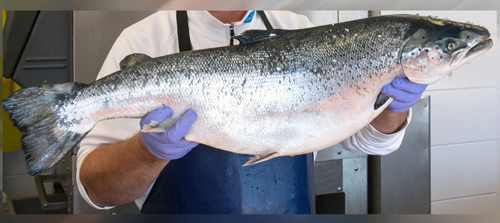
Atlantic Salmon.
For Tipperary and the River Suir, this is not an abstract national problem. The Suir is one of Ireland’s great salmon rivers and Atlantic salmon is a protected qualifying species within the Lower River Suir Special Area of Conservation, which extends through Tipperary, and Waterford.
The latest scientific assessment for the 2026 season groups the Suir, with the river Clodiagh near Holycross, and river Lingaun latter part of the border between Kilkenny and Tipperary, and Waterford Blackwater. At the standard 75% probability of achieving its conservation limit, the stock was recommended for catch-and-release fishing only, rather than having a harvestable surplus. Under more precautionary probability thresholds, the advice is now to close it.
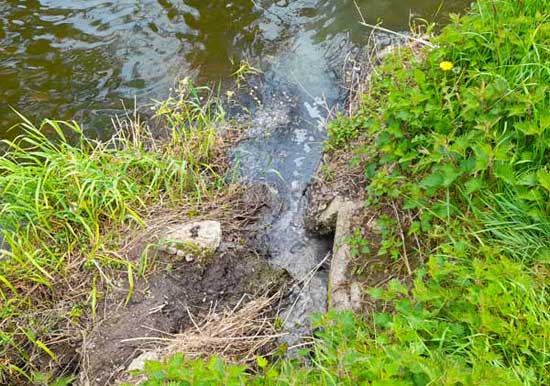
Domestic effluent allowed to flow into the River Suir for past 10 years unabated.
What is happening to our salmon? There is no single cause. Poor survival at sea certainly is a major part of the national decline, with changing ocean temperatures, food availability and wider changes in the North Atlantic affecting salmon after they leave Irish rivers. But what happens inside rivers such as the Suir also matters enormously. Salmon need clean, cool, well-oxygenated flowing water and clean gravel beds in which to spawn. The female buries her eggs among the stones. Water must circulate freely through that gravel to supply oxygen. When fine soil, silt and other sediment fill the spaces between the stones, the gravel can become clogged. Water circulation falls and the supply of oxygen to salmon eggs can be reduced. In badly affected spawning beds, eggs and newly hatched fish can die even though the surface of the river may look relatively normal.
Pollution and excessive nutrients are therefore important concerns. The EPA says agriculture and wastewater remain the greatest challenges to Irish water quality, with nitrogen and phosphorus still too high in many waters. In 2026 the EPA also reported that nitrogen remains particularly high across much of the south and southeast, with agriculture the main national source of nitrogen entering rivers. Environmental Protection Agency Tipperary has had direct examples of pollution affecting the Suir. In 2025 Inland Fisheries Ireland secured a conviction following a September 2024 incident at Holycross, where harmful matter entered the River Suir and approximately 400 metres of river bed was reported as having a yellowish-cream deposit. IFI warned that aluminium sulphate entering a river poses a major threat to aquatic ecosystems. Inland Fisheries Ireland
That incident should not be taken as the explanation for the long-term decline of the Suir salmon stock, but it demonstrates how vulnerable the river remains to individual pollution events on top of longer-term pressures.
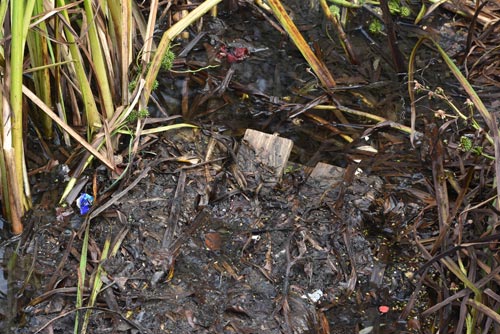
Rubbish blocking the river while an over abundance of reeds steal the oxygen.
Barriers are another major issue on the Suir Weirs, dams, culverts and other structures can prevent or delay salmon reaching spawning grounds. They can also change river flows and alter the natural movement of gravel and sediment. A very relevant Tipperary example is Bakery Weir in Cahir. IFI assessed the structure in 2018 and found it to be a significant barrier to migrating salmonids, as well as lamprey and coarse fish. Eight years later, a project is now being progressed to partially remove the weir and improve the natural river channel and fish passage. IFI explains more generally that barriers can stop fish reaching breeding habitat, increase the energy salmon need to expend during migration and interfere with the movement of the gravels and sediment needed to create healthy spawning beds.
So is pollution, lack of oxygen and clogged gravel responsible? They are certainly a large part of the problem and they are factors we can actually do something about locally. But the scientific evidence points to several pressures acting together:
poor survival of salmon at sea;
agricultural and wastewater pollution;
excess nutrients;
fine sediment clogging spawning gravel;
loss and alteration of river habitat;
barriers such as weirs and culverts;
warmer water, drought and extreme floods associated with climate change;
and other pressures including disease, predation and aquaculture.
The worrying point for Co. Tipperary is that we cannot control what happens to salmon throughout the North Atlantic, but we can improve the River Suir and its tributaries. That means protecting spawning gravel from excessive silt, reducing nutrient and pollution losses, improving sewage and wastewater treatment, restoring damaged river habitat, protecting river banks and riparian vegetation, and removing or modifying unnecessary barriers so that salmon can once again reach as much good spawning habitat as is possible. If young salmon leave the Suir in greater numbers and in better condition, they have a better chance of surviving the increasingly difficult journey at sea. The River Suir has supported wild Atlantic salmon for thousands of years. Their decline should be treated as a warning about the health of the entire river system, not simply as an angling issue. Protecting the salmon means protecting the River Suir, its tributaries, its spawning gravels and its water quality throughout County Tipperary and beyond.
Criminal Proceeds Redirected to Community Safety Projects – Tipperary Has Benefited in Previous Years.
More than €4.8 million seized through the proceeds of crime is being redirected into community projects across Ireland under the 2026 Community Safety Fund. Minister for Justice, Home Affairs and Migration Mr Jim O’Callaghan has announced funding of €4.84 million for 56 projects nationwide, supporting initiatives aimed at improving community safety, assisting vulnerable groups, encouraging youth participation and promoting greater inclusion and integration.
The Community Safety Fund uses proceeds of crime seized by the Criminal Assets Bureau and An Garda Síochána to support community-led projects. The 2026 allocation represents a 10% increase on the €4.4 million awarded in 2025 and is €2.84 million higher than the €2 million allocated when the fund was first introduced in 2022. The number of successful projects has also grown significantly, with 56 projects receiving support this year, more than double the number funded in the first year of the scheme.
The organisation has been awarded €74,000 for its Safe Neighbourhood Project, which aims to tackle social isolation and concerns around community safety in disadvantaged inner-city areas. The initiative will bring younger and older residents together through volunteering, community activities and storytelling projects involving art and media, with the aim of building trust and strengthening relationships between generations. Minister O’Callaghan said the Community Safety Fund was designed to turn the proceeds of criminal activity into positive investment in communities. He said the record €4.84 million allocation would support community-led initiatives working to make communities safer and more inclusive, while helping vulnerable groups, engaging young people and supporting crime prevention.
Projects funded nationally this year cover areas including community engagement, inclusion of minority and marginalised groups, domestic, sexual and gender-based violence, youth safety, addiction recovery, reducing reoffending, digital safety and online harm, and supports for LGBTQI+ communities.
Tipperary has previously received funding Tipperary has benefited directly from the Community Safety Fund in previous years. In 2025, Tipperary County Council and Youth Work Ireland Tipperary were awarded €137,750 for the Cashel Traveller Education Initiative. A further €45,300 was awarded in 2025 to the Killaloe/Ballina Community and Family Resource Centre for its Power without Violence programme, with the project listed as operating across Tipperary and Clare. Tipperary also featured among areas benefiting from earlier rounds of the fund. In 2023, Waterford LEADER Partnership received €149,820 for a South East Farming Pilot operating across South Tipperary, Wexford, Carlow, Kilkenny, and Waterford. The project was aimed at providing vulnerable young people with social and care-farming placements. Another 2023 project, the Community Safety Weapons Awareness Programme, led by Moyross Development CLG, was listed as operating across Tipperary, Limerick and Clare . In 2024, Tipperary was again included in a multi-county project listed among the 33 successful Community Safety Fund projects, with an initiative operating across Tipperary, Limerick and Clare .
The Department of Justice says the fund has expanded substantially since its introduction, rising from €2 million for 22 projects in 2022 to the record €4.84 million allocation for 56 projects announced for 2026.
The National Office for Community Safety is responsible for administering the fund.
Are you looking for temporary work in your local area and an opportunity to play a part in an important national project?
The Central Statistics Office (CSO) will be recruiting over 3,880 Census Field Support Officers across Ireland for Census 2027. These roles will involve working in local communities, helping and supporting members of the public as they complete their Census.
Applications open: 23 November 2026
Positions available nationwide
Temporary contract: 5 April – 28 May 2027
This could be a great opportunity for individuals who enjoy meeting people, working in their local community and being part of a nationwide team.
For further information and to apply when recruitment opens, visit: www.census.ie
Please feel free to share this post with anyone who may be interested in working with Census 2027.
Ireland must stop reacting to individual events and instead start preparing systematically for a climate of greater extremes, says Climate Change Advisory Council.
Council warns Ireland is increasingly moving between weather extremes, from severe flooding and prolonged rainfall to exceptional heat and drought-like conditions.
Government urged to put a price on inaction and properly cost climate resilience as Budget 2027 approaches.
Some 30 of 54 major flood relief schemes remain at preliminary design stage, with major schemes taking an average of 11 years to complete.
Launching Preparing for Ireland’s Changing Climate, the adaptation and resilience chapter of its Annual Review 2026 today, the Climate Change Advisory Council has warned that Ireland’s climate resilience planning and preparation does not match the scale or urgency of the risks the country now faces.
With Budget 2027 approaching, the Council says Government must also better understand the scale and level of investment required in climate resilience. It must also quantify the cost of inaction to determine what continued delay will ultimately cost households, businesses, communities and the State.
The Council says Ireland must prepare for the full range of climate extremes rather than treating storms, floods, droughts and periods of extreme heat as isolated emergencies. It is calling for a fundamental shift from reactive response to proactive adaptation, backed by long-term planning and sustained investment.
Storm Chandra and prolonged rainfall exposed vulnerabilities in homes, transport and critical infrastructure earlier this year, while unprecedented summer temperatures highlighted growing risks to water supply, agriculture, health systems and vulnerable communities.
The Council says climate resilience must be built into long-term decisions across critical infrastructure and essential services. Sectoral adaptation plans published in November 2025 are not comprehensively costed, lack committed funding and measurable targets, and do not consistently align actions with identified climate risks. Flood protection is one clear example of the ever widening delivery gap as growing climate impacts rapidly outstrip our response.
Eight years after they were prioritised through the 2018 national flood risk assessment, 30 of the 54 major flood relief schemes remain at Stage 1 – preliminary design, while major schemes currently take an average of 11 years to complete. The Council says technical expertise and staffing within the Office of Public Works and local authorities must be strengthened to accelerate delivery.
It also warns that short-term pressures must not create new long-term climate risks. Over the past six years, 288 flood-prone sites have been proposed for rezoning by councillors. As pressure grows to expand housing supply, the Council says climate risk must remain central to planning decisions and development in flood-prone areas must be avoided. In addition, these zones will expand with further climate change with many areas previously not flooded becoming increasingly prone to flooding.
The Council is also calling for stronger local and community resilience, including building sustained capacity within local authorities and better support for households, businesses and communities to prepare for and recover from extreme weather. The Council has expressed considerable disappointment that the Extreme Weather Event Assistance Scheme, committed to in the Programme for Government 2025, has still not been established. It says the absence of a permanent and properly resourced scheme remains a critical gap for households, communities, farmers and businesses following extreme weather.
Professor Peter Thorne, Chair of the Climate Change Advisory Council’s Adaptation Committee, said: “Ireland is already living with the consequences of a changing climate. This year alone, we have moved from severe flooding and prolonged rainfall to exceptional heat and drought-like conditions. We are not prepared for either extreme. The recent UNEP publication tells us that we will exceed 1.5˚C of warming and that some impacts of climate change are now unavoidable and we must make decisions today to prepare for our future. By far the most effective adaptation measure is emissions reductions that avoid future impacts. Government must accelerate mitigation actions while also taking action to protect society from the coming storm. Adaptation is not an alternative to getting off our addiction to fossil fuels. We cannot keep treating extreme events as one-off emergencies, simply repairing the damage, while people continue to live in fear of the next major event. We need to build back better and take measures to protect vulnerable homes, communities, infrastructure and public services before the next crisis hits. Government needs to put a price on inaction to improve investment decisions and track delivery, fund the measures we know are needed and move from plans to delivery. Climate resilience will cost money, but the cost of inaction will be far greater. .”
Pressure is growing on the Government to address Ireland’s high fuel and energy costs ahead of Budget 2027.
More than 1,000 people attended a public meeting in Moate, Co Westmeath, where organisers warned that further protests could follow if the Budget does not deliver meaningful reductions in fuel costs. Among the demands raised was the complete abolition of the carbon tax on fuel, alongside further reductions in other fuel taxes and additional support for households, farmers, hauliers and businesses struggling with rising costs.
The debate comes as motorists continue to face significant prices at the pumps. September figures from AA Ireland showed petrol averaging around €1.87 per litre and diesel around €1.94 per litre. The Government has already introduced temporary excise reductions and postponed some planned tax increases. However, those measures are temporary, and decisions on what happens next are expected to form part of Budget 2027, on October 6th. Representatives of the haulage sector have also warned that further fuel protests cannot be ruled out, if businesses continue to face unsustainable diesel costs.
With the Budget approaching, the key questions now are whether existing fuel-tax reductions will be extended, whether further relief will be introduced, and what decision will be made on carbon-tax measures.
For households and businesses depending heavily on fuel, the outcome could have a significant impact on costs heading into the winter.
This website uses cookies to improve your experience. We'll assume you're ok with this, but you can opt-out if you wish.AcceptRead More
Privacy & Cookies Policy
Privacy Overview
This website uses cookies to improve your experience while you navigate through the website. Out of these, the cookies that are categorized as necessary are stored on your browser as they are essential for the working of basic functionalities of the website. We also use third-party cookies that help us analyze and understand how you use this website. These cookies will be stored in your browser only with your consent. You also have the option to opt-out of these cookies. But opting out of some of these cookies may affect your browsing experience.
Necessary cookies are absolutely essential for the website to function properly. This category only includes cookies that ensures basic functionalities and security features of the website. These cookies do not store any personal information.
Any cookies that may not be particularly necessary for the website to function and is used specifically to collect user personal data via analytics, ads, other embedded contents are termed as non-necessary cookies. It is mandatory to procure user consent prior to running these cookies on your website.






Recent Comments