Minister for Finance Mr Simon Harris’s statement, today, that he has no plans to change stamp duty, raises a question; could targeted relief for people over 50 years, buying a smaller home and selling their larger family home, help ease housing pressures?
Ireland should perhaps consider removing stamp duty for people over 50 years old, who choose to buy a smaller home and sell their larger family home.
In 2025, total Stamp Duty receipts collected by the Irish Exchequer amounted to approximately €1.695 billion, representing only about 2% of the total net tax receipts for the year.
Some economists believe that this suggestion could make a useful contribution to easing housing pressures, including here in Co. Tipperary. It would help some homeowners move into accommodation that better suits their needs, while bringing larger homes into the market place, for families who need more space. While it would not solve the housing crisis on its own, it could be a practical proposal worth examining and testing.
When the family home becomes larger than needed For some parents, life changes considerably once their children grow up and move away. A house that once felt crowded can become much larger than they need. There may be several spare bedrooms, a garden that takes considerable work, and more space to heat, clean and maintain. Some parents indeed would welcome a smaller, more manageable home, particularly if they could remain close to friends, family and familiar services.
Selling a larger house and buying a less expensive property could also release money for retirement or other needs. Yes, moving also comes with costs. Solicitors’ fees, estate agents’ fees, removal expenses and stamp duty can all reduce future financial benefit, however removing stamp duty would take away one of those expected costs.
What difference could the saving make? Under Ireland’s standard residential stamp-duty rates, the first €1 million of the purchase price is taxed at 1%. For an ordinary purchase of an existing smaller home, this means:
A €200,000 home carries €2,000 in stamp duty. A €250,000 home carries €2,500 in stamp duty. A €300,000 home carries €3,000 in stamp duty, A new-build home priced at €300,000 costs €2,595 because Stamp Duty is charged on the price minus the VAT.
These above examples assume no special relief applies. A saving of a few thousand euro will not persuade everyone to move. But it could make a difference to someone already considering down-sizing, especially when added to the other expenses involved. For example, a couple selling their larger house and buying an existing smaller home for €250,000 would save approximately €2,500 under a full exemption. That money could help pay for removals, legal costs or changes needed in their replacement home. This is a proposal for a new relief, rather than a description of an existing general entitlement for people over 50.
How could it help other families seeking homes? When a homeowner down-sizes and sells their larger house, that property then becomes available to another household. A family living in a smaller home might buy it, potentially putting their own property up for sale. A first-time buyer might then have an opportunity to purchase that smaller property. The precise chain will vary, but one move can allow several households to find homes that suit them better. There is an important limit: down-sizing does not, by itself, create an extra dwelling. The person selling the larger home still needs somewhere to live. The benefit is that existing homes can become better matched to the households occupying them. That is useful, but it should not be confused with increasing the total number of homes.
How should the proposed relief work? Economists would support a scheme with clear conditions linking the tax saving to a genuine move: ►The larger property must have been the applicant’s main home. ►The smaller replacement property must become their main home. ►The former home must be sold within a reasonable, clearly stated period. ►There should be a limit on the relief and rules preventing repeated claims or abuse. ►The scheme should accommodate people who need to buy before completing the sale of their previous home.
Putting the larger house on the market would start the process. Final entitlement should normally depend on completing the sale, with sensible provisions for genuine delays. Relief could be provided through a refund after the sale, or conditionally at purchase with repayment required if the conditions are not met. An upfront arrangement would offer more immediate help, although it would need careful administration. The meaning of “smaller” would also need a clear definition. A home with less floor space may cost more if it is newer, accessible or in a convenient location. Price alone would not be a reliable measure. An over-50 threshold could be considered, but the Government should explain why that age is appropriate. Household needs differ, and similar support may also be justified for some younger people whose circumstances have changed.
Suitable smaller homes must be available. The biggest practical question is where people would move? A homeowner may be willing to down-size but unable to find a suitable property nearby. A tax saving will achieve little if the available homes are unaffordable, difficult to access or far from the person’s community.
For Tipperary and other counties, economists appear to recommend combining the proposed relief with: ► More accessible smaller houses and apartments near shops, healthcare and transport. ► Renovation of vacant and derelict properties that can become safe, comfortable homes. ► Practical moving advice and limited help with essential costs for households with low incomes. ► More social, affordable and rental housing, alongside the infrastructure needed to support construction.
The aim should be to make a wanted move easier. Parents may still need space for visiting children, grandchildren or care arrangements.
Would it be a solution to the housing crisis? This could be one useful measure within a wider housing programme. It has a clear purpose; reducing a moving cost for people willing to release a larger home for sale. However, the scale of the benefit is uncertain. Some recipients would have moved without the relief. More buyers seeking smaller properties could increase competition for those homes, and sellers could capture part of the tax saving through higher prices. A time-limited pilot would help establish whether the scheme encourages additional moves and represents good value for public money. Its success should be measured by completed moves, larger homes released for sale and the cost of achieving those results.
People would welcome a serious examination of this proposal. Helping people move into homes that suit their changing lives could benefit both the sellers and the families who buy their former homes, while Ireland continues the essential work of building and restoring more housing.
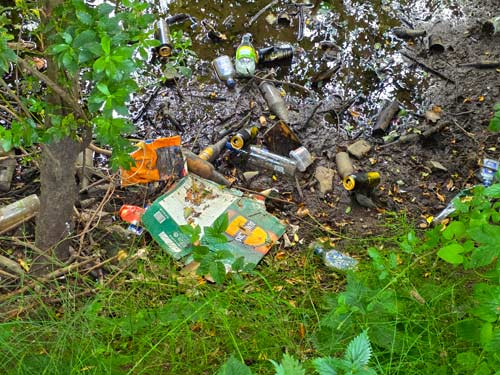
The summer foliage is dying back, unveiling more of the uncollected rubbish along the banks and in the River Suir in central Thurles. Bottles, cans, flower pots and other litter remain, while fallen trees and uncontrolled shrubbery continue to obstruct the river, as the stench persists.
After more than 13 year, the problems remain unresolved. Certainly over the past six weeks, despite my contact with the Environmental Protection Agency and Tipperary County Council, there have been no meaningful progress on the continuing litter, obstructions and overall pollution. The installation of litter bins also still remains unaddressed.
Two Years On – Bed Of River Suir At Low Tide.
Dear Mr Willoughby, Further to previous correspondence and responding to your concerns, the EPA wrote to Tipperary County Council seeking a written response from them on actions taken or planned on this matter. The Council responded to the EPA on 15/09/2026. However, the response did not provide sufficient information. The EPA has therefore requested further information from the Council. We will provide you with an update in three weeks. In the interim, we recommend you continue to report any further issues relating to this matter to the Council. Please use the reference number above in any further communication with the EPA regarding this matter. Trusting this is of assistance to you. Kind regards, Signed:Ms Shelly Laffan (Complaints Unit | Office of Environmental Enforcement) (Aonad Gearán na hOifige Forfheidhmithe i leith cúrsaí Comhshaoil)
Now, a response to my initial complaint from Ms Shelly Laffan, of the EPA’s Complaints Unit, Office of Environmental Enforcement, raises further questions about the Council’s handling of this matter.
The EPA confirms that it sought a written response (See above) from Tipperary County Council on actions taken or planned. The Council replied on September 15th 2026, but the EPA states: “However, the response did not provide sufficient information.”
The EPA has now requested further information and says it will update me in three weeks. In the meantime, it advises me to continue reporting further issues to the Council and to use my complaint reference [Ref: COM021813], in future correspondence with the EPA.
Thurles residents deserve to know what action if any is being actually taken, and when visible work will begin.
The Stench Continues. Where Is the Public Accountability?
The accompanying video hereunder records what appears to be effluent entering the river. It also shows a flat flagstone positioned over one pipe outlet, raising questions about whether the discharge is being obscured. Who placed it there, and why, requires investigation. The discharge itself needs to be identified and its source established.
I have also received reports of fish found floating near ‘The Willows’ housing estate in the recent past. The account relayed to me attributes this to an accidental chemical spill washed into the Suir through a connected surface-water drainage pipe. That explanation remains unconfirmed. The relevant authorities should establish what happened and publish their findings, including any available sampling results.
These concerns have a history. Local reporting in May described dumped shopping trolleys, plastic debris and suspected effluent along this same town-centre river.
Despite a political promotional video, 13 years too late, same highlighting the river’s condition, no subsequent update has come from same hand holding politicians, with the sole exception of local councillor Mr Jim Ryan who has taken up the cause. His communication on local radio over past months is acknowledged. Others,, if any, who have publicly expressed concern should explain what further follow-up they have undertaken.
Tipperary County Council should also now publish a dated programme for litter removal, for required bin provisions and assessment of the fallen-tree obstructions. The relevant authorities must investigate the discharges, explain their findings and identify who is responsible for each next step. Every further week of delay leaves the rubbish, the smell and the unanswered questions with the people of Thurles.
A copy of today’s updated report has been forwarded to all those responsible for this crime of neglect.
The River Suir deserves urgent care, sustained maintenance and public accountability. When will that work become visible?
Application Ref: 2660699. Applicant: McDonald’s Restaurants of Ireland Ltd. Development Address: Lands At Slievenamon Road And Thurles Relief Road , Thurles , Co. Tipperary. Development Description: the addition of a 6.5 metre totem sign with yellow acrylic internally illuminated “Golden Arch”, located on the western side of the site, and all associated works necessary to facilitate the development. The McDonald’s drive-thru restaurant is permitted on site under planning permission reg. ref. 2460829/ACP ref. 322465-25 and is now under construction. Status: Conditional. Application Received: 17/07/2026. Decision Date: 08/09/2026. Further Details:http://www.eplanning.ie/TipperaryCC/AppFileRefDetails/2660699/0.
Application Ref: 2660495. Applicant: Philip Ryan & Claire Hayes. Development Address: 77 Kennedy Park , Thurles , Co. Tipperary. Development Description: (a) the demolition of existing garage, (b) construction of a single-storey pitched roof extension to the rear and side of the existing dwelling, (c) alterations to existing external elevations to include changes to windows and openings to accommodate proposed new extension and internal layouts, (d) all associated site works. Status: Conditional. Application Received: 22/05/2026. Decision Date: 11/09/2026. Further Details: http://www.eplanning.ie/TipperaryCC/AppFileRefDetails/2660495/0.
Tipperary County Council has approved the rezoning of 161 hectares, (approximately 397 acres), for housing at its September plenary meeting.
The changes to the county development plan took immediate effect following the vote. Public consultation had attracted more than 100 submissions.
Councillors who welcomed the changes: Mr John Crosse (Fine Gael): Highlighted the urgent need for housing across Tipperary and the opportunity for landowners and developers to deliver more homes. Mr Jim Ryan (Independent, Thurles): Welcomed the restoration of residential zoning to lands in Thurles and thanked the planning team for listening to local councillors. However he felt an opportunity had been missed for the village of Littleton.
Councillors who raised concerns during the earlier June discussions: Ms Phyll Bugler (Fine Gael, Ballina): Said she had not been given enough time to raise issues during the process. Mr Seamie Morris(Former Sinn Fein and now Independent, Nenagh): Questioned the inclusion of certain lands in Nenagh, saying they should not have been considered for housing.
This agreed rezoning now makes additional land immediately available for potential housing development, although no construction timetable or confirmed number of homes has been publicly made known.
Thurles is to receive €150,000 towards plans for an age-friendly community fitness hub, as part of new regeneration funding for North Tipperary.
The available Thurles funding report does not specify the proposed Thurles age-friendly community fitness hub’s exact location or identify who submitted the funding application. {Some unconfirmed reports suggest it refers to the existing open air fitness hub already in the town park.}
Liberty Square, Thurles.
A further €130,000 has been allocated to Nenagh to progress plans to extend St John’s Lane car park and provide pedestrian access onto Sarsfield Street. We understand, Tipperary County Council has already acquired the lands needed for this Nenagh project. The funding will support the next stages of design and development.
The combined €280,000 allocation for Thurles and Nenagh forms part of nearly €13.5 million announced for Tipperary under the Towns and Cities Regeneration Investment Fund.
Clonmel will receive €13.1 million for two town centre regeneration projects, while Tipperary County Council is to provide €3.25 million in matched funding for the county’s projects.
Nationally, the fund will support 120 projects across every local authority area, with total investment of €409 million.
This website uses cookies to improve your experience. We'll assume you're ok with this, but you can opt-out if you wish.AcceptRead More
Privacy & Cookies Policy
Privacy Overview
This website uses cookies to improve your experience while you navigate through the website. Out of these, the cookies that are categorized as necessary are stored on your browser as they are essential for the working of basic functionalities of the website. We also use third-party cookies that help us analyze and understand how you use this website. These cookies will be stored in your browser only with your consent. You also have the option to opt-out of these cookies. But opting out of some of these cookies may affect your browsing experience.
Necessary cookies are absolutely essential for the website to function properly. This category only includes cookies that ensures basic functionalities and security features of the website. These cookies do not store any personal information.
Any cookies that may not be particularly necessary for the website to function and is used specifically to collect user personal data via analytics, ads, other embedded contents are termed as non-necessary cookies. It is mandatory to procure user consent prior to running these cookies on your website.






Recent Comments