|
|
A major new & rare exhibition entitled “Downton Abbey, A Tipperary Perspective.” comes to Thurles. The TV series Downton Abbey is set on the fictional estate of Downton Abbey in the North Riding of Yorkshire, England, home to the Earl and Countess of Grantham which follows the lives of the aristocratic Crawley family and their servants during the reign of King George V.
On Friday next St. Mary’s Famine Museum, Thurles will feature this new previously unseen exhibition, which will open to the public for just two weeks beginning Friday September 21st, & continuing until Friday October 5th, inclusive. The event is being kindly sponsored by Thurles Centenary Co-Op & Thurles Fresh Milk.
The exhibition can be viewed during Thurles Famine Museum’s normal opening hours which are 10.00am – 5.00pm. The Museum will feature a special lecture tour of the exhibition starting sharp at 8.00pm on Saturday night next, September 22nd. Total cost of admission to this unique Tipperary exhibition is a mere €2 which also incorporates a chance to examine the Famine Museum, latter which boasts the largest amount of original memorabilia, pertaining to the Great Famine (1845 – 1849), anywhere in the world.
This current new exhibition is also a must for Primary, Secondary & Third Level history students, who will find this ‘primary resource,’ of huge interest & in keeping with the current education curriculum which encourages students to become involved in all such source activity.
The exhibits on display will include household goods, clothing & shoe fashion, including Flapper dresses of the early 20th century period, which had their origins in the period of Liberalism, social and political turbulence and an increased transatlantic cultural exchange, which followed the end of World War I.
Also on show are Military costumes, some dating back before 1900 from the Royal Military College, Sandhurst, in Surrey, together with rare memorabilia from the Gallipoli Campaign (1915 -1916). Hand guns, Military medals, including two rare military crosses, never before viewed by the public, will also be part of this unique exhibition. Each of the over 100 exhibits displayed all contain a strong Tipperary connection. If sufficient interest is shown in this exhibition by the public and all Tipperary people at large, same will become a permanent exhibition here in Thurles next year, thus adding greatly to the prospects of future tourism in our town.
Downton Abbey & Tipperary – The Similarities
The first series of the TV Downton Abbey drama spanned the two years before the Great War, (WW1) beginning with news of the sinking of the Titanic in 1912, which set the story in motion. The second series covered the years 1916 to 1919, and the 2011 Christmas Special covered the 1919 Christmas period, ending in early 1920. The third series has just now returned to our screens, beginning last Sunday on ITV and will begin tonight on TV3.
Created by Julian Fellowes and set in the early 20th century, “Downton Abbey,” boasts an all-star cast, including Hugh Bonneville (Robert Crawley, Earl of Grantham), Jim Carter (Mr. Carson), Brendan Coyle (Mr Bates), Michelle Dockery (Lady Mary Crawley), Dan Stevens (Matthew Crawley) and my own favourite Oscar, Tony, BAFTA and Emmy award winning actress the great Dame Maggie Smith, DBE, together with Oscar and Golden Globe winning actress Shirley Maclaine.
Since its premier in September 2010, “Downton Abbey,”” has been met with critical acclaim and has been awarded some of TV’s most prestigious awards including two BAFTAs, six Primetime Emmy Awards, a Golden Globe and Best Drama in the National Television Awards. “Downton Abbey,” also holds the record for the most nominated non-American show in Prime-time Emmy history, with 16 nominations since 2011.
Some critics claim that historically the series is not truly accurate, especially with regard to the close interaction between servants & the owners of the “Big House.” However, to prove the critics somewhat incorrect in this claims & their current understanding, please see a report from a correspondent of the Tipperary Star, who wrote on September 10th 1910, as follows:-
PLEASANT NIGHT AT MOYALIFF
“On Saturday night the working men on the Moyaliff estate presented Mr Wm. M. Armstrong, only son of Captain Marks B. Armstrong of Moyaliff, Thurles, with a valuable silver cup and illuminated address on the occasion of his coming of age. Mr. Matthew Kennedy presided and spoke at length on the interest the Armstrong family always took in the welfare of their workmen and servants, and the friendly relations that always existed between Mr. Armstrong, his tenants, and neighbours, and he had great pleasure in making the following presentation, which was numerously signed:-
To Wm. M. Armstrong, Esq., 10th Hussars: “We, the workmen on the Moyaliff estate, offer you our most hearty congratulations on the occasion of your coming of age, and we beg you to accept the accompanying silver cup as a small token of the affection we entertain for you. We hope and pray that you may have a long and happy life, and that success will crown your career in the noble profession to which you belong. Assuring you of our constant devotion and interest in your welfare.”
Mr. Armstrong entertained the workmen and neighbours to dinner at 6.30, and at 7.30 threw open a spacious hall, beautifully decorated, where over two hundred people spent a very pleasant night dancing and singing. Mr. and Misses Armstrong remained for a portion of the night and took part in and enjoyed the performance. The principal contributors of songs were:- Miss M. Ryan, Miss C. Long, Messrs J. McGlen, J.Boyle, J. Mahony, and D. Hayes. Mr. Hayes was inimitably funny with his comic songs, while Miss B. McCarthy’s exhibition of step dancing was a rare treat in itself. Misses M. Kennedy, J. Gleeson, C. Hayes, and J. Hayes were busily engaged distributing refreshments and catering for the ladies. Dancing continued until 5.30 on Sunday morning, and many toasts were proposed and honoured to Captain Armstrong and family.”
Do enjoy the magnificent Downton Abbey series beginning on TV3 tonight and if you get the opportunity call to St.Mary’s Famine Museum on Saturday night next at 8.00pm sharp or over the next fortnight, to view the Tipperary version.
The museum would like to thank Paul Scully, (Thurles Photo Station) Friar Street, Thurles, Stewart Willoughby, Kickham Street, Thurles & Paddy Stakelum (Stakelums Men’s Wear) in Friar Street, Thurles for their particular expertise in assisting with the setting up of the exhibition.
The foundation stone of St Patrick’s College, Thurles, Thurles, was laid on July 6th, 1829 by most Rev. Dr. Laffan, Archbishop of Cashel. A sum of about £10,000 had been provided for the building of the College by Dr. Laffan’s predecessor, Dr. Everard, who had been engaged nearly all his life in education – in the Irish College at Bordeaux, as rector of a school for Catholics in Ulverstone, Lancashire and finally as President of Maynooth here in Ireland.
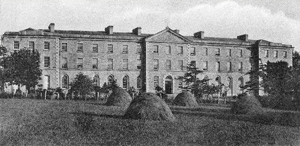 St Patrick’s College, Thurles Dr. Everard was born in Fethard, Co. Tipperary of wealthy parents, in 1752. He was educated in the local Grammar school, and then went to Salamanca where he was ordained a priest. During a short tour of the continent he visited a friend of his family, one Mr. Barton in Bordeaux. In the city was one of the Irish Colleges on the continent, and the young Fr. Everard was appointed Rector by the Archbishop of Bordeaux, Monsignor de Ceci. The year was 1789 and the French Revolution (1789–1799) a period of radical social and political upheaval in France had begun. The Civil Constitution for the Clergy forced the French Clerics who refused to accept it, to become émigrés (emigrants). Monsignor de Ceci was one of the latter, but before leaving, he appointed Everard as sole administrator of his diocese. Foreign clerics enjoyed a fragile immunity from attack, but Dr. Everard remained at his post until 1793. In October of that year a band of Jacobins, the most famous and influential political club in the development of the French Revolution, so-named because of the Dominican convent where they met, located in the Rue St. Jacques (Latin: Jacobus), Paris, broke into his house, dragging Dr. Everard into the street. He had struggled to get free, and his soutane, old and torn, gave in their grasp, and so Dr. Everard lived to become, in due time, President of St. Patrick’s College in Maynooth. This position was held by him until 1814.
The following year on April 14th 1815, he was consecrated Coadjutor Archbishop with the right of succession to the then Archbishop of Cashel, the Most Reverend Dr. Bray. Interestingly he was consecrated in Cork. He succeeded as Archbishop of Cashel, on Dr. Bray’s death in December 1820. His reign, however was tragically short. Dr. Everard died within three months, on March 20th 1821.
Continue reading History Of St Patrick’s College Thurles
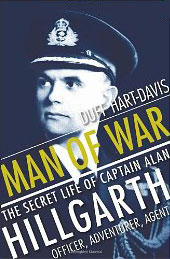 “Man Of War” By Duff Hart Davis His eccentricities possibly made him stand out here in rural Tipperary and local people never really knew what to make of him. He himself wrote in one of his letters, “A lot of people know me, but I’m very much an enigma to most of them and regarded with suspicion, because I don’t fit into any category . . . I’m a trouble-maker. I ride the storm.”
He had travelled widely during his working life, including visits to Ireland, to Morocco and America, settling in 1930 for a period with his second wife Mary at an old farmhouse in the hills of Majorca. Eventually in 1946 he would decide to settle here in North Tipperary, in the village of Ballinderry, having purchased the once-grand but then somewhat ruined house known as ‘Gurthalougha,’ on the shore of Lough Derg, which he had quickly renamed ‘Illannanagh.’
In 1975, a group IRA men, two of which were escaped murderers and who possibly had confused his home with another address in their search for firearms, were not even slightly aware of his mysterious past. Although then aged in his 70’s, he had remained appearing unperturbed, cold, seated & continuing to read his newspaper, when they had surprised him by entering his home. He had insisted that no conversation was ever taking place until they had lowered their weapons. Chastened somewhat by this old man’s non negotiable firm attitude, his unwelcome IRA visitors had consented, later quietly leaving his home, carrying only a couple of shotguns.
Fact Is Often More Exciting Than Fiction
The man of whom I speak was actually born Hugh Evans in 1899, the son of a then prominent London surgeon and his wife. He had enrolled as a naval cadet just before the outbreak of the First World War. By February 1915, this same boy, at just 15 years old, was an acting midshipman aboard the cruiser Bacchante, sailing on its way to participate in the ill-fated Gallipoli campaign against Turkey. Once on shore with Anzac troops, Evans soon found himself in the thick of war & involved in hand to hand fighting. Narrowly escaping death, when a Turkish bullet grazed his scalp, the following year young Evans was invalided home having received even more serious wounds.
Continue reading “Man Of War,” Tipperary Book Of The Month
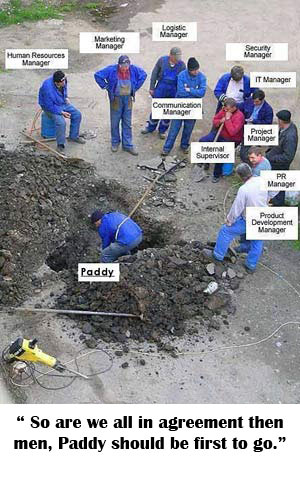 According to Tipp FM Radio & North Tipperary Co Councillor Mr John Carroll, some 30 temporary staff, presently employed by North County Council, have all been issued with Notices of Employment Termination, to come into effect from September next. According to Tipp FM Radio & North Tipperary Co Councillor Mr John Carroll, some 30 temporary staff, presently employed by North County Council, have all been issued with Notices of Employment Termination, to come into effect from September next.
The staff affected are employed in the Roads section of the Council & their “lay off,” will have a direct impact on the future of the North Tipperary Roads programme. Speculation is that these cuts are the result of failure by Minister Phil Hogan to collect his unjustifiable & inequitable €100 Household Charge. Nationally 600,000 properties nationwide have yet to be registered by owners, a job that may go to Revenue, when it takes over collection of the levy next year.
Looks like yet another Fine Gael/Labour vote loosing exercise, here in the forgotten county, latter whose population appear happy to accept weekly, action-less political spin, while some of their Tipperary Senators & TD’s fail to turn up for work, and thus earn their exorbitant salaries.
Staff at the Local Government Management Agency, (LGMA), the group charged with collecting the household charge, have recently received unacceptable death threats & abuse, including a shotgun cartridge sent in the post, & that’s according to LGMA’s CEO Paul McSweeney.
While normal civilised people these days will totally frown on this type of behaviour, declaring is totally unacceptable, Phil Hogan is obviously no historian and is not aware of the happenings, when forced collection of a similar form of unjust taxation was attempted, in his own county of Kilkenny, in 1831.
The Tithe War
The Tithe War (Irish: Cogadh na nDeachúna) was a campaign which began with nonviolent civil disobedience, but later became punctuated by sporadic violent episodes here in Ireland between 1830 & 1836, in angry reaction to the enforcement of Tithes on subsistence farmers and others, for the upkeep of the established state church, the Church of Ireland. The idea of Tithe Taxes goes back a long way to the Reformation of 1517 & its idea sprang from the Christian Bible, possibly from Leviticus 27:30: “And all the tithe of the land, whether of the seed of the land, or of the fruit of the tree, is the Lord’s; it is holy unto the Lord.”
Continue reading North Tipperary Co Council Lay Off 30 Temp Staff
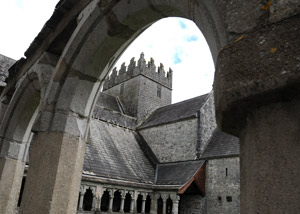 Holycross Abbey I knew that headline would grab your attention for a moment and if you believe gang warfare & crime in this country has gotten out of control, then visit our sister website Hidden Tipperary and read about the ‘carry on,’ in the parish of HolyCross, Co.Tipperary, which began in 1826.
I bring this historical true tale to your attention and indeed the attention of the residents of Bohernacrusha & Holycross particularly, because next year we celebrate “The Gathering 2013,” (Tóstal Éireann 2013). The Gathering is our unique chance to join a countrywide, citizen-led initiative to reach out to Ireland’s global diaspora and bring them home, for an unprecedented year-long celebration of all that is great about our green land and her people. The Gathering is a chance for all of us here in Co Tipperary, to organise and participate in special community, family, club, or parish events that will be the foundation of a year of celebrations. Ireland’s global gathering starts with your local gathering. If we join in now, then the world will surely flock to enjoy not just our special hospitality but also our unique history, our ancient & modern way of life, our food & our laughter.
As I have often stated previously, County Tipperary has more history ‘in it’s little finger,’ to sell to native visitors and encourage tourism to our shores, than any other county in Ireland.
The new publication “Destination Cashel,” which we referred to in our last blog is indeed welcome & of huge benefit to visitors, but must also be observed in the context of reality. For the past few years North Tipperary County Council have been advertising the myth that a Tourism Information Point, is supposedly operating from the Source Library building here in Thurles. This mythical Tourism Information Point has not existed for the last 4 years, as over worked Thurles Library staff will attest. Despite having six County Councillors in place, all claiming to represent the interests of Thurles and its environs &, who according to the Tipperary Star Newspaper, two weeks ago were ‘calling,’ (To whom they were calling we just do not know) for the preservation of existing job in our area, same have failed to notice that this unsatisfactory situation now exists.
Those who are responsible for the distribution of Leader Funding, also must come in for some criticism. While some failed tourism orientated project last year received funding, to the reported tune of some €70,000, there were smaller & much more merited local development projects, seeking much smaller amounts of funding, (e.g €4,000) for which funding was made impossible to access.
So before you read the true history of Holycross / Bohernacrusha and it’s environs, I ask the question; Should we build a commemorative scaffold in Bohernacrusha? Would the many tourists visiting the beautiful village of Holycross, before heading too far South, be curious enough to stop off for lunch or a pint in Bohernacrusha, & enquire further as to the historical background to this spectacle of a past era?
Before you make your mind up, please click Here.
|
Support Us Help keep Thurles.info online by donating below. Thank you.
Total Donated 2026: €290.00
Thank You!
Daily Thurles Mass Livestream
|





Recent Comments