The Environmental Protection Agency (EPA) report on 2017 emission levels for the five main air pollutants.
These figures show that ammonia emissions increased by 2% cent in 2017. The trend in increasing ammonia emissions is projected to continue out to 2030. Emissions of non-methane volatile organic compounds also increased. Ireland is projected to exceed the 2030 emission ceiling for this pollutant. While emissions of nitrogen oxides decreased in 2017, emissions are projected to be non-compliant with national limits in 2030. Emissions of two other air pollutants; sulphur dioxide and particulate matter, decreased in 2017. These pollutants are projected to remain compliant with national limits, provided planned measures are implemented.
The EPA today published figures for emissions of five key air pollutants. These pollutants impact environment and health contributing to respiratory problems and pollution of soil, surface water and vegetation. These pollutants are: ammonia, non-methane volatile organic compounds, sulphur dioxide, nitrogen oxides and particulate matter.
This latest information from the EPA shows that ammonia emissions increased by 2% in 2017, which followed a 5% increase in 2016. Agriculture dominates emissions of ammonia, which arise from the decomposition of animal manures and the application of fertiliser. This trend in increasing emissions is projected to continue out to 2030.
In addition, emissions of non-methane volatile organic compounds showed an increase in 2017. These pollutants arise from the food and beverage industry and the storage and handling of animal manures and synthetic fertilisers. Non-methane volatile organic compound emissions are projected to increase slightly to 2030 as the gains from switching to less polluting sources are outweighed by increased economic activity and population growth. Ireland is therefore projected to exceed the more challenging 2030 non-methane volatile organic compounds emission ceiling, despite being in compliance for 2020.
Dr Eimear Cotter, (Director of Office of Environmental Sustainability) said: “Our figures show that ammonia levels are on an upward trend, in tandem with increased agricultural production, and that they breached national limits in 2016 and 2017. This has implications for air and water quality.The National Air Pollution and Control Programme, currently out for public consultation, will need to address these emissions particularly as they are projected to increase further to 2030. The underlying driver for these emissions is the application of more animal manure to soils — mostly as an organic fertiliser — and the increase in the use of inorganic fertilisers. Options to increase efficiencies and reduce fertiliser use will need to be implemented at farm level.”
Emissions of other air pollutants – sulphur dioxide, nitrogen oxides and particulate matter – decreased in 2017. This reflects a general downward trend in emissions since 1990 reflecting the impact of fuel switching from coal and peat to natural gas, penetration of renewables and technology improvements. Looking to the future, however, while sulphur dioxide and particulate emissions are projected to remain compliant with substantially lower national limits in 2030, provided planned measures are implemented, this is not envisaged to be the case for nitrogen oxide emissions. Nitrogen oxide emissions are projected to be non-compliant with national limits in 2030, with the transport sector projected to continue to be a key source of emissions.
Stephen Treacy, (EPA Senior Manager) said: “We have seen the positive impact of a range of policy measures and regulatory interventions since 1990 which are particularly evident in declining sulphur dioxide and particulate emissions. Fuel switching and the move to more renewables has brought dividends in terms of cleaner air, with effective regulatory intervention from the EPA also playing a role. It is important that this good work is not reversed in the context of a growing economy. Further measures are needed to meet national limits in the period from now to 2030, particularly for the pollutants ammonia, nitrogen oxides and non-methane volatile organic compounds”.
For further detail on these figures, see the EPA web published report “Ireland’s Air Pollutant Emissions 1990-2030” available HERE
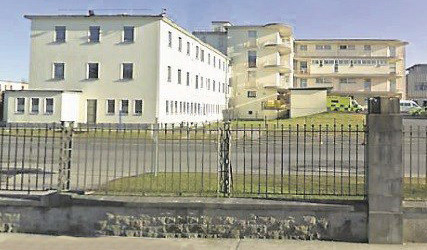
University Hospital Limerick, serving North Tipperary, remains the most overcrowded medical facility here in Ireland for the third day in a row.
Today, May 1st 2019, 513 people are without a bed nationally; 62 persons of which remain without a bed in University Hospital Limerick, according to the Irish Nurses and Midwives Organisation (INMO)
REMEMBER: You can view accurate daily emergency department figures by clicking HERE. Same figures shown are a count of the number of additional patients on beds, trolleys or chairs, on inpatient units, latter above the stated complement of that unit and which provides a complete picture of our hospital overcrowding.
Surely, with Local Elections this month and possibly a National Election before Christmas, this is the time to eradicate, from County Tipperary, all Fine Gael councillors and any Fine Gael political “pretenders to the Throne”, thus demonstrating our anger and registering our sense of outrage.
Currently some 523 patients are waiting on trolleys nationally at hospitals today, according to the Irish Nurses and Midwives Organisation (INMO).
Not for the first time or indeed the last; to Tipperary’s shame, the worst affected medical facility in Ireland is again University Hospital Limerick, serving the North of Tipperary county, where there are 57 patients without a bed.
You can view accurate daily emergency department figures by clicking HERE. Same figures shown are a count of the number of additional patients on beds, trolleys or chairs, on inpatient units, latter above the stated complement of that unit and which provides a complete picture of our hospital overcrowding.
Why is there such an air of silence and acceptance here in Tipperary, with regard to what is being offered on this most serious of health issues?
This morning, April 18th, 2019, nationwide, some four hundred and twenty-six patients are waiting for beds at hospitals in the Republic of Ireland.
Once again University Hospital Limerick, latter which serves North Tipperary, is the worst affected, with 58 patients on trolleys just starting the day.
Earlier this month, overcrowding in University Hospital Limerick was compared to that of a scene in a hospital, where a major national disaster had occurred, following 81 people found on trolleys on April 3rd last, with patient numbers jumping to above 90 as the day progressed.
A signed five page ‘Open Letter’ to the Mid-West Region, latter which includes North Tipperary.
Today, five Doctors, based at University Hospital Limerick, have written an open five (5) page letter outlining the continued serious challenges faced not just by hospital staff, but also by acutely ill patients unable to secure in-patient beds.
It is with profound regret, the five Doctors most justifiably claim that unacceptable numbers of elderly and frail patients are being left waiting, far too long, in their hospital emergency area, in the hope of a bed being located.
The open letter addressed to “the people of the Mid-West Region from the Clinical Directors of UL Hospitals Group”, can be read by clickingHERE.
The letter states that no matter how excellent an emergency department is “and the new one at UHL is a superb modern facility”, serious problems arise if there are not enough beds and enough access to staff, including doctors, nurses, diagnostics staff and step-down facilities.
Facts, stated in the letter, compare Beaumont Hospital in Dublin with University Hospital Limerick (UHL), thus further highlighting the vast urban / rural divide that exists in the Republic of Ireland.
Beaumont Hospital Dublin compared with University Hospital Limerick
[A] Beaumont Hospital Dublin has a whole-time staff of 3,728. University Hospital Limerick has 2,851 equivalent personnel. [UHL short 877 personnel]
[B] Beaumont Hospital Dublin serves a catchment area of 290,000 people. University Hospital Limerick, serving the Mid West catchment area, serves 385,000 people. [A difference of 95,000 people]
[C] Beaumont Hospital Dublin has 630 in-patient beds, while University Hospital Limerick has 454. [UHL short 176 beds].
[D] Beaumont Hospital Dublin had 52,856 new emergency department (ED) presentations last year. University Hospital Limerick had 63,850 new ED presentations last year, or 21% difference. [UHL admitted 10,994 more emergency patients].
Sorry “Mary for Tipperary” and “Garret for South Tipperary”, I suspect their remains no place for Fine Gael representing Tipperary dwellers in the next elections. This is despite your brochures showing that both of you were photographed beside An Taoiseach, Mr Leo Eric Varadkar and despite your weekly regular ramblings, broadcast to the Tipperary public on Radio TippFM. Perhaps you should set up offices in an area served by Beaumont Hospital, Dublin, if you wish to be in with a chance at that €94,535 basic TD salary, plus expenses.
The silence may remain deafening presently in Thurles and Tipperary in general, but the Ballot Box, no doubt, will confirm my suspicions.
This website uses cookies to improve your experience. We'll assume you're ok with this, but you can opt-out if you wish.AcceptRead More
Privacy & Cookies Policy
Privacy Overview
This website uses cookies to improve your experience while you navigate through the website. Out of these, the cookies that are categorized as necessary are stored on your browser as they are essential for the working of basic functionalities of the website. We also use third-party cookies that help us analyze and understand how you use this website. These cookies will be stored in your browser only with your consent. You also have the option to opt-out of these cookies. But opting out of some of these cookies may affect your browsing experience.
Necessary cookies are absolutely essential for the website to function properly. This category only includes cookies that ensures basic functionalities and security features of the website. These cookies do not store any personal information.
Any cookies that may not be particularly necessary for the website to function and is used specifically to collect user personal data via analytics, ads, other embedded contents are termed as non-necessary cookies. It is mandatory to procure user consent prior to running these cookies on your website.






Recent Comments