A 63 year old Tipperary ESB engineer, who was attacked by a Stag, on September 12th 2016, before being tossed through the air, has sued his employers in the High Court.
Mr John Corcoran, with an address at Fawnlough, Nenagh, Co Tipperary; an engineer with the ESB, was on his way to check on an ESB mast, when the Stag attacked him on a forestry path on the 445metres (1460 feet) high Kilduff Mountain [Cnoc Na Coille Duibhe], Borrisnafarney, a hill north west of Templemore, Co. Tipperary.
Note: The three largest species of deer (red, fallow and sika) all rut in early autumn, with Stags pumped full of testosterone; becoming highly aggressive in parklands, often attacking and injuring people and other unrelated animals.
Mr Corcoran informed Mr Justice Paul Coffey that he came upon a herd of deer as he went about his work, on a forest track, before being attacked from behind by the Stag, whose antlers creating eight puncture wounds in his rucksack and injuring his shoulder area, as he tried to escape his attacker. The force of the attack propelling him through the air over a bank and into nearby scrub.
The stag then continued its attack using his feet and antlers, before reared up on his hind legs and crashing down on him, forcing him to lose consciousness for some 10 to 12 minutes.
It was claimed that Mr Corcoran had been allowed to work alone in a hilly area during the deer mating / rutting season, when it ought to have been understood that it was dangerous and unsafe to do so.
Mr Corcoran’s counsel Mr Edward Walsh SC, instructed by Mr Sean Fitzgerald solicitor, informed the court that Mr Corcoran is left with lifelong medical deficits, leading to the spoliation of his career, with his claim for loss of earnings amounting to a total of some €420,000.
Mr Corcoran went back to his employment in February 2017, but on medical advice retired early in November of the same year, having spent in total 38 years working with the ESB.
Mr Justice Paul Coffey was informed that liability had been admitted in the case, which was now before the court, for the assessment of damages only.
The case before Mr Justice Paul Coffey is expected to conclude tomorrow.
Over 4,000 Householders benefit from MyWaste.ie’s Food Waste Separation Roadshow.
More than 4,000 households have benefited from MyWaste.ie’s Food Waste Separation Road Show which visited 11 locations across the country in November and December this year.
As part of the roadshow MyWaste.ie’s Food Waste Separation Teams travelled to some of Ireland’s largest towns, met with shoppers, and handed out free household food waste separation kitchen caddy packs with some easy-to-follow advice. The food waste separation packs contained a free kitchen caddy, a starter pack of caddy liners and an information leaflet.
Photographed at the MyWaste.ie Food Separation Road Show were Percy Foster (cre), Minister Ossian Smyth, Anthony Mulleady (Chair), Irish Waste Management Association, Angela Ruttledge (VOICE), Declan Breen (EMR), Sinead Ni Mhainnin, (CUR).
MyWaste.ie, Ireland’s official website for guidance on managing waste, coordinated the roadshow after a Food Waste Recycling Pilot Project published in 2020 demonstrated an increase of between 20 and 25% in food waste tonnage presented, while contamination decreased by more than 56%. In relation to the caddy and liners, as many as 81% of respondents included in this pilot project found the caddy enormously helpful.
Ms Sinead Ni Mhainnin, spokesperson for MyWaste.ie explained that this year’s roadshow gave valuable insight into people’s willingness to segregate their food waste properly once armed with the correct information and equipment. “The use of food waste separation caddy packs, and ongoing correct segregation of food waste has the potential to significantly improve household waste recycling rates. We are confident that food waste segregation will be enhanced due to the circulation of these food waste separation caddy packs,” she said.
Minister of State with special responsibility for Communications and Circular Economy, Mr Ossian Smyth TD said, “Food waste can create emissions, adding to climate change. But we can limit this harm by separating food from other waste. These food waste caddy packs make it easier for people at home to manage their food waste.” Given the success of the recent roadshow event, plans are now being developed to roll out further food waste separation awareness campaigns in the future. As many as 300,000 packs will be funded by the Government over the next 2 years to support these campaigns.
The Irish Waste Management Association (IWMA) has also committed to all new household customers signing up to a waste collection service receiving a food waste separation kitchen caddy pack from IWMA affiliated waste collectors from the beginning of 2022.
The Food Waste Separation Roadshow initiative was co-ordinated by the Regional Waste Management Planning Offices, supported by the IWMA, Environmental Protection Agency, Cré (Composting & Anaerobic Digestion Association of Ireland), and the local authorities, and funded by the Department of the Environment, Climate & Communications. The road show visited Arklow, Limerick, Navan, Clonmel, Birr, Portlaoise, Wexford, Letterkenny, Belturbet, Ballymun and Carrickmacross.
The Food Waste Recycling Pilot Project published in 2020 is available HERE
To find out more information on food waste management and to have all your waste related questions answered log on HERE.
For more information about preventing food waste visit HERE
More focused and co-ordinated enforcement is needed by local authorities to protect water and air quality, cautions EPA.
Local authority inspection numbers remained high (180,000 in 2020) despite the impact of COVID-19. However, water inspections decreased by 30 per cent and air and noise inspections decreased by 10 per cent.
Focused water quality enforcement and follow through on non-compliances in key areas such as farm and septic tank inspections needs improvement.
The burning of non-complaint solid fuel remains a key issue impacting on human health, with co-ordinated and targeted inspections of fuel supplies required.
More resources need to be targetted at water and air enforcement to address the environmental and health challenges highlighted.
The Environmental Protection Agency (EPA) has today released its report on local authority environmental enforcement activities for 2020. The EPA has seen a high level of inspections and enforcement actions carried out by local authorities, with the bulk of these relating to waste and litter. Local authorities also handled a substantial volume of environmental complaints during the year – predominantly relating to waste issues.
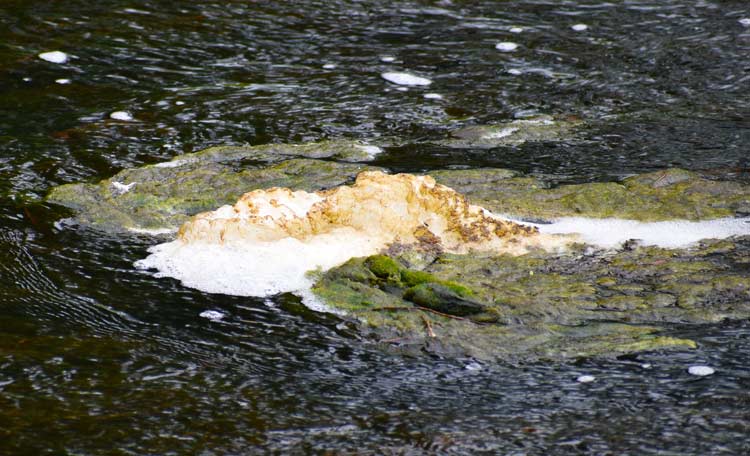
River Suir, Barry’s Bridge, Thurles, Co. Tipperary
Waste enforcement activities largely remained resilient in 2020. However, the EPA found progress on water and air enforcement priorities lagged behind waste enforcement, primarily due to having less resources assigned to them and a lack of enforcement co-ordination services, across the local authorities.
EPA stated: “The resilience of the waste enforcement activities and better co-ordination through the support of the regional waste shared services is to be commended. However, it is concerning to see the reduced enforcement activity in water, air and noise, given the decline in our water quality and the impact of poor air quality and noise on the environment and human health. Local authorities must address these challenges as a matter of priority in their enforcement activities.”
The national water quality monitoring programme was substantially completed by local authorities, providing up to date information on water quality. However, there is not enough evidence that this information is being used effectively by local authorities to target local enforcement efforts.
Mr Noel Byrne, Programme Manager of the EPA’s Office of Environmental Enforcement said:
“National water monitoring data is showing a continuing decline in water quality and more needs to be done to protect our water environment. Local authorities need to make sure that they are targeting inspections of farms and septic tanks in the areas of greatest risk and are taking effective enforcement action where non-compliances are found.”
In addition, the burning of non-complaint solid fuels remains a key issue impacting on air quality and human health. Local authorities should engage in co-ordinated and targeted inspections of solid fuel supplies and take follow-up enforcement actions to ensure that the environment and health are protected.
The Focus on Local Authority Environmental Enforcement Report 2020 is available on the EPA website, which contains an infographic highlighting the main findings from the report.
Further information: Emily Williamson, EPA Media Relations Office 053-9170770(24 hours) or media@epa.ie
Vulnerability of Ireland’s drinking water supplies must be urgently addressed by Irish Water.
The quality of drinking water from public supplies is high, with over 99.7% of samples compliant with bacterial and chemical limits.
At the end of 2020, 46 vulnerable water supplies – serving 1 million people – required significant works, with over half experiencing delays.
Over 15,500 people were on boil water notices for longer than one month.
It will take decades for Irish Water to remove all lead connections at their current rate of replacement.
The EPA Drinking Water Quality in Public Supplies Report 2020 released today, shows that the quality of drinking water in public supplies remains high, with over 99.7% compliance with bacterial and chemical limits. The continued high levels of water quality being achieved are positive for consumers and indicate that the water is safe to drink. However, improvements are needed in our drinking water infrastructure to protect public health. Delays in the delivery of these improvements at water treatment plants by Irish Water means that water supplies remain vulnerable for longer, posing a risk to the health of a large portion of the population.
The EPA’s Remedial Action List identified 46 vulnerable supplies (serving 1,000,000 consumers) with significant issues to be addressed by Irish Water at the end of 2020. This figure is down from 77 supplies in 2017. Through EPA targeted enforcement, Leixlip has since been removed from the list, after works there resulted in a more secure water supply for over half a million people. However, improvement works at almost half of these supplies will now take longer to complete than was anticipated at the end of 2019.
Launching the report, Dr Tom Ryan, EPA Director said:
“It is good news that our water is safe to drink today, but we cannot say with confidence that it is resilient into the future. The EPA remains concerned about the vulnerability of many drinking water supplies nationally. Irish Water needs to fix the remaining supplies on the EPA’s Remedial Action List without further delay. Recent incidents at Gorey and Ballymore Eustace water treatment plants have highlighted the absolute necessity for Irish Water to ensure our public water supplies are properly and effectively operated, and managed, to protect public health.”
The EPA has also found deficiencies in the national disinfection programme, and a continued lack of focus by Irish Water and the Department of Housing, Local Government and Heritage on plans to remove lead from supply connections and assessments of the extent of lead pipework in public buildings on lead in public buildings.
Mr Noel Byrne, EPA Programme Manager, said:
“15,500 consumers were on Boil water notices for over a month in 2020, and 145,000 households still have lead connections from water mains, which highlights the vulnerabilities that exist in drinking water supplies.
Irish Water must expedite lead connection replacements and progress improvements to disinfection systems – including addressing the issues with the disinfection programme identified by the EPA – to ensure that the quality of drinking water is adequately safeguarded.”
The EPA Drinking Water Quality in Public Supplies Report 2020 and the complete list of public water supplies currently on the Remedial Action List – including details of the proposed remedial measures and associated timeframes – are available on the EPA website.
Major new study shows overwhelming agreement amongst the Irish public on the threat of climate change and the desire for action.
The results of the EPA survey on the Irish people’s beliefs, attitudes, policy preferences and behaviours are emphatic:
Irish people are in almost full agreement that climate change is happening and 85% are worried about it.
91% of people say climate change is important to them personally and (79%) say climate change should be either a “very high” or “high” priority for the Government of Ireland.
Irish people strongly support a range of policies to address climate change. People also think that climate action will increase jobs, economic growth and quality of life (78%).
Scientists, experts and the EPA are very highly trusted sources of information about climate change.
The Environmental Protection Agency (EPA) has today published the first report from its ‘Climate Change in the Irish Mind’ project. This work was undertaken by EPA and the Yale University Program on Climate Change Communication (its academic partner) in support of the National Dialogue on Climate Action. The project aims to develop a better understanding of the Irish population by conducting a baseline study of public climate change beliefs, risk perceptions, policy preferences, and behaviour of the Irish public to climate change.
The project will deliver three key outputs: 1) A Climate Change in the Irish Mind report; 2) A segmentation report and 3) an online interactive map.
Today’s report “Climate Change in the Irish Mind” is based on a nationally representative survey of more than 4000 people during the summer of 2021, conducted by the survey research firm Behaviours and Attitudes.
Speaking about the report Ms Laura Burke, Director General EPA said:
“The findings of this report are definitive. This is an important first step in a very valuable project that will help to understand how Irish people perceive the environmental challenge, and that can fundamentally change how we all communicate on the topic. The findings of the survey clearly demonstrate that the Irish people overwhelmingly recognise the threat, feel personally affected and want to see real change. It demonstrates that – as a country – we are ready for the transition to climate neutrality and resilience; people see the benefits to themselves and Ireland in general and many are already advanced on the journey.”
This is the first study of its kind to be undertaken in Ireland using Yale’s internationally recognised approach. The project will deliver three key outputs: 1) Climate Change in the Irish Mind report; 2) Segmentation report and 3) an online interactive map. The findings will be used to support climate change awareness and engagement campaigns, the design of national policy and climate action.
There are very high levels of awareness of climate change amongst the Irish population, people are informed and understand the implications of a changing climate. They see that opportunities exist for jobs, innovation and wellbeing in taking climate action.
Speaking about the report, the Minister for the Environment, Climate and Communications, Mr Eamon Ryan TD said;
“The cornerstone of the National Dialogue for Climate Action (NDCA) is to engage and empower everyone in society to transition towards a climate neutral economy in a way that is fair, just, and accessible. This research shows that Irish people are well informed and understand and support the need for climate action. The research programme will provide valuable insights as we develop policies and initiatives that will support people as we make this transition together.”
People want the government to act by developing climate friendly policy. They are also willing to change their political and consumption behaviours but to a lesser degree. This demonstrates that people are aware of the systems changes that are required to effect change and they are also aware of their own responsibilities to act. This points to the need for more behavioural insights as to what supports people need to affect change.
Dr Anthony Leiserowitz, Director of the Yale Program on Climate Change Communication said:
“The Irish people overwhelmingly accept the findings of climate science and strongly support a whole-of-society response. They are ready for a national dialogue on climate action and primed to lead the world by their example.”
Further information: Emily Williamson, EPA Media Relations Office 053-9170770 (24 hours) or media@epa.ie
This website uses cookies to improve your experience. We'll assume you're ok with this, but you can opt-out if you wish.AcceptRead More
Privacy & Cookies Policy
Privacy Overview
This website uses cookies to improve your experience while you navigate through the website. Out of these, the cookies that are categorized as necessary are stored on your browser as they are essential for the working of basic functionalities of the website. We also use third-party cookies that help us analyze and understand how you use this website. These cookies will be stored in your browser only with your consent. You also have the option to opt-out of these cookies. But opting out of some of these cookies may affect your browsing experience.
Necessary cookies are absolutely essential for the website to function properly. This category only includes cookies that ensures basic functionalities and security features of the website. These cookies do not store any personal information.
Any cookies that may not be particularly necessary for the website to function and is used specifically to collect user personal data via analytics, ads, other embedded contents are termed as non-necessary cookies. It is mandatory to procure user consent prior to running these cookies on your website.






Recent Comments