Liberty Square in Thurles, Co. Tipperary, has suffered some mild damage as a result of current prevailing Storm Barra, with the strong gale and heavy rain, removing one strand of Christmas lighting, west of the junction with Liberty Square and Slievenamon Road, [On the money side]. Council personnel were fast on the scene to remove the electric cabling and lights crossing the roadway.
At least one of the badly staked, newly sown ‘Italian Alder’ (Alnus Cordata), trees on the Square has also bowed its knee to the prevailing south westerly galeforce wind.
Stay indoors and stay safefor the remainder of this evening.
EPA calls for urgent action to address Ireland’s rising waste volumes and falling recycling rates.
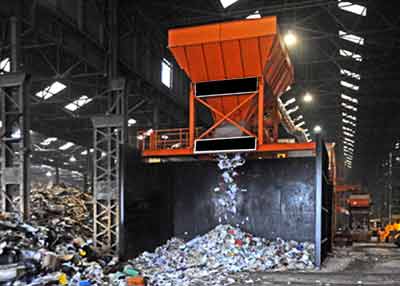
Waste Recycling Station
Waste generation in Ireland increased significantly in 2019.
Municipal waste increased by 6% to 3.1 million tonnes,
packaging waste increased by 11% to 1.1 million tonnes,
hazardous waste increased by 10% to 0.6 million tonnes and
construction waste increased by 2.6 million tonnes to 8.8 million tonnes.
Ireland’s recycling rates for municipal waste and packaging waste have declined, with more waste being sent for energy recovery. Ireland faces a widening gap to meet ambitious new EU recycling targets from 2025 onwards.
To address Ireland’s rising waste volumes and falling recycling rates, we need to transform existing business models into circular ones, that promote waste reduction, reuse and recycling. Circularity roadmaps are needed for key economic sectors, including the construction, manufacturing and food processing sectors, supported by clear policy, legislation, and national targets.
Waste generation in Ireland continues to rise while recycling rates are falling, according to the Environmental Protection Agency’s (EPA) National Waste Statistics Summary Report for 2019, which publishes the most recent official data on waste generation and management in Ireland. The report reveals some worrying trends. Waste generation in Ireland increased significantly in 2019. Municipal waste increased by 6% to 3.1 million tonnes, packaging waste increased by 11% to 1.1 million tonnes and hazardous waste increased by 10% to 0.6 million tonnes. Ms Sharon Finegan, (Director of the EPA’s Office of Environmental Sustainability), said, “A circular economy is one that is based on less waste and more reuse of materials; these trends show Ireland is going in the wrong direction. Our rising levels of waste are unsustainable and need to stop. Systemic change is needed across all economic sectors to shift the focus to designing out waste and promoting reuse and recycling.”
The past decade in Ireland has seen dramatic changes in waste management. Only 15% of municipal waste was landfilled in 2019, compared with 61% a decade earlier. There has been a significant increase in the share of municipal waste sent for incineration with energy recovery over the same period, from 4% in 2009 to 46% in 2019. Ireland’s recycling rates for municipal and packaging waste have been in gradual decline for a number years, as efforts to improve recycling have been outstripped by the growth in waste being generated and the amount being sent for energy recovery. Our recycling rate for municipal waste has fallen from 41% in 2016 to 37% in 2019, while the recycling rate for packaging waste has declined from 70% in 2013 to 62% in 2019. The trends show that Ireland is facing a widening gap to meet ambitious new EU recycling targets from 2025 onwards.
Commenting on the trends, Dr Tara Higgins, (EPA Senior Scientist) said, “Ireland’s declining recycling rates are a significant cause for concern. Recent moves to allow soft plastics such as films and wraps into our recycling bins, continued expansion of brown bin services to households, new requirements for all packaging to be reusable or recyclable by 2030 and a levy on waste recovery are among the suite of measures needed to increase recycling and close the gap to new EU recycling targets”.
Ireland also continues to have some significant waste infrastructure deficits and relies on export for a number of key waste streams, including municipal, packaging and hazardous waste. These trends point to the need for expansion of Ireland’s waste treatment and recycling capacity in order to extract the maximum value from waste materials here in Ireland and reduce the emissions associated with transporting waste over long distances.
With the relocation of seven (7) new ‘Italian Alder’ (Alnus Cordata), trees, newly sown on Liberty Square, Thurles; these deciduous trees, native to high elevation areas in Southern Italy, are sure to bring a certain continental charm to our town centre.
Four of seven ‘Italian Alder’ trees sown this week on Liberty Square, Thurles, Co. Tipperary. Pic. G. Willoughby.
Growing to a height of up to 25m (82ft) and with a spread of some 8m (26ft); same trees are native to southern Italy. Italian Alder is a tall, fast-growing, deciduous tree of conical habit, with the flowers appearing before the leaves. The slender cylindrical male catkins are pendulous, reddish and up to 10 cm (4 inches) long. Pollination is in early spring, before the leaves emerge. The female catkins are ovoid, when mature in autumn, dark green to brown in colour, similar to some conifer cones. The small winged seeds disperse through the winter, leaving the old woody, blackish cones on the tree for up to a year afterwards.
The glossy, mid-green leaves themselves are heart-shaped with very finely serrated edges and stay on the tree as late as December, especially in milder areas. Italian alder is highly wind-resistant and tolerant of very poor soils, as it is able to obtain nitrogen from the air. It will also tolerate high levels of pollution and heavily compacted soils, making it a useful urban tree.
With the occasional uncouth barbarian often visiting our town, usually at night, hopefully these trees will be protected soon by metal tree guards, at least until roots properly take hold.
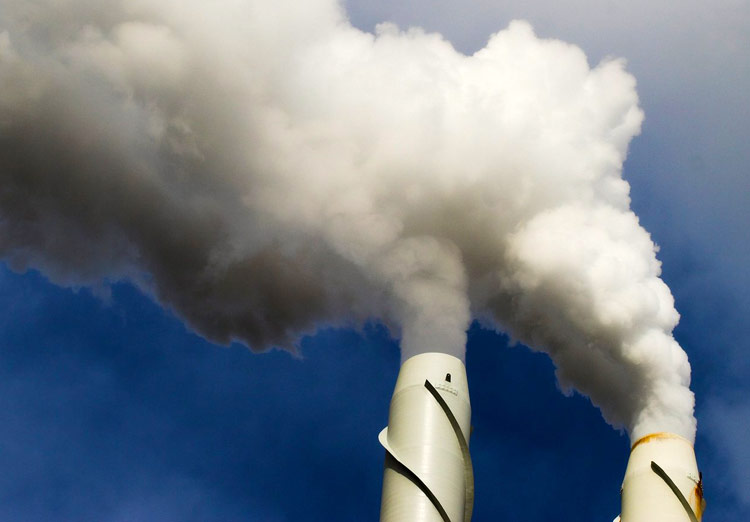
While air quality in Ireland in 2020 was generally good there are worrying localised issues.
Air pollution from traffic fell at all monitoring stations, particularly at urban roadside locations, as a consequence of reduced traffic volumes due to Covid-19 restrictions.
However, Ireland was above World Health Organization (WHO) air quality guidelines for particulate matter (PM), sulphur dioxide (SO2) and ozone at 52 monitoring sites, mostly due to the burning of solid fuel in our villages, towns and smaller cities.
Fine particulate matter from the burning of solid fuel remains the biggest contributor to poor air quality in Ireland, responsible for an estimated 1,300 premature deaths per year.
The choices we make in how we heat our homes and how we travel directly impacts the quality of the air we breathe.
The Environmental Protection Agency (EPA) has today launched its annual air quality report ‘Air Quality in Ireland 2020′. The report shows that, while air quality in Ireland is generally good and compares favourably with many of our European neighbours, there are worrying localised issues which lead to poor air quality.
EPA monitoring shows that Ireland was compliant with EU legal limits in 2020, largely assisted by the significant reduction in traffic due to Covid-19 restrictions. Air pollution from traffic – nitrogen dioxide (NO2) – fell at all monitoring stations, but most notably at urban-traffic locations where levels fell by up to 50%.
However, air quality levels were above the WHO stricter guideline values at 52 monitoring stations, largely due to the burning of solid fuel for home heating.
Air quality has an impact on people’s health and there are an estimated 1,300 premature deaths in Ireland per year due to levels of fine fine particles (particulate matter) in our air. Levels of this pollutant are of growing concern and are particularly high during the winter months, when people’s use of solid fuels such as coal, turf and wood impacts negatively on-air quality, especially in villages, towns and smaller cities.
The EPA air quality report notes that any movement towards cleaner home heating choices and less smoky solid fuel choices will result in a subsequent improvement on air quality.
Launching the report, Air Quality in Ireland 2020, Dr Micheál Lehane, Director of the EPA’s Office of Radiation Protection & Environmental Monitoring, said, “The EPA’s air quality monitoring carried out in 2020 has shown that there were dramatic and immediate decreases in air pollution in our urban areas due to reduced traffic volumes associated with COVID-19 restrictions. As we now start to travel more we must not lose sight of the obvious link between our journey choices and levels of traffic derived air pollutants. Pollutants from traffic have a negative impact on people’s health and our actions, as individuals, do impact the air we breathe.“
Pat Byrne, EPA Programme Manager, said, “Ireland still has issues with poor air quality due to the burning of solid fuel in our villages, towns and smaller cities. Ireland is above WHO air quality guideline values at many locations and it is imperative that we each, as individuals, make cleaner air choices when deciding how to heat our homes, as this can improve our local air quality and have associated health benefits.”
The Government has announced that new regulations on the use of solid fuels will come into force in 2022 – all coal products sold will be required to be low-smoke and all wood sold for immediate use must have a moisture content of 25 per cent or less. This is a positive step for air quality, which will need to be supported by clear communications to ensure public engagement and the best outcome for air quality and health.
The ‘ABC for Cleaner Air’ campaign, launched by the Department of Environment, Climate and Communications, highlights some simple steps we can all make and help reduce pollution from solid fuels. The EPA’s home heating infographic also identifies what changes people can make to home heating choices to improve air quality.
The ‘Air Quality in Ireland 2020’ report is available on the EPA website. The EPA continually monitors air quality across Ireland and provides the air quality index for health and real-time results online HERE. Results are updated hourly on the website, and people can log on at any time to check whether the current air quality is good, fair or poor.
Further information: Niamh Hatchell/Emily Williamson, EPA Media Relations Office: 053-91 70770(24 hours) and media@epa.ie
Unacceptable delays and the pace at which essential improvements in waste water treatment are being delivered is too slow, says EPA.
34 towns and villages release raw sewage into the environment every day, and a third of these will continue to do so after 2024.
12 large towns and cities did not meet waste water treatment standards set to protect our environment. These areas generate half of Ireland’s waste water.
Ireland will need substantial and sustained investment to bring public waste water treatment up to standard.
The EPA report on Urban Waste Water Treatment in 2020, released today, shows that the pace at which essential improvements in waste water treatment are being delivered is too slow.
Irish Water is making progress in resolving environmental issues and the number of priority areas has reduced from 148 to 97 over the past four years. However, there is still a long way to go to bring all deficient treatment systems up to standard.
There have been further delays in providing treatment for many of the 34 towns and villages discharging raw sewage, and as a result over one third of these areas will not receive treatment until after 2024.
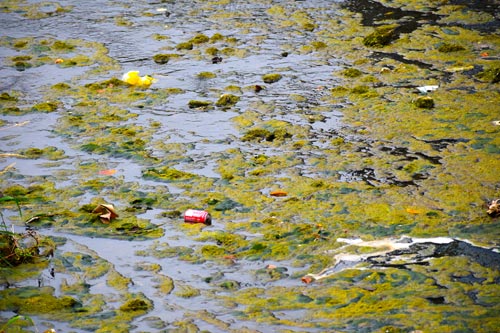
River Suir, Thurles, Co. Tipperary
Investment in waste water infrastructure is bringing environmental benefits to some areas. The number of large towns and cities failing to meet EU treatment standards is down from 28 in 2017 to 12 in 2020. However, the final deadline for all large urban areas to meet these treatment standards was 2005.
Commenting on the report, Dr Tom Ryan, Director of the EPA’s Office of Environmental Enforcement said: “It is unacceptable that 15 years after the final deadline to comply, half of Ireland’s urban waste water is still not treated to the basic EU standards. There are repeated delays in providing proper treatment at many areas, and this continues to put our environment and people’s health at risk. It is clear that Ireland will still need substantial investment over many years to bring our public waste water treatment plants and public sewers up to standard. Irish Water must deliver the essential infrastructure in as timely a manner as possible and resolve the underlying causes for the delays in upgrading treatment systems.”
The EPA report identifies the priority areas where improvements are most urgently needed and will deliver the greatest environmental benefits.
Mr Noel Byrne, EPA Programme Manager said: “While we are seeing progress at some areas, it is very concerning that Irish Water still has no clear action plans setting out when and how it will improve treatment at many of the priority areas where waste water is threatening the quality of our rivers and coastal waters. It is essential that Irish Water improves treatment to resolve the environmental issues highlighted by the EPA and provides clear, site specific action plans and time frames to carry out this work.”
The report contains key actions recommended for Irish Water as follows:
Direct resources to the priority areas and ensure there is a clear plan and time frame to resolve the environmental issues at each area.
Resolve the underlying causes for delays in upgrading treatment systems and deliver upgrade works in as timely a manner as possible.
Complete the impact assessments for shellfish waters and address the information shortfalls on the condition and performance of collecting systems.
This website uses cookies to improve your experience. We'll assume you're ok with this, but you can opt-out if you wish.AcceptRead More
Privacy & Cookies Policy
Privacy Overview
This website uses cookies to improve your experience while you navigate through the website. Out of these, the cookies that are categorized as necessary are stored on your browser as they are essential for the working of basic functionalities of the website. We also use third-party cookies that help us analyze and understand how you use this website. These cookies will be stored in your browser only with your consent. You also have the option to opt-out of these cookies. But opting out of some of these cookies may affect your browsing experience.
Necessary cookies are absolutely essential for the website to function properly. This category only includes cookies that ensures basic functionalities and security features of the website. These cookies do not store any personal information.
Any cookies that may not be particularly necessary for the website to function and is used specifically to collect user personal data via analytics, ads, other embedded contents are termed as non-necessary cookies. It is mandatory to procure user consent prior to running these cookies on your website.





Recent Comments