Two companies, Danish group Obton and Shannon Energy are planning to spend some €300 million; building plants that will generate electricity from solar panels here in Ireland.
Both companies confirmed last Wednesday that they had formed a joint venture to develop solar farms, latter which uses panels of specially manufactured cells, to convert heat from the sun into electricity.
The joint operation intends to spend some €300 million over the next three years on building these solar farms that would generate up to 500 megawatts of electricity, while creating an estimated 1,000 jobs in the process.
It is understood that the Danish company Obton would provide most of the finance, while Shannon Energy would provide local expertise and do much of the work on the ground.
This joint venture has already earmarked sites in counties Tipperary, Cork, Galway, Longford and Westmeath, where it is expected to install solar panels capable of producing 150 megawatts of electricity, supplying enough energy to cover the annual consumption of some 25,000 private homes.
The new group association remain in talks with farmers regarding the acquisition of other recognised sites here in Ireland, as they estimate that overall, they will require a minimum of 2,000 acres, if their plans are to be brought to fruition.
Wooden Patio decks (including those pressure treated), Stone Patio’s, Tarmacadam and Cement Walkways can, each surface combined, attract mildew, algae, lichen, liverwort or cyanobacteria called Nostoc. Same is wholly encouraged by our persistent damp, humid, shady conditions, our clean air and more often poor drainage. So how do we rid ourselves of this constant occurring problem?
Many people use washing powder to kill off this growth, spreading it over the offending surface. Same washing powder does work, killing the moss, but leaves behind a brown deceased moss skeleton, which is never easy to shift and if left behind can become slippery, for those not so steady on their trotters.
There is however another product which better solves this algae problem. Its name is Chloras, a product used by Dairy farmers for cleaning and flushing out milking machines.
Warning: Chloras is a bleach, so users are required to take care, as the product is extremely strong. Bleach can damage your clothing and footwear if unnecessarily splashed about. It is therefore advisable to use your Wellington boots, your old overalls, plastic gloves and more importantly, wear good eye protection by way of goggles or safety glasses. Remember bleach is never recommended for use near plants and can discolour certain types of stone. Important Note: Try also to keep your domestic pet off any treated area for a day or two, as the bleach could potentially burn their paws, causing the animal some mild discomfort.
To obtain a quick clean using Chloras, use one-part bleach to ten-parts of water. Same can be spread / sprayed using a watering can with a rose nozzle fitting or a knapsack sprayer. Let the solution sit on the affected surface area for some twenty minutes, before rinsing off, using a yard brush and your garden hose.
Chloras not only kills off all algae, but also the spores present, thus slowing the return of such growth the following year. Used on cemented areas, the surface will be returned to its initial fresh greyish colour.
Chloras is readily available here in Thurles, Co. Tipperary from Centenary Co-Op‘s Meal Store and Fuel Section, situated on the Templemore Road, at Monacocka, Thurles.
Free Christmas Tree Recycling Centres In Co. Tipperary
Christmas Tree Recycling Centre In Thurles
The final opportunity to drop off your traditional Christmas tree for recycling, [Note: All sites free of charge], will come to an end on Saturday, January 18th, at the following locations: –
Thurles: Parnell Street Car Park. Clonmel: Clonmel Recycling Centre Carrigeen. Cashel: Waller’s-Lot Recycling Centre. Carrick- on- Suir: Fair Green Car Park. Nenagh: Nenagh Recycling Centre. Roscrea: Roscrea Recycling Centre. Templemore: Templemore Town Park. Cahir: Cahir Depot, Cahir Business Park.
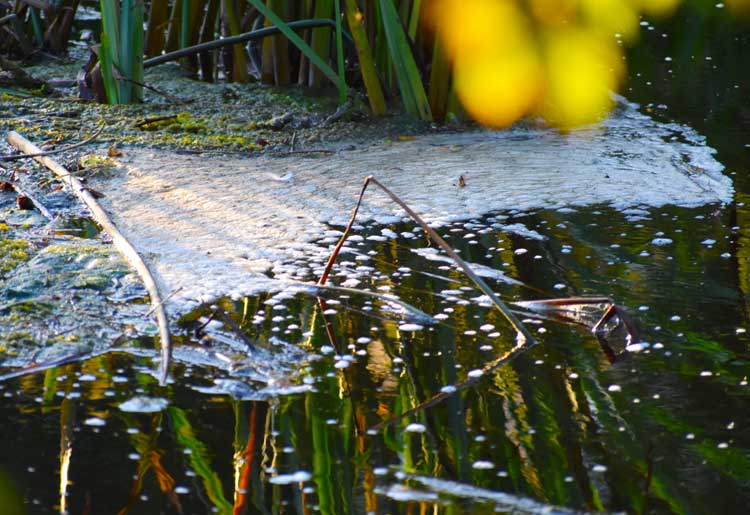
Now the EPA have today published the report for the five-year period 2013-2018.
The key findings are: (1) Some 92% of groundwater bodies, 80% of coastal waters, 53% of rivers, 50% of lakes and 38% of estuaries were found to be of satisfactory quality. (2) Since the last full assessment, however, river water quality has disimproved, with a net decline of 5.5% (128 water bodies) in the status of river water bodies. (3) We are continuing to see a loss of the pristine river water bodies. There are now just 20 pristine river sites; same down from over 500 sites in the late 1980’s. (4) The number of seriously polluted river water bodies (the ‘worst of the worst’) has started to rise; from 6 to 9 after many years of an improving trend. (5) The number of fish kills increased to 40 in 2018, following a historic low of 14 in 2017. It is likely that the hot summer and low flow conditions in 2018 had an impact on this.
Commenting on the assessment, EPA Director Matt Crowe said: “Ireland has made commitments to protect and improve water quality, under the Water Framework Directive and the National River Basin Management Plan 2018-2021. The aim of European and National Water Policy is to get polluted waters clean again, and ensure clean waters are kept clean. However, the findings of this report indicate that water quality is getting worse after a period of relative stability and improvement. We now have an increase in the number of the most polluted river sites, and the number of rivers in poor ecological health is also increasing. Positive trends reported previously by the EPA have reversed. Not only are we failing to improve overall water quality, we are also failing to prevent further deterioration of our rivers.”
Concluding, Ms Mary Gurrie, (Water Programme Manager) said: “The overall increase in nutrient concentrations is a worrying development for our water quality. These excess nutrients come from human activities, predominantly our farms and waste water. We need to address the sources and the pathways by which these nutrients make their way into our rivers and lakes. Good water quality is essential for out health and well-being. The National River Basin Management Plan sets out a programme of measures to protect and improve water quality. It is essential that the measures required are implemented in order to avoid further deterioration and achieve the good water quality which people expect.”
The report Water Quality in Ireland 2013-2018 is now available on the EPA website and the accompanying data used in the water quality assessments are available HERE. An infographic is also available.
Reducing Food Waste is the Climate Action YOU can do three times a day, as well as saving you money.
Reducing food waste is one of the most effective actions you can undertake to address climate change – it’s simple, it’s free and makes a real difference. The EPA are challenging everyone to reduce food waste in order to combat climate change.
Do you stop and think when you scrape half-full plates into your waste bin; or throw away food that has been lurking at the back of the fridge?
Not only are we wasting food, but also the resources used to produce, transport and supply it. All of this waste causes unnecessary greenhouse gas emissions and scientists estimate that food waste produces up to 10% of all global carbon emissions. In terms of addressing climate change, reducing food waste is an action in which everyone can become involved.
You might be surprised to learn that reducing food waste is one of the most important day-to-day actions we can take, to tackle climate change and it won’t cost you anything. In Ireland over 200,000 tonnes of food is wasted at home, and this waste has a greater impact on the environment given the energy consumed in processing, transport, packaging and preparation. To help you to reduce your food waste the EPA have some great tips and advice, with same available to view HERE.
Ms Mary Frances Rochford(EPA Programme Manager) has stated:
“We talk about climate change and the need for action, but often it is hard to know where to start. Reducing food waste is an immediate and effective way to reduce your personal carbon footprint. If every household in Ireland takes steps to reduce their food waste, this would be a great achievement towards reducing our national footprint. We as a nation are best when we work together to tackle issues and collectively, our individual actions will make a real difference.”
More than one quarter of all food produced is wasted worldwide. Here, in Ireland, we generate more than one million tonnes of food waste every year, with same representing a carbon footprint as high as 3.6 million tonnes of carbon dioxide equivalent. The EPA has three simple steps that individuals and families can take to get started in your food waste battle:
(1) Make a shopping list, and stick to it. (2) Make the most of the food you buy; don’t forget the leftovers. (3) If and when plans change, freeze your food and use it later.
We are encouraging everyone to join us in our Stop Food Waste pledge to go a week without wasting food.
Ms Rochford added: “As part of the Climate Action Plan, Ireland has committed to halving food waste by 2030. We will do this by working with food producers; retailers and restaurants; but we also need every person in Ireland to take their own action. So make the pledge, get involved and begin to reduce the food you currently waste.”
This website uses cookies to improve your experience. We'll assume you're ok with this, but you can opt-out if you wish.AcceptRead More
Privacy & Cookies Policy
Privacy Overview
This website uses cookies to improve your experience while you navigate through the website. Out of these, the cookies that are categorized as necessary are stored on your browser as they are essential for the working of basic functionalities of the website. We also use third-party cookies that help us analyze and understand how you use this website. These cookies will be stored in your browser only with your consent. You also have the option to opt-out of these cookies. But opting out of some of these cookies may affect your browsing experience.
Necessary cookies are absolutely essential for the website to function properly. This category only includes cookies that ensures basic functionalities and security features of the website. These cookies do not store any personal information.
Any cookies that may not be particularly necessary for the website to function and is used specifically to collect user personal data via analytics, ads, other embedded contents are termed as non-necessary cookies. It is mandatory to procure user consent prior to running these cookies on your website.






Recent Comments