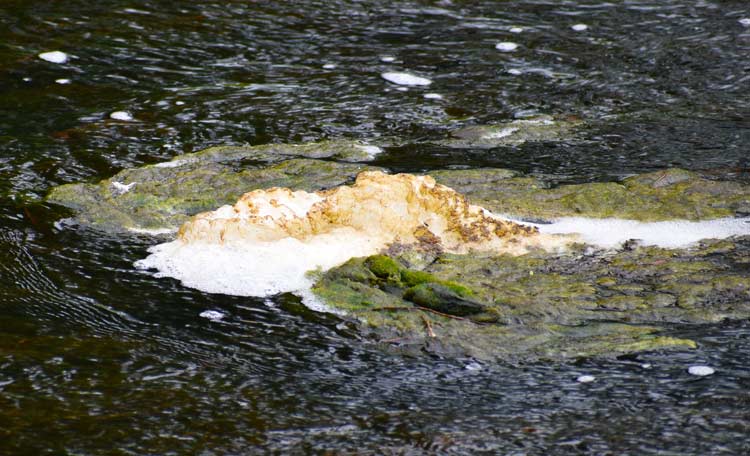
River Suir at Barry’s Bridge, Thurles, Co. Tipperary. Photo: G. Willoughby
Just over half of Irish surface waters are in a satisfactory condition.
Nutrient concentrations in waters are too high and the trends are going in the wrong direction.
Nitrate concentrations are now increasing in nearly half of our river and groundwater sites.
Phosphate levels are increasing in a quarter of river sites.
Concentrations of nitrate are highest in the south and south east of the country where the main source is agriculture.
Delivering on the key objectives of Ireland’s River Basin Management Plan and targeted action at local water catchment level is key to improving water quality.
The Environmental Protection Agency (EPA) has today published the Water Quality Indicators Report 2019 which provides an assessment on Ireland’s surface water and groundwater quality.
The main threat to water quality is the presence of too much nutrients, such as phosphorus and nitrogen, which come primarily from agriculture and waste water. Over one third of rivers, and a quarter of lakes are failing to meet their environmental quality standards for nutrients. Over one fifth of our groundwater, estuarine and coastal water bodies have high nitrogen concentrations.
Just over half of rivers and lakes are in high or good biological quality. The rivers surveyed in 2019 have shown more improvements than declines overall, which is welcome, however further action is needed to return waters to a satisfactory condition.
Commenting on the assessment, EPA Director Dr Micheál Lehane said:
“Clean, healthy water is essential for our economy, our aquatic wildlife and for our health and well-being. However, this assessment shows that our water environment remains under considerable pressure from human activities. Of most concern is the continued upward trend of nitrate concentrations. The problem is particularly evident in the south and southeast of the country where the main source is agriculture. We need urgent and effective action to ensure that the decline in water quality is halted and to restore those water bodies that have declined in quality.”
Ms Mary Gurrie(Programme Manager), continued:
“Elevated nutrient concentrations are contributing to pollution in our freshwaters and estuaries and causing difficulties with drinking water standards in some areas. Urgent action is now needed to reduce nutrient inputs from agriculture. Measures need to be targeted at the critical source areas where nitrogen and phosphate problems occur. There is a lot of good work happening at a local level to improve water quality and this needs to be scaled up to deliver the improvements needed.
The River Basin Management Plan, the new Common Agricultural Policy Strategic Plan and the full implementation of the EU Farm to Fork Strategy offer significant opportunities to achieve improvements in water quality, while delivering multiple benefits for the environment including for climate, air quality and biodiversity.”
The report is available on the EPA website HERE, and the accompanying data used in the water quality assessments are available HERE.
Over 581,000 tonnes of hazardous waste was generated in Ireland in 2019, an increase of 55,000 tonnes (10%) since 2018.
Hazardous waste generation in Ireland has been increasing since 2015, driven mainly by increases in incinerator ash and contaminated soils.
Ireland remains heavily reliant on export for treating the hazardous waste produced in the State. Overall 65% of our hazardous waste was exported for treatment to other EU member states in 2019.
The Environmental Protection Agency (EPA) has today published its latest hazardous waste figures for Ireland. Hazardous waste includes ash produced by waste to energy facilities, contaminated soils and chemicals.
The amount of hazardous waste produced in Ireland continues to increase. Ireland produced 581,000 tonnes of hazardous waste in 2019, an increase of 55,000 tonnes (10%) since 2018. Hazardous waste generation in Ireland has been increasing since 2015, driven mainly by increases in incinerator ash and contaminated soils.
While treatment capacity in Ireland has increased for some waste types, such as contaminated soils, Ireland still does not have the range of facilities to deal with all of the hazardous waste generated in the country. Overall 65% of Ireland’s hazardous waste was exported for treatment to other EU member states in 2019. The Netherlands, Norway, Great Britain, Denmark, Germany, Northern Ireland and France together accepted the majority of Ireland’s hazardous waste exports.
Commenting on the figures, EPA Programme Manager Mary Frances Rochford stated: “It is clear that Ireland has made some progress in terms of increased treatment of some hazardous waste types, due to increased capacity provided in 2019. However, we still have a way to go to become self-sufficient in the management of this waste stream. The Covid-19 pandemic has shown the importance of adequate and resilient waste treatment capacity. This will be a key focus as the EPA prepares the next National Hazardous Waste Management Plan due to be published in 2021.”
Industry and the construction sector continue to be the largest generator of hazardous waste, giving rise to large quantities of incinerator ash (152,000 tonnes), contaminated soils from remediation of industrial sites (91,000 tonnes) and chemical residues (66,000 tonnes). Households, farms and other businesses also produce a range of hazardous wastes such as batteries, waste electrical and electronic appliances, paints, solvents and medicines.
Infectious health care waste was the eleventh largest category of hazardous waste in 2019 at just over 12,000 tonnes. The effect of the Covid-19 pandemic is likely to result in higher tonnages in 2020.
The EPA compiles data on waste generation from industry and waste facilities in cooperation with the National Trans Frontier Shipment Office.
The 2019 information is available on the EPA website HERE.
EPA/IIEA Environmental Resilience Lecture Series will begin Friday 4th December 2020. International experts will address the following topics at public webinar events:
the circular economy,
air quality,
environmental governance,
sustainable waste management,
water quality and
climate change.
The Environmental Protection Agency (EPA) and the Institute of International and European Affairs (IIEA) are delighted to announce a new lecture series on ‘Environmental Resilience’ which will begin this Friday, December 4th.
The lecture series aims to bring all stakeholders together behind a collective message of resilience, emphasising both the individual and societal responsibility to be good stewards of our shared environment – everyone has a role to play. By taking concerted efforts to improve air and water quality, by reimagining waste cycles, and by focusing on raising standards of environmental governance, we can address a the pressing climate, ecological and biodiversity crises.
Speaking about the lecture series, EPA Director General Laura Burke has stated: “We are delighted to begin this partnership with the IIEA. Our shared environment has faced unprecedented pressures and continues to suffer from resource exploitation, inadequate environmental governance, and biodiversity degradation. However, by adopting nature-based solutions and implementing a circular model of production, consumption, and growth, together we can develop an environment that is resilient to such pressures.”
She continued: “The EPA is responsible for protecting and improving the environment as a valuable asset for the people of Ireland. This series provides an excellent opportunity to hear the insights of international experts as they address the most critical environmental issues of our time.”
IIEA Director General, Mr Michael Collins has stated: “We are delighted to work with the EPA on this lecture series. The issues covered are ones which will be central to all our lives in the decades ahead. The IIEA always seeks to be relevant in our work to share ideas, and this series on Environmental Resilience is pertinent, pressing and of great public interest. Collectively we must do everything we can to move to a position of ‘environmental resilience’. It is this journey that will be charted through each of the lectures in the series.”
Six virtual lectures will cover themes including the circular economy, air quality, environmental governance, sustainable waste management, water quality and climate change. International experts will address these topics at public webinar events.
Speakers will include: – John Bell, Director ‘Healthy Planet’, DG Research & Innovation, European Commission Florika Fink-Hooijer, Director-General DG Environment, European Commission Loïc Fauchon, President of the World Water Council Professor Jos Delbeke, European Investment Bank Climate Chair at EUI School of Transnational Governance.
You can register to join the first lecture series by visiting HERE.
For further media information: Niamh Hatchell (EPA). Darragh Moriarty (IIEA), darragh.moriarty@iiea.com / 087 737 0157.
“A people without the knowledge of their past history, origin and culture, is like a tree without roots”.
Quote by Marcus Mosiah Garvey, (Latter a Jamaican political activist, publisher, journalist, entrepreneur, and orator, greatly influenced by the Irish 1916 rising.)
“The land between the Mill Road and the river to the north and south of the relief road corridor is low laying, criss-crossed by field drains and provides poor grazing. This area was wet and soft underfoot during my site inspection and it is likely that, at least in part, it was the flood plain for the Suir.”
Quote by Inspector Mr Hugh Mannion(An Bord Pleanála, Ref.: PL79.JP0024), regarding the Development named: Thurles Relief Road, Thurles, County Tipperary.
It is on this River Suir flood plain that Tipperary Co. Council are now building 26 houses, flooding the north side area of the ‘Double Ditch’. See the two images shown hereunder, as impacted earth floods the soggy building site, forcing the builders to run 2 permanent drains into the North side of the Double Ditch, carrying silt and flooding this local historical site.
Builders draining part of the flood plain for the River Suir, are now destroying the Great Famine ‘Double Ditch’, here in Thurles, with the permission of Tipperary Co. Council. Photo: G. Willoughby.
In tomorrow’s Irish Mail on Sunday, investigative journalist, Valerie Hanley, brings national attention to the plight of the Thurles ‘Double Ditch’, as well as the international descendants connected to its rich local history and the concern for its threatened future.
It is not surprising that the story of the Great Famine ‘Double Ditch’ has now garnered the attention of individuals far beyond the town of Thurles. The story of the Knaggs family and their noble efforts during the Great Famine, is indeed a captivating tale forever immortalised by this Thurles Double Ditch walkway here in Thurles, Co. Tipperary.
What is surprising, as highlighted by tomorrows article, is that despite local, national and international pleas for conservation, it remains unclear if local Tipperary councillors and politicians like Mr Michael Lowry and Mr Jackie Cahill, are willing to acknowledge its historic value and attempt to safeguard its future for future generations of Thurles people.
Builders draining part of the flood plain for the River Suir, are now destroying the Great Famine ‘Double Ditch’, here in Thurles, with the permission of Tipperary Co. Council.Photo: G. Willoughby.
Here’s hoping tomorrow’s article in the Irish Mail on Sunday and our ongoing campaign here onThurles.Info will help to raise more awareness, thus helping to save this Double Ditch as part of our town’s rich historic culture.
To refresh our memories regarding the historic origins of the Double Ditch and this ‘Great Famine Walkway’ see all links shown hereunder: –
The outlook for Ireland’s environment is not optimistic unless we accelerate the implementation of solutions across all sectors and society.
Climate and biodiversity are two of the key challenges we need to address.
An investment in the environment is also an investment in our health.
Environmental indicators are going in the wrong direction across many areas.
A national Environmental Policy Position will provide clarity on our ambition and commitment to live up to the image of a Clean Green Island.
River Suir, Thurles, Co. Tipperary.
Launching the EPA seventh State of the Environment Report today, Ms Laura Burke, EPA Director General, has stated that, “The overall quality of Ireland’s environment is not what it should be, and the outlook is not optimistic unless we accelerate the implementation of solutions across all sectors and society.”
Ireland’s Environment: An Integrated Assessment 2020 reveals that enduring and systemic challenges are putting pressure on the environment and remain to be solved. These cut across different environmental topics such as climate, air, soil, water, biodiversity and waste, and across organisations and sectors, business and all levels of society.
Specific examples include:
Almost 90% of our energy is generated from fossil fuels giving rise to greenhouse gases.
Air quality in some urban areas doesn’t meet WHO standards.
Nature and habitats are being damaged (85% of EU listed habitats are in unfavourable condition).
Wetland bird species, such as curlew, are under threat as a breeding species.
Raw sewage is being discharged to water from 35 towns and villages.
Even more stark is the dramatic reduction in the number of Ireland’s most pristine rivers, which have fallen from over 500 sites to only 20 sites in 30 years.
Nutrient concentrations in rivers and nutrient inputs to the marine environment are increasing.
More than one million tonnes of food waste is generated each year in Ireland.
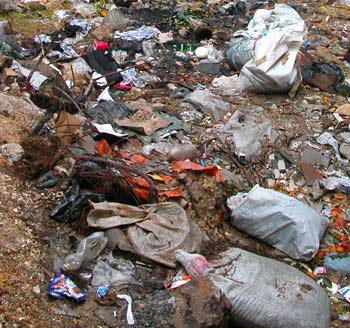
Littering remains a problem, resulting in thousands of complaints annually to local authorities.
A key message from Ireland’s Environment: An Integrated Assessment 2020 is that the absence of an overarching national environmental policy position is negatively impacting on success across multiple environment-related plans and policies: the sum of the parts does not make up a coherent whole.
EPA Director General, Ms Laura Burke has stated, “Environmental issues and challenges such as climate change, air quality, water quality and biodiversity cannot be looked at in isolation, as they are complex, interconnected and need to be tackled in an integrated way. Now is the time for an overarching environmental policy position for Ireland – to be clear on our ambition to protect Ireland’s environment in the short, medium and long-term and on our commitment to live up to the image of a Clean Green Island. We need to see a decade of action in the 2020s. A policy position would provide a national vision that all government departments, agencies, businesses, communities and individuals can sign up to, to play their part in protecting our environment.
In addition to such a policy position, our report also calls for better implementation and delivery of existing legislation and policies. Many plans and programmes are already in place which, if fully implemented, would go a long way towards resolving persistent environmental issues. Full implementation of, and compliance with, legislation is a must to protect the environment.”
In relation to greenhouse gas emissions, the report’s data confirms Ireland’s underachievement in curbing emissions and meeting stated targets. It shows that the longer we delay, the more difficult it will become to turn things around to meet our obligations. It is more than meeting targets, the real goal for Ireland in the face of climate disruption is to have a resilient and stable society and economy, one that is carbon neutral through its own efforts and natural attributes.
The report has also found that nature and wild places in Ireland are under unprecedented pressure and need to be better safeguarded, both locally and in protected areas. Our action to protect nature needs to be more ambitious. We need to identify the pathway to transformative change for nature protection in Ireland and reverse wider current trends in biodiversity and habitat loss. Very topically, the EPA report highlights people’s greater awareness about the positive benefits of a clean environment for health and wellbeing. The coronavirus (COVID-19) crisis has shown people the importance of the natural environment in their local areas.
Dr. Micheal Lehane, Director of the EPA’s Office of Environmental Assessment, has stated: “Ireland is already losing much of what is important in its environment. Unspoilt areas are being squeezed out and we are losing our pristine waters and the habitats that provide vital spaces for biodiversity. Now, more than ever, Ireland’s green and blue spaces, which include urban parks, coasts, lakes, rivers, forest and bogs, are essential components of our health infrastructure. These allow people to get out in nature and away from everyday stresses, to the benefit of health and wellbeing and they need to be clean and protected. An investment in the environment is also an investment in our health.”
This comprehensive State of the Environment Report includes chapters on industry, transport, agriculture, air and water quality, nature and health and is available to download from HERE
This website uses cookies to improve your experience. We'll assume you're ok with this, but you can opt-out if you wish.AcceptRead More
Privacy & Cookies Policy
Privacy Overview
This website uses cookies to improve your experience while you navigate through the website. Out of these, the cookies that are categorized as necessary are stored on your browser as they are essential for the working of basic functionalities of the website. We also use third-party cookies that help us analyze and understand how you use this website. These cookies will be stored in your browser only with your consent. You also have the option to opt-out of these cookies. But opting out of some of these cookies may affect your browsing experience.
Necessary cookies are absolutely essential for the website to function properly. This category only includes cookies that ensures basic functionalities and security features of the website. These cookies do not store any personal information.
Any cookies that may not be particularly necessary for the website to function and is used specifically to collect user personal data via analytics, ads, other embedded contents are termed as non-necessary cookies. It is mandatory to procure user consent prior to running these cookies on your website.






Recent Comments