RTÉ’s ‘Mooney Goes Wild’ and ‘The Today Show’ both launched a photography competition in January 2021, with the aim of celebrating our Irish flora and fauna.
This competition not surprisingly received an massive response, with more than 7,000 entries being forwarded for final adjudication.
The judging panel, which consist of Mr Matthew Jebb(National Botanic Gardens), Mr Niall Hatch(Bird Watch Ireland) and Ms Sheena Jolley(Wildlife Photographer), have now shortlisted the final 12 pictures, with two of the excellent photographs selected; the work of Tipperary photographers.
Finalist Mr Larry Doherty, Thurles, Co. Tipperary, “Orange Ladybird” located at Cabragh Wetlands, Thurles.
Finalist MrPhilip Greaves, Clonmel, Co. Tipperary, “Leaf Cutter Bee” spotted in the area of his back garden.
The winner will to be announced on ‘The Today Show‘ tomorrow, St. Patrick’s Day, on RTÉ Radio One, with Mr Derek Mooney himself presenting the winning photographer with a trophy and a cash prize of €1,000.
Best of luck to both men.
In the coming months, it is planned that the exhibition will travel to Office of Public Works sites around Ireland.
“Men prefer darkness, because their deeds are evil”. Gospel according to St. John, Chapter 3 -Verse 18.
Photo: G. Willoughby
When Mother Nature removed her warm “overcoat of green and pleasant foliage” last winter, she revealed the fact that Fly Tippers had located a new area in which to secretly dump their domestic rubbish, here in Thurles, Co. Tipperary.
Obviously, conscience of the Covid-19 virus restrictions, the criminal in question did not go past the 5 kilometre (3.1 miles) limits, to the bog lands of Templetouhy or Littleton. No, thankfully, instead they took advantage of the dark area on the north side of the Archerstown Road, to the rear of Thurles Golf Club, (close to the bad bend), to rid themselves of their beer bottles, toys and other unwanted trash.
Hopefully, Ms Cora Morrissey(Administrative Officer Environment & Climate Action Section, Tipperary Co. Council) will now scramble her forensic investigation team, to check out the contents, or maybe the ‘Fly Tipper’ responsible, may since have obtained his trash /recycling bins and suffering pangs of conscience; could rush back to erase all evidence of this deed, most foul.
Then again “Pigs may fly” and “Hell may freeze over”.
New Thurles Shopping Centre under construction at the old Erin Foods site on Slievenamon Road, Thurles, Co. Tipperary.
A planning decision on the proposed drive through take away at the southern end of the old Erin Foods site here in Thurles, which had been due to be announced on the 28th February last, has been further delayed.
It is understood that the planning authority requires a published notice of the developers requirement to submit a Natura Impact Assessment to evaluate the potential impact of the proposed development on the lower River Suir special area of conservation.
The two x 207metre high Poolbeg industrial chimneys situated standing at the mouth of Dublin Harbour were built and came into operation in the 1970’s and are amongst the tallest, hideous, eyesore structures in Ireland, visible from most areas of Dublin city.
The twin chimneys, with their distinctive red and white, dirty, rust streaked facades, when built had only a planned operational lifetime of 30-40 years. While Poolbeg itself continues today to be an operational power station, the existing chimneys were decommissioned back in 2006 and 2010; same no longer required for the 470MW gas turbine plant, which generates electricity for more than half a million Irish homes.
Bear this information in mind, when you hear that Dublin City councillors have called for the 50 year old chimneys to be listed as protected structures. To this end they have commissioned an architectural historian to research and report on the state of the chimneys, with a view to encasing them in concrete or fibreglass at a cost of several million euro.
Here in Thurles, Tipperary Co. Council officials, elected County Councillors and TD’s are on a totally different thought wave length.
Surely, the Poolbeg chimneys built in the 1970’s can hardly be observed as an international tourist attraction, while the Great Famine Double Ditch situated on Mill Road, Thurles Co. Tipperary has major tourism attraction potential, bringing benefit to a town centre currently on its knees.
Tipperary Co. Council officials, elected County Councillors and TD’s have now condemned the 175 year old Great Famine Double Ditch to total eradication, without the consent of those residents of the county who elected them and who continue to pay their massive salaries.
In the words of U.S. President Dwight D. Eisenhower’s Secretary of Defence, Mr Charles Erwin Wilson, which of these scenarios offers“most bounce for ounce” or “bang for your buck”, for the Irish taxpayer.
Choose! Restore and protect a 50 year old defunct and hideous eyesore, known as the Poolbeg chimneys; costing “Several million euro”, placing the debt burden on a State-owned company, who will be required to foot a continuous annual maintenance bill. Or Restore and protect an historic 175 year old Great Famine Double Ditch, Right-Of-Way and Mass Path, already slightly damaged by Tipperary Co. Council officials; which offers major tourism attraction potential, costing “Between €15,000 and €20,000”.
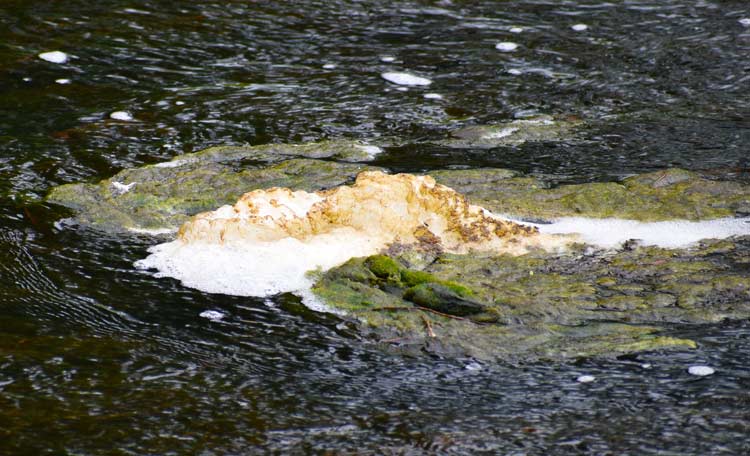
River Suir,Barry’s Bridge, Central Thurles, Co. Tipperary.
The Environmental Protection Agency (EPA) has today released its report on local authority environmental enforcement activities for 2019.
There has been an increase in local authority inspection and enforcement activities relating to waste and litter.
Further action and coordination are needed to ensure compliance with air legislation, with a focus on fuels that are on sale and in use in low smoke zones.
More needs to be done to drive compliance nationally with water protection legislation, given the continuing decline in water quality.
The EPA has today released its report on local authority environmental enforcement activities for 2019. The EPA has seen an increase in both the numbers of inspections and enforcement actions taken by local authorities since 2018 with the bulk of these relating to waste and litter. Local authorities also managed a substantial volume of environmental complaints during the year. These again related predominantly to waste issues.
The EPA found that local authorities are taking account of national enforcement priorities in implementing their work, which is welcome. It did find, however, that additional focus is needed in both air enforcement and water protection.
Commenting on the findings of the report, Dr Tom Ryan, (Director of the EPA’s Office of Environmental Enforcement) stated:
“In looking across the range of enforcement activities, waste management is where most local authority activities are focused. This is not surprising given the breadth of their functions in this area relative to air enforcement. Good work has been completed by local authorities, working with the EPA, in developing the national air monitoring programme. However, considering the effect of air quality on human health and well-being, more action is needed on air enforcement.”
A substantial programme of water inspection was undertaken by the local authorities during the year and these water inspections and investigations led to over a thousand enforcement actions and a limited number of prosecutions during 2019.
Mr Andy Fanning, (Programme Manager of the EPA’s Office of Environmental Enforcement) stated:
“Local authorities continue to deliver their key role in national water sampling which is welcome as it provides data to inform action. This information, however, is showing a continuing decline in water quality and more needs to be done to protect our water environment. Local authorities need to make sure that they are applying enough resources to protect both human health and the environment and are taking effective enforcement action where non compliances are found.”
The EPA also highlights in the report that, while enforcement is necessary, all sectors of society have a role in making sure their actions do not pollute or damage our environment. Each household, organisation and business need to segregate and manage their wastes correctly, comply with low smoke zone requirements where they are in place, and make sure that their actions do not pollute waters.
This website uses cookies to improve your experience. We'll assume you're ok with this, but you can opt-out if you wish.AcceptRead More
Privacy & Cookies Policy
Privacy Overview
This website uses cookies to improve your experience while you navigate through the website. Out of these, the cookies that are categorized as necessary are stored on your browser as they are essential for the working of basic functionalities of the website. We also use third-party cookies that help us analyze and understand how you use this website. These cookies will be stored in your browser only with your consent. You also have the option to opt-out of these cookies. But opting out of some of these cookies may affect your browsing experience.
Necessary cookies are absolutely essential for the website to function properly. This category only includes cookies that ensures basic functionalities and security features of the website. These cookies do not store any personal information.
Any cookies that may not be particularly necessary for the website to function and is used specifically to collect user personal data via analytics, ads, other embedded contents are termed as non-necessary cookies. It is mandatory to procure user consent prior to running these cookies on your website.





Recent Comments