Most of Ireland’s Local Authorities Strengthen Environmental Enforcement in 2025.
Ireland’s local authorities delivered a strong environmental enforcement performance in 2025, with 83% of assessments under the National Enforcement Priorities rated Strong or Excellent. The EPA’s latest performance report shows that environmental teams across the country carried out more than 252,000 inspections, responded to 85,500 complaints, took 23,550 enforcement actions and initiated 386 prosecutions during the year.
Dún Laoghaire-Rathdown County Council, Galway City Council and South Dublin County Council achieved the required standard across every National Enforcement Priority. All 31 local authorities also met the required standard for tackling illegal waste. Despite the positive overall results, the EPA identified areas where enforcement must improve. Seventeen per cent of assessments fell below the required standard, while Leitrim County Council and Sligo County Council did not meet the required standard across several priority areas. Particular attention is now needed in relation to waste segregation, discharges to water and transport noise. The EPA has called on local authorities to maintain momentum, allocate sufficient resources and ensure that enforcement is consistent across the country.
Tipperary County Council. While Tipperary County Council recorded positive results across several environmental enforcement priorities in 2025, the EPA assessment indicates that improvement is needed in two important areas.
The council received yellow ratings for its performance under the Environmental Noise Directive and for discharge licences and Misconnections. These ratings indicate that the work carried out did not reach the required Strong or Excellent standard.
The Environmental Noise Directive requires local authorities to identify harmful transport-noise exposure, prepare action plans and demonstrate that appropriate measures are being implemented. Tipperary County Council should clarify what actions are planned, when they will be completed and how progress will be measured.
The rating for Discharge Licences and Misconnections is also a concern. Incorrect wastewater connections and poorly controlled discharges can result in pollution entering surface-water drains, rivers and streams. Stronger inspections, licence reviews, investigations and enforcement follow-up may be required to protect water quality.
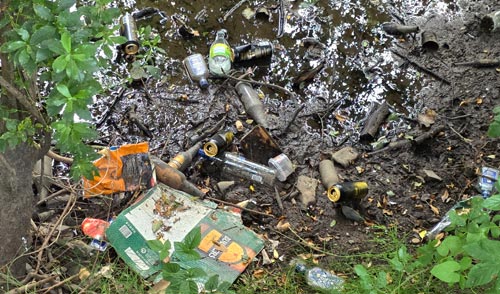
Visual Confirmation:State of the Suir River setin the heart of Thurles today; left uncleared since the recent Liberty Music Festival, which was held on Saturday July 4th and Sunday 5th, 2026 last.
These findings do not suggest failure across the council’s entire environmental programme. They do, however, show that enforcement must be consistent across every priority area. Tipperary County Council should respond by publishing clear corrective actions, measurable targets and realistic timelines for improvement. The report also highlights targeted work carried out in Tipperary’s firewood sector. Eleven firewood producers were contacted and provided with information on their obligations under solid-fuel legislation, including EPA registration and certification requirements. Following this engagement, three producers registered with the EPA and six began working towards certification through the Wood Fuel Quality Assurance Scheme. Two newly identified producers remain subject to further follow-up.
The Tipperary initiative demonstrates how inspections, education and sustained engagement can improve compliance. It also shows that continued oversight is necessary to ensure firewood meets the required quality and moisture standards, protects air quality and supports responsible producers.
The EPA will continue to monitor local-authority performance and work with councils to improve environmental outcomes for communities throughout Ireland.
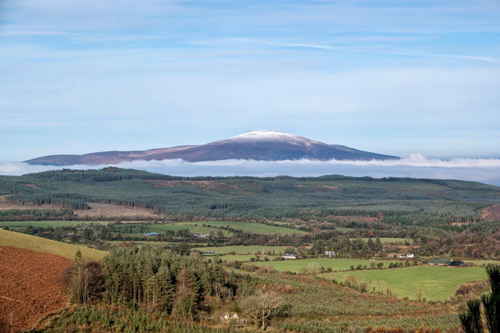
Emergency services are continuing efforts to contain a wildfire burning on Slievenamon mountain in County Tipperary.
Slievenamon is one of County Tipperary’s most important natural and cultural landmarks, rising prominently above the surrounding plains and serving as a valued destination for walking, recreation and appreciation of the county’s landscape. Its importance extends far beyond scenery: the mountain contains prehistoric burial remains, is deeply connected with Irish mythology and the stories of Fionn mac Cumhaill, and inspired Charles Kickham’s song “Slievenamon,” widely regarded as Tipperary’s unofficial county anthem. As a place where nature, archaeology, folklore and local identity come together, protecting Slievenamon is essential for preserving biodiversity, heritage and a powerful symbol of belonging for generations to come.
Firefighters withdrew from the mountain overnight because darkness, difficult terrain and limited visibility made operations unsafe. Crews maintained a presence in the area and continued monitoring the fire throughout the night.
Overnight fog helped subdue the blaze, while firebreaks established during Monday’s operation limited its spread. However, the fire remains active, and officials say there is still considerable work to be done.
Crews from Clonmel, Cahir and Carrick-on-Suir are assessing the affected area and developing a plan to safely return to the mountain. Aerial assessment is also being used to establish the extent of the fire and any possible impact on nearby forestry.
Emergency services have said there is currently no imminent threat to residential properties. Members of the public are being asked to avoid the affected area, follow all instructions from emergency personnel and exercise extreme caution during the continuing warm and dry conditions.
People should not light fires or disposable barbecues grills in or near forests, grasslands or upland areas. Any sign of fire should be reported immediately by calling 112 or 999.
Where Tipperary Childhood Can Run Free – A Magical Day at Leahy’s East Cork Open Farm.
There are childhood days that disappear almost as soon as they are over, and then there are days that seem to glow in children’s memory for years. A family visit to Leahy’s Open Farm in the green countryside of East Cork belongs firmly in the second category. For families travelling from Tipperary, the journey to Dungourney feels like the beginning of the adventure. Familiar streets gradually give way to winding country roads, hedgerows, open fields and the soft colours of rural Ireland. By the time the farm comes into view, everyday routines already feel far behind. Yet it is when children discover the play areas that the true magic begins.
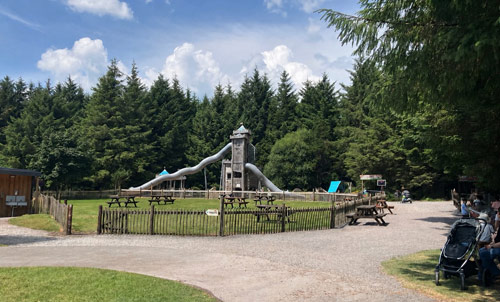
Playground Made for Big Imaginations. Pic: G. Willoughby.
A Playground Made for Big Imaginations Leahy’s is not simply a place where children look at animals and move quietly from one enclosure to another. It is a place created for movement, curiosity and joyful noise. Across the farm, play spaces invite young visitors to climb, race, dig, slide and explore. Adventure trails stretch ahead like secret pathways, while climbing towers challenge children to rise a little higher and become a little braver with every step. The playgrounds feel less like ordinary equipment and more like stages for childhood stories. A wooden tower becomes a castle. A bridge becomes a crossing over a mysterious valley. A slide becomes a thrilling escape route from an imaginary dragon. Sure, Parents may see timber, ropes and platforms, but children see entire worlds waiting to be conquered.
The Thrill of the real Digger Park For many young visitors, the Digger Park is where dreams suddenly become real. Here, children can take control of real machinery and experience the irresistible satisfaction of scooping, lifting and moving earth. Small hands grip the controls in safety with serious concentration. Faces light up when the bucket finally rises. For a few exciting minutes, they are no longer visitors to a farm; they are builders, engineers and expert machine operators with important work to complete. It is hands-on play at its best; exciting, physical and wonderfully absorbing. This attraction is especially memorable because it offers something children do not often experience elsewhere. They are not merely pressing buttons on a screen or watching someone else having fun. They are participating, experimenting and discovering what they can do.
Laughter on the Barrel Train. Then comes the Barrel Train, rumbling along its route with a cheerful collection of passengers. Children climb aboard with bright eyes and waving hands, ready to be carried around the farm. As the little carriages follow one another, laughter drifts across the countryside. Parents stand nearby, smiling as the train passes, cameras raised to capture expressions of complete delight. The ride may last only a short while, but to a child it can feel like a grand journey through a faraway land. It is one of those simple family experiences that asks for nothing more than everyone being present; children laughing, parents watching and a day unfolding without hurry.
Indoor Adventures When the Rain Appears. Irish skies have a habit of changing their minds, but rain does not have to end the adventure at Leahy’s Farm. The Play Barn and other indoor attractions provide plenty of space for energetic children to continue exploring. When showers tap against the roof, families can step inside rather than packing up and heading for home. The covered play areas also give the day a pleasant rhythm. Children can race around outdoors while the weather is bright, retreat indoors when the clouds gather and return to the fresh air when the sun reappears. This mixture of indoor and outdoor entertainment makes the farm particularly reassuring for parents planning a full day away from home.
Gentle Moments Among the Excitement. Although the play areas are filled with action, Leahy’s also offers quieter moments. Between climbs and train rides, families can wander through the farm, meet its animals (friendly Alpacas, Goats, Sheep, Donkeys, Horses, Rabbits, Snakes, Pigs and Chickens) while discovering displays celebrating Irish rural life. The farm museum introduces visitors to tools, machinery and traditions from earlier generations, adding a sense of heritage to the day.
There is something lovely about watching a child move from the excitement of a playground to the gentle wonder of meeting an animal. One moment they are racing towards a climbing tower; the next, they are standing perfectly still, fascinated by a goat, donkey or rabbit. These contrasts give this farm its special character. Adventure and education sit naturally beside one another, without the day ever feeling organised like a classroom lesson.
Homemade Ice cream. Pic: G. Willoughby.
A Sweet Ending to the Adventure. After hours of climbing, digging, running and exploring, there is still one final pleasure to enjoy. Leahy’s is also known for its ice cream and chocolate experiences, offering families a suitably sweet conclusion to their visit.
Tired children can sit down with a treat, while parents enjoy a well-earned pause and talk about the day’s favourite moments. Perhaps it was the Barrel Train. Perhaps it was the biggest slide, the diggers or the animals. Every child will carry home a different memory. For Tipperary families searching for more than an ordinary afternoon out, Leahy’s Open Farm offers space to reconnect, play and make memories together. Its playgrounds are not simply places to burn off energy. They are places where confidence grows, imaginations awaken and childhood is allowed to run gloriously free.
Long after the muddy shoes have been cleaned and the final photographs have been shared, the laughter of that East Cork adventure will still feel wonderfully close.
RATE Leahy’s East Cork Open Farm with regards Enjoyment and Value for Money: An exceptional 10/10 rating – something increasingly rare in Ireland today.
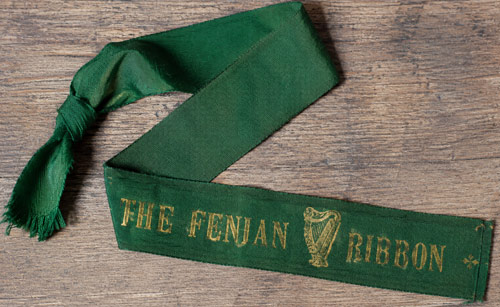
The Ribbon Men in Tipperary; Where They Came From, Where They Went And Why They Are Less Spoken About in Irish History.
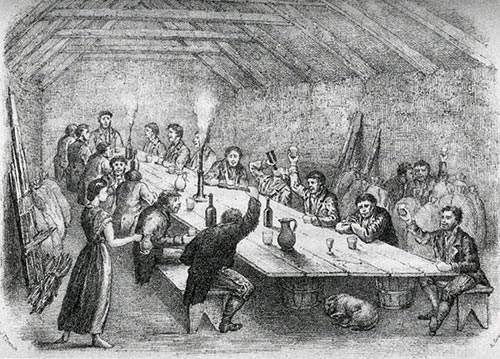
The Ribbon Men were part of the wider movement known as Ribbonism, a Catholic secret-society tradition that grew in Ireland during the late eighteenth and nineteenth centuries. They did not begin in Tipperary alone. Their roots are usually traced to the Defender movement of the 1790s, especially in Ulster, where Catholic communities organised for protection in a time of sectarian tension and political unrest. Over time, Ribbonism spread beyond the north and became associated with rural grievances, tenant rights, resistance to tithes, opposition to evictions, and hostility towards landlords, agents, informers, and process servers. Historians describe Ribbonism as both a secret society and a form of community defence, though government officials often used the name loosely for many kinds of rural disorder.
In Tipperary, the Ribbon Men entered a county already well known for agrarian conflict. Long before them there had been Whiteboys, and later there were Rockites, Terry Alts, Caravats, Shanavests, and other local factions. Tipperary’s land system, poverty, insecurity of tenure, tithes, evictions, competition for farms, and resentment of middlemen created the conditions in which secret societies could take hold. From the 1760s onwards the county was heavily involved in these rural movements, under different names and with changing motives.
Their activities in Tipperary were usually not open political rebellion in the modern sense. They worked in secret and at night. They used oaths, passwords, threatening letters, armed visits to houses, raids for firearms, attacks on property, intimidation of tenants, latter who took land from evicted families, and warnings to employers or landlords. Some actions were violent and sometimes deadly. Others were intended to frighten rather than kill. A National Archives record from 1828, for example, refers to Ballingarry Glebe, (NR), near Borrisokane and the forwarding of new oaths sworn by entrants into the “Ribband System.” This is important because it places Ribbon organisation, not just vague agrarian unrest, in north Tipperary.
The evidence suggests that Ribbon and Ribbon-like activity was strongest in north and mid Tipperary. The Ormond districts, especially around Borrisokane and Nenagh, appear repeatedly in studies of threatening notices and rural intimidation. Daniel Grace’s study of threatening notices in pre-Famine Tipperary found that land was the dominant issue behind such threats, and that the northern baronies of Upper and Lower Ormond produced a particularly high concentration of notices. Other places connected with this wider pattern include Thurles, Roscrea and Ikerrin, Templemore, Borrisoleigh, Cashel, Golden, Bansha, Tipperary town, Killenaule, Mullinahone, Carrick-on-Suir, Cahir, and Clonmel. Some of these places were centres of actual incidents; others were police, court, or administrative centres where cases were reported, tried, or investigated.
Where did they go? In one sense, they did not simply go anywhere. Ribbonism changed shape. Some members emigrated, especially to Britain and America, bringing forms of Irish Catholic fraternal organisation with them. Scholarship on Ribbon societies shows that the tradition did not remain purely rural or purely Irish; it also appeared among Irish migrant communities in Britain and later influenced Catholic fraternal organisations such as the Ancient Order of Hibernians. In Ireland itself, the Ribbon Men faded as new movements took the stage. The Young Irelanders, the Fenians, the Land League, the Irish Parliamentary movement, and later revolutionary nationalism, latter which gave people different languages and structures for protest. The old secret agrarian oath-bound society became less central.
There are several reasons why the Ribbon Men are less spoken about today. First, they were secretive. They did not leave behind manifestos, membership lists, or proud public records in the way later political organisations did. Much of what we know comes from police reports, court records, hostile newspapers, informers, and government correspondence. These sources are useful, but they are also biased and often confused.
Second, the term “Ribbonman” was sometimes used too broadly. Officials could blame almost any unsolved agrarian crime on Ribbonism. This makes it difficult to separate genuine Ribbon organisation from Faction Fights, local feuds, Whiteboy activity, Rockite activity, or ordinary crime. Historians therefore handle the term carefully.
Third, their story is morally uncomfortable. They were not simply heroes or villains. They defended poor Catholic tenants in a harsh land system, but they also used intimidation and violence. That complexity does not fit easily into the cleaner patriotic story often told about later Irish nationalism.
Finally, Tipperary’s later history overshadowed them. The Famine, the Land War, the War of Independence, Soloheadbeg, and the Civil War became larger parts of public memory. Compared with those events, the Ribbon Men belong to a darker, earlier, more secretive world of oath-bound rural resistance.
Yet they matter. To understand Tipperary in the nineteenth century, we must remember not only the famous leaders and public movements, but also the hidden networks of ordinary people who acted from fear, anger, loyalty, and desperation. The Ribbon Men were part of that hidden history.
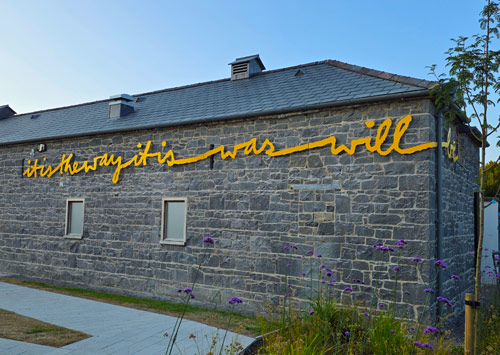
The above words are placed so beautifully and appropriately that it would be difficult to imagine a better setting.
Written in glowing golden script across the weathered limestone, the inscription seems almost to float upon the old walls; not merely as a sign, but as a quiet conversation between what has been, what is now and what is still to come. This striking artwork adorns the carefully restored 1849 stone old farm building in what is now Thurles Market Quarter. Once a modest agricultural shed, shaped by work, weather and generations of local life, it has now been lovingly reborn as ONE19 Coffee House & Restaurant.
West side of “One19 Restaurant”, Cathedral Street,Thurles, Co. Tipperary.
Its transformation has thankfully not erased its past. Instead, the old stone, the traditional form of the building and the marks of age have been allowed to remain, lending great warmth and authenticity to its new life. What was once a place of labour has become a place of welcome; a setting for coffee, food, conversation, friendship and new memories.
Its location gives the inscription an even deeper resonance. The building stands between two other landmarks, both woven into the spiritual and educational heritage of Thurles: the Cathedral of the Assumption and the former St Patrick’s College, now part of Mary Immaculate College. In such surroundings, the words/phrase naturally carry an almost sacred rhythm. They are not a direct quotation from Scripture, yet they gently recall the ancient Christian doxology:-“As it was in the beginning, is now, and ever shall be, world without end.” They also echo the language of the Book of Revelation, which describes God as the one “who is and who was and who is to come.”
Yet the sentiment has travelled beyond religious tradition and into popular culture. A closely related line, “That’s the way it is, was and will be”, introduces the established order of Sneetch society in the 2017 musical adaptation of Dr. Seuss’s “The Sneetches”. Dr. Seuss’s original 1961 story, later adapted for television in 1973, ultimately challenges the belief that society must always remain as it has been. The ‘Sneetches’ learn that inherited divisions are neither natural nor permanent and that even “the way it was”, can be changed.
The wording also appears with a more playful and satirical flavour in the 1974 comedy film “The Groove Tube”, where a fictional television newscaster signs off: “And that’s the way it is, was, and will be.” There, the phrase humorously imitates the certainty and authority of traditional television news.
Placed upon this restored building, however, the words take on a gentler and more romantic meaning. The stone remembers farm carts, tools, harvests and working hands. Today, those same walls shelter laughter, conversation and the aroma of freshly brewed coffee and hastily produced food. Tomorrow, they will hold stories belonging to generations not yet born.
The way it was: A humble building serving the life of the land. The way it is: A beautifully renewed gathering place in the heart of Thurles. The way it will be: A cherished part of Thurles town’s story for many years to come.
At dusk, when the golden lettering shines against the cool grey stone, it feels as though the building itself is speaking. Not mourning what has passed. Not resisting what has changed. Simply acknowledging that the past, present and future can inhabit the same place beautifully. An old building saved rather than forgotten. A historic quarter renewed rather than replaced unlike the towns Great Famine “Double Ditch“. A little philosophy, faith and humour written in golden light.
This website uses cookies to improve your experience. We'll assume you're ok with this, but you can opt-out if you wish.AcceptRead More
Privacy & Cookies Policy
Privacy Overview
This website uses cookies to improve your experience while you navigate through the website. Out of these, the cookies that are categorized as necessary are stored on your browser as they are essential for the working of basic functionalities of the website. We also use third-party cookies that help us analyze and understand how you use this website. These cookies will be stored in your browser only with your consent. You also have the option to opt-out of these cookies. But opting out of some of these cookies may affect your browsing experience.
Necessary cookies are absolutely essential for the website to function properly. This category only includes cookies that ensures basic functionalities and security features of the website. These cookies do not store any personal information.
Any cookies that may not be particularly necessary for the website to function and is used specifically to collect user personal data via analytics, ads, other embedded contents are termed as non-necessary cookies. It is mandatory to procure user consent prior to running these cookies on your website.





Recent Comments