All Things Bright and Beautiful. Extract byChildrens HymnAuthor:- Cecil Frances Alexander [ born in Redcross, Co. Wicklow, Ireland, 1818-1895 ].
“All things bright and beautiful, all creatures great and small, All things wise and wonderful, the Lord God made them all. Each little flower that opens, each little bird that sings, He made their glowing colors, He made their tiny wings”.
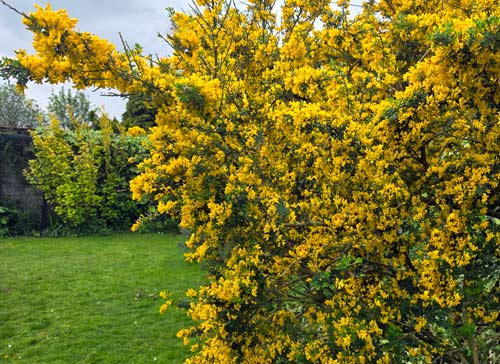
Yellow‘Cytisus scoparius’ commonly called ‘Broom’, so-called because its long stems were often bound together and used to make brushes.
At first glance, the dominance of yellow flowers in early spring might seem like a coincidence. In reality, it is a highly effective evolutionary strategy, shaped by the needs of plants and the behaviour of their pollinators.
Early spring presents a challenging environment for both plants and insects. Temperatures fluctuate unpredictably, with warm spells followed by sudden cold snaps and frost. Sunlight remains inconsistent, and many pollinating insects, such as bees, are only just emerging after winter dormancy. Their energy reserves are low, and they must quickly find reliable food sources to survive. For flowering plants, this creates a narrow window of opportunity, for they must attract pollinators efficiently and stand out in a landscape that is still largely dull and colourless.
A key factor in this strategy lies in how insects perceive the world. Human vision is based on three primary colours; red, blue, and green, but many pollinators see a different spectrum. Bees, for example, are sensitive to ultraviolet (UV), blue, and green wavelengths, but they cannot perceive red in the same way humans do. Within this visual system, yellow appears especially vivid and highly detectable. It occupies a central position in the range of colours insects can see, making it one of the most noticeable signals a flower can display.
Beyond simple visibility, yellow flowers often have another advantage, they reflect ultraviolet light in distinctive patterns. While these UV markings are invisible to humans, they act as visual guides for pollinators. Sometimes referred to as “nectar guides”, these patterns effectively direct insects toward the centre of the flower, where pollen and nectar are located. This increases the efficiency of pollination, benefiting both the insect and the plant itself.
Temperature is another critical factor in early spring, and yellow flowers offer an advantage here as well. Their pigmentation and structure can help absorb and retain heat from available sunlight. In some cases, the interior of a yellow flower can be a few degrees warmer than the surrounding air. For cold, energy-depleted insects, this slight increase in temperature can make a meaningful difference. A warmer flower provides not only food but also a place to briefly conserve energy and raise body temperature, allowing insects to remain active in otherwise challenging conditions.
In addition, the broader environment, during early spring, enhances the effectiveness of yellow. The landscape is often dominated by muted tones, e.g browns, greys, and dull greens, left over from winter. Against this subdued background, bright yellow flowers create a strong visual contrast, making them even easier for pollinators to locate from a distance.
Taken together, these factors explain why yellow is so prevalent among early-blooming flowers. It is not merely an aesthetic choice, but a refined adaptation that maximises visibility, guides pollinators efficiently, and even provides a small thermal benefit. By aligning their characteristics with the sensory abilities and needs of insects, these flowers improve their chances of successful pollination at a time of year when conditions here in Ireland and elsewhere are far from ideal.
Recent news articles have shed light on a troubling reality; fraud is becoming increasingly common across Ireland, and in many cases still go unreported. While scams have long existed, the scale and sophistication of fraudulent activity today make it a serious and evolving threat that affects people from all walks of life.
What’s particularly concerning is not just how widespread fraud has become, but how often it goes unspoken. Many victims feel embarrassed, unsure of what to do, or even doubtful that reporting the incident will make a difference. As a result, countless cases remain hidden, allowing criminals to continue operating with little resistance.
Fraud is no longer limited to obvious or easily identifiable schemes. Modern scams can be highly convincing, most often involving social media through fake emails, phone calls, or websites that closely mimic legitimate organisations such as banks, delivery services, or even government agencies. With the rise of digital banking and online services, fraudsters have more opportunities than ever to exploit trust and access sensitive information.
It’s important to recognise a simple truth; fraud can happen to anyone. No level of education, awareness, or caution makes a person completely immune. Scammers rely on manipulation, urgency, and psychological pressure, not just technical tricks. They are skilled at creating scenarios that feel real and demand immediate action, catching people off guard.
Because of this, the conversation around fraud needs to shift. Instead of focusing on blame or embarrassment, there should be greater emphasis on awareness, support, and prevention.
If you’ve been affected by fraud, it’s crucial to understand that reporting it is one of the most effective ways to combat the problem.
By contacting your financial provider as soon as possible, you increase the chances of limiting financial loss and preventing further unauthorised activity. Banks and financial institutions have dedicated teams that can respond quickly to suspected fraud, freeze accounts, and investigate suspicious transactions.
Equally important is reporting the incident to An Garda Síochána. While it may seem like a small step, every report contributes to a broader understanding of how fraud operates in Ireland. This information helps authorities identify patterns, track criminal networks, and develop strategies to prevent future scams.
Reporting fraud doesn’t just help you, it helps others. When scams go unreported, criminals remain free to target more victims using the same tactics. By speaking up, you play a role in disrupting these schemes and making it harder for fraudsters to succeed.
Education also plays a key role in prevention. Staying informed about common scams, being cautious with unsolicited communications, and taking time to verify requests for personal or financial information can significantly reduce risk. Simple actions, such as double-checking a sender’s email address or contacting a company directly through official channels, can make a big difference.
However, even the most careful individuals can be caught out. That’s why creating an environment where people feel comfortable reporting fraud is essential. Open conversations help remove stigma and encourage others to come forward if they experience something similar.
Fraud is a growing challenge, but it’s not one we are powerless against. Through awareness, vigilance, and a willingness to report incidents, individuals and communities can work together to reduce its impact. The more we talk about it, the harder it becomes for fraud to thrive in silence.
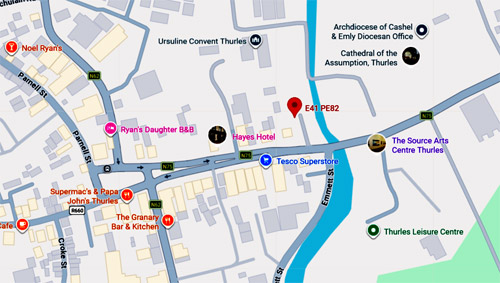
Suirside Place Thurles Co. Tipperary(Eircode E41 PE82) Work Dates Proposed: 11/05/2026 – 06/09/2026 Development Type: Assembly and Recreation Development Overview: Renovation of 3 Toilets and cloakrooms, Closing doors from toilets to classrooms and opening up doors onto corridor. Replacing doors from classrooms to Corridor all on top floor of Ursuline primary school. These works do not affect Part A or Part B of the Second Schedule to the Building Regulations.
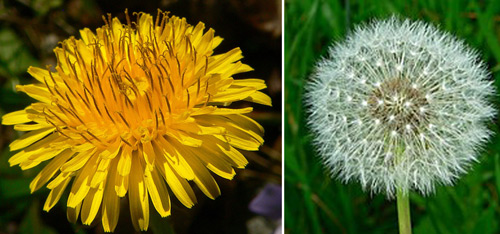
Yes, Bees do visit dandelions frequently, but not because dandelion are uniquely desirable. Instead, their behaviour reflects a more complex ecological and nutritional strategy shaped by survival, availability, and seasonal change.
The ecological role of dandelions. While dandelions play a role in early spring ecosystems, particularly in places like Ireland, where floral resources can be scarce at that time of year. Observational data collected across the country shows that dandelions are certainly among the plants visited by wild bees, but only ranking as the number one food source in early spring surveys, when pollen and nectar is scarce.
This visitation rate is not accidental. Dandelions bloom early and abundantly, providing both nectar and pollen at a critical moment when many bees are emerging from winter or beginning new colonies. In landscapes shaped by agriculture or urban development, where diverse wildflowers may be limited, dandelions effectively fill just a temporary ecological gap.
From a biological standpoint, this makes them extremely valuable. Bees rely on pollen as their primary source of protein, essential for feeding larvae and sustaining colony growth. Without early-season food sources, bee populations can struggle to establish themselves. Dandelions, by virtue of their massive abundance and accessibility, certainly do help prevent that initial shortage.
Why abundance is not the same as preference. Despite their importance, it would be misleading to conclude that bees “prefer” dandelions in any absolute sense. Scientific studies of pollinator behaviour show that bees do not select flowers based on simple attraction or fixed preference. Instead, they respond dynamically to the availability and nutritional value of resources in their environment.
The reason dandelions appear popular is largely because they are everywhere during a time when alternatives are limited. When more diverse and nutritionally richer plants become available, bees readily shift their foraging patterns. This flexibility reflects an adaptive strategy rather than a fixed preference.
Indeed, research into bee nutrition shows that pollen varies widely in its composition. Bee-collected pollen typically contains a mix of proteins, sugars, fats, vitamins, and minerals, but the exact balance depends on the plant species involved. No single plant provides everything bees need. As a result, bees benefit from visiting multiple flower types over time.
The importance of nutritional diversity. Modern ecological research has revealed that bees actively balance their diet by visiting different flowers throughout the season. Spring flowers often provide higher protein levels, while summer and autumn species may offer more fats and carbohydrates. This variation allows bees to meet changing physiological needs as colonies grow and develop.
Field data from Ireland reinforces this pattern. While dandelions dominate early spring records, other plants such as bramble, clover, knapweed, and thistles become more important later in the year . This seasonal succession of flowering plants is crucial. Bees require a continuous supply of nectar and pollen from February through October to thrive.
The broader scientific consensus is clear; bee health depends not on any single plant, but on the availability of a diverse and uninterrupted range of floral resources. In fact, one of the main reasons bee populations are in decline is not the absence of specific flowers like dandelions, but a general reduction in habitat and food diversity.
Rethinking the “dandelion myth” So, are bees really interested in dandelions? The answer is both yes and no. Bees do make heavy use of dandelions, especially in early spring, and these plants can be vital in supporting pollinators when other options are scarce. In that sense, they are undeniably important.
However, the idea that bees have a special preference for dandelions is a simplification. Their apparent popularity is driven by timing and availability rather than superior nutritional value or intrinsic appeal. When given a wider choice, bees diversify their foraging behaviour to optimise their diet.
A more accurate scientific perspective. The most accurate way to understand the relationship between bees and dandelions is to see it as part of a larger ecological system. Dandelions are one piece of a much broader puzzle, acting as an early-season resource that supports bees during a critical phase. They are neither the best nor the only food source, but they are an important one.
Ultimately, bees are not loyal to particular flowers. They are highly adaptive organisms responding to environmental conditions and nutritional needs. Their survival depends on diversity, continuity, and balance, not on any single plant species.
In this light, the familiar image of bees on dandelions is not a myth, but it is incomplete. It captures a real interaction, yet overlooks the deeper ecological reality; bees are not choosing dandelions because they love them, but because, at that moment in time, they are simply the best available option.
The Irish Tricolour: A story of unity and the current struggle to keep it that way.
On a spring morning in Dublin, as the flag rises slowly above the General Post Office, it looks simple; three vertical bands of green, white, and orange catching the light, waving in the breeze. People pause, some out of habit, others out of respect. For a moment, it feels like a shared symbol, something steady in an ever changing Ireland. But the Irish tricolour has never been just a flag. It has always been an idea, and like all ideas, it is constantly being argued over.
The signature of Thomas Francis Meagher present at the ‘Ballingarry Uprising of 1848’, in Tipperary, who gave us ‘The Irish Tricolour’. His signature is written on the inside cover of a book found in Richmond prison, Tasmania. The book is entitled “Wreath of Friendship” and dated 26th February 1849.
Its meaning was set down long before the modern state existed. When it emerged in the 19th century and later became central during the Easter Rising, it carried a message that was strikingly ambitious for its time. Green stood for the nationalist tradition. Orange stood for the Protestant, unionist tradition, associated with William of Orange. Between them, white promised something fragile but powerful: peace. It was, in essence, a proposal. Not for dominance or victory, but for coexistence.
When the Irish state was later formalised, the Constitution of Ireland gave the tricolour its official status. Yet the Constitution did not try to explain it. It didn’t need to. By then, the symbolism was already understood, or at least, it was supposed to be.
For much of the 20th century, the flag settled into everyday life. It flew over schools, appeared at sporting events, and marked national ceremonies. It became familiar, almost ordinary. But beneath that familiarity, its meaning never stopped evolving.
In Northern Ireland, the same flag carried a different weight. It was not neutral there. It marked identity, allegiance, and, at times, division. During the years of conflict, it could signal not just who you were, but where you stood. Even after the Good Friday Agreement, which recognised multiple identities on the island, the tricolour remained meaningful to some and contested by others. The promise of the white stripe; peace between traditions, was still a work in progress.
Back in the Republic, things seemed more settled, at least on the surface. The flag belonged to everyone. Or so it was said. But in recent years, something has shifted. The tricolour has begun to appear in new settings, at protests, in political movements, in moments of tension rather than unity. And with that, old questions have returned in new forms.
Taoiseach Mr Micheál Martin.
Who does the flag really represent? When our Taoiseach Mr Micheál Martin correctly speaks about people “dishonouring” the flag, he is not talking about how it is folded or whether it touches the ground. He is talking about something less visible, but far more significant. He is talking about “meaning“.
There are times now when the Irish flag is carried, not as an invitation, but as a statement. Not “this is ours together,” but “this is ours, not yours.” It appears alongside messages that draw lines, between insider and outsider, between those considered truly Irish and those who are not. In those moments, the flag begins to change. Not physically, but symbolically.
And this where the tension lies. Because the tricolour was never meant to settle arguments about identity by excluding people. It was meant to make room for difference. The green and the orange were not supposed to compete; they were supposed to coexist. The white was not just decoration; it was the point.
Yet symbols are powerful precisely because they are open. They can be claimed, reinterpreted, even reshaped. Across the world, flags go through the same struggle. They are waved in celebration and in anger, in unity and in division. Ireland is not unique in this. But its flag carries a particularly clear instruction from its origins; an instruction that makes its misuse, today, harder to ignore.
To use the tricolour well, does not require ceremony or perfection. It simply requires remembering what it stands for. It means recognising that it does not belong to one tradition, one belief, or one version of Irishness. It belongs, in theory and in practice, to everyone who calls Ireland their home.
That is an easy thing to say and a harder thing to live. As the flag continues to rise and fall over cities and towns, over quiet streets and crowded gatherings, its meaning is never entirely fixed. It is shaped, again and again, by the people who carry it.
And so the questions remains, not written in law, but woven into the very fabric itself: Will the tricolour be used as it was intended, as a bridge between differences? Or will it become, slowly and subtly, a line that sadly divides?
This website uses cookies to improve your experience. We'll assume you're ok with this, but you can opt-out if you wish.AcceptRead More
Privacy & Cookies Policy
Privacy Overview
This website uses cookies to improve your experience while you navigate through the website. Out of these, the cookies that are categorized as necessary are stored on your browser as they are essential for the working of basic functionalities of the website. We also use third-party cookies that help us analyze and understand how you use this website. These cookies will be stored in your browser only with your consent. You also have the option to opt-out of these cookies. But opting out of some of these cookies may affect your browsing experience.
Necessary cookies are absolutely essential for the website to function properly. This category only includes cookies that ensures basic functionalities and security features of the website. These cookies do not store any personal information.
Any cookies that may not be particularly necessary for the website to function and is used specifically to collect user personal data via analytics, ads, other embedded contents are termed as non-necessary cookies. It is mandatory to procure user consent prior to running these cookies on your website.





Recent Comments