“Those who cannot remember the past are condemned to repeat it.” — Attributed to philosopher George Santayana.
Antisemitism, or prejudice and discrimination against Jewish people, has existed for centuries but has sadly seen renewed global concern in recent years due to rising hate crimes, extremist rhetoric, and worst of all, online misinformation.
An example of this is the rise in anti-Semitism and growing tensions around the Ireland v Israel soccer match, causing deep concern across Irish communities. While people have strong views on the middle east conflict, there is an urgent need for restraint, calm language, and respect for public safety. Calls for protests by poorly informed individuals around the match have increased in recent weeks, but many believe demonstrations should be halted to avoid further division, intimidation, or violence, and to ensure the focus remains on peace, dialogue, and the protection of all communities from hate crime.
“Those that fail to learn from history are doomed to repeat it.“ — Quote attributed to Sir Winston Churchill.
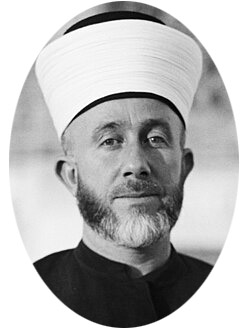
Amin al-Husseini.
On May 6th, 1943, one of the most controversial figures in Middle Eastern history, Muslim leader Amin al-Husseini, (1897-1974), sent a letter to the Bulgarian government objecting to a proposal that would have allowed thousands of Jewish children to escape Europe and immigrate to British Mandate Palestine. This letter remains one of the clearest documented examples of the Mufti’s▲ active collaboration with Nazi Germany and his opposition to Jewish rescue efforts during the Holocaust.
▲ Mufti: An Islamic legal scholar qualified to issue fatwas (religious decrees).
During World War II, the former Grand Mufti of Jerusalem became closely aligned with the Axis powers. After fleeing the Middle East, following anti-British unrest in Iraq, Husseini settled in Berlin, where he was welcomed by senior Nazi officials and supported by the German government.
While in Germany, he broadcast pro-Nazi and antisemitic propaganda in Arabic; encouraged resistance against Britain and the Allies; opposed all Jewish immigration to Palestine, and recruited Muslims into Waffen-SS units operating in the Balkans. In November 1941, Husseini met directly with Adolf Hitler in Berlin. Records of the meeting show that both men discussed opposition to Jews and British influence in the Middle East.
The Bulgarian Rescue Proposal. By 1943, reports of the mass murder of European Jews had begun spreading internationally. At the same time, efforts were underway to rescue Jewish children trapped in Nazi-controlled territory. One proposal involved allowing approximately 4,000 Jewish children and several hundred accompanying adults to leave Bulgaria for British Mandate Palestine. Husseini strongly opposed the plan. According to historical records cited by the United States Holocaust Memorial Museum and multiple historians, he contacted German and allied officials to block the transfer. In correspondence connected to these rescue efforts, Husseini argued that Jews should not be allowed to emigrate to Palestine and suggested they instead be sent to places where they would remain under tighter control, including Poland.
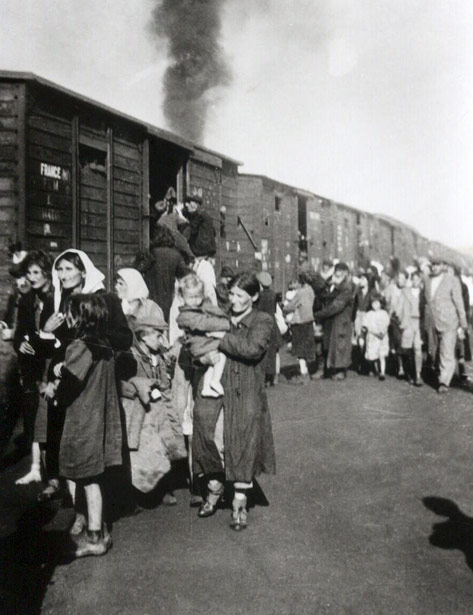
Jews Being Deported To Treblinka 1942.
What “Poland” Meant in 1943. By May 1943, Nazi-occupied Poland had become the centre of the Holocaust. Extermination camps including Auschwitz-Birkenau, Treblinka, Sobibor, and Majdanek were operating there, and hundreds of thousands of Jews had already been murdered. The Warsaw Ghetto Uprising had just been crushed weeks earlier. Children sent to Auschwitz-Birkenau,Treblinka,Sobibor,and Majdanek were primarily targeted for immediate extermination, with the vast majority murdered in gas chambers upon arrival. Jewish children were deemed “unfit for labour,” leading to instant separation from parents and death. In Auschwitz-Birkenau, over 200,000 children were killed immediately upon arrival, together with over 700 babies born there, murdered prior to late 1944. Treblinka and Sobibor in fact were pure death camps (Operation Reinhard). Children, alongside adults, were usually sent immediately to the gas chambers upon arrival. Majdanek Functioned as both a concentration and extermination camp, where children were either immediately murdered or faced death through starvation, disease, and, in some cases, older children were kept for forced labour.
Some children were kept in “family camps”(often to be murdered later) or used for sadistic medical experiments. Only about 700 children were alive upon liberation in January 1945.
Historians generally agree that senior Nazi collaborators, such as Husseini, were aware that deportations to Poland placed Jews in grave danger, though scholars continue debating precisely how much he knew about the mechanics of the extermination process itself.
Collaboration Beyond Propaganda Husseini’s wartime role extended beyond speeches and diplomacy. Historical documentation confirms that he worked closely with senior Nazi figures including Heinrich Himmler and Joachim von Ribbentrop. He also helped recruit Muslim volunteers for Nazi military formations in Bosnia and the Balkans. Photographs and wartime records additionally place him visiting Nazi facilities and meeting SS leadership during the war years. At the same time, many historians caution against exaggerating his role. Institutions such as Yad Vashem▲, note that while Husseini was unquestionably a Nazi collaborator and antisemite, there is no evidence he was one of the architects of the Holocaust itself.
The Core Message of Husseini Letter. The May 1943 correspondence remains historically significant because it demonstrates that Husseini was not merely sympathetic to Nazi Germany in abstract political terms. He actively intervened against efforts to rescue Jewish refugees. The central theme of the Mufti’s correspondence was unmistakable; Jewish refugees must not be allowed to reach Palestine. Historical records show that Husseini urged Axis-aligned governments to prevent Jewish emigration to the Middle East and instead redirected Jews to territories where they would remain under Nazi authority and surveillance. One of the most chilling lines associated with these communications was his recommendation that Jews be sent to countries “where they would find themselves under active control, for example, in Poland.”
For many historians and commentators, this episode illustrates how antisemitism, wartime Arab nationalism, and Nazi ideology intersected during World War II. Others caution against using Husseini’s actions to generalize about all Palestinians or all Arab political movements, noting that political views across the Arab world were never uniform.
What is beyond serious historical dispute, however, is that the Grand Mufti aligned himself with Nazi Germany, spread antisemitic propaganda, and opposed attempts to allow Jewish refugees to escape to Palestine during the Holocaust.
That aside, there is a strong current argument that sport should continue independently of politics. Supporters of that view see international sport as one of the few arenas where countries and peoples still meet under shared rules, even during periods of political conflict. They further argue that former Ireland manager and women’s captain Brian Kerr and Louise Quinn; together with Shamrock Rovers captain Roberto Lopes; musician Christy Moore; bands Fontaines DC and Kneecap, are not elected government ministers, and that ordinary supporters should not automatically be treated as representatives of Irish State policy. Anger tends to be most effective when it is channelled into a coherent ethical stance rather than confrontation for its own sake. Targeting Jewish people, Israeli civilians, or individual athletes with abuse, undermines the moral credibility protesters may want/wish to project.
Bodies like UEFA and FIFA generally resist team exclusions unless there is overwhelming international consensus or direct breaches of competition rules. The FAI has publicly argued that refusing to fulfil fixtures could damage Irish football competitively and institutionally.
A Rich Country Begging for €8: What SVP’s TV Appeal Reveals About Ireland’s Broken Model.
There is something profoundly uncomfortable about watching an advert from Society of St. Vincent de Paul on Irish television, asking for just €8 a month to help Irish children. Not because the request is unreasonable, but because it is necessary in the first place. In Ireland, one of the wealthiest countries in the world, a charity is asking ordinary people to fund basic childhood needs. That should stop and sicken us in our tracks.
The Quiet Power of SVP For generations, SVP has been one of Ireland’s most trusted safety nets, quietly visiting homes, paying bills, buying food, and restoring dignity where the system on our Island falls short. Their work is not theoretical; it is immediate and it is human. Now, for the first time, they have launched a major TV campaign focused on Irish child poverty. It is not subtle. It is not abstract. It is a direct appeal to the public to act. The message is simple: “Give €8 a month to stop poverty hurting children”. The campaign highlights a stark truth, over one in five children in Ireland experiences deprivation, the highest of any age group and that statistic alone should be politically explosive. Instead, it has become normalised.
The Reality Behind the Advert. SVP’s appeal is not about charity, it is about failure elsewhere. Their own research shows, that child poverty has surged dramatically, rising from 4.8% to 8.5% in just a single year. Income supports for older children meet only 64% of actual needs. The cost of a basic standard of living has risen by 18.8% since 2020. This is not marginal hardship. It is systemic.
Children are hungry. Homes are cold. Parents are cutting essentials so their children can eat. These are not isolated cases, they are widespread enough to justify a national TV campaign.
Let’s Be Blunt: This Is a Political Failure, there is no polite way to say this.
This situation did not arise by accident. It is the result of policy choices made repeatedly over decades. Successive governments, led primarily by Fianna Fáil and Fine Gael and by those who supported them namely Labour, The Greens, Lowry’s Independants; latter who chose:- • To rely on the private market to deliver housing. • To underinvest in social housing for years. • To allow essential costs (rent, childcare, energy) to spiral. • To patch over problems with temporary payments rather than structural reform.
Even now, Budget 2026 offers increases, but they fall short of what families actually need. That is not an accident. That is a choice.
The Core Problem: Ireland Is Expensive, Not Poor. Ireland does not have a ‘lack-of-money’ problem. It has a ‘cost-of-living’ problem. The state redistributes income reasonably well, but it does almost nothing to control the cost of essentials: •Housing is among the most expensive in Europe. • Energy costs remain elevated. • Childcare is prohibitively expensive. • Everyday goods have risen sharply.
So what happens? The government gives with one hand, and the market takes with the other. The result is predictable, families fall short. Perhaps the most disturbing shift is this, people who are working; sometimes full-time, are now turning to SVP. This is not traditional poverty. This is a system malfunction. When employment no longer guarantees a basic standard of living, something fundamental has broken.
Charity is becoming structural as SVP handled hundreds of thousands of requests for help in recent years. That is not emergency support anymore, that is parallel welfare. Let’s be honest about what this means; the Irish system is now quietly outsourcing part of its social responsibility to charities, and charities, no matter how good, cannot replace the State.
Where We Should Be Heading Ireland does not need minor tweaks. It needs a shift in direction. Housing must be treated as infrastructure. The state must build at scale, tens of thousands of homes annually; not rely on private developers to solve a public crisis. Reduce costs, not just increase payments. Throwing money at people, while leaving rents and childcare untouched is futile. Costs must come down. Benchmark Social Welfare to Reality. Supports should be tied to the actual cost of living, not political compromise. Invest in Children Directly. Free school meals throughout, reduced education costs, and meaningful child supports should be universal.
The Political Courage Question. None of this is impossible but it does requires confronting uncomfortable truths: •Property values may stabilise or fall. •Investors may lose out. •Government spending must increase. That is the trade-off and for years, Irish politics has chosen to avoid it.
Final Thought: What the €8 Really Means. The €8 in that SVP advert is not just a donation. It is a signal. It tells us that:– The system is not working. The gap between wealth and lived reality is widening and ordinary people are being asked to bridge that gap themselves.
SVP deserves enormous respect. Their work is compassionate, effective, and essential, but they should not have to do this at scale in a country like Ireland. When a wealthy nation relies on charity to meet children’s basic needs, the problem is not charity, it is policyand until that changes, the adverts will keep coming.
Ms Maura Barrett(Cashel Branch Librarian)Reports:-
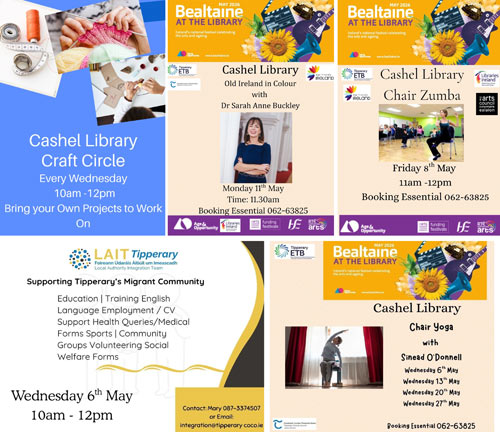
[1] Join the Cashel Craft Circleevery Wednesday from 10:00am-12:00pm for their social gathering. Bring along your own project to work, share ideas, patterns and enjoy a chat and cuppa with others. No need to book just come along.
[2] Chair Yoga with Sinead O’Donnell on Wednesday 6th May 3pm-4pm for four weeks. Booking Essential to Tel: 062-63825.
[3] The next meeting of the Local Integration Team Clinic Supporting Migrants in the Community will take place in Cashel library on Wednesday 6th May 10:00am-12:00pm
[4] Chair Zumba With Eimear Byrne. Friday 8th May 11am-12pm. Booking Essential to Tel: 062-63825.
[5] “Old Ireland in Colour” Monday May 11th. at 11:30am. In this engaging talk, Dr Sarah-Anne Buckley explores Ireland’s past through carefully restored and colourised photographs. These vivid images, spanning the Land War, the revolutionary decade, and everyday life across the island are placed within their wider historical context, revealing the social, political and cultural forces that shaped modern Ireland. Combining rigorous research with striking visual material, the talk shows how colour can deepen our understanding of history and reconnect us with the real lives behind the photographs. Dr Sarah-Anne Buckley is co-author of the award-winning Old Ireland in Colour Series with Professor John Breslin. Booking Essential to Tel: 062-63825.
[6] Join Suzanne Buttimer for an interactive fun singing session designed to engage participants and evoke happy memories. Suzanne will be in Cashel Library. Monday 11th May 2:30–3:30pm. Booking Essential to Tel: 062-63825.
People wishing to attend the above events can locate the Cashel Library building; situated on Friar Street, Lady’s Well, Cashel, Co. Tipperary, HERE. (Eircode E25 K798).
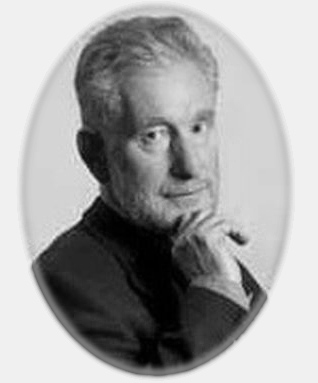
It was with a great personal sadness that I learned of the passing of prominent senior Irish journalist, history teacher, author and producer, Mr Brendan O’Brien at the age of 82. Same marks the loss of a remarkable figure whose influence reached far beyond the world of media.
The Late Mr Brendan O’Brien.
I first encountered Mr O’Brien in the late 1960s, when he was my history teacher during my final secondary school years. He carried himself with a quiet confidence, never seeking attention, yet commanding respect effortlessly. His lessons were always thoughtfully prepared, and through both his teaching and daily interactions, it became clear that he was a man of deep honesty. His words were simple, direct, and sincere, never crafted to impress, only to reflect truth. That authenticity earned the instinctive trust of his students, and it was from him that I personally developed a lifelong love of history.
Integrity defined him. He stood firmly by his beliefs, never swayed by convenience or the need for approval. At our boarding school, he introduced the first debating society, organising one of its earliest public debates in 1969, on Ireland’s proposed entry into the European Union; a debate in which I spoke against the motion.
Mr O’Brien’s abilities were equally striking. Sharp-minded and adaptable, he approached challenges with determination and focus, consistently turning effort into meaningful achievement. He was never loud or boastful, yet his presence was always felt.
From 1974 to 2002, he became a respected reporter on RTÉ One Prime Time, producing notable documentaries on the IRA. One particularly significant moment in his career was his decision to follow and confront Mr Martin Cahill, “The General”, on camera in the street, reflecting his fearless approach to journalism.
I later met him again in the canteen at RTÉ. Recognising me immediately, he invited me to record my first voice-over for Hall’s Pictorial Weekly. He handed me a short script requiring an American accent, and I was paid £17 for just 15 minutes’ work, a memorable and generous gesture at the time.
In 1983, he received a Jacob’s Award for his reporting on ‘Today Tonight‘, one of many honours he earned for his investigative journalism. After retiring from RTÉ, he continued to contribute meaningfully through lectures on the Northern Ireland conflict and the peace process.
As an author, he wrote The Long War: The IRA and Sinn Féin, and the children’s book The Story of Ireland, which won the Irish Children’s Book of the Year Award in 2008. “The Long War“ tells the story of the IRA and Sinn Fein from their beginnings right up to the Good Friday Agreement in Easter 1998 and beyond. It tracks the IRA’s military strategy, their bombing and killing campaign, coupled with massive arms supplies from Libya and the long, torturous, at times secret, journey led by Gerry Adams and Martin McGuinness through two ceasefires to a negotiated compromise. The Long War contains major source material and details the roles of key peacemakers in Ireland, Britain and America and also of the dissident militarists who intend continuing the war against Britain.
“The Story of Ireland” begins ‘After the Ice’ and lasts 9000 years. It tells the story of the whole island and its people. The book’s 27 chapters chronicle the big picture of invasions, wars, Christianity, famine and a divided island, mixed with tales of Celtic head hunters, mysterious stone tombs, the Vikings, the black death, life in castles, the Titanic tragedy, music, mobiles and computers. When it ends a new story is just beginning.
Our paths crossed again when he visited the former now closed Great Famine and War Museum in Thurles, County Tipperary, where he attended a lecture I gave on World War II, during a visit by a Fine Gael Minister.
A graduate of Trinity College Dublin and the University of Ulster, he later worked with Newstalk from 2005 to 2010, presenting ‘The Saturday Edition‘.
Mr Brendan O’Brien is survived by his wife, five children, and three grandchildren. He will be remembered not only for his distinguished career, but for the quiet strength, integrity, and inspiration he brought to all who knew him.
In recent weeks, a series of interconnected events, from a cancelled event at Ireland’s National Concert Hall to the interception of a Gaza-bound flotilla, have highlighted the increasingly complex intersection of activism, diplomacy, and public discourse around Israel and Palestine. Here we attempt to set out the confirmed facts behind these developments, separating them from speculation and clarifying how they connect.
Ireland and the National Concert Hall controversy. The debate in Ireland began with the cancellation of a fundraising event for Magen David Adom, Israel’s national emergency medical service, at the National Concert Hall in our capital city of Dublin.
The event, which included a cultural performance linked to the 7th October 2023 Hamas attacks, was ultimately cancelled after public pressure and planned protests. Critics, including organisers, described the decision as a form of censorship or “cancel culture”, arguing that it silenced pro-Israel expression. Supporters of the cancellation, however, argued the event was political in nature and inappropriate for a state-supported venue.
What is clear is that the above incident reflects a broader reality in Ireland. Sadly, Irish cultural institutions are increasingly becoming arenas for geopolitical disputes.
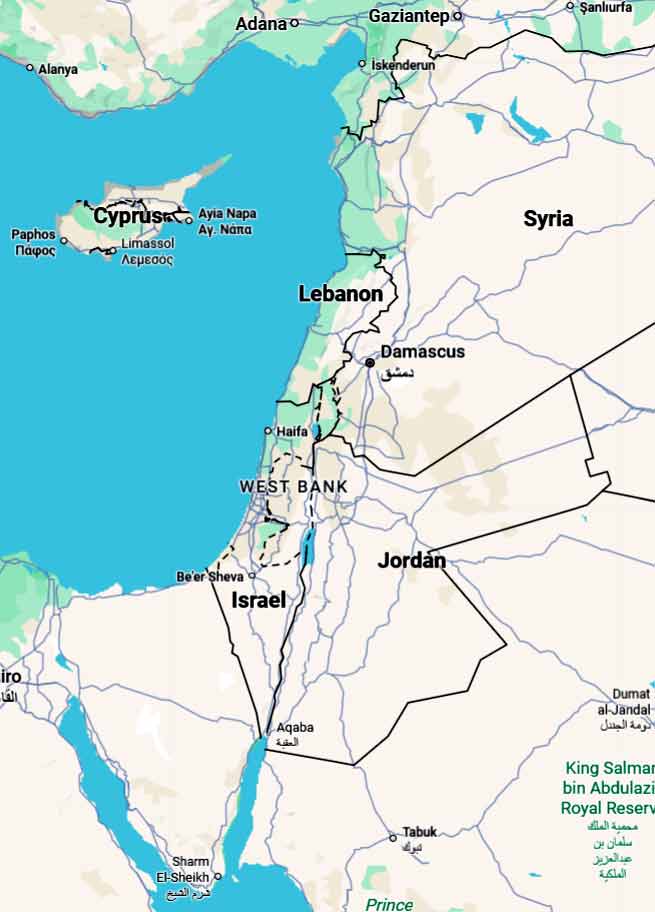
The State of Israel is bordered by Lebanon, Syria, Jordan and Egypt.
The Global Sumud Flotilla; what it is ? Running parallel to this Irish debate is the Global Sumud Flotilla, a large international activist initiative aiming to deliver about a ton of humanitarian aid to Gaza and challenge Israel’s long-standing blockade.
This flotilla involved dozens of vessels and over 150 activists.
It departed from European ports including Barcelona in April 2026.
Participants came from dozens of countries, including Ireland, Brazil, and Spain.
The flotilla is not a single ship but a coordinated network of boats, which explains why participants experienced different outcomes during its recent interception.
The interception and detention of activists. In late April 2026, Israeli forces intercepted part of the flotilla in international waters near Greece. Around 175 activists were detained. Most were transferred to Crete and later released. However, two prominent figures, Brazilian activist Mr Thiago Ávila and Spanish activist Mr Saif Abu Keshek, were taken to Israel. An Israeli court subsequently extended their detention, with authorities alleging offences including assisting a terrorist organisation and aiding an enemy during wartime. However, it is important to note:No formal charges had been filed at the time of the court hearing. and both activists deny all allegations.
The Nasrallah funeral controversy. Mr Thiago Ávila has attracted additional scrutiny because of his past activities. It is confirmed that he attended the funeral of Hezbollah leader Hassan Nasrallah. He also publicly described Nasrallah as an “inspiring” figure. This matters because Hezbollah is designated a terrorist organisation by the European Union. However, the key distinction is this; Attending such an event is controversial, but it is not, in itself, proof of criminal activity. Instead, it has become part of the broader political narrative surrounding his detention.
So where does Mr Thiago Ávila fit in the flotilla? Mr Ávila is not just a participant; he is a senior organiser. He sits on the flotilla’s steering committee and he has participated in multiple previous flotilla missions. He has previously been detained and deported by Israel in earlier incidents. Thus his leadership role likely explains why his case is being treated differently from most other activists.
How is the flotilla funded? One of the most frequently asked questions concerns funding. Based on confirmed information; The flotilla is organised by international activist coalitions, including the Freedom Flotilla Coalition. It relies primarily on donations, non-governmental organization (NGO) support and grassroots fundraising. There is no single publicly documented funding source or central financial structure.
Some investigations (for example in Tunisia) have examined how donations were handled, but these are inquiries, not proven wrongdoing. Israeli authorities have alleged links between flotilla organisers and militant groups, but these claims are disputed and not established in court reporting.
Government reactions: Brazil, Spain, Ireland. This flotilla has triggered significant diplomatic responses.
Brazil. – For obvious reasons Brazil has taken a strong stance, MrÁvila being a Brazilian activist. They have condemned Ávila’s detention as illegal, describing similar incidents as violations of international law. Spain. – Spain has been equally vocal as Mr Abu Keshek is a Spanish activist. It has demanded the immediate release of its citizen accusing Israel of acting outside international law. Ireland. – Ireland’s response has been more measured, focusing primarily on consular assistance for Irish citizens. However Irish activists initially detained were released a short time later via Greece
Irish connection: Dr Margaret Connolly. Adding a domestic dimension, Dr Margaret Connolly, sister of Irish President Mrs Catherine Connolly, is part of the flotilla. She claims to participate as a private activist. She was on a vessel not intercepted, and therefore not detained. Her involvement however underscores how deeply connected this issue has become within Irish public life. Her sister, President Mrs Catherine Connolly has been one of the most outspoken Irish political figures in her criticism of Israel and support for Palestinians. She has repeatedly described Israel’s actions in Gaza as a “genocide” and even referred to Israel as a “genocidal” or “terrorist” state, while calling on Ireland and the wider international community to “stand up” in solidarity with Palestinians and take stronger action, including sanctions on Israeli settlements. Overall, her stance combines strong moral criticism of Israel’s policies with consistent advocacy for Palestinian rights, which has made her controversial in Irish and international politics.
A wider pattern: activism vs state policy. Taken together, these events point to a broader pattern. Cultural spaces in Ireland are becoming politicised (as seen in the Concert Hall controversy). International activism is increasingly confrontational (as observed in the flotilla). Governments are being forced to balance, legal obligations, diplomatic relations and public opinion
Conclusion: What links the National Concert Hall dispute and the Gaza flotilla is not just geography, it is a shared tension over who gets to define legitimacy in deeply polarised conflicts. We ask the questions:- Is cancelling an event an act of censorship or responsible neutrality? Are flotilla activists humanitarian actors or a major security risk? Should governments intervene forcefully, or cautiously?
There are no simple answers, but the facts show clearly that these are no longer distant geopolitical questions. They are now embedded in Irish cultural life, international activism and global diplomacy alike.
This website uses cookies to improve your experience. We'll assume you're ok with this, but you can opt-out if you wish.AcceptRead More
Privacy & Cookies Policy
Privacy Overview
This website uses cookies to improve your experience while you navigate through the website. Out of these, the cookies that are categorized as necessary are stored on your browser as they are essential for the working of basic functionalities of the website. We also use third-party cookies that help us analyze and understand how you use this website. These cookies will be stored in your browser only with your consent. You also have the option to opt-out of these cookies. But opting out of some of these cookies may affect your browsing experience.
Necessary cookies are absolutely essential for the website to function properly. This category only includes cookies that ensures basic functionalities and security features of the website. These cookies do not store any personal information.
Any cookies that may not be particularly necessary for the website to function and is used specifically to collect user personal data via analytics, ads, other embedded contents are termed as non-necessary cookies. It is mandatory to procure user consent prior to running these cookies on your website.




Recent Comments