The Ribbon Men in Tipperary; Where They Came From, Where They Went And Why They Are Less Spoken About in Irish History.
The Ribbon Men were part of the wider movement known as Ribbonism, a Catholic secret-society tradition that grew in Ireland during the late eighteenth and nineteenth centuries. They did not begin in Tipperary alone. Their roots are usually traced to the Defender movement of the 1790s, especially in Ulster, where Catholic communities organised for protection in a time of sectarian tension and political unrest. Over time, Ribbonism spread beyond the north and became associated with rural grievances, tenant rights, resistance to tithes, opposition to evictions, and hostility towards landlords, agents, informers, and process servers. Historians describe Ribbonism as both a secret society and a form of community defence, though government officials often used the name loosely for many kinds of rural disorder.
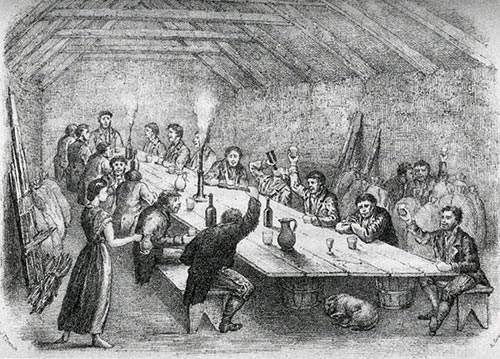
In Tipperary, the Ribbon Men entered a county already well known for agrarian conflict. Long before them there had been Whiteboys, and later there were Rockites, Terry Alts, Caravats, Shanavests, and other local factions. Tipperary’s land system, poverty, insecurity of tenure, tithes, evictions, competition for farms, and resentment of middlemen created the conditions in which secret societies could take hold. From the 1760s onwards the county was heavily involved in these rural movements, under different names and with changing motives.
Their activities in Tipperary were usually not open political rebellion in the modern sense. They worked in secret and at night. They used oaths, passwords, threatening letters, armed visits to houses, raids for firearms, attacks on property, intimidation of tenants, latter who took land from evicted families, and warnings to employers or landlords. Some actions were violent and sometimes deadly. Others were intended to frighten rather than kill. A National Archives record from 1828, for example, refers to Ballingarry Glebe, (NR), near Borrisokane and the forwarding of new oaths sworn by entrants into the “Ribband System.” This is important because it places Ribbon organisation, not just vague agrarian unrest, in north Tipperary.
The evidence suggests that Ribbon and Ribbon-like activity was strongest in north and mid Tipperary. The Ormond districts, especially around Borrisokane and Nenagh, appear repeatedly in studies of threatening notices and rural intimidation.
Daniel Grace’s study of threatening notices in pre-Famine Tipperary found that land was the dominant issue behind such threats, and that the northern baronies of Upper and Lower Ormond produced a particularly high concentration of notices. Other places connected with this wider pattern include Thurles, Roscrea and Ikerrin, Templemore, Borrisoleigh, Cashel, Golden, Bansha, Tipperary town, Killenaule, Mullinahone, Carrick-on-Suir, Cahir, and Clonmel. Some of these places were centres of actual incidents; others were police, court, or administrative centres where cases were reported, tried, or investigated.
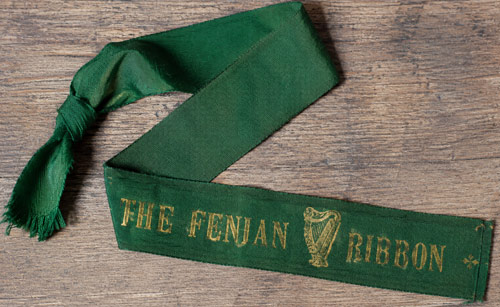
Where did they go? In one sense, they did not simply go anywhere. Ribbonism changed shape. Some members emigrated, especially to Britain and America, bringing forms of Irish Catholic fraternal organisation with them. Scholarship on Ribbon societies shows that the tradition did not remain purely rural or purely Irish; it also appeared among Irish migrant communities in Britain and later influenced Catholic fraternal organisations such as the Ancient Order of Hibernians.
In Ireland itself, the Ribbon Men faded as new movements took the stage. The Young Irelanders, the Fenians, the Land League, the Irish Parliamentary movement, and later revolutionary nationalism, latter which gave people different languages and structures for protest. The old secret agrarian oath-bound society became less central.
There are several reasons why the Ribbon Men are less spoken about today.
First, they were secretive. They did not leave behind manifestos, membership lists, or proud public records in the way later political organisations did. Much of what we know comes from police reports, court records, hostile newspapers, informers, and government correspondence. These sources are useful, but they are also biased and often confused.
Second, the term “Ribbonman” was sometimes used too broadly. Officials could blame almost any unsolved agrarian crime on Ribbonism. This makes it difficult to separate genuine Ribbon organisation from Faction Fights, local feuds, Whiteboy activity, Rockite activity, or ordinary crime. Historians therefore handle the term carefully.
Third, their story is morally uncomfortable. They were not simply heroes or villains. They defended poor Catholic tenants in a harsh land system, but they also used intimidation and violence. That complexity does not fit easily into the cleaner patriotic story often told about later Irish nationalism.
Finally, Tipperary’s later history overshadowed them. The Famine, the Land War, the War of Independence, Soloheadbeg, and the Civil War became larger parts of public memory. Compared with those events, the Ribbon Men belong to a darker, earlier, more secretive world of oath-bound rural resistance.
Yet they matter. To understand Tipperary in the nineteenth century, we must remember not only the famous leaders and public movements, but also the hidden networks of ordinary people who acted from fear, anger, loyalty, and desperation. The Ribbon Men were part of that hidden history.





Leave a Reply