The Irish Government is preparing a new savings and investment scheme that is expected to be announced during the next Budget. The main political figure behind the proposal is Mr Simon Harris, who is currently serving as Ireland’s Minister for Finance, with the Department of Finance also heavily involved in designing this plan.
New Savings & Investment Scheme.
The Government says the aim is to encourage ordinary people to invest their savings instead of leaving large amounts of money sitting in low-interest bank accounts. Ministers believe Irish households are holding billions of euro in cash savings that could earn better returns through investment funds or shares.
Under the proposal being discussed, people could place money into a special investment account that would receive major tax advantages. Reports suggest the Government is looking at a Swedish-style model where profits and gains from investments would either face very low tax or possibly no capital gains tax at all.
Supporters of the idea say this could help middle-income families grow their savings faster and make investing less complicated. Mr Simon Harris has argued that Ireland’s current taxes on investments are too high and discourage people from investing for the future.
However, several economists are warning that the plan may mainly benefit wealthier households. Their argument is simple: people with large amounts of spare cash will gain the biggest tax savings because they can afford to invest much more money. Families struggling with rent, mortgages, childcare, or daily expenses may not be able to take advantage of the scheme at all.
Critics also fear the State could lose a significant amount of tax revenue. Taxes collected from investments help fund public services such as hospitals, schools, transport, and housing. If investment profits become lightly taxed, the Government may collect less money in future years. Economists describe this as creating “another hole in the tax bucket” because less money would flow into the State, while the largest benefits would go to those already financially comfortable.
The debate now centres on fairness. The Government sees the proposal as a way to modernise Irish savings and encourage people to build wealth. Critics believe it risks increasing inequality by rewarding people who already have money while reducing funds available for public services.
A new law to legalise nuclear energy is set to come before the Dáil in the coming months.
On the surface, it is framed as a pragmatic response to high energy prices and climate pressure. But scratch beneath that surface, and what emerges is something far less reassuring; a political system once again flirting with an idea it has repeatedly rejected, often for reasons that remain unresolved.
The Ghost of Chernobyl Still Matters Any serious discussion of nuclear power in Ireland that does not grapple with Chernobyl disaster is either incomplete or deliberately selective. Ireland’s anti-nuclear stance did not appear out of thin air. It was shaped by a combination of domestic protest and global catastrophe. The planned nuclear plant at Carnsore Point, Co. Wexford collapsed not just because of local activism, but because nuclear accidents abroad fundamentally changed public perception.
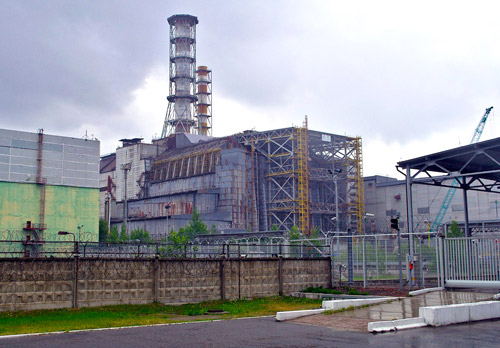
Chernobyl, forty years on from the events of April 26th, 1986in Russia.
A Pattern of Crisis-Driven Thinking. What is striking about the current proposal is not its novelty, but its timing. Ireland tends to rediscover nuclear energy whenever its energy model comes under stress.
In the 1970s: oil shocks → nuclear proposed. In the 1980s: public backlash + global disasters → nuclear notion abandoned. In the 2020s: energy prices + climate targets → nuclear once again revived.
This is not strategic thinking—it is reactive policymaking. Even today, nuclear power remains explicitly banned under the Electricity Regulation Act 1999. So before any plant is even discussed, the State must first undo decades of settled law; a process that signals just how far removed this proposal is from practical delivery.
The Uncomfortable Contradiction. Supporters often point out that Ireland already imports electricity generated by nuclear power. That is true, and it exposes a possible contradiction in policy. Ireland bans domestic nuclear generation while quietly relying on it through interconnectors. But this argument cuts both ways. If nuclear energy is acceptable when produced elsewhere, why has there been no sustained effort to build domestic capability in the past 25 years? The answer is simple, because when the issue moves from abstraction to implementation, political support tends to evaporate.
The Cost Illusion. There is also a persistent tendency to present nuclear power as an Irish solution to high energy prices. This is, at best, misleading. Modern nuclear projects in Europe have been plagued by delays and spiralling costs. The UK’s Hinkley Point C, for example, has seen its projected cost balloon dramatically over time. For Ireland, a small grid, limited capital capacity, and no nuclear infrastructure; the barriers would be even higher. Even optimistic timelines suggest nuclear would not deliver power for well over a decade. That makes it irrelevant to the current cost-of-living crisis it is being used to attempt justification.
History Has Already Tested This Idea. Ireland did not “miss out” on nuclear power by accident. No it tested the idea thoroughly before rejecting it. The Nuclear Energy Board, established in the 1970s, pursued nuclear development seriously. Plans were advanced, sites selected, and policy aligned. Yet the project ultimately failed due to:-
Public opposition.
Safety concerns amplified by global events.
Overestimation of future energy demand.
These are not trivial footnotes, they are structural barriers. And many of them still exist.
A Debate Without Honesty. What is missing from the current discussion is intellectual honesty. Proponents frame nuclear as:-(1) A solution to high prices. (2) A route to energy independence. (3) A necessary complement to renewables. But they often underplay:- (A) The decade-plus delivery timeline. (B) The multi-billion euro upfront costs. (C) The lack of domestic expertise or infrastructure and (D) Continued public scepticism. Even recent polling shows a divided public, not a mandate for change.
Conclusion: Reopening or Repeating? The upcoming Dáil debate may feel like a turning point, but it risks becoming something more familiar: another cycle of political curiosity followed by practical retreat. Ireland is not debating nuclear energy for the first time, it is revisiting a question it has already answered, under pressure, multiple times. The shadow of Chernobyl still looms, not because the technology hasn’t evolved, but because the political, economic, and societal challenges it exposed were never fully resolved. Until those are addressed directly, rather than sidestepped, the latest push to legalise nuclear energy may prove less a bold new direction, and more a repetition of history.
A significant residential development in Clonmel has been thrown into uncertainty following the collapse of its developer, in what is shaping up to be a major blow to the town’s housing ambitions.
Construction work on the Coleville Road site, latter a planned 122-unit housing scheme, had already stalled in recent weeks. Now, the situation has escalated further, with Torca Developments Limited among a group of companies placed under provisional liquidation by the High Court.
The development forms part of the wider Torca Homes network, where a total of 20 associated companies have been deemed insolvent. Of these, 13 have entered court-appointed provisional liquidation, while the remaining seven are expected to follow through voluntary liquidation proceedings.
Local Impact and Community Concerns. The collapse has raised immediate concerns for prospective homeowners, particularly those who had already committed deposits. Local people described the situation as a serious setback for both the town and buyers: The key concern now is safeguarding deposits and ensuring the project can be revived under new ownership.
Despite the setback, there remains cautious optimism. The site’s prime location, on the southern bank of the River Suir and close to the town centre, continues to make it attractive for future investment, especially given the strong demand for housing in the region.
A Promising Development Now in Limbo Originally granted planning permission for 115 homes, the scheme was later expanded following approval from An Bord Pleanála in late 2024.
The revised proposal included: 122 residential units (up from 115). A mix of houses, duplexes, and apartments. A childcare facility with capacity for 33 children. Expanded car and cycle parking.
Community-focused features such as: Bike parking areas. Soft play spaces. Shared communal areas and quiet seating zones.
The project had been designed as a modern, sustainable community aimed at families and individuals alike, making its current halt all the more significant.
What Happens Next? With provisional liquidators now in place, the immediate priority will be securing assets and assessing whether the development can be transferred or sold to a new builder. For Clonmel, Co. Tipperary the hope is clear, that this stalled project will not remain idle for long, and that a new developer will step in to complete what was one of the town’s most important housing schemes in recent years.
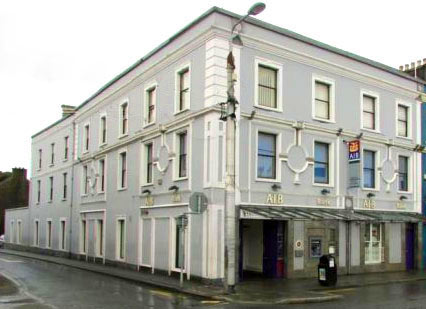
Tipperary County Council has announced a series of temporary road closures in Thurles to allow for painting maintenance works in the town centre. The N62 on O’Donovan Rossa Street in the town will be closed at AIB Bank corner on three consecutive Sundays; 17th, 24th, and 31st May 2026, between 6:00am and 8:00pm each day.
Same closure is necessary to facilitate painting works to the exterior of the A.I.B. bank building. While these works are relatively short-term, some disruption to traffic in the area is expected during the specified hours.
Motorists travelling through Thurles town will be diverted via Cúchulainn Road and onto Parnell Street, while heavy goods vehicles will be rerouted along Jimmy Doyle Road. As with similar roadworks across the county, clearly signposted diversion routes will be in place to help minimise disruption and keep traffic moving safely.
Drivers are advised to plan ahead, allow extra travel time, and follow all local signage, while the works are underway.
First U.S. Inhalation Products Manufactured in Tipperary, Marks Major Milestone for Cashel Facility.
Cashel, Co. Tipperary / Bridgewater, New Jersey– Amneal Pharmaceuticals, located on Cahir Road in Cashel, Co. Tipperary, has officially launched two respiratory inhalation products in the United States, following approval by the U.S. Food and Drug Administration in 2025, confirming the accuracy of recent reports and underscoring a significant milestone for both the company and its Irish manufacturing base.
The newly launched products; Albuterol Sulfate Inhalation Aerosol and Beclomethasone Dipropionate HFA Inhalation Aerosol, represent Amneal’s first metered-dose inhalation (MDI) products introduced to the U.S. market, marking the company’s strategic entry into the complex inhalation therapeutics category.
Both medicines are widely prescribed respiratory treatments. Albuterol is used for the treatment and prevention of bronchospasm and exercise-induced bronchospasm in patients aged four years and older, while beclomethasone is a corticosteroid indicated for the maintenance treatment of asthma in patients aged five and above.
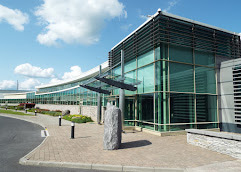
Strong Validation of Cashel Manufacturing Operations. The products are manufactured at Amneal’s dedicated inhalation facility in Cashel, Co. Tipperary; a site that employs approximately 150 people and plays a central role in the company’s global operations. The facility, acquired from Johnson & Johnson in 2015, is specifically designed for complex inhalation product development and production.
The transition to commercial U.S. sales represents a meaningful boost for the local economy, reinforcing the strategic importance of advanced pharmaceutical manufacturing in Ireland.
Addressing Patient Needs and Market Gaps. Both inhalers utilise a hand-breath actuator device, requiring the patient to depress the canister before inhaling; a format previously discontinued for QVAR®, creating a renewed option for patients and healthcare providers. According to Amneal, these products address gaps in patient access while increasing competition in a U.S. respiratory market, latter valued at approximately $1.8 billion annually (based on combined category sales data).
Leadership Commentary. Dr. Srinivas Kone, (Senior Vice President and Chief Scientific Officer – Affordable Medicines), stated: “The launch of these inhalation products marks a significant milestone and reflects our ability to develop and scale complex formulations that address meaningful gaps in patient access. With additional inhalation products in development, we are building a durable presence in this important category.”
Strategic Growth in Complex Medicines. Headquartered in Bridgewater, New Jersey, Amneal continues to expand its portfolio of complex generics and specialty medicines. The successful U.S. launch of these inhalers highlights the company’s growing capabilities in advanced drug delivery systems and positions it for continued growth in respiratory therapeutics.
This website uses cookies to improve your experience. We'll assume you're ok with this, but you can opt-out if you wish.AcceptRead More
Privacy & Cookies Policy
Privacy Overview
This website uses cookies to improve your experience while you navigate through the website. Out of these, the cookies that are categorized as necessary are stored on your browser as they are essential for the working of basic functionalities of the website. We also use third-party cookies that help us analyze and understand how you use this website. These cookies will be stored in your browser only with your consent. You also have the option to opt-out of these cookies. But opting out of some of these cookies may affect your browsing experience.
Necessary cookies are absolutely essential for the website to function properly. This category only includes cookies that ensures basic functionalities and security features of the website. These cookies do not store any personal information.
Any cookies that may not be particularly necessary for the website to function and is used specifically to collect user personal data via analytics, ads, other embedded contents are termed as non-necessary cookies. It is mandatory to procure user consent prior to running these cookies on your website.







Recent Comments