|
|
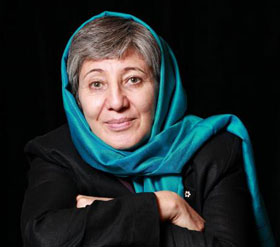 Dr Sima Samar The Tipperary Peace Convention today in a statement announced that the 2010 Tipperary International Peace Prize is to be awarded to Afghan human rights activist, Dr. Sima Samar.
The 53 year old Dr. Samar, OC. (Ordre du Canada) a native of Ghazani, Afghanistan, is the Chairperson of the Afghan Independent Human Rights Commission (AIHRC) and since 2005 also United Nations Special Rapporteur on the situation of human rights in Sudan.
Dr. Samar obtained her degree in medicine in February 1982 from Kabul University, the first Hazara woman to ever do so.
She was forced to flee from her native Jaghoori, where she provided medical treatment to patients throughout the remote areas of central Afghanistan.
In 1984, the Russian Communist regime arrested Dr. Samar’s husband, physics professor Abdul Chafoor Sultani and Dr. Samar together with her young son was forced to flee to the safety of nearby Pakistan where she worked as a doctor at the refugee branch of the Mission Hospital.
Dr. Samar’s ongoing efforts at educating and uplifting the poor and ignorant, especially females, is not looked upon with favor by the Taliban regime and she has been publicly threatened with death on numerous occasions, for failing to close down her hospitals and schools for women and girls.
Dr. Samar publicly refuses to accept that women must be kept secluded from the public and speaks out against the wearing of the burqa (head-to-foot wrap), which was enforced on women first by the fundamentalist Mujahideen and later by the Taliban. Among the Taliban’s many other misogynistic edicts is barring girls over the age of eight from attending school.
Dr. Sima Samar is the recipient of numerous International Awards for her work on human rights including:
Ramon Magsaysay Award for Community Leadership in 1994.
Global Leader for Tomorrow from the World Economic Forum in Switzerland in1995.
The Voices of Courage Award, Women’s Commission for Refugee Women and Children, New York, in 2001.
John F. KennedyProfile in Courage Award in 2004.
Ypres Peace Prize Belgium, in 2008.
Honorary Officer of the Order of Canada, in 2009.
As I write this, 235,470 page readers have visited Thurles.Info over the past number of months.
To all of our viewers, go our wish to you for a Happy, Healthy and Prosperous New Year in 2011.
To quote the words of an old Irish Toast:
When the wind is howlin’ in every one’s ears, may you hear a soft lilting breeze.
And if the rain comes crashing down, may it only be dew at your knees.
If the ground ‘neath your feet should quiver and shake, I hope you’ll be standing with ease.
May you never go hungry or wanting for much and may God grant you all that you need!
Happy New Year Everyone.
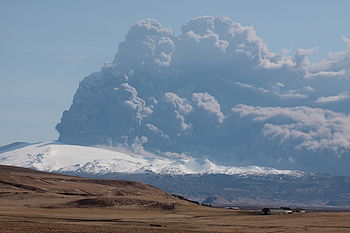 Eyjafjallajokull Volcano Natural calamity always tests the administrative structures and social bonds of our society and the recent weather experienced here in Co.Tipperary over the past few weeks certainly tested all of these.
Yet this type of weather, contrary to popular media reports, is indeed not new to Ireland. “The Great Frost”, “Bliain An Áir” (Translated into English “year of the slaughter“) or the “Forgotten Irish Famine” happened between December 1739 and September 1741 and was one of many such calamities which struck Europe in the past and occurred after a decade of relatively mild winters, such as we have recently experienced here in Ireland.
This crisis of 1739-1741 should in no way be confused with the even more devastating ‘Great Famine’ in Ireland, a century later between 1845 and 1849.
Temperature readings for Ireland then ranged between −12 °C and 0 °C. Ireland was locked into a stable and vast high-pressure system which stretched across most of Europe, from Russia to northern Italy, in a similar way as experienced recently. Our lakes, rivers,and waterfalls froze and fish died. Rural dwellers fared better than city dwellers, due to easier access to fuel, while poor urban dwellers lived in freezing basements and below standard housing.
Retail prices for coal soared, urban and rural mill-wheels became frozen stiff and since water powered our machinery, bakers could not grind wheat, printers could not pulp rags for paper and the work of weavers was greatly prohibited, disrupting craft employment and food processing.
The export of grain out of Ireland was prohibited to all destinations except Britain. The Church of Ireland parish clergy and the Established Church solicited donations from the property classes, which they converted into required rations for free dispersal to mainly city dwellers, distributing nearly 80 tons of coal and ten tons of meal in the first month of this unprecedented cold spell.
One of the main food sources, the humble potato became frozen and inedible. Spring rains never arrived and drought killed off sheep and other animals in the fields. The potato crisis caused an increase in grain prices which in turn led to higher bread prices. Starving rural dwellers began to move into the larger towns with bands of citizens causing food riots.
Documentation of deaths were far from accurate between December 1739 and September 1741, but cemeteries provide some small information. We can estimate that the normal death rate for the country tripled in January and February 1740 and burials averaged about 50% higher during the period of this crisis, than for the total previous years of 1737 to 1739.
It is interesting to note that Mount Tarumae in Japan experienced a major volcanic eruption, as did Mount Asahi, Japan’s tallest mountain, in 1739.
In 1783 and 86 we experienced two successive severe winters both attributed to an Icelandic volcanic eruption.
In 1816, known as the year without summer, snow fell late and the summer never really materialised. The winter proceeding it was also severe. A volcanic eruption at Mount Tambora on the island of Sumbawa, Indonesia, greatly disrupted wind patterns and temperatures.
In 2010 the eruptions of Eyjafjallajökull, Iceland caused enormous disruption to air travel across western and northern Europe over a period of six days in April 2010. Additional localised disruption continued into May 2010.
Is there a connection between volcanic activity and our unusual Irish weather?
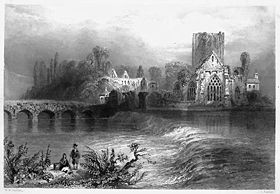 Holycross Abbey 1841 Legendary hurler Mr John Doyle’s body will repose at Egan’s Funeral Home, Dublin Road, Thurles, from 4.00 pm to 8.00 pm today Thursday, December 30th 2010. His body will then be removed to the historic Abbey of Holycross at 8.30 pm sharp.
A Requiem Mass will take place tomorrow morning, Friday, at 11.30 am. John’s burial will take place in the adjoining cemetery following his funeral Mass.
Note: Family flowers only, however donations to his memory, if desired, can be sent to the Community Hospital of the Assumption, Thurles, Co.Tipperary.
House to remain private.
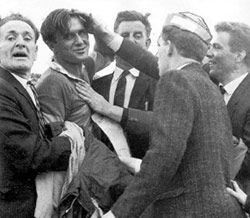 John Doyle, in earlier days, being congratulated by adoring fans. It is with great sadness we learn of the death of legendary Tipperary hurler and Holycross native Mr John Doyle.
John was widely regarded as one of the greatest hurlers in the history of the game and is one of only a handful of players to have won All Ireland medals in three separate decades.
John Doyle, an only child, was born in Holycross, County Tipperary on the 12th of February 1930. His mother died in the first week of his birth and he was raised by his father on their family farm. Educated at the local Gaile National school near Holycross, he later attended Thurles Christian Brothers School.
From an early age he showed a great interest in hurling, and it was in the CBS that his skills were further developed and nurtured by the then Christian Brothers at the school.
He played hurling with his local Holycross-Ballycahill club from the 1940’s until the 1970’s and was a member of the Tipperary senior inter-county team from 1949 until 1967.
John’s status as one of the all time greats of hurling is self-evident by his many honours and achievements:
2 Munster Minor Hurling Medals – 1946, 1947.
2 County Minor Medals – 1947, 1948.
1 All-Ireland Minor Hurling Medal – 1947.
8 All-Ireland Senior Hurling Medals – 1949, 1950, 1951, 1958, 1961, 1962, 1964, and 1965, a record he shares with old rival and Cork’s own legend Christy Ring.
10 Munster Senior Hurling Medals – 1949, 1950, 1951, 1958, 1960, 1961, 1962, 1963, 1964, 1965, 1967.
11 National League Medals – 1949, 1950, 1952, 1954, 1955 (Capt.), 1957, 1959, 1960, 1961, 1964, 1965.
6 Railway Cup Medals – 1951, 1952, 1953, 1955, 1960, 1963.
3 County Senior Medals – 1948, 1951, 1954.
4 Mid Tipp Medals – 1947, 1948, 1951, 1954.
6 Oireachtas Medals 1949, 1960, 1961, 1963, 1964, 1965.
John had also been the recipient of numerous awards and honours off the field.
In 1964 and again in 1992 his hurling prowess earned him the prestigious “Texaco Hurler of the Year” award. In 1984 he was named in the left corner-back position on the GAA Hurling Team of the Century. He was also named in the right corner-back position on the GAA Hurling Team of the Millennium in 1999.
In 2009 he was named in the Sunday Tribune’s list of the “125 Most Influential People In GAA History.”
His status as one of the greatest players of all time was further enhanced in 1984 and again in 2000 when he was named on the Gaelic Athletic Association’s Hurling Team of the Century and the Hurling Team of the Millennium.
He remained a member of the Tipperary senior panel from 1949 until 1967.
Following his sporting career he entered politics and was elected to Seanad Eireann in 1969 and served until 1973.
In retirement from inter county hurling, Doyle continued to work on his farm in Holycross until his death on Tuesday last.
Speaking today, GAA president Christy Cooney stated:
“I wish to express my sincere sympathies and those of the whole of the GAA, to his family on their sad loss. John made an immense contribution to the Association over the course of his life. This spanned from his remarkable success on the hurling field with eight All-Ireland medals, right up to his contribution at national level. He is regarded as one of the best defenders ever to grace the game of hurling.”
John is survived by his wife Anne, his sons Johnny and Michael and daughters, Collette, Margaret, Anne-Marie, Sandra, and Liz.
Ar Dheis Dé go raibh a anam uasal.
|
Support Us Help keep Thurles.info online by donating below. Thank you.
Total Donated 2026: €290.00
Thank You!
Daily Thurles Mass Livestream
|





Recent Comments