|
|
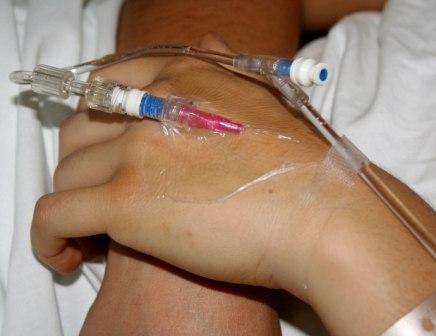 The total count for patients forced to remain on trolleys at Limerick Regional Hospital yesterday was 51 according to the today’s Irish Times. The total count for patients forced to remain on trolleys at Limerick Regional Hospital yesterday was 51 according to the today’s Irish Times.
Mary Fogarty, industrial relations officer with the INMO in the mid-west region, stated that over Christmas patients had little access to diagnostic tests and procedures and this led to very few discharges. She stated the hospital has been under severe pressure since reconfiguration of acute services in the mid-west region began in April 2009. A spokesman for the hospital said emergency departments are under pressure because of cold weather, seasonal demands and swine flu.
Meanwhile according to Tipp Fm Radio today visiting restrictions are in place at the Mid-Western Regional Hospital due to the presence of influenza cases. People are asked not to visit the hospital unless it is absolutely essential.
According to management at the hospital, unwell patients who may have flu like symptoms should not visit the hospital. Pregnant women or young adults and those with chronic illnesses should not visit suspect or confirmed cases and these visiting restrictions will remain in place until the situation has been resolved. Meanwhile many appointments with out patients are being cancelled.
This situation now confirms the argument that the closure of services at Nenagh Hospital, not only places patients at unacceptable distances from acute life-saving medical care, forcing people to travel unnecessarily to an overworked and overwhelmed central hospital in Limerick, but in truth leaves us without any real reliable medical service in North Tipperary at all.
This unacceptable situation must now become an election issue on all doorsteps in North Tipperary in the coming weeks with those political candidates who choose to seek out our valuable support. Remember, while we can not change the direction of the wind, we can adjust our sails in our efforts to reach our required destinations.
Meanwhile, we are informed that all appropriate infection control measures are being taken to deal with this situation at the Mid-Western Regional Hospital.
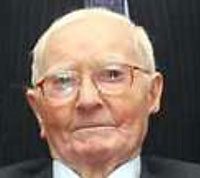 Jimmy 'Butler' Coffey. (26th Oct 1909 – 29th Dec 2010) The death occurred, on December 29th last, of the former Tipperary hurler Jimmy ‘Butler’ Coffey, at the grand old age of 101.
Mr Coffey was born in Chapel Lane, Newport, County Tipperary in 1909. He played hurling with his local Newport club and was a member of the Tipperary senior inter-county team from 1931 until 1940. Mr Coffey held the distinction of being one of the oldest living senior All-Ireland medal winners and had turned 101 in October 2010.
The Newport native won an All-Ireland medal at wing-forward in 1937 against Kilkenny, marking the legendary Paddy Phelan in a game played in Killarney, due to on-going work at Croke Park. The press report on the All Ireland final against Kilkenny at Killarney stated: “The half forward line composed of Doyle, Treacy and Coffey was outstanding. The Newport man, assuredly one of the best forwards to don the county colours for several years, was the best of the three. Opposed by Paddy Phelan, who had made the entire Tipperary forward line look like novices in an earlier league game in Carrick-on-Suir, Coffey careered around, a bundle of energy. As a resolute and determined hurler, possessed of great stamina and dash, he kept ‘hell for leather’ after his rival for fifty yards. Most hurlers would have given up – but not Coffey. He not alone overtook his opponent but dispossessed him and sent the ball flying goalwards with a great delivery.”
The Coffey brothers Jimmy Jack and Mick recorded a unique achievement in 1935 when all three of them shared the substitutes bench for the senior championship game against Limerick here in Thurles.
He also collected a Railway Cup medal in 1938 on a star studded Munster team which included former Jack Lynch.
For his club, Mr Coffey won North Tipperary senior championship medals in 1932 and 1935.
Following his retirement from inter-county hurling, he played club hurling in Limerick, winning county senior hurling medals in 1947 and 1948 with Ahane.
He trained the Cappamore team that brought county titles to the parish in both junior and senior grades. He was also a selector with Mick Mackey on the Limerick team that won the Munster title in 1955.
Mr Coffey was buried, following Requiem Mass at Cappamore Church, on Saturday last at 11.30am in Ballinure Cemetery.
Ar Dheis Dé go raibh a anam uasal.
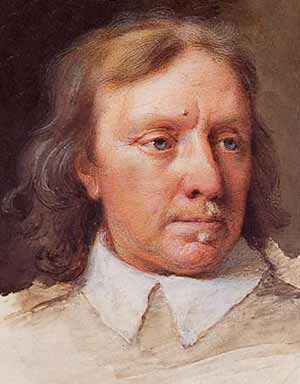 Oliver Cromwell (1599–1658) Oliver Cromwell is still a figure of hatred in Ireland, considered a regicide dictator with his name being associated with massacre, religious persecution, and mass dispossession of the Catholic community. A traditional Irish curse still used is ‘mallacht Chromail ort ‘ or translated into English ‘the curse of Cromwell upon you ‘.
On 15th August 1649 Oliver Cromwell landed at Ringsend,Dublin, with an army of over 3,000 battle hardened ‘Ironsides‘. The civil war in England had come to an end, and King Charles I had been executed seven months previously.
In Ireland the Roman Catholics had been in revolt since 1641 and now held much of the island. They had in general taken the King’s side, encouraged by the Church of Rome, though some inhabitants had observed that in England’s civil war internal turmoil a chance existed to restore independence to Ireland.
From Dublin Cromwell marched north to Drogheda, which was defended by an English Catholic Royalist, Sir Arthur Aston. When Cromwell’s surrender demand was ignored, he stormed the city ordering the death of every man in the garrison who held arms, describing his actions as “a righteous judgment of God upon these barbarous wretches“. The nearby garrisons at Dundalk and Trim, on learning the news, ‘took to their heels’.
Realising he had secured the route into Ulster, Cromwell turned on the south eastern port of Wexford town, slaughtering townspeople and the garrison alike. Neighbouring towns quickly submitted.
Oliver Cromwell’s campaign ended with an assault on Clonmel here in Co.Tipperary, where, after some stout resistance, the defenders withdrew, under the cover of darkness.
But the reign of Oliver Cromwell was not all bad, under his rule in England the contract between a monarch and his subjects was analysed and clearly defined. An elected representative must represent the best interests of his electorate and each subjects must obey the law of the land, as represented in the person of that elected individual.
Cromwell established that a parliament exists only to serve its electorate, and not the other way round. He demonstrated that governments were fully answerable to their subjects for any wrong doing. Under his leadership the reigning king, Charles 1, indeed was executed for the treason of ‘making war on his own people‘.
He demonstrated that good organisation and administration was more important in government than any social position, to get things done properly and that leadership can exist at all levels of a country’s society. He invited the expelled Jewish community to return to England, following their 400 years in exile, and thus began massive expansion of financial and trading services across Europe with England as the centre. Further proof of his appreciated governance is that in a 2002 BBC poll, in Britain, Cromwell was selected as one of the ‘Top 10 Britons’ of all time.
Cromwell’s principles of government have in the past been quoted by American colonists to justify their rebellion against British rule, by moderate French Revolutionaries, by the 1830 revolutionary leaders of Paris, by the 1848 revolutionary leaders of Vienna and Paris, by Frederick Engels in the Communist Manifesto, and by early Trade Union pioneers. His ideas have become relevant to many societies and world governments where it became necessary to overthrow tyranny and reckless greedy corruption.
His speech to the House of Commons on 20th April 1653, just minutes prior to him dissolving the Long Parliament, perhaps expresses the true feelings of many politically disillusioned men and women in the Ireland of 2011.
“It is high time for me to put an end to your sitting in this place, which you have dishonored by your contempt of all virtue, and defiled by your practice of every vice. Ye are a factious crew, (Exp: Given to promoting internal dissension) and enemies to all good government; ye are a pack of mercenary wretches, and would, like Esau, sell your country for a mess of pottage or like Judas, betray your God for a few pieces of money.
Is there a single virtue now remaining amongst you? Is there one vice you do not possess? Ye have no more religion than my horse; gold is your God.
Which of you have not bartered your conscience for bribes? Is there a man amongst you that has the least care for the good of the Commonwealth?
Ye sordid prostitutes, have you not defiled this sacred place, and turned the Lord’s temple into a den of thieves, by your immoral principles and wicked practices?
Ye are grown intolerably odious to the whole nation; you were deputed here, by the people, to get grievances redressed, are yourselves gone!
So! Take away that shining bauble there, and lock up the doors.
You have sat too long, for any good you have been doing lately. Depart, I say; and let us have done with you. In the name of God, go!”
Where can we find an Oliver Cromwell in 2011?
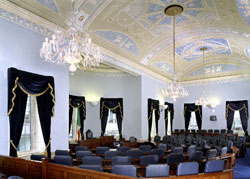 Seanad Éireann New senators are now paid €65,621 per year and no longer benefit from long-service increments, which have been abolished by Finance Minister Brian Lenihan.
However, long-serving senators who were already on increments, prior to Mr Lenihan’s changes, have retained same, meaning they earn €67,634 if they have served between seven and 10 years and €69,647, if they have served more than 10 years.
This gravy train does not end here my friends, well that is according to today’s Sunday Independent, which shows ten senators receiving nearly €500,000 in expenses during the 12-month period Nov.1st 2009 to Nov.1st, 2010.
Tipperary’s three serving members of Seanad Éireann received expenses totalling over €126,800, added to their existing salaries. Tipperary Labour Senator Phil Prendergast ranked 11th highest for expenses claimed of €45,649, while next in line of our county’s Senators was Fianna Fail’s Labhras O’Murchu, coming in at 23rd position with €41,423. His party colleague John Hanafin claimed €39,732, ranking him a mere 32nd highest of the total 61 Senators listed.
First prize went to Newross Co.Wexford’s Fianna Fáil senator Jim Walsh, who received €62,196 and who on the 7th of July 2010, resigned the Fianna Fáil parliamentary party whip, along with Tipperary’s Labhrás Ó Murchú and John Hanafin, in protest at the Civil Partnership bill. Senator Walsh has repeatedly called for a freedom of conscience amendment to the legislation which would by-pass equality legislation, allowing people a religious exemption in providing goods and services to gay couples. In November 2009, Walsh claimed that women working outside the home is a major cause of depression in young people.
Now don’t we get real value for our money. By the way, has anyone actually seen a Tipperary Senator in recent times?
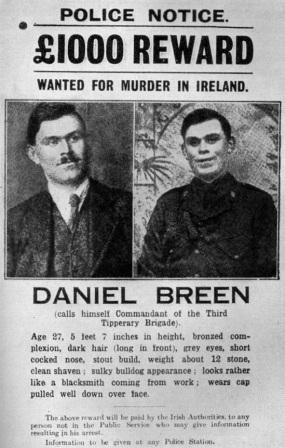 The 41st anniversary of the death of the Old IRA leader Dan Breen, a member of the Third Tipperary Brigade of the Old IRA, was marked with a Mass in the Church of the Immaculate Conception, Donohill, Co Tipperary, today. The 41st anniversary of the death of the Old IRA leader Dan Breen, a member of the Third Tipperary Brigade of the Old IRA, was marked with a Mass in the Church of the Immaculate Conception, Donohill, Co Tipperary, today.
Dan Breen, born 11th August 1894 (Mícheál Dónall Ó Briaoin ) was also a Dáil deputy, who served as a politician and member of Dáil Éireann (Anti-Treaty) from 1923 -1927 and 1932-1965.
Dan Breen and his then comrades fired the first shots which began the War of Independence at Soloheadbeg on January 21st, 1919.
Dan died in Dublin on the 27th December 1969 and was buried in Donohill cemetery, Co. Tipperary.
Breen’s memory will also be honoured with a wreath laying ceremony at his grave, followed by a cultural evening.
|
Support Us Help keep Thurles.info online by donating below. Thank you.
Total Donated 2026: €290.00
Thank You!
Daily Thurles Mass Livestream
|





Recent Comments