|
|
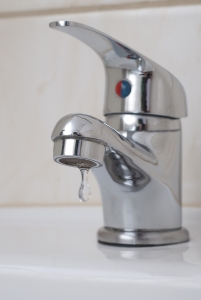 An estimated several thousand people are without a safe supply of drinking water here in Co. Tipperary since yesterday, due to a major kerosene spillage.
As a result, following consultations between the Health Service Executive (HSE), Irish Water and Tipperary County Council, a “Do Not Drink” notice has been issued for Fethard and its environs; same to come into immediate effect for the householders in this affected area.
This contamination of Hydrocarbon was only detected yesterday morning, with the spillage having occurred during Storm Emma. Irish Water now warn its customers that boiling this water does not make it safe for human consumption.
To protect the health of consumers, the HSE are advising that Kerosene is generally detected by smell and/or by taste, before it reaches a level which might seriously affect human health.
The source of the contamination we now understand has been identified and containment and clean-up measures have been put in place.
The Do Not Drink notice will apply to all consumers supplied by the Fethard Public Water Supply and under no circumstances it be used for drinking.
 Six women and five men (11 people in total), have been arrested in counties Tipperary, Limerick and Kerry this afternoon, as part of an ongoing child sexual abuse investigation.
Gardaí from Roxboro Road, Newcastle West, Bruff, Henry Street, and Mayorstone Park, combined with the Limerick Divisional Protective Services Unit to made the arrests.
This follows on from an investigation into alleged sexual exploitation of children who were resident in the Newcastle West Garda District.
The ages of those arrested range from 20 to 70 years, and currently are being detained at Garda stations in Limerick, Cork and Clare under the provisions of Section 4 of the Criminal Justice Act 1984, on suspicion of the sexual exploitation of children.
Advice For Private Well Owners Affected by Storm Emma
The EPA recommends that if your well has been affected by Storm Emma you should make sure it is properly disinfected before using it for drinking water. Details of how you can disinfect your well are below. This procedure should be carried out once the flooding has subsided.
The EPA has also published advice and guidance for households using private wells which includes information on:
- Protecting your private well water
- Testing and treating your well water
- Concerns and complaints
- Further guidance and Frequently Asked Questions
This information includes a Protect Your Well Assessment App. and a short animation explaining how to protect your private well.
The EPA has also published an Advice Note on Restoring Public Water Supplies Following Flooding which should be used by water suppliers, such as Irish Water and Group Water Schemes operators, if supplies have been affected by flooding.
Disinfecting Your Well After Flooding
 This method is for the disinfection of a well water supply, water storage tank, water carrying pipe work and hot and cold-water cylinders. Approximately 1,100 litres of water will be used.
Caution: if you have a filter or any other type of water treatment on any part of your system, consult your supplier before following this procedure. Heavily chlorinated water may affect the filter or the chlorine may be absorbed by the filter, rendering the procedure ineffective.
Add 5 litres of a 1% w/v solution of Sodium Hypochlorite to 25 litres of water. While we do not endorse any individual products, any one of the following products may be used diluted in 25 litres of water.
2.5 litres of Milton fluid (or 50 tablets) or similar products with 2% w/v Sodium Hypochlorite.
Or
0.5 litres of Sterichlor or similar products with 10/11% Sodium Hypochlorite
Disinfection products sold for use on the farm will be acceptable for use in disinfecting wells. However, it is important to seek advice about their use and it is advisable to always use the products in about 25 litres of water.
- Pour half of the solution into the well.
- Turn on the drinking water tap in the kitchen and let the water run until there is a distinct smell of chlorine from the water. Then turn off the tap.
- Turn on all other taps and let the water run until there is a distinct smell of chlorine from the water. Then turn off the taps.
- Pour the other half of the solution into the well. Turn off the well pump and ensure that the well is covered properly. Allow to stand overnight or for at least 8 hours.
- After at least 8 hours reconnect the pump. Turn on all taps and let the water run until the smell of chlorine is gone. Turn off all taps.
- Arrange for the water to be tested.
N.B. This method is only suitable as a once off shock disinfecting procedure and cannot replace a proper treatment system if your water supply needs continuous disinfection.
 Det. Chief Supt. Patrick Lordan. Gardaí continue to warn businesses regarding online scams, that has allowed fraudsters to attempt to embezzle more than €1.3m in “invoice redirect fraud”, over a mere two-month period.
On February 28th last, we posted news of the arrest of three men and two women, following a total of four searches; three in Co. Tipperary and one in Co. Dublin.
Detective Chief Superintendent Mr Patrick Lordan, Garda National Economic Crime Bureau (GNECB) and a former Garda Superintendent here at Thurles Garda Station (2010 -2013), has highlighted the need for businesses to urgently instigate more “robust policies and procedures”, with regard to “Invoice Redirect Fraud”. This can be easily undertaken by making “direct contact” with a trusted individual within any organisation with which business is being conducted.
What is Invoice Redirect Fraud?
In crimes of this nature, criminals send emails to businesses purporting to be one of their legitimate suppliers. These emails contain an instruction to change the suppliers bank account details, that the business currently use. Payments then arrive to new bank accounts that ultimately benefit the criminals, and in the majority of instances, the business does not become aware it has been a victim of such crime, until the legitimate supplier sends a reminder invoice, seeking payment.
These requests from criminals can also come via written correspondence or by a phone call, so caution should attach to any such request of this nature, and business owners are urged to remind employees to treat any request to change supplier bank account details, with extreme caution.
Just one of the examples of such fraud being attempted was Meath Co. Council, who were deceived into handing over €4.3m to an online fraudster. Having acted quickly and made contact with Gardaí when this slip-up was realized, it became possible to recover all losses involved.
The five arrests we recently reported on, were made following a probe into a similar scam, which involved Dublin Zoo. Current NECB boss, Det. Chief Supt. Mr Pat Lordan has stated: “Invoice redirect fraud is a major problem around the world and we are also targeting the crime gangs who are sending money to Ireland.”
The scam is being targeted by the Money Laundering Investigation Unit (MLIU) of the Garda Economic Crime Bureau, who work very closely with financial institution in this regard.
It looks like the necessary surface work required to upgrade Barry’s Bridge, crossing the River Suir here in Thurles town, is at last about to start.
Health and Safety barriers were erected on the bridge this morning beginning at 9.00am, together with led digital signage, requesting drivers of vehicles, where possible, to use alternative routes out of the town centre.

Barry’s Bridge in Thurles, Co Tipperary, has provided passage over the river Suir, since around 1650, and was partially widened again circa 1820.
Bridge Castle, overlooking this seasonally shallow river crossing, has dominated the Thurles skyline since as early as 1453, built possibly by the Norman invader McRickard Butler of whom history records that he erected, in 1453, two castles at Thurles and one at Buaidlic (Boulick).
While footpaths for pedestrians remain unrestricted presently, we understand that vehicles will be curtailed to one single lane of traffic crossing the bridge, for the duration of the period deemed necessary to carry out the resurfacing work.
So, where possible do try to use the alternative entrance and exit routes indicated, in order to keep traffic flowing.
|
Support Us Help keep Thurles.info online by donating below. Thank you.
Total Donated 2026: €300.00
Thank You!
Daily Thurles Mass Livestream
|



Recent Comments