Pre-deceased by her husband Michael, her baby son William, brother Joe and close cousin Moira Mernagh; Mrs Ryan passed away peacefully, with the same grace and dignity with which she lived her life, and while surrounded by her loving family; at the place of residence of her daughter Una.
Her passing is most deeply regretted by her son Gerard, daughters Una and Siobhan, adored grandchildren Aoibhinn, Aoife, Daithí and Cathal, daughter-in-law Sinead, sons-in-law Greg and Gerard, nephews, nieces, extended relatives, special friend Eileen, good neighbours and many friends.
Requiescat in Pace.
Funeral Arrangements.
The earthly remains of Mrs Ryan will repose at Hugh Ryan’s Funeral Home, Slievenamon Road, Thurles on Monday evening, April 18th, from 4:00pm to 6:00pm. Her body will be received into the Cathedral of the Assumption, Cathedral Street, Thurles on Tuesday morning April 19th at 10:30am, for to further repose for Requiem Mass at 11:00am. Interment will take place immediately afterwards in St. Patrick’s Cemetery, Moyne Road, Thurles, Co. Tipperary.
For the many persons who would have liked to have attended Requiem Mass for Mrs Ryan, but are unable to do so, due to the prevailing Covid-19 pandemic; same can be viewed online HERE.
[NB: Due to Public Health Guidelines, regarding C-19 virus restrictions; those attending Requiem Mass will continue to observe strict adherence to social distancing, face covering, with no hand shaking.]
The extended Ryan family wish to express their appreciation for your understanding at this difficult time and have made arrangements for those wishing to send messages of condolence, to use the link shown HERE.
Pre-deceased by her parents Connie and Mary; Ms Keane passed away peacefully, following a short illness, while in the care of staff at St. John’s Hospital, Limerick City, Co. Limerick and Lakes Nursing Home, Killaloe, Co. Clare.
Her passing is most deeply regretted by her loving family; sister Claire, brother Eugene, niece Orla, nephews Ronan and Eoin, Ronan’s wife Malissa, grand-nieces Bella, Lara and Charlie, sister-in-law Grace, cousins, aunt Alice, uncle Joss, extended relatives, neighbours and friends.
For the many persons who would have liked to have attended Requiem Mass for Ms Keane, but are unable to do so, due to the prevailing Covid-19 pandemic; same can be viewed online HERE.
[NB: Due to Public Health Guidelines, regarding C-19 virus restrictions; those attending Requiem Mass will continue to observe strict adherence to social distancing, face covering, with no hand shaking.]
The extended Keane family wish to express their appreciation for your understanding at this difficult time and have made arrangements for those wishing to send messages of condolence, to use the link shown HERE.
Tipperary Co. Council officials; latter led by Chief Executive Mr Joe MacGrath and Fianna Fáil Councillor & Cathaoirleach of Thurles Municipal District, Mr Seamus Hanafin; last month successfully set about destroying our Thurles Great Famine heritage. We at Thurles.Info feel it is necessary to fully highlight the serious damage done to the Thurles business community, through the loss of local Tourism, same brought about by the above named, in collusion with their council colleagues/officials/administrators and by Tipperary’s two most indolent T.D’s, Mr Jackie Cahill and Mr Michael Lowry.
The information supplied hereunder; were it to be linked to the now destroyed, Thurles “Double Ditch“; the existing Thurles Great Famine Minutes – (1846-1847); the newly digitized rare Gratuitous Relief Ration Record Book’; the Widow McCormack’s Cabbage Patch rebellion, (situated in Ballingarry, Thurles, Co. Tipperary); the Mining Museum, (latter situated in the Commons, Thurles, Co. Tipperary); the Tipperary villages of Glengoole; Ballingarry; The Commons, and Littleton, and towns like Thurles if added to the mix, could have been the foundation for much needed Tourism in the county, at no extra cost, whatsoever, to Tipperary Tax payers.
Where are Tipperary’s appointed tourism officials? Where are Tipperary’s various Chambers of Commerce members? Where are those people with a mere modicum of basic imagination?
Certainly no current ‘Double Jobbers’; demonstrating imagination were elected, when we visited polling stations in Thurles last election day. But, enough, not to worry, we can correct our mistakes in the not too distant future.
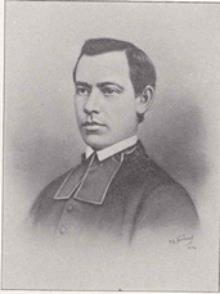
Stephen De Vere (1812-1904)
Stephen De Vere(1812-1904)
We begin with Stephen De Vere (1812-1904) latter born into an aristocratic Anglo-Irish Protestant family that owned large landed estates at Curragh Chase, Co. Limerick and at Glangoole, (Glengoole), Thurles, Co. Tipperary. He was a descended of Vere Hunt, latter a Cromwellian soldier who was first granted land in the mid-17th century.
His grandfather, 1st Baronet Sir Vere Hunt, was a wealthy and eccentric Irish politician, [also known as Aubrey de Vere Hunt (1761–1818).
In all this De Vere estate held considerable land here in nearby Tipperary, in the baronies of Eliogarty and Slievardagh, Co Tipperary. In all, his Tipperary property, comprised of over 6,000 acres and included coal mines at Glangoole, (Glengoole, Thurles), before same was sold off in the mid to late 1850s.
Glengoole, [glen of the coal], in copious documents, is written in various ways down the years; in 1401 it was Glangole; in 1508Glengowell; in 1534Glawngoyle; in 1655 as Glangale, while in the early 19th century, we find the names New Birmingham and Brimigim.
1st Baronet Vere Hunt is chiefly remembered here in Thurles, for his founding of the village of New Birmingham, Thurles, in Co. Tipperary, latter established in the early 1800s, aided by the help of Fr. Michael Meighan, a then local parish priest. Same was founded for the workers in his then existing coal mine at Glengoole, which at one time employed some 400 workers. New Birmingham had been chosen due to the existence of a Catholic Church and in Vere Hunt’s own diary, he records having laid out the street pattern himself, in person. He went on to obtain a charter, giving him the right to hold one or two markets and several fairs, every year. His hope was to turn New Birmingham into a major manufacturing centre, however he failed, mainly due to not having the financial necessities with which to further expand the new village area.
Stephen De Vere, (1812-1904) was the second son of the union between 2nd Baronet Sir Aubrey de Vere (1788–1846), latter an Anglo-Irish poet (a childhood friend of the English Poet Lord Byron), and Mary Spring Rice.
He was born into an aristocratic Anglo-Irish Protestant family. His elder brother was the poet and critic Aubrey Thomas de Vere. In 1832 Stephen’s sister Elinor would marry Robert O’Brien, the brother of William Smith O’Brien, latter the Irish nationalist Member of Parliament and leader of the Young Ireland movement; arrested at Thurles Railway Station, following the Ballingarry Thurles, Co. Tipperary insurrection/uprising of 1848, (Latter derisively referred to by “The Times” of London as the “Battle of Widow McCormack’s Cabbage Patch“).
Stephen was one of the most influential eyewitnesses of the Great Irish Famine migration of 1847. Despite his great wealth, De Vere felt closest to the Irish Catholic tenants on his estate, many of whom he sought to help escape from Ireland when it was afflicted by the Great Hunger between 1845 to 1849.
It was in that same year that he took passage in the steerage of an infamous “coffin ship”, same vessels then being used to transport Irish emigrants fleeing the Great Famine to British North America and the United States. Stephen De Vere wanted to share and witness, at first hand, the reported privations of the emigrants for himself and share in the horrendous conditions that were leading to the deaths of so many Irish ships passengers. During his voyage, he composed a damning report, now known as “The Elgin-Grey Papers”.
The Stephen De Vere red leather-bound diaries, (See video hereunder) kept during his voyage from Ireland to Canada in 1847-1848, remain today to provide, if needed, an invaluable record of Irish Famine migration.
In his report, Stephen De Vere writes:
“Having myself submitted to the privation of a steerage passage in an emigrant ship for nearly two months, in order to make myself acquainted with the condition of the emigrant from the beginning, I can state from experience that the present regulations for ensuring health and comparative comfort to passengers are wholly insufficient, and that they are not, and cannot be enforced, notwithstanding the great zeal and high abilities of the Government agents. Before the emigrant has been at sea a week, he is an altered man. How can it be otherwise? Hundreds of poor people, men, women and children, of all ages from the drivelling idiot of 90 to the babe just born, huddled together, without light, without air, wallowing in filth and breathing a fetid atmosphere, sick in body, dispirited in heart; the fevered patients lying between the sound, in sleeping places so narrow as almost to deny them the power of indulging, by a change of position, the natural restlessness of the disease; by their agonized ravings disturbing those around and pre-disposing them, through the effects of the imagination, to imbibe the contagion; living without food or medicine except as administered by the hand of casual charity; dying without the voice of spiritual consolation and buried in the deep without the rites of the Church. The food is generally ill-selected and seldom sufficiently cooked, in consequence of the insufficiency and bad construction of the cooking places. The supply of water, hardly enough for cooking and drinking, does not allow washing. In many ships the filthy beds, teeming with all abominations, are never required to be brought on deck and aired: the narrow space between the sleeping berths and the piles of boxes is never washed or scraped, but breathes up a damp and fetid stench, until the day before arrival at quarantine, when all hands are required to Scrub up” and put on a fair face for the doctor and Government inspector. No moral restraint is attempted; the voice of prayer is never heard; drunkenness, with its consequent train of ruffian debasement, is not discouraged, because it is profitable to the captain who traffics in the grog. In the ship which brought me out from London last April, the passengers were found in provisions by the owners according to a contract, and emaciated scale of dietary. The meat was of the worst quality. The supply of water shipped on board was abundant, but the quantity served out to the passengers was so scanty that they were frequently obliged to throw overboard their salt provisions and rice (a most important article of their food), because they had not water enough both for the necessary cooking and the satisfying of their raging thirst afterwards. They could only afford water for washing by withdrawing it from the cooking of their food. I have known persons to remain for days together in their dark close berths, because they thus suffered less from hunger, though compelled at the same time, by want of water to heave overboard their salt provisions and rice. No cleanliness was enforced; the beds never aired; the master during the whole voyage never entered the steerage, and would listen to no complaints; the dietary contracted for was, with some exceptions, nominally supplied, though at irregular periods; but false measures were used (in which the water and several articles of dry food were served), the gallon measure containing but three quarts, which fact I proved in Quebec, and had the captain fined for; once or twice a week, ardent spirits were sold indiscriminately to the passengers, producing scenes of unchecked blackguardism beyond description; and lights were prohibited, because the ship, with her open fire-grates upon deck, with Lucifer matches and lighted pipes used secretly in the sleeping berths, was freighted with Government powder for the garrison of Quebec. The case of this ship was not one of peculiar misconduct, on the contrary, I have the strongest reason to know from information which I have received from very many emigrants well-known to me who came over this year in different vessels, that this ship was better regulated and more comfortable than many that reached Canada.”
When the then Colonial Secretary of State for War and the Colonies, Henry George Grey, [3rd Earl Grey (1802-1894)] read his damning report of inhumane conditions, and forwarded same to James Bruce, 8th Earl of Elgin, Governor-General of the province of Canada, the Passenger Act of 1847, making “coffin ships” illegal was introduced, although many such ships would continue to operate.
Sir Stephen de Vere would later become a Roman Catholic, from his observation of the peasantry, whom he had often educated, fed and nursed.
Yes, this is the proud history of Thurles and how dare Tipperary Co. Council and elements claiming to represent Fianna Fáil interfere, to destroy our strong heritage!
So, alone and happy in the world, We two in a rustic wilderness Can listen to the wind And its tale of the centuries. The present and its ephemeral importance Can be forgotten in this old house, Cherishing its own quiet wisdom. The years are great teachers Man’s yearning is a whisper In a tumultuous and eternal sea, Hear the wind sigh and breathe All is vanity.
Sadly, yesterday, April 15th, 86 year old former Tipperary Politician, Cabinet Minister; EU Commissioner and Senator, Mr Michael O’Kennedy, passed away, following a long illness.
Survived by his wife Breda and three children; the Nenagh, Co. Tipperary native, born into a family that had strong links to Sinn Féin and the Old IRA, had previously served as a Fianna Fáil TD for the constituency of North Tipperary, from 1969 until 2002.
Mr O’Kennedy joined Fianna Fáil in 1957, becoming an active member of the party, before failing narrowly to win a Dáil seat in the 1965 General Election for Tipperary North. However he again contested the 1969 General Election and was successful in securing a seat.
During his period in office, Mr O’Kennedy served briefly as Minister for Transport (1973); later a popular Minister for Irish Agriculture, Fisheries and Food (1987-1991); Minister for Labour (1991-1992); Minister for Foreign Affairs under Mr Jack Lynch and Minister for Finance under Mr Charles Haughey (1979-1980).
In January 1981, Mr O’Kennedy was appointed as Ireland’s EU Commissioner for Personnel Administration and the Statistics Office, but resigned one year later in February 1982, to return to Irish politics regaining his North Tipperary seat.
Mr O’Kennedy lost his seat again in the General election of 1992, which turned out to be a disaster for the Fianna Fáil party, but he was subsequently elected to Seanad Éireann (1993-1997), [On the Administrative Panel]. In 1997, he sought the Fianna Fáil nomination for President of Ireland, however, Mrs Mary McAleese became the party’s nominee. Mr O’Kennedy retired from national politics in 2002 and returned to work as a barrister, subsequently becoming a member of the Refugee Appeals Tribunal.
For the many persons who would have liked to have attended Requiem Mass for Mr O’Kennedy, but are unable to do so, due to the prevailing Covid-19 pandemic; same can be viewed online HERE.
[NB: Due to Public Health Guidelines, regarding C-19 virus restrictions; those attending Requiem Mass will continue to observe strict adherence to social distancing, face covering, with no hand shaking.]
The extended O’Kennedy family wish to express their appreciation for your understanding at this difficult time and have made arrangements for those wishing to send messages of condolence, to use the link shown HERE
This website uses cookies to improve your experience. We'll assume you're ok with this, but you can opt-out if you wish.AcceptRead More
Privacy & Cookies Policy
Privacy Overview
This website uses cookies to improve your experience while you navigate through the website. Out of these, the cookies that are categorized as necessary are stored on your browser as they are essential for the working of basic functionalities of the website. We also use third-party cookies that help us analyze and understand how you use this website. These cookies will be stored in your browser only with your consent. You also have the option to opt-out of these cookies. But opting out of some of these cookies may affect your browsing experience.
Necessary cookies are absolutely essential for the website to function properly. This category only includes cookies that ensures basic functionalities and security features of the website. These cookies do not store any personal information.
Any cookies that may not be particularly necessary for the website to function and is used specifically to collect user personal data via analytics, ads, other embedded contents are termed as non-necessary cookies. It is mandatory to procure user consent prior to running these cookies on your website.









Recent Comments