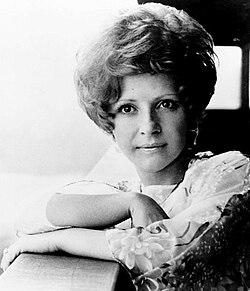
Lyrics: Song adapted it into English by American songwriter, the late Mann Curtis(1911-1984), originally born Emanuel Kurtz. Vocals: American singer Brenda Mae Tarpley known professionally as Brenda Lee.
Brenda Lee.
The song was originally written in French by Gilbert Bécaud and Pierre Delanoë, it became an English-language standard before Brenda Lee brought her own warmth and emotional power to it. With its simple plea for devotion and Lee’s unmistakably expressive voice. This timeless ballad speaks straight from the heart.
Let It Be Me.
Let It Be Me.
I bless the day I found you. I wanna stay around you, And so I beg you let it be me. Don’t take this heaven from one, If you must cling to someone, Now and forever, Let it be me. Each time we meet love, I find complete love. Without your sweet love, What would life be? So never leave me lonely. Tell me you love me only, And that you’ll always, Let it be me. And so I beg you, Let it be me. Each time we meet love, I find complete love. Without your sweet love, What would life be? Never leave me lonely. Tell me you love me only, And so I beg you, Let it be me. Let it be me.
Lyrics and Vocals: The late, great American singer-songwriter of country-folk music, John Edward Prine (1946–2020)
Late John Prine.
With his trademark blend of wit and heartache, John Prine turns an unhappy relationship into a wonderfully funny escape act. Same was featured as a live bonus track on his Grammy-winning 2005 album “Fair & Square”.
Other Side of Town.
Other Side of Town.
Why must you always seem to criticise me. Seems like everything I do just turns out wrong. Why don’t you come on out and despise me, So I could pack my bag and baby I’d be gone.
Remember when you used to call me honey. Well I’d turn around and call you honey too. You might think it’s a joke, but it ain’t funny, To hurt someone who’s so in love with you.
Chorus.
A clown puts his makeup on upside down, So, he wears a smile even when he wears a frown. You might think I’m here when you put me down, But actually I’m on the other side of town.
My body’s in this room with you just catching hell, While my soul is drinking beer down the road a spell. You might think I’m listening to your grocery list, But I’m leaning on the jukebox and I’m about half … way there.
Repeat Chorus.
I’m sittin’ on a chair just behind my ear, Playing dominoes and drinking some ice cold beer. When you get done talking, I’ll come back downstairs, And assume the body of the person you presume who cares.
Repeat Chorus.
I’m across the river on the other side of town. And in my mind I’m going to the dog-racing side of town.
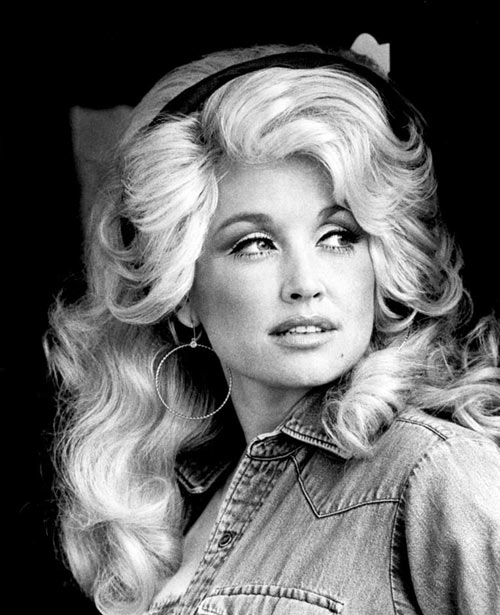
Lyrics and Vocals: American singer, songwriter, actress, philanthropist, and business woman, the late, great Ms Dolly Rebecca Parton Dean(née Parton), [1946–2026].
The late Ms Dolly Parton.
A song for all you dog lovers everywhere; the late Dolly Parton’s “Cracker Jack” is a tender tribute to the scruffy stray she once befriended as a child and remembered as her loyal playmate and best friend. Recorded in 1973 but unreleased until the 2007 reissue of “Jolene”, this bittersweet country story celebrates the unconditional love of a cherished pet and the memories that endure after they are gone.
Cracker Jack.
Cracker Jack.
Once I had a little dog, I called him Cracker Jack. He had a spot around one eye that looked just like a patch. His legs were way too long and he was awkward as could be. He wasn’t much to look at but he looked alright to me. I found him by the river bank just wandering about. He was cold and hungry and his ribs were sticking out. I snapped my fingers, whistled, when he came, I picked him up. I was just a kid and Cracker Jack was just a pup. I took him home and fed him ’til he couldn’t eat no more. I took him to my room and put a blanket on the floor. After that beside my bed is where he’d always sleep. Each night in my prayers I’d pray the lord his soul to keep.
Chorus.
Cracker Jack, The best friend that I ever had was Cracker Jack, But he was more than that, A playmate, a companion, He was love and understanding, That was Cracker Jack. The best friend that I ever had was Cracker Jack, But he was more than that, Everything a kid could want I had in Cracker Jack.
Cracker Jack would run to meet me after school each day. He’d jump and wag his tail and look at me as if to say, “I love you and I’ve missed you and I’m glad you’re home again”. I knew just how he felt ’cause me and Cracker Jack was friends. Through the woods and fields we would often roam about, And when we got in trouble we would help each other out. I could run almost as fast as Cracker Jack could run, We had a lot in common and we had a lot of fun. He was always with me when I was growing up. We shared each other’s good times and we shared each other’s love. He only lives in memories now but often I think back, To the days of childhood, the days of Cracker Jack.
Lyrics and Vocals: Ms Dolly Rebecca Parton Dean(née Parton) [1946–2026].
“In remembrance of the late Dolly Parton, we turn to one of her most moving gospel songs, ‘When Jesus Comes Calling for Me’. Written by Dolly and released on her 1998 album Hungry Again, the song tells of approaching death not with fear, but with faith, peace, and the assurance of going home. In light of her passing at age 80, its message feels especially poignant; a tender reflection from an artist whose music, generosity, and spirit touched generations”.
When Jesus Comes Calling For Me.
When Jesus Comes Calling For Me.
When I was a child I recall an old man, everybody loved old Zeke He was all alone, his family was gone; one day he said to me.
I’m just sittin’ here thinkin’ about Jesus, rockin’ as my old chair creaks. Some glad day I’ll fly away when Jesus comes calling for me. It might be today, it might be tomorrow, maybe one day next week. I’ll soon be done with trouble and sorrow when he comes calling for me. When Jesus comes calling for me, When I die don’t grieve and cry, Lordy, don’t feel sorry for me. Oh what a day, what a mighty fine day, When Jesus comes calling for me. When he comes calling for me. I might be in the graveyard walking talking to my family, Or I might be plowing in the field down yonder, just old Muley and me. Wherever I am, whatever I’m a doing, some sweet day I’ll see, A band of angels in a cloud of glory when Jesus comes calling for me. When he comes calling for me. When I die just close my eyes, And lay me ‘neath the willow tree. Oh what a day, what a mighty fine day, When Jesus comes calling for me. When Jesus comes calling for me. I’m just sittin’ here watchin’ for Jesus, rockin’ as my old chair creaks. Some sweet day I’ll fly away when Jesus comes calling for me. When he comes calling for me.
It is with profound sadness that we mark the death of Dolly Parton, the beloved singer, songwriter, actress, philanthropist and cultural icon, who passed away peacefully in Nashville today August 25th, 2026. She was aged 80 years.
Born on January 19th, 1946, in a one-room cabin in rural Tennessee, Dolly Rebecca Parton was the fourth of 12 children. From those humble beginnings, she built an extraordinary career spanning nearly six decades; bringing warmth, wit and an unmistakable voice to audiences around the world.
As a songwriter, Dolly had a rare gift for turning deeply personal experiences into universal stories. She wrote thousands of songs, including “Jolene,” – “Coat of Many Colors,” – “9 to 5” and “I Will Always Love You.” Her music crossed the boundaries of country, pop, rock and gospel, while her honesty and humanity enabled her to connect with people from every generation and background.
“Coat of Many Colors” Autobiographical song, based on one of her most vivid childhood memories.
The above song tells the story of when her family could not afford a new winter coat, her mother stitched one together from donated scraps of fabric. While sewing, she told Dolly the biblical story of Joseph and his coat of many colors. Dolly proudly wore her coat to school, where other children mocked her for wearing rags. The experience inspired her song about poverty, a mother’s love and recognising wealth in forms other than money.
Her talents extended far beyond music. Dolly brought her characteristic humour and heart to films including “9 to 5“ and “Steel Magnolias”. She also became a successful businesswoman, establishing ‘Dollywood’ in her native Tennessee and creating opportunities for the community that had shaped her.
Perhaps her most meaningful legacy can be found in the lives she changed through her generosity. The Imagination Library, founded in 1995, has placed hundreds of millions of books into the hands of young children. She also supported disaster relief, medical research and numerous community causes; often helping quietly and without seeking recognition.
Among her many honours were 11 Grammy Awards and induction into both the Country Music Hall of Fame and the Rock & Roll Hall of Fame. Yet awards alone cannot measure the joy, comfort and hope she gave to millions.
Her husband of nearly 60 years, Carl Dean, died in 2025. Our deepest sympathies are with Dolly’s family, friends, colleagues and the countless admirers mourning her loss.
Dolly Parton leaves behind far more than a remarkable body of work. She leaves a legacy of kindness, courage, humor and songs that will continue to speak for generations.
This website uses cookies to improve your experience. We'll assume you're ok with this, but you can opt-out if you wish.AcceptRead More
Privacy & Cookies Policy
Privacy Overview
This website uses cookies to improve your experience while you navigate through the website. Out of these, the cookies that are categorized as necessary are stored on your browser as they are essential for the working of basic functionalities of the website. We also use third-party cookies that help us analyze and understand how you use this website. These cookies will be stored in your browser only with your consent. You also have the option to opt-out of these cookies. But opting out of some of these cookies may affect your browsing experience.
Necessary cookies are absolutely essential for the website to function properly. This category only includes cookies that ensures basic functionalities and security features of the website. These cookies do not store any personal information.
Any cookies that may not be particularly necessary for the website to function and is used specifically to collect user personal data via analytics, ads, other embedded contents are termed as non-necessary cookies. It is mandatory to procure user consent prior to running these cookies on your website.



Recent Comments