The National Children’s Hospital was supposed to be one of the great public investments of modern Ireland.
Instead, it has become synonymous with spiralling costs, missed deadlines, contractual disputes and public frustration. Construction at the St James’s Hospital site began in 2016. The hospital was expected to be completed by 2022. Four years after that original target, there is still no dependable date for substantial completion.
So who is responsible? The uncomfortable answer is that responsibility does not lie in just one place. The first major failure occurred before many of today’s construction disputes even arose. An independent PwC review published in 2019 found serious weaknesses in the project’s planning, budgeting, governance and execution. Crucially, it concluded that the vast majority of the initial €450 million cost increase arose because the true cost of building the hospital had been underestimated in the first place.
That places significant responsibility on the State. Government, the National Paediatric Hospital Development Board and their advisers proceeded with an extraordinarily complicated project without sufficient certainty over design, cost and risk. The original figures proved unrealistic.The project subsequently grew from an estimated cost of roughly €1 billion to an approved overall budget of approximately €2.24 billion.
But that does not absolve the main contractor, BAM. The present dispute is increasingly about delivery. The NPHDB told the Oireachtas earlier this year that BAM had changed its projected substantial-completion date 18 times over a five-year period. Its April 30th 2026 target represented a delay of approximately 40 months beyond the revised contractual completion date of December 2022. That April deadline was not met.
Minister for Health Ms Jennifer Carroll MacNeill has since sharply criticised BAM and its parent company, saying commitments on additional resources and delivery had been inadequately fulfilled. There are also disputes over workmanship and defects. Earlier this year the NPHDB described the scale of defects identified during the completion process as unprecedented, while BAM argued that much of this represented normal snagging on a project of exceptional size and complexity. Meanwhile, BAM has submitted claims totalling approximately €983 million for disputed additional costs. These are claims, not an accepted bill to the taxpayer, and large parts remain contested. BAM, for its part, disputes the State’s account of responsibility for delays and argues that design decisions, changes and other client-side issues have affected its ability to complete the job. That means we should distinguish between political responsibility, project-management responsibility and legal liability.
For the original cost escalation and poor project structure, the State must carry substantial responsibility. For many of the later construction delays, the NPHDB and Government now place much of the blame on BAM. But the final allocation of contractual liability cannot simply be decided by politicians, journalists or commentators. Some of it will ultimately be determined through the contract’s dispute-resolution procedures and possibly the courts.
The more important question now is: what should happen next? First, BAM must be required to produce and deliver against a credible, properly resourced completion programme with measurable weekly milestones. Second, the State must rigorously enforce the contract. Valid claims should be paid, invalid claims resisted, and damages for contractor-caused delay pursued where legally justified. Third, quality cannot be sacrificed simply to produce another politically attractive completion date. This is a national paediatric hospital containing operating theatres, intensive-care facilities and highly complex clinical systems. It must be finished properly. Fourth, Government should publish a simple public progress dashboard showing completed rooms, outstanding defects, testing of critical systems and verified milestones. After so many missed deadlines, the public needs measurable progress rather than another promise. And finally, when the hospital is delivered, there must be a comprehensive independent review of the entire project. Not simply another report to gather dust.
Ireland needs to know why such a vital national project was allowed to proceed with inadequate cost certainty, why governance failed, why completion dates repeatedly slipped, which additional contractor claims were justified, and which were not. Those lessons matter far beyond this hospital. Ireland is entering an era in which enormous sums will be spent on transport, housing, healthcare, energy and other infrastructure. The lasting scandal would not merely be that the National Children’s Hospital became extraordinarily expensive and extraordinarily late. It would be spending billions more on future projects without learning anything from it. The children who will eventually receive world-class care in this hospital deserve better than political point-scoring.
Taxpayers deserve something too; an honest account of what went wrong, who was responsible and guarantees that Ireland will not repeat the same mistakes again.
109 Sets of Institutional Remains Have Now Been Recovered
The continuing forensic excavation at the former ‘Mother and Baby Home’, in Tuam, has once again brought one of the darkest chapters in modern Irish history, into sharp focus. On October 2nd 2026, the Office of the Director of Authorised Intervention, Tuam (ODAIT) confirmed that a further 10 sets of infant remains had been recovered. Evidence of coffins was present in all 10 cases. This brought the total number of institutional human remains recovered during the current excavation to 109 individuals.
Of these, 77 infants were recovered from one excavation area, 32 from another, while disarticulated infant remains have also been recovered from the subterranean chamber. Scientific examination and attempts at identification are continuing.
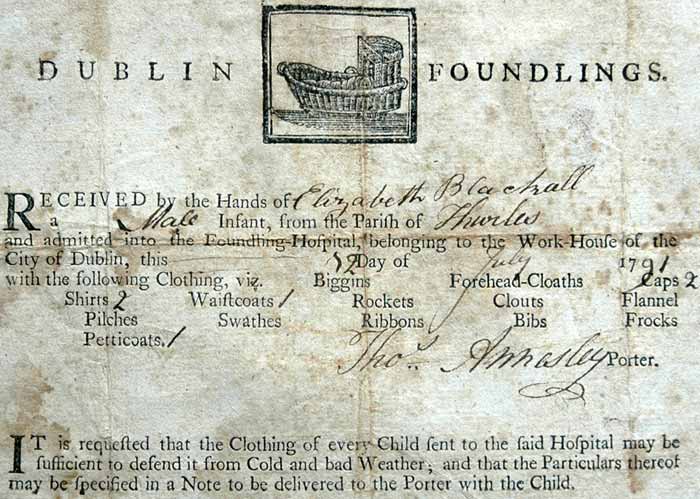
But this excavation raises an even more difficult question. Why did so many children die at Tuam in the first place? Hundreds of children died. The Commission of Investigation into Mother and Baby Homes established that 978 children associated with Glenamaddy and Tuam died between 1921 and 1961. Most were extremely young. Around 80% of those for whom age information was available died before reaching their first birthday. The great majority of deaths occurred before 1950. The causes recorded on death certificates included prematurity and congenital debility, pneumonia and other respiratory infections, whooping cough, tuberculosis, influenza, gastroenteritis, meningitis, measles, diphtheria, congenital abnormalities and convulsions. These were genuine and often deadly illnesses in an age before modern neonatal intensive care, widespread antibiotics, sophisticated treatment of dehydration and comprehensive vaccination programmes.
It would therefore be historically inaccurate to claim that every child who died at Tuam, died directly because of neglect. But it would be equally misleading to suggest that these deaths can simply be explained away as the unfortunate reality of childhood illness in early twentieth-century Ireland. The mortality at Tuam was frequently far higher than the already high Irish national rate.
Years of Extraordinary Mortality Some years were particularly devastating. Historical records show major clusters of deaths during outbreaks of measles, whooping cough and respiratory disease. During the 1940s the situation became especially serious. An official inspection in 1947 recorded infant mortality at the home ranging between approximately 23% and 34% during the years 1943 to 1946. The national infant mortality rate was itself distressingly high at this time. In 1943, for example, it was approximately 83 deaths per 1,000 live births. Yet mortality among infants at Tuam remained dramatically higher. The Commission therefore could not simply attribute the difference to general poverty or poor medical knowledge throughout Ireland. Something about the institutional circumstances placed these children at additional risk.
Officials Knew There Was a Serious Problem. This is where the question of responsibility becomes particularly important. An inspector visiting Tuam in April 1947 found 271 children and only 61 mothers living there. She specifically warned that there was a constant risk of infectious disease. Most importantly, there was no isolation unit. Children arriving at the institution could therefore introduce infections into a large population of vulnerable infants and young children living together. The inspector believed the high death rate required investigation. At the same time, she reported that the Bon Secours Sisters caring directly for the infants appeared attentive and that the children received good immediate care. Both findings need to be acknowledged.
There is no sound basis for claiming that every death resulted from deliberate mistreatment by individual Sisters. But there is substantial evidence of a wider institutional system that failed to protect vulnerable children adequately.
Galway County Council Had Direct Responsibility Tuam was not simply a private religious institution operating independently of the State. Galway County Council owned and controlled the home.The local authority was responsible for major decisions and for maintenance and improvements to the property. Public money supported the institution and aspects of its medical care. This becomes particularly significant because the physical conditions were poor and infection control was inadequate. The Commission found serious shortcomings in the buildings and sanitation and concluded that Galway County Council had failed adequately to maintain and improve the institution. Remarkably, the council itself sometimes held meetings at the Tuam Children’s Home. Yet despite extraordinarily high infant mortality, the surviving council records contain remarkably little evidence of a determined investigation into why so many children were dying.
The Central State Also Knew. Responsibility extended beyond Galway County Council. The extraordinary mortality experienced by children born outside marriage and by children living in institutions was known to Government departments. Mortality statistics were being collected and published. Official inspectors were raising concerns. Yet the Irish State response was profoundly inadequate. When Taoiseach Micheál Martin issued the formal State apology in January 2021, he acknowledged that the exceptionally high mortality rates in Mother and Baby Homes had been known to both local and national authorities. He then made an especially important admission; there was “little or no evidence of State intervention” in response to those alarming statistics, and reports identifying problems had not been acted upon. That admission is central to any fair assessment of responsibility.
How Much Blame Can Be Placed on the Irish State? It is impossible to give an honest percentage. Historical evidence cannot tell us that, for example, 30%, 50% or 70% of Tuam deaths were directly caused by State failure. Many infants were premature. Some had serious congenital conditions. Measles, tuberculosis, influenza, pneumonia and whooping cough could kill even children receiving reasonable contemporary medical care. But the evidence does allow a strong conclusion about institutional responsibility. The State, through local government and central administration, knew vulnerable children were dying at exceptionally high rates. A State-controlled institution lacked adequate isolation facilities. The buildings and sanitary conditions were deficient. Warnings existed. Mortality statistics existed. Yet sufficiently effective corrective intervention did not follow. The Irish Government itself has subsequently acknowledged that the State failed in its duty towards vulnerable mothers and children.
State Failure Began Before Women Reached Tuam There was also a wider failure. Many unmarried mothers entered institutions because realistic alternatives were extremely limited. Women without family support could face poverty, homelessness, social exclusion and severe stigma. Ireland did not introduce a dedicated ‘Unmarried Mother’s Allowance’ until 1973, long after the Tuam home had closed. Had adequate financial assistance, housing and community-based support been available, more women may have been able to remain with and raise their children outside institutions. The institutional system therefore cannot be examined separately from the social and Irish State policies that helped make institutionalisation the practical option for thousands of women.
Disease Was Real, But That Does Not End the Question It is important not to replace one oversimplification with another. The evidence does not show that the hundreds of children at Tuam were deliberately killed. But neither does it support the argument that they simply died because “children died young in those days.” The central question is not merely what was written on each death certificate. If a certificate recorded pneumonia, measles, gastroenteritis or whooping cough, we must also ask, Why were so many vulnerable children concentrated together? Were infectious children adequately isolated? Were sanitation, nutrition, heating and medical facilities sufficient? When death rates became extraordinarily high, why did authorities not intervene more forcefully?
Those are questions of governance and responsibility. The Excavation May Finally Restore Individual Identities The excavation now taking place may help answer questions that remained unresolved for decades. ODAIT is conducting forensic anthropological examination and collecting family DNA samples in an effort to identify recovered children. As of the latest update, 74 family reference DNA samples had been collected. It may never be possible to determine the precise medical cause of death from skeletal remains in many cases. Diseases such as pneumonia, influenza, gastroenteritis and whooping cough often leave no identifiable trace on bones. But identification could potentially connect remains with names, dates and surviving historical records.
For decades the Tuam story was discussed in terms of numbers: 796, 978 and now 109 recovered individuals in coffins. Behind every one of those numbers was a child. The continuing excavation offers the possibility that some may finally be restored not simply to history, but to their families, by name.
A Final Moral Question. What happened at Tuam may not fit the strict legal definition of genocide, which requires proof of an intention to destroy, in whole or in part, a national, ethnic, racial or religious group. But that legal distinction should not diminish the moral gravity of what occurred.
These were overwhelmingly vulnerable women and children, many impoverished, socially stigmatised and dependent upon institutions over which the Irish State exercised substantial responsibility. The Irish Government itself has acknowledged a profound generational wrong, repeated State failures, neglect, oppressive discrimination and circumstances in which institutionalisation significantly reduced children’s prospects of survival. The evidence does not establish an organised intention to physically destroy this population; it does, however, support a deeply troubling picture in which a marginalised group could be segregated, deprived of meaningful alternatives and exposed to conditions associated with extraordinary mortality, while those with the power to intervene repeatedly failed to do enough.
Whatever legal terminology is ultimately applied, that raises a fundamental moral question for Irish history; “How could the lives of poor, unmarried mothers and their children have been valued so little that suffering and death on this scale were allowed to continue?”
The Defence Forces are expanding towards a planned strength of 11,500 personnel by 2028, and an increasing proportion of new recruits were born outside Ireland.
According to reported figures, between 13% and 18% of recruits since 2022 have been born outside the Irish State. That statistic deserves discussion, but we need to ask the right question. Being foreign-born does not make somebody a security threat. Many foreign-born people have lived in Ireland for years, have built their lives here and subsequently become Irish citizens. Others eligible to join include EEA nationals, recognised refugees and people with subsidiary protection who meet residency and other requirements.
The real national-security issue is therefore not someone’s place of birth. It is how Ireland vets military personnel and decides who gets access to our most sensitive capabilities. Every Defence Forces applicant undergoes security vetting. The Department of Defence has confirmed that this is carried out with the assistance of An Garda Síochána and that cases involving an overseas or non-national component can require contact with international vetting authorities.
That is reassuring. But as Ireland invests heavily in defence, cyber capabilities, intelligence, radar, communications, weapons systems and maritime security, another question arises; should every person who can join the Defence Forces automatically be eligible for every sensitive military appointment?
Other democracies make an important distinction between being eligible to serve and being eligible to access highly classified information. The United States allows lawful permanent residents to enlist, but non-US citizens generally cannot obtain a personnel security clearance. That restricts access to classified information and certain sensitive military occupations.
The United Kingdom also recruits some non-UK nationals but operates several levels of national-security vetting. Higher-level vetting can examine overseas connections, financial circumstances, family relationships and other vulnerabilities relevant to foreign influence or coercion. Some particularly sensitive national-security and intelligence positions may also be restricted by nationality.
Canada permits permanent residents to serve in its armed forces, but its security system is similarly graduated. Under recent reforms, Canadian citizenship is required for Top Secret and Enhanced Top Secret clearance, alongside stronger continuing security checks.
So what is Ireland’s equivalent? That is the question I believe deserves a clear public answer. Ireland should be able to welcome people who genuinely wish to serve their adopted country, while simultaneously protecting intelligence, cyber systems, strategic communications, weapons and other sensitive military capabilities. Those two objectives are not contradictory. A modern security system should assess the individual, not stereotype somebody according to birthplace. But it should also recognise that foreign intelligence services seek leverage through relationships, financial pressure, overseas connections, coercion and access to information. And those risks can apply to Irish-born personnel too.
Perhaps Ireland therefore needs a more clearly defined system in which eligibility to join the Defence Forces; eligibility to receive particular security clearances; and eligibility to work in the most sensitive areas of intelligence, cyber, communications and strategic defenceare treated as separate questions.
There may already be classified safeguards that cannot sensibly be made public. But the Government should at least be able to explain the principles governing the system. With the Defence Forces expanding rapidly and Ireland facing a much more complicated international security environment, this is not a question about ethnicity or immigration. It is a question about national security, loyalty, vetting and access to sensitive information. Ireland should welcome anyone who is eligible and genuinely committed to serving the Irish State. But the State also has a duty to ensure that whoever gets access to its most sensitive military capabilities, Irish-born or foreign-born, has been vetted to a standard appropriate to that responsibility.
As we expand our Defence Forces, perhaps the question we should be asking is; “Do Ireland’s security-clearance rules match the military we are now trying to build?”
Ireland’s wild Atlantic salmon are in serious decline.
Scientific estimates indicate that well over one million salmon returned to Irish rivers annually during much of the 1970s; in recent years that figure has fallen below 200,000. Inland Fisheries Ireland’s Technical Expert Group says the decline reflects pressures both at sea and in freshwater.
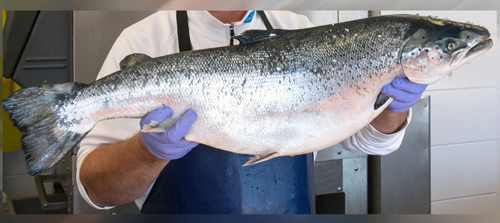
Atlantic Salmon.
For Tipperary and the River Suir, this is not an abstract national problem. The Suir is one of Ireland’s great salmon rivers and Atlantic salmon is a protected qualifying species within the Lower River Suir Special Area of Conservation, which extends through Tipperary, and Waterford.
The latest scientific assessment for the 2026 season groups the Suir, with the river Clodiagh near Holycross, and river Lingaun latter part of the border between Kilkenny and Tipperary, and Waterford Blackwater. At the standard 75% probability of achieving its conservation limit, the stock was recommended for catch-and-release fishing only, rather than having a harvestable surplus. Under more precautionary probability thresholds, the advice is now to close it.
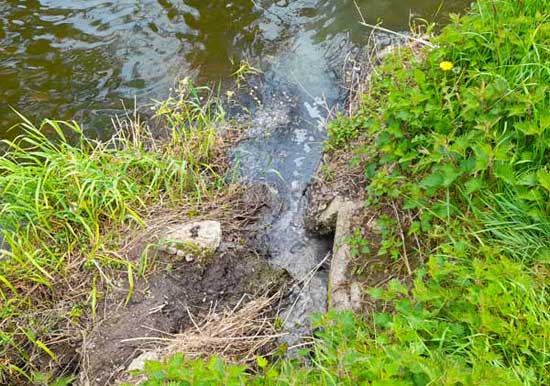
Domestic effluent allowed to flow into the River Suir for past 10 years unabated.
What is happening to our salmon? There is no single cause. Poor survival at sea certainly is a major part of the national decline, with changing ocean temperatures, food availability and wider changes in the North Atlantic affecting salmon after they leave Irish rivers. But what happens inside rivers such as the Suir also matters enormously. Salmon need clean, cool, well-oxygenated flowing water and clean gravel beds in which to spawn. The female buries her eggs among the stones. Water must circulate freely through that gravel to supply oxygen. When fine soil, silt and other sediment fill the spaces between the stones, the gravel can become clogged. Water circulation falls and the supply of oxygen to salmon eggs can be reduced. In badly affected spawning beds, eggs and newly hatched fish can die even though the surface of the river may look relatively normal.
Pollution and excessive nutrients are therefore important concerns. The EPA says agriculture and wastewater remain the greatest challenges to Irish water quality, with nitrogen and phosphorus still too high in many waters. In 2026 the EPA also reported that nitrogen remains particularly high across much of the south and southeast, with agriculture the main national source of nitrogen entering rivers. Environmental Protection Agency Tipperary has had direct examples of pollution affecting the Suir. In 2025 Inland Fisheries Ireland secured a conviction following a September 2024 incident at Holycross, where harmful matter entered the River Suir and approximately 400 metres of river bed was reported as having a yellowish-cream deposit. IFI warned that aluminium sulphate entering a river poses a major threat to aquatic ecosystems. Inland Fisheries Ireland
That incident should not be taken as the explanation for the long-term decline of the Suir salmon stock, but it demonstrates how vulnerable the river remains to individual pollution events on top of longer-term pressures.
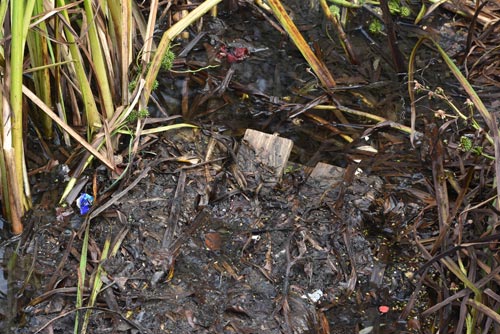
Rubbish blocking the river while an over abundance of reeds steal the oxygen.
Barriers are another major issue on the Suir Weirs, dams, culverts and other structures can prevent or delay salmon reaching spawning grounds. They can also change river flows and alter the natural movement of gravel and sediment. A very relevant Tipperary example is Bakery Weir in Cahir. IFI assessed the structure in 2018 and found it to be a significant barrier to migrating salmonids, as well as lamprey and coarse fish. Eight years later, a project is now being progressed to partially remove the weir and improve the natural river channel and fish passage. IFI explains more generally that barriers can stop fish reaching breeding habitat, increase the energy salmon need to expend during migration and interfere with the movement of the gravels and sediment needed to create healthy spawning beds.
So is pollution, lack of oxygen and clogged gravel responsible? They are certainly a large part of the problem and they are factors we can actually do something about locally. But the scientific evidence points to several pressures acting together:
poor survival of salmon at sea;
agricultural and wastewater pollution;
excess nutrients;
fine sediment clogging spawning gravel;
loss and alteration of river habitat;
barriers such as weirs and culverts;
warmer water, drought and extreme floods associated with climate change;
and other pressures including disease, predation and aquaculture.
The worrying point for Co. Tipperary is that we cannot control what happens to salmon throughout the North Atlantic, but we can improve the River Suir and its tributaries. That means protecting spawning gravel from excessive silt, reducing nutrient and pollution losses, improving sewage and wastewater treatment, restoring damaged river habitat, protecting river banks and riparian vegetation, and removing or modifying unnecessary barriers so that salmon can once again reach as much good spawning habitat as is possible. If young salmon leave the Suir in greater numbers and in better condition, they have a better chance of surviving the increasingly difficult journey at sea. The River Suir has supported wild Atlantic salmon for thousands of years. Their decline should be treated as a warning about the health of the entire river system, not simply as an angling issue. Protecting the salmon means protecting the River Suir, its tributaries, its spawning gravels and its water quality throughout County Tipperary and beyond.
Consent, Responsibility and the Conversation Tipperary Needs to Have.
New research from the Dublin Rape Crisis Centre should prompt a serious conversation about attitudes to rape, consent and responsibility in Ireland. According to its latest national survey, 15% of adults believe that someone raped, while under the influence of alcohol or drugs, is at least partly responsible for what happened to them. Among men under 25 years, that figure rises sharply to 37%. Among women under 25 years, it is 25%.
The wider findings are equally concerning. Almost half of men under 25 years surveyed believe there are “a lot” of false rape allegations, while roughly one in three say a rape should not be believed without either a criminal conviction or a report to Gardaí. These attitudes matter because sexual violence does not always result in an immediate report, prosecution or conviction. The same research found that among people who had experienced rape, only 17% reported it to Gardaí, while 19% told nobody at all.
Alcohol or drug use does not transfer responsibility for rape from the perpetrator to the victim. Consent must still be freely given, and a person’s vulnerability is never permission for another person to violate them. But simply condemning young people who hold these views will not solve the problem either. We need to understand where these beliefs are coming from; what young people are learning about sex and consent, what they are seeing online, how pornography, peer culture and social media may shape expectations, and whether our education system is giving young people the tools to recognise healthy sexual relationships and boundaries.
The encouraging finding is that 88% of adults agree that a perpetrator who is intoxicated should remain just as responsible for their actions. That principle should be equally clear on the other side of the equation; being intoxicated does not make a victim responsible for somebody else’s decision to commit sexual violence. Education about consent cannot be a one-off classroom lesson. It needs to involve families, schools, universities, sporting organisations, online platforms and, importantly, men speaking with other men.
Changing attitudes is part of preventing harm and the starting point should be simple; responsibility for rape lies with the person who commits it, not with the person who experiences it.
This website uses cookies to improve your experience. We'll assume you're ok with this, but you can opt-out if you wish.AcceptRead More
Privacy & Cookies Policy
Privacy Overview
This website uses cookies to improve your experience while you navigate through the website. Out of these, the cookies that are categorized as necessary are stored on your browser as they are essential for the working of basic functionalities of the website. We also use third-party cookies that help us analyze and understand how you use this website. These cookies will be stored in your browser only with your consent. You also have the option to opt-out of these cookies. But opting out of some of these cookies may affect your browsing experience.
Necessary cookies are absolutely essential for the website to function properly. This category only includes cookies that ensures basic functionalities and security features of the website. These cookies do not store any personal information.
Any cookies that may not be particularly necessary for the website to function and is used specifically to collect user personal data via analytics, ads, other embedded contents are termed as non-necessary cookies. It is mandatory to procure user consent prior to running these cookies on your website.





Recent Comments