A new season begins for the athletes of Thurles Special Olympics Basketball Club.
Club Chairperson Mr Enda Bourke (Secretary) Reports:-
Activities kick off at Thurles Golf Club on Thursday 1st October at 5:30pm with a golfing skills lesson, chipping and putting, from the Club Pro, Mr Raymond Ryan. The athletes and their families will be treated to refreshments afterwards in the clubhouse.
Basketball training restarts on Wednesday 7th October at 7:00pm, in the Presentation sports hall and will continue weekly at the same time.
The Club has planned a Halloween disco for later in October, details to follow.
New athletes and volunteers are always welcome at our Club. Contact details are: Mary: Tel: 086 0818135 and Enda: Tel: 087 6060772.
We look forward to another season of continued dedication and commitment from our athletes, with the support of parents, carers and volunteers throughout the months ahead.
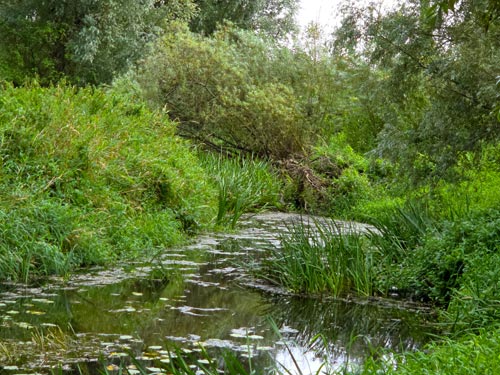
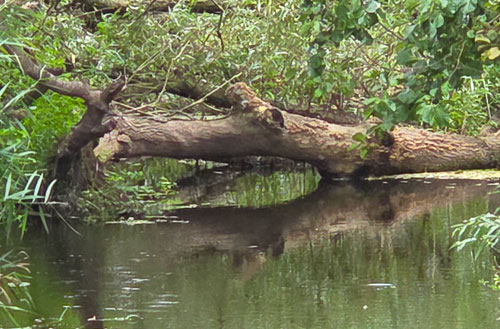
Cllr. Jim Ryan deserves congratulations for taking the lead in demanding action on the condition of the River Suir in Thurles, and for securing a commitment that large fallen trees lying across the river will be removed as soon as possible.
At Monday’s Thurles District meeting, Cllr. Ryan pressed for a commitment to tackle the extensive weeds and reeds. Local representatives were presented with an outline rehabilitation plan for the river, with details expected to be finalised later this month.
River Suir, Thurles Town Centre.
Mr Fran Igoe of the ‘River Basin Management Service’, (formerly LAWPRO), explained that dredging or cutting vegetation alone is unlikely to resolve the underlying problems. Excess nutrients entering the river from agricultural run-off and other sources are contributing to the growth, and these causes must be addressed if improvements are to last.
LAWPRO’s recent change of name to the River Basin Management Service also deserves scrutiny. The stated justification is that the new title better reflects its expanded work and its role in coordinating Ireland’s River Basin Management Plan. However, the organisation confirms that its mission, structure and responsibilities remain unchanged. Residents are entitled to ask what the rebranding cost and what practical benefit it will bring to places such as Thurles.
Due to neglect, dredging can only be the answer to the Thurles, River Suir problem.
“This clearer name may help explain the service’s role, but its success must be judged by measurable improvements in water quality, effective coordination and delivery of promised action on the river Suir”, stated Cllr Ryan.
Nevertheless, concerns about the river’s condition deserve clear answers. Kick-sampling tests reportedly found little or no river-life activity. “Residents need to know what the findings mean and what measures, including any appropriate vegetation management, will form part of the rehabilitation plan”, he continued.
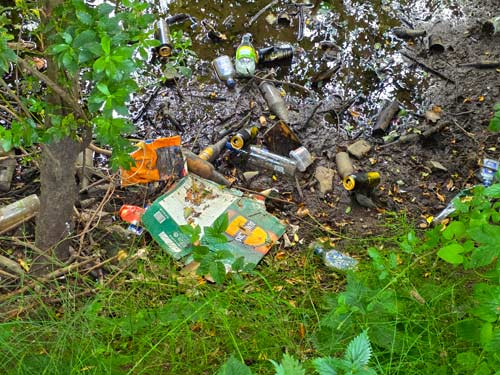
Refresh Thurles Tidy Towns volunteers who this week removed bottles and cans; whose presence on the riverbed had reportedly been well documented as sitting there for two years, after Cllr Ryan highlighted the problem. Disappointingly, further dumping was reported this morning. The council must now provide a suitable litter bin and arrange regular collection to support the efforts of these volunteers.
Deplorable state of River Suir permitted and acknowledged by Tipperary Co. Co..
With water levels rising, there are concerns that substantial work could be delayed until next spring or early summer. Any machinery access must also be carefully planned to protect the newly laid tarmac footpaths along the river bank.
European and Irish public funding already supports farmers in protecting waterways through ACRES, Farming for Water EIP and TAMS grants for measures such as buffer zones, fencing and alternative livestock drinking supplies. Payments depend on eligibility and approved actions, rather than simply owning riverside land.
“Residents are entitled to ask how these supports are being used in the Suir catchment and what measurable improvements they are delivering”, said Cllr. Ryan.
The commitment given to Cllr. Ryan to remove fallen trees is indeed a welcome step; but residents now need a clear timetable and a rehabilitation plan that delivers lasting improvements long term.
A Possible Budget Leak – With Questions Still Unanswered.
Reports ahead of Ireland’s Budget 2027 suggest that all 16-year-olds could receive a €100 voucher for arts and cultural activities, with a possible extension to 17-year-olds in Budget 2028. The estimated first-year cost is €7.5 million. This remains a reported proposal, rather than a confirmed entitlement. Whether the announcement has emerged through a deliberate leak has not been established.
Helping young people experience culture most certainly is a worthwhile ambition. But taxpayers are entitled to ask what this particular measure would achieve, and whether another approach would achieve much more.
Cultural Spending on those aged 16 year does not automatically mean education A play, concert or creative workshop can spark an interest that can last a lifetime. Enjoyment and shared experiences have value also. However, redeeming a voucher does not prove that someone has learned something new or discovered an activity they would otherwise have missed.
France’s experience offers a warning. Its national auditors found that the ‘Culture Pass’ mainly reinforced established cultural habits, while its ability to broaden participation remained limited. Ireland should learn from that experience, before assuming a voucher will overcome barriers to culture. The test is whether the Government sets clear objectives, publishes the costs and commissions an independent evaluation. Success should mean reaching young people who currently miss out, not simply announcing how many vouchers were spent.
Could It Free Money For Alcohol or Drug Abuse? If a teenager already planned to buy a concert ticket, a voucher could leave their own money available for something else. But it would be unfair to assume that the money would go towards alcohol or drugs. It might pay for transport, food or savings. There is no evidence presented here establishing that this proposal would increase substance use. Will Ticket Prices Rise And Who Gets the Money? Extra purchasing power could put upward pressure on prices where popular events already sell out. At venues with empty seats, it could instead increase attendance without raising prices. Most popular bands on Tour entering Ireland already cost well over €100 Some spending could benefit wealthy performers, major promoters and ticketing platforms. Other spending could support local theatres, musicians and cultural organisations which command much less cost. The Government should monitor prices and publish where the money goes. Public subsidy deserves scrutiny even when the product being sold is culture.
Could €7.5 Million Expected Spend Achieve More Elsewhere? A comparison might be sustained music tuition, youth clubs, instrument lending, school cultural visits and transport for disadvantaged or rural teenagers. A voucher cannot solve the problem of having no accessible venue or no way to get there. Supporting participation may require people, facilities and transport as well as purchasing power. Poorer children deserve cultural opportunities too. The question is which approach gives them the most meaningful access.
“For Ye Have the Poor Always With You” The moral question remains relevant for Christians; does this prospective spending meaningfully help those excluded, or mainly subsidise those already well able to participate? Matthew 26:11 should be read in context; Jesus defends a woman’s anointing of him, with expensive perfumed oil, which he connects with his burial. We should not interpret it as permission to neglect poverty. Deuteronomy 15:11 (Second Law) acknowledges that poverty persists while calling for generosity towards those in need.
My Own Personal View: Let’s Test this Before Expanding It. I would support a limited, independently evaluated pilot, with extra support for disadvantaged teenagers and opportunities to take part in local creative activities. France’s experience shows why this matters. Its national auditors found weaker participation among young people from less advantaged backgrounds and questioned how far a primarily financial scheme could overcome existing inequalities.
Create Opportunities to Make and Perform To my mind the pilot should offer opportunities to learn an instrument, join a drama group, make a short film, try photography or attend a series of creative workshops. Taking part in an activity over several weeks offers a much better chance to develop skills,friendships and confidence. The pilot should test both approaches, while preserving young people’s choice. Here in Thurles Co. Tipperary, as in many other Irish communities, we already have organisations that could greatly inform this work. Music Generation, for example, supports local access to vocal and instrumental tuition for children and young people. Partnership opportunities should be explored, with funding for any additional places and teaching required.
Measure What Changes Because of the Support. The independent evaluation should ask:
Did teenagers start activities they would otherwise have missed?
Did the scheme reach those with the greatest barriers?
Did participation continue six or twelve months later?
What did participants learn, enjoy or find difficult?
What was the full cost, including administration, transport and additional support?
Did spending support local provision, and were there changes in prices or fees?
Researchers should record participation before any pilot and use a fair comparison, such as a phased rollout, to help distinguish the scheme’s effects from changes that would have happened anyway. They should also speak to teenagers who never used the offer or stopped attending. If the results are strong, expansion would have a credible foundation. If benefits mainly go to teenagers already participating, the scheme should be redesigned. Support would rest on a clear purpose; giving young people a fair chance to discover, enjoy and develop their creativity and showing that public money greatly helped make that possible.
Before expansion, the Government should demonstrate new participation, fair access and reasonable value for money.
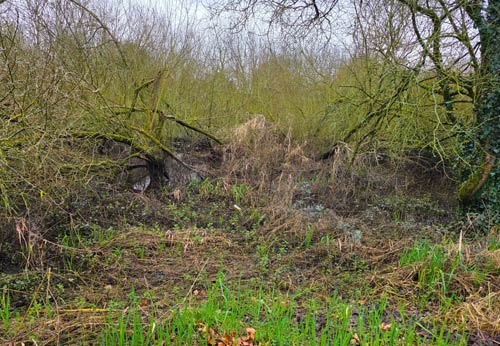
The summer foliage is dying back, unveiling more of the uncollected rubbish along the banks and in the River Suir in central Thurles. Bottles, cans, flower pots and other litter remain, while fallen trees and uncontrolled shrubbery continue to obstruct the river, as the stench persists.
After more than 13 year, the problems remain unresolved. Certainly over the past six weeks, despite my contact with the Environmental Protection Agency and Tipperary County Council, there have been no meaningful progress on the continuing litter, obstructions and overall pollution. The installation of litter bins also still remains unaddressed.
Two Years On – Bed Of River Suir At Low Tide.
Dear Mr Willoughby, Further to previous correspondence and responding to your concerns, the EPA wrote to Tipperary County Council seeking a written response from them on actions taken or planned on this matter. The Council responded to the EPA on 15/09/2026. However, the response did not provide sufficient information. The EPA has therefore requested further information from the Council. We will provide you with an update in three weeks. In the interim, we recommend you continue to report any further issues relating to this matter to the Council. Please use the reference number above in any further communication with the EPA regarding this matter. Trusting this is of assistance to you. Kind regards, Signed:Ms Shelly Laffan (Complaints Unit | Office of Environmental Enforcement) (Aonad Gearán na hOifige Forfheidhmithe i leith cúrsaí Comhshaoil)
Now, a response to my initial complaint from Ms Shelly Laffan, of the EPA’s Complaints Unit, Office of Environmental Enforcement, raises further questions about the Council’s handling of this matter.
The EPA confirms that it sought a written response (See above) from Tipperary County Council on actions taken or planned. The Council replied on September 15th 2026, but the EPA states: “However, the response did not provide sufficient information.”
The EPA has now requested further information and says it will update me in three weeks. In the meantime, it advises me to continue reporting further issues to the Council and to use my complaint reference [Ref: COM021813], in future correspondence with the EPA.
Thurles residents deserve to know what action if any is being actually taken, and when visible work will begin.
The Stench Continues. Where Is the Public Accountability?
The accompanying video hereunder records what appears to be effluent entering the river. It also shows a flat flagstone positioned over one pipe outlet, raising questions about whether the discharge is being obscured. Who placed it there, and why, requires investigation. The discharge itself needs to be identified and its source established.
I have also received reports of fish found floating near ‘The Willows’ housing estate in the recent past. The account relayed to me attributes this to an accidental chemical spill washed into the Suir through a connected surface-water drainage pipe. That explanation remains unconfirmed. The relevant authorities should establish what happened and publish their findings, including any available sampling results.
These concerns have a history. Local reporting in May described dumped shopping trolleys, plastic debris and suspected effluent along this same town-centre river.
Despite a political promotional video, 13 years too late, same highlighting the river’s condition, no subsequent update has come from same hand holding politicians, with the sole exception of local councillor Mr Jim Ryan who has taken up the cause. His communication on local radio over past months is acknowledged. Others,, if any, who have publicly expressed concern should explain what further follow-up they have undertaken.
Tipperary County Council should also now publish a dated programme for litter removal, for required bin provisions and assessment of the fallen-tree obstructions. The relevant authorities must investigate the discharges, explain their findings and identify who is responsible for each next step. Every further week of delay leaves the rubbish, the smell and the unanswered questions with the people of Thurles.
A copy of today’s updated report has been forwarded to all those responsible for this crime of neglect.
The River Suir deserves urgent care, sustained maintenance and public accountability. When will that work become visible?
In July 1848, John Blake Dillon stood at a barricade at Killenaule, Thurles, County Tipperary, facing British cavalry.
Seventeen years later, the county elected him to Parliament. Those two moments connect Tipperary to a life shaped by rebellion, exile and a determination to serve Ireland.
This month, September, marks the 160th anniversary of Dillon’s death. His story recalls a turbulent chapter in the county’s history and a friendship that helped shape the ideals of the Young Ireland movement.
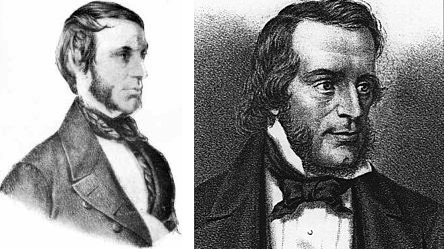
L-R: John Dillon and Thomas Davis.
John Dillon was born in Ballaghaderreen in 1814, when the town belonged to County Mayo; (it is now within the borders of County Roscommon). After studying for the priesthood at Maynooth, he changed direction, entering Trinity College Dublin and pursuing a career in law. At Trinity, he became a close friend of Thomas Davis. In 1842, they joined Charles Gavan Duffy in founding “The Nation”, the newspaper around which ‘Young Ireland’ gathered.
Thomas Davis, born in Mallow, County Cork, in 1814, was the son of a Welsh army surgeon and an Irish mother. Although he qualified as a barrister, writing and public life became his principal calling. Songs such as “A Nation Once Again” and “The West’s Asleep” carried his political hopes far beyond the newspaper’s pages.
“A Nation Once Again”
Written by Thomas Davis, the song was first published in “The Nation” newspaper on July 13th 1844. It follows a narrator whose childhood reading about ancient heroes inspires a lifelong wish to see Ireland free. It however connects national liberation with personal responsibility, courage, selflessness, and moral character.
A Protestant, Davis believed that Irish nationhood should embrace people of different religious traditions. His friendship with Dillon, a Catholic, gave that conviction practical expression. His support for educating Catholics and Protestants together brought him into a bitter dispute with Daniel O’Connell over the proposed Queen’s Colleges in 1845. Political disagreement, however, did not extinguish personal regard: O’Connell was deeply distressed by his death.
“The West’s Asleep”
The song hereunder, again with words by Thomas Davis, mourns its apparent political slumber, recalls its landscape and history of resistance, and ends with a stirring declaration of awakening.
Davis died from scarlet fever in Dublin on September 16th 1845, aged thirty, and was buried in Mount Jerome Cemetery. For Dillon, the loss was both personal and political. A close friend and fellow founder of ‘The Nation‘ had died before their shared work was three years old.
His death came as potato blight began to threaten Ireland’s harvest. He did not live to witness the full catastrophe of the Great Famine or the desperate circumstances in which his surviving colleagues would make their decisions. His songs and ideas nevertheless remained part of the movement’s inheritance.
By July 1848, those colleagues faced mounting confrontation with the government in a country devastated by hunger. Tipperary became a central setting for the struggle. Carrick-on-Suir, Mullinahone, Killenaule and The Commons witnessed hurried meetings, uncertain plans and dangerous decisions. Local enthusiasm could not easily be turned into an organised force. Supporters lacked weapons and provisions, while the government commanded far greater resources.
At Killenaule, Dillon’s courage took a memorable form. In the book, “The Felon’s Track”, (Chapter VII), fellow ‘Young Irelander’ Michael Doheny describes how barricades were erected, as a troop of cavalry entered the village. Dillon stood at one of them and challenged the commanding officer; question asked, Was his purpose to arrest William Smith O’Brien?
According to Doheny, the officer denied that intention and pledged his honour as a soldier. The barricade was then partly removed, and Dillon took the officer’s horse by the bridle and led him out of town. The encounter passed without any bloodshed. It is a scene worth remembering alongside the better-known confrontation at Ballingarry (South Riding), Thurles; Dillon within reach of armed soldiers, negotiating a passage through a moment that could have ended very differently.
Although involved in the Tipperary rising, Dillon was not present at the fighting at the Widow McCormack’s farmhouse on July 29th 1848 . He had left the immediate scene before O’Brien’s remaining supporters confronted police who had taken refuge in the house.
The fighting brought deaths and defeat. Captured leaders were subsequently tried for high treason in Clonmel, where death sentences were pronounced before being commuted to transportation. Tipperary thus witnessed both the rising’s collapse and the trials that followed.
With the help of Maynooth friends Dillon escaped to France dressed as a priest, and subsequently reached the United States. In New York, he established a successful legal practice. Later, taking advantage of an amnesty, he returned to Ireland in 1856 and settled with his family at Killiney, County Dublin.
Then Co. Tipperary became central to his life again. In July 1865, the county elected him to Parliament. The former insurgent now pursued reform at Westminster, seeking cooperation between Irish nationalists and British Liberals. His work on land reform challenged the assumption that improvements made by tenants belonged to their landlords, while his opposition to suspending habeas corpus reflected his concern for civil liberty.
His parliamentary service was brief. On September 15th 1866, cholera took his life at Killiney. He was fifty-two. Tipperary had lost its representative little more than a year after electing him. The family’s connection with the county continued. His son John Dillon would also represent Tipperary in Parliament, from 1880 to 1883, before his long association with East Mayo.
Dillon’s career resists a simple division between rebellion and constitutional politics. His participation in 1848 and his later commitment to parliamentary reform belong to the same life. Remembering him means recognising both the risks he accepted and the changes in his approach to securing Ireland’s future. His friendship with Davis adds another dimension. Their collaboration expressed a belief that religious differences need not prevent people from working for a shared country. It did not resolve every disagreement about what Ireland should become, but it demonstrated the possibilities of friendship and common purpose across an entrenched divide.
That inheritance offers a question for later generations: how can political aspirations be pursued in ways that build confidence among people of different traditions? An inclusive national ideal must leave room for those whose identities, loyalties and hopes differ from our own.
For Tipperary, Dillon’s story remains rooted in particular places: the barricade at Killenaule, the towns and villages caught up in the events of 1848, and the constituency that later sent him to Westminster. Remembered 160 years after his death, his life connects the immediate courage of confrontation with the patient work of reform, and the enduring effort to build a country in which people of different traditions can belong.
From that perspective, Sinn Féin’s historical support for the Provisional IRA’s armed campaign during “The Troubles” can be criticised as being in tension with the work of reconciliation essential to such an inclusive ideal. The strongest lesson from Davis and Dillon’s partnership is that national unity must be measured by the trust built between people of different traditions.
An echo of Davis and Dillon’s partnership can also be seen in Micheál Martin’s stated ambition to build understanding between Ireland’s different communities. Through his Shared Island initiative, Mr Martin has emphasised practical cooperation, dialogue and respect for all traditions. The parallel lies in the conviction that a shared future requires relationships strong enough to accommodate different religious and political identities. In that sense, his approach can be interpreted as reflecting the inclusive spirit embodied by the Protestant Davis and the Catholic Dillon.
US President Donald Trump’s unwelcome comments favouring Irish unity, after his meeting with Mr Martin earlier this September 2026, may have given this discussion renewed press and Sinn Féin PR relevance, but they do not in themselves establish Mr Martin’s future intentions. To my mind, the stronger basis for the comparison is Mr Martin’s longstanding emphasis on the need for reconciliation; future constitutional aspirations must always be accompanied by the patient work of building confidence, firstly, among those who view Ireland’s future differently.
Davis and Dillon’s friendship offers a historical illustration of why that work matters.
This website uses cookies to improve your experience. We'll assume you're ok with this, but you can opt-out if you wish.AcceptRead More
Privacy & Cookies Policy
Privacy Overview
This website uses cookies to improve your experience while you navigate through the website. Out of these, the cookies that are categorized as necessary are stored on your browser as they are essential for the working of basic functionalities of the website. We also use third-party cookies that help us analyze and understand how you use this website. These cookies will be stored in your browser only with your consent. You also have the option to opt-out of these cookies. But opting out of some of these cookies may affect your browsing experience.
Necessary cookies are absolutely essential for the website to function properly. This category only includes cookies that ensures basic functionalities and security features of the website. These cookies do not store any personal information.
Any cookies that may not be particularly necessary for the website to function and is used specifically to collect user personal data via analytics, ads, other embedded contents are termed as non-necessary cookies. It is mandatory to procure user consent prior to running these cookies on your website.






Recent Comments