EU Internet Forum endorsed a revised EU Online Crisis Response Framework, to enable a joint response to protect users online in times of crisis, and ensure the timely removal of content related to suspected terrorist or violent extremist attacks.
Discussed addressing the emerging threat of nihilistic extremism.
Discussed collective actions to protect minors from being radicalised online.
Exchanged views on innovative approaches to tackling antisemitism and anti-Muslim hatred online.
Mr Niall Collins TD, (Minister of State with special responsibility for International Law, Law Reform and Youth Justice), represented Ireland at a Ministerial Meeting of the EU Internet Forum in Brussels yesterday.
The EU Internet Forum (EUIF) was launched by the Commission in December 2015 and addresses the misuse of the internet for terrorist purposes through two main actions:
reducing accessibility to terrorist content online
increasing the volume of effective alternative narratives online
The Forum’s activities also cover the fight against child sexual abuse online (since 2019), drug trafficking online and trafficking in human beings online (since 2022).
The Forum brings together relevant EU Ministers, technology companies and experts to discuss and advance responses to terrorism, violent extremism and illegal content online.
At the meeting, Ministers endorsed a revised EU Online Crisis Response Framework for the rapid removal of online content relating to terrorist attacks. This new Framework builds on the EU Internet Forum Protocol which was developed in the aftermath of the Christchurch terrorist attack in 2019, footage of which circulated widely online at the time.
The new Framework includes additional measures to enable Member States’ law enforcement authorities to share early warning alerts with other EU Internet Forum members in case of a suspected terrorist or violent extremist attack. This will allow for better monitoring and quicker action in case the situation develops into an online crisis.
The meeting also contained two round table discussions, the first of which opened with a presentation by Professor Ms Maura Conway (Dublin City University and member of the EU Knowledge Hub Research Committee) on the threat landscape and risks to minors stemming from terrorism and violent extremism online.
Increasingly, these risks are interlinked with other harms, such as exploitation, self-harm, child sexual abuse and recruitment into organised crime. The presentation served as an introduction for the round table discussion on innovative actions and cooperation to better protect children online.
The second round table session opened with a presentation by Ms Sasha Havlicek, [Co-Founder and CEO of the Institute for Strategic Dialogue (ISD)], on the increase of anti-Semitism and anti-Muslim hatred online. Ministers and industry representatives then discussed actions being taken and required to effectively tackle this issue.
Bishop Monahan Pays Tribute as Cistercian Community to Leave Roscrea for Mellifont.
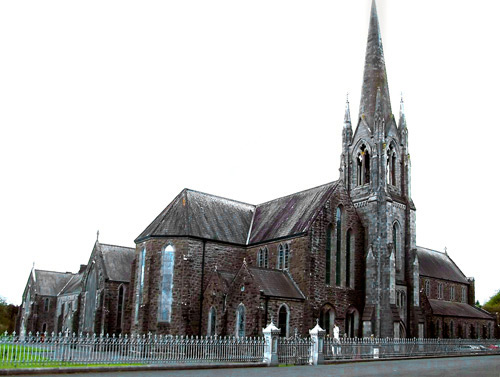
Mount Saint Joseph’s Abbey
Bishop Fintan Monahan of Killaloe has expressed deep sadness following confirmation that the Cistercian Community of Our Lady of Silence Abbey, Roscrea (formerly Mount Saint Joseph’s Abbey), is to relocate to Mellifont Abbey in Co Louth.
The Bishop noted that, since 1878, the abbey has been a cherished and faithful presence in the pastoral life of the Diocese of Killaloe, holding “a special place in the hearts of the people of Roscrea”, including all who prayed and worshipped there, generations of pupils, (former students, included former Taoiseach Mr Brian Cowen and former Tánaiste Mr Dick Spring), and staff connected with the school on the grounds since 1905, and those who benefited from retreats and the hospitality of the guesthouse. He also acknowledged the importance of the farm on the college grounds to the wider local community.
As stated, the abbey was founded in 1878 by a group of 32 monks from Mount Melleray Abbey, County Waterford. A number of years earlier Arthur John Moore MP of County Tipperary had visited Mt Melleray petitioning for it. The church was later opened for worship in 1883, on 600 acres in Mount Heaton, Roscrea, and a Boarding school, Cistercian College, Roscrea, was founded in 1905.
Bishop Monahan paid tribute to the contribution of the monks and school staff to education, highlighting the respected tradition of the boarding school and its strong sporting ethos. He confirmed that the Cistercians will continue as patrons of Cistercian College, ensuring the Cistercian spirit remains central to school life.
He said the abbey’s greatest gift has been its spiritual witness, including the long-standing availability of the Sacrament of Reconciliation and the enduring legacy of figures such as Dom Eugene Boylan OCSO.
While acknowledging local disappointment, Bishop Monahan said he understands the decision follows prolonged prayerful discernment and reflects wider rationalisation in Church life today. He offered gratitude to Dom Rufus and the community, assuring them of prayers and good wishes as they undertake this transition.
Irish Government warns against fuel price gouging amid current Middle East tensions.
Taoiseach Mr Micheál Martin has said there is “no excuse for prices going up at the pumps yesterday, or indeed anywhere”, warning fuel and home-heating suppliers against taking unfair advantage of consumers in response to escalating conflict in the Middle East.
Speaking ahead of a Cabinet meeting, Mr Martin said Ireland currently has adequate supplies and noted that much of the State’s oil is sourced from the North Sea, including Norway. He acknowledged the situation could have implications over time if it does not stabilise, but said immediate price rises are not justified.
The Taoiseach said he has raised the issue with Minister for Energy Mr Darragh O’Brien and has engaged with the Competition and Consumer Protection Commission (CCPC). The Government has asked the CCPC to examine the sector for any unfair pricing practices. He also pointed to ongoing work on energy affordability and wider EU-level discussions on energy pricing structures.
Enterprise Minister Mr Peter Burke said energy price rises are a concern for the economy, noting prices increased on Monday, while emphasising the country has continued to see solid growth despite geopolitical instability.
Sinn Féin leader Ms Mary Lou McDonald has condemned the recent/latest US and Israeli strikes, calling them “an act of unprovoked military aggression” and urging a halt to military action and a return to diplomacy.
Wrapped in the sanctimony of condemning ‘unprovoked military aggression,’ Sinn Féin’s moral certainty jars with a past in which civilians were too often treated as collateral.
That phrase, “unprovoked military aggression”, is designed to do a lot of work in a very small space. It tells you who the villains are, who the victims are, and who holds the moral high ground. It’s a clean sentence. A righteous sentence. The kind of sentence that fits neatly into a clip for an evening news bulletin.
The problem for Sinn Féin is that Ireland’s memory is not short, clean and neat, and neither is modern Sinn Féin’s own history. Because, while Sinn Féin is a political party, it was long widely regarded as the political wing of the Provisional IRA, even if both have emphasized separateness since the 1990s. That association matters, not as a cheap talking point, but because it drags out a very specific set of ghosts into any conversation about violence and legitimacy. And those ghosts have names, dates, and places, where civilians paid the ultimate price.
Civilians in the crosshairs: Provisional IRA (PIRA) If readers want to understand why some people hear “unprovoked aggression” and immediately wince; you don’t need to reach for ideology. You just need a calendar of factual events .
21st July 1972 – Belfast (“Bloody Friday”): 22 bombs in 75 minutes. 9 killed, around 130 seriously injured.
31st July 1972 – Claudy, Co. Londonderry (“Bloody Monday”): Three car bombs, 9 civilians killed, 30 injured.
17th February 1978 – La Mon House Hotel/Restaurant, near Comber, Co. Down: an incendiary device killed 12 and injured 30 in a restaurant setting.
27th August 1979 – Mullaghmore, Co. Sligo (Mountbatten assassination): a bomb on a boat killed four, including teenagers Nicholas Knatchbull (14yrs) and Paul Maxwell (15yrs).
8th November 1987 – Enniskillen, Co. Fermanagh (Remembrance Day bombing): a bomb at a ceremony killed 11 people initially, most of them civilians.
20th March 1993 – Warrington, England: bombs in litter bins killed two children (Jonathan Ball, 3yrs; Tim Parry, 12) and injured 56 persons.
23rd October 1993 – Shankill Road, Belfast: a bomb detonated prematurely in a fish shop; 10 killed, including eight civilians and two children.
These aren’t “military operations.” They’re not “surgical strikes.” They’re the messy, brutal reality of what happens when violence is sold as strategy and civilians are treated as collateral, or as leverage. So when Sinn Féin’s leader uses the language of moral clarity about foreign wars, people are entitled to ask: where was that clarity when Irish and British civilians were being blown apart in pubs, streets, shops, at ceremonies, and in restaurants? Again, ordinary people, normal venues, lives ended in pieces.
Real IRA: Omagh and the moral bankruptcy of “after”. Then there’s Omagh, the moment that shattered any illusion that mass-casualty bombing belonged to the past. 15th August 1998 – Omagh, Co. Tyrone: the Real IRA bombing killed 29 and injured 200 plus. Whatever someone wants to call it; be it ‘war’, ‘resistance’, ‘conflict’, Omagh made one thing undeniable; there is no political argument that redeems the slaughter of civilians in a town centre.
The point isn’t “whataboutism.” It’s credibility. Defenders will say, “Sinn Féin today is not the Provisional IRA”. True, in the direct operational sense. But Sinn Féin can’t have it both ways, it can’t trade on a revolutionary heritage when it suits, then act offended when that heritage is raised as a moral mirror. Britannica’s phrasing is blunt for a reason: “Sinn Féin was long widely regarded as the political wing of the Provisional IRA”.
So yes, Ms McDonald can condemn foreign strikes as “unprovoked military aggression.” But if Sinn Féin wants to speak like an international referee, it should expect people to replay their tapes, and on their tapes, watch as civilians scream, burn, bleed and die. No, it’s not ancient history. No, it’s the price paid by ordinary people who never got to vote on anybody’s future “strategy.” And it’s why moral language, used cheaply, can sound less like principle, and more like a theatre performance, for the less informed.
“Unprovoked Military Aggression”,said Ms Mary Lou McDonald. Let us take a look at Iran’s weapons support and who it armed, and roughly for how long, up until this year (2026).
Hezbollah (Lebanon): since1982 – (44 years). Hamas + Palestinian Islamic Jihad (PIJ) associated with Sinn Féin: the former commonly described as armed/supported since the 1990s era – (30–36 years).
Major war-theater pipelines. Houthis / Ansar Allah (Yemen): at least since 2014 (and UN panels have identified Iranian-origin missile/UAV remnants in Yemen) – (12+ years.) Syrian government / pro-Assad forces: widely reported military support since 2011 – (15 years).
Newer state-to-state channel. Russia: transfers tied to the Ukraine war since 2022; UK/France/Germany have publicly condemned Iran’s ballistic missile transfers – (4 years).
Hezbollah timeline: 1982: Hezbollah emerges, founded in the context of Israel’s invasion of Lebanon with Iranian support. 18th Apr 1983: U.S. Embassy bombing, Beirut: 63 killed. Frequently attributed in U.S. accounts to Hezbollah-linked networks / “Islamic Jihad Organization 23rd Oct 1983: U.S. Marine barracks bombing, Beirut: 241 U.S. service members killed.23rd Oct 1983: French paratrooper barracks bombing, Beirut: 58 French soldiers killed. 20th Sep 1984: U.S. Embassy annex bombing (Aukar), Beirut: 23 killed. 3rd Dec 1984: Kuwait Airways Flight 221 hijacking: 2 killed (two U.S. passengers murdered). 14th–30th Jun 1985: TWA Flight 847 hijacking (Athens): 1 killed (U.S. Navy diver Robert Stethem). 12 Apr 1985: El Descanso restaurant bombing (Spain): 18 killed. 7th Mar 1992: Assassination of Ehud Sadan (Israeli Embassy security chief), Ankara: 1 killed, 3 injured; claimed by “Islamic Jihad Organization,” Hezbollah suspected/denied. 17th Mar 1992:Israeli Embassy bombing, Buenos Aires: 29 killed, 242 injured; claim of responsibility by “Islamic Jihad Organization,” which has been linked to Iran/Hezbollah in many accounts. 28th Jan 1993: Attempted murder of Jak Kamhi (prominent Turkish Jewish figure): shot and survived; discussed in intelligence/terrorism reporting as part of Iran/Hezbollah-linked activity. 17th Mar 1994: Attempted bombing of the Israeli Embassy, Bangkok: failed after suspects’ car crash; C4 reportedly found. 18th Jul 1994: AMIA bombing, Buenos Aires: 85 killed; widely attributed by Argentine judicial/official actions and major reporting to Hezbollah with Iranian backing, (Iran denies). 19th Jul 1994: Alas Chiricanas Flight 901 bombing (Panama): 21 killed; long unresolved, later treated publicly by U.S. sources as Hezbollah-linked. Apr 1996: Hezbollah rocket fire into northern Israel (Grapes of Wrath period): Hezbollah fired Katyusha rockets; exact counts/precise injury figures vary by source. 25th Jun 1996: Khobar Towers bombing (Saudi Arabia): 19 killed; attribution often tied to Saudi Hezbollah/Hezbollah al-Hejaz, but it is politically disputed in some accounts. 7th Oct 2000: Abduction of three Israeli soldiers: abducted, later confirmed dead; remains returned in 2004 exchange. 14th Feb 2005: Assassination of Rafik Hariri (Beirut): 22 killed. International legal proceedings convicted Hezbollah members (in absentia), while also noting limits on proof regarding leadership direction. 12th Jul 2006: Cross-border raid: 8 Israeli soldiers killed, 2 captured; triggers the 2006 Lebanon War. 26th May 2011: Attempted assassination of Israel’s consul in Istanbul: some reporting ties it to Iran/Hezbollah; treated as alleged. Feb 2012: India/Georgia diplomat attack attempts: widely discussed as an Iran-linked campaign, sometimes described as Iran/Hezbollah-linked. 2012: Bulgaria (Burgas) bus bombing: 6 killed (+ bomber); Bulgarian/EU assessments attributed involvement to Hezbollah operatives; Hezbollah denies. 2012: Azerbaijan plot against Israeli ambassador / Chabad-linked targets: widely described as Iran-linked; “Iran/Hezbollah” appears in some reporting/claims. Apr 2014: Bangkok plot targeting Israeli tourists (Passover/Songkran period): Thai authorities arrested suspects described in reporting as Hezbollah members/agents. May–Jun 2015: Cyprus ammonium nitrate seizure: Reuters reported Cyprus believed it foiled a major attack; Israel said it bore Hezbollah hallmarks. 2015: London-area ammonium nitrate cache, widely reported as a 2015 discovery later revealed publicly. Nov 2023: Brazil: foiled plot targeting Jewish-linked sites: Brazilian federal police said suspects were recruited/funded by Hezbollah; treated as alleged pending full public case details. 27th Jul 2024: Majdal Shams (Golan Heights) strike: 12 killed; a rocket attack. Israel/U.S. blamed Hezbollah; Hezbollah denied responsibility.
So should the USA and Israel attack be therefore described as “Unprovoked Military Aggression”? If a strike is responding to an armed attack carried out by an Iran-backed aggressor, supporters can surely argue that it’s actions are not “unprovoked.”
Tipperary County Council has introduced additional security measures at two public buildings in Clonmel following incidents of anti-social behaviour.
Security personnel have been deployed at Clonmel Library and the Motor Tax Office at Town Hall, Parnell Street, in order to support a safe environment for members of the public and staff using these services.
The Council has said it has a duty of care to ensure that public facilities remain welcoming and secure, and that the matter has been brought to the attention of An Garda Síochána.
These arrangements have been put in place as a preventative measure and will continue to be monitored. The Council will keep the situation under review and will adjust security and operational measures as appropriate in the coming weeks.
Tipperary County Council thanks the public for their understanding and cooperation and encourages anyone who witnesses anti-social behaviour at public facilities to report it to An Garda Síochána.
This website uses cookies to improve your experience. We'll assume you're ok with this, but you can opt-out if you wish.AcceptRead More
Privacy & Cookies Policy
Privacy Overview
This website uses cookies to improve your experience while you navigate through the website. Out of these, the cookies that are categorized as necessary are stored on your browser as they are essential for the working of basic functionalities of the website. We also use third-party cookies that help us analyze and understand how you use this website. These cookies will be stored in your browser only with your consent. You also have the option to opt-out of these cookies. But opting out of some of these cookies may affect your browsing experience.
Necessary cookies are absolutely essential for the website to function properly. This category only includes cookies that ensures basic functionalities and security features of the website. These cookies do not store any personal information.
Any cookies that may not be particularly necessary for the website to function and is used specifically to collect user personal data via analytics, ads, other embedded contents are termed as non-necessary cookies. It is mandatory to procure user consent prior to running these cookies on your website.







Recent Comments