The National Children’s Hospital was supposed to be one of the great public investments of modern Ireland.
Instead, it has become synonymous with spiralling costs, missed deadlines, contractual disputes and public frustration. Construction at the St James’s Hospital site began in 2016. The hospital was expected to be completed by 2022. Four years after that original target, there is still no dependable date for substantial completion.
So who is responsible? The uncomfortable answer is that responsibility does not lie in just one place. The first major failure occurred before many of today’s construction disputes even arose. An independent PwC review published in 2019 found serious weaknesses in the project’s planning, budgeting, governance and execution. Crucially, it concluded that the vast majority of the initial €450 million cost increase arose because the true cost of building the hospital had been underestimated in the first place.
That places significant responsibility on the State. Government, the National Paediatric Hospital Development Board and their advisers proceeded with an extraordinarily complicated project without sufficient certainty over design, cost and risk. The original figures proved unrealistic.The project subsequently grew from an estimated cost of roughly €1 billion to an approved overall budget of approximately €2.24 billion.
But that does not absolve the main contractor, BAM. The present dispute is increasingly about delivery. The NPHDB told the Oireachtas earlier this year that BAM had changed its projected substantial-completion date 18 times over a five-year period. Its April 30th 2026 target represented a delay of approximately 40 months beyond the revised contractual completion date of December 2022. That April deadline was not met.
Minister for Health Ms Jennifer Carroll MacNeill has since sharply criticised BAM and its parent company, saying commitments on additional resources and delivery had been inadequately fulfilled. There are also disputes over workmanship and defects. Earlier this year the NPHDB described the scale of defects identified during the completion process as unprecedented, while BAM argued that much of this represented normal snagging on a project of exceptional size and complexity. Meanwhile, BAM has submitted claims totalling approximately €983 million for disputed additional costs. These are claims, not an accepted bill to the taxpayer, and large parts remain contested. BAM, for its part, disputes the State’s account of responsibility for delays and argues that design decisions, changes and other client-side issues have affected its ability to complete the job. That means we should distinguish between political responsibility, project-management responsibility and legal liability.
For the original cost escalation and poor project structure, the State must carry substantial responsibility. For many of the later construction delays, the NPHDB and Government now place much of the blame on BAM. But the final allocation of contractual liability cannot simply be decided by politicians, journalists or commentators. Some of it will ultimately be determined through the contract’s dispute-resolution procedures and possibly the courts.
The more important question now is: what should happen next? First, BAM must be required to produce and deliver against a credible, properly resourced completion programme with measurable weekly milestones. Second, the State must rigorously enforce the contract. Valid claims should be paid, invalid claims resisted, and damages for contractor-caused delay pursued where legally justified. Third, quality cannot be sacrificed simply to produce another politically attractive completion date. This is a national paediatric hospital containing operating theatres, intensive-care facilities and highly complex clinical systems. It must be finished properly. Fourth, Government should publish a simple public progress dashboard showing completed rooms, outstanding defects, testing of critical systems and verified milestones. After so many missed deadlines, the public needs measurable progress rather than another promise. And finally, when the hospital is delivered, there must be a comprehensive independent review of the entire project. Not simply another report to gather dust.
Ireland needs to know why such a vital national project was allowed to proceed with inadequate cost certainty, why governance failed, why completion dates repeatedly slipped, which additional contractor claims were justified, and which were not. Those lessons matter far beyond this hospital. Ireland is entering an era in which enormous sums will be spent on transport, housing, healthcare, energy and other infrastructure. The lasting scandal would not merely be that the National Children’s Hospital became extraordinarily expensive and extraordinarily late. It would be spending billions more on future projects without learning anything from it. The children who will eventually receive world-class care in this hospital deserve better than political point-scoring.
Taxpayers deserve something too; an honest account of what went wrong, who was responsible and guarantees that Ireland will not repeat the same mistakes again.
A Tipperary Farmer Who Helped Change Irish Agriculture.
As Ireland marked the 60th anniversary, yesterday October 3rd, of the historic Farmers’ Rights Campaign in Bantry Co Cork, it is fitting to remember the remarkable life and legacy of Mr Rickard Joseph Gerard Deasy (1916–1999).
Although born in Leeson Street, Dublin, on March 13th, 1916, Rickard Deasy was brought up on his family’s farm at Carrigahorig, near Nenagh, Co. Tipperary. It was in North Tipperary that his life as a farmer and farmers’ leader was firmly rooted. Mr Deasy was educated at Ampleforth College in Yorkshire and Christ Church, Oxford, where he studied politics, philosophy and economics. He later joined the Irish Defence Forces and served as an artillery officer. Following the death of his mother in the 1940s, he left the Army and returned to Carrigahorig, Nenagh, Co. Tipperary, where he developed the family holding to almost 200 acres.
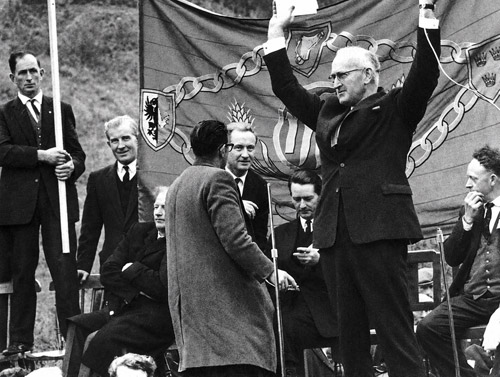
Farmers’ Rights Tipperary Campaigner the late Mr Rickard Deasy.
He became involved in the National Farmers’ Association through its Terryglass, Nenagh branch and rose through the organisation to become President in 1961. His defining moment would came in October 1966.
On October 7th, Deasy and 16 local farmers set out from Bantry, County Cork, on a 217 mile march to Dublin. As the march progressed, farmers joined from across the country, with around 30,000 participating along the route before the campaign converged on the capital.
The campaign sought something fundamental; recognition of farmers’ right to negotiate directly with Government, rather than merely being consulted on decisions affecting their livelihoods. Its ‘Declaration of Farmers’ Rights’ called for recognition of 11 basic rights for rural and farming families. The movement drew inspiration from the international civil-rights movement and, in particular, Martin Luther King Jr.’s March on Washington in 1963. The declaration also invoked the promise of equality contained in the 1916 Proclamation.
When the Government initially refused to meet the NFA leadership, nine farmers began a sit-in at Government Buildings which lasted for three weeks. The dispute subsequently escalated into road and bridge blockades, a rates strike and the imprisonment of dozens of farmers. Eventually, significant progress was made on the right to negotiate, while farmer representatives secured places on important marketing and advisory bodies. The IFA today regards the campaign as one of the decisive events in the history of organised Irish farming.
Mr Deasy and Mr Charles Haughey The campaign also brought Mr Deasy into direct confrontation with the then Minister for Agriculture, Mr Charles J. Haughey. Mr Haughey’s initial refusal to meet the farmers helped turn the protest into a major political confrontation. The episode was damaging to his standing as Minister for Agriculture, although this did not prevent Mr Haughey’s later rise to become leader of Fianna Fáil and Taoiseach. But it is reasonable to regard the Farmers’ Rights Campaign as a serious setback for Mr Haughey at that stage of his political career.
The Political Price Paid by Mr Deasy. There was a striking irony in Mr Rickard Deasy’s later career. Although he had successfully mobilised thousands of farmers nationally, he was unable to convert that prominence into electoral success. In the 1969 general election, Mr Deasy stood for the Labour Party in Tipperary North, but received only 517 first-preference votes, about 1.8% of the poll, and was not elected. His poor showing was extraordinary for a man who had been one of Ireland’s best-known farming leaders just three years earlier. Some later accounts suggest that his image as a militant campaigner worked against him politically, while he was also portrayed by some critics as a “Marxist”. What is beyond doubt is that Mr Deasy’s electoral failure contrasted sharply with the success of the movement he had previously led.
Sixty Years Later At the 60th-anniversary commemoration in Bantry, yesterday October 3rd, 2026, IFA President Mr Francie Gorman described the Farmers’ Rights Campaign as a seminal event in the history of the NFA and IFA. He said the right to negotiate, fought for in 1966, remained as important to farmers six decades later. Several surviving participants in the original march were also present at the event.
For County Tipperary, there is particular reason to remember Rickard Deasy of Carrigahorig and Terryglass; farmer; Army Officer, campaigner, and national farming leader. From his Tipperary farm he rose to lead one of the most significant rural protest movements in modern Irish history. The campaign helped secure a recognised voice for Irish farmers in their dealings with Government and strengthened the organisation that later became the Irish Farmers’ Association in 1971.
Mr Rickard Deasy died at Nenagh Hospital on July 13th, 1999. His contribution to Irish farming, and his deep association with North Tipperary, remain an important part of our local and national history.
Mr Deasy never became a TD, but his legacy is arguably more enduring; he helped ensure that Irish farmers had a recognised voice at the table of Irish Government.
A €10-a-week increase in the State pension and core social welfare payments is now set to form part of Budget 2027, as Government leaders enter the final stages of negotiations ahead of Tuesday’s announcement.
The increase is expected to apply across the main welfare rates, including payments to pensioners, people with disabilities, carers and jobseekers. An earlier figure of €7.50 had been under consideration, but negotiations have since moved to the higher €10 increase. Energy and the cost of living remain central to the final Budget discussions.
Taoiseach Mr Micheál Martin has signalled that further carbon tax increases on home-heating oil will be halted for the remainder of the Government’s term. He has also confirmed that eligible pensioners and long-term welfare recipients can expect the traditional Christmas bonus payment this year.
Further targeted assistance for households facing high heating costs is still being discussed. One proposal under consideration is a once-off payment for Fuel Allowance recipients, with figures of around €300 mentioned during negotiations. However, the final form of this support has not yet been confirmed.
A new annual cost-of-disability payment is also expected, with current discussions putting its value in the region of €400 to €500. An increase in the Living Alone Allowance is among the measures expected to feature in the final package.
The Government is also examining ways of reducing household energy costs, while final decisions on childcare supports are being worked out during talks in Government Buildings today.
Budget 2027 is scheduled to be announced on Tuesday next, October 6th, with the overall package expected to include approximately €7 billion in additional spending and €1.5 billion in tax reductions.
Final decisions on several measures are still being made, so figures relating to Fuel Allowance, disability supports, childcare and other cost-of-living measures should be treated as proposals until formally announced on Budget Day.
109 Sets of Institutional Remains Have Now Been Recovered
The continuing forensic excavation at the former ‘Mother and Baby Home’, in Tuam, has once again brought one of the darkest chapters in modern Irish history, into sharp focus. On October 2nd 2026, the Office of the Director of Authorised Intervention, Tuam (ODAIT) confirmed that a further 10 sets of infant remains had been recovered. Evidence of coffins was present in all 10 cases. This brought the total number of institutional human remains recovered during the current excavation to 109 individuals.
Of these, 77 infants were recovered from one excavation area, 32 from another, while disarticulated infant remains have also been recovered from the subterranean chamber. Scientific examination and attempts at identification are continuing.
But this excavation raises an even more difficult question. Why did so many children die at Tuam in the first place? Hundreds of children died. The Commission of Investigation into Mother and Baby Homes established that 978 children associated with Glenamaddy and Tuam died between 1921 and 1961. Most were extremely young. Around 80% of those for whom age information was available died before reaching their first birthday. The great majority of deaths occurred before 1950. The causes recorded on death certificates included prematurity and congenital debility, pneumonia and other respiratory infections, whooping cough, tuberculosis, influenza, gastroenteritis, meningitis, measles, diphtheria, congenital abnormalities and convulsions. These were genuine and often deadly illnesses in an age before modern neonatal intensive care, widespread antibiotics, sophisticated treatment of dehydration and comprehensive vaccination programmes.
It would therefore be historically inaccurate to claim that every child who died at Tuam, died directly because of neglect. But it would be equally misleading to suggest that these deaths can simply be explained away as the unfortunate reality of childhood illness in early twentieth-century Ireland. The mortality at Tuam was frequently far higher than the already high Irish national rate.
Years of Extraordinary Mortality Some years were particularly devastating. Historical records show major clusters of deaths during outbreaks of measles, whooping cough and respiratory disease. During the 1940s the situation became especially serious. An official inspection in 1947 recorded infant mortality at the home ranging between approximately 23% and 34% during the years 1943 to 1946. The national infant mortality rate was itself distressingly high at this time. In 1943, for example, it was approximately 83 deaths per 1,000 live births. Yet mortality among infants at Tuam remained dramatically higher. The Commission therefore could not simply attribute the difference to general poverty or poor medical knowledge throughout Ireland. Something about the institutional circumstances placed these children at additional risk.
Officials Knew There Was a Serious Problem. This is where the question of responsibility becomes particularly important. An inspector visiting Tuam in April 1947 found 271 children and only 61 mothers living there. She specifically warned that there was a constant risk of infectious disease. Most importantly, there was no isolation unit. Children arriving at the institution could therefore introduce infections into a large population of vulnerable infants and young children living together. The inspector believed the high death rate required investigation. At the same time, she reported that the Bon Secours Sisters caring directly for the infants appeared attentive and that the children received good immediate care. Both findings need to be acknowledged.
There is no sound basis for claiming that every death resulted from deliberate mistreatment by individual Sisters. But there is substantial evidence of a wider institutional system that failed to protect vulnerable children adequately.
Galway County Council Had Direct Responsibility Tuam was not simply a private religious institution operating independently of the State. Galway County Council owned and controlled the home.The local authority was responsible for major decisions and for maintenance and improvements to the property. Public money supported the institution and aspects of its medical care. This becomes particularly significant because the physical conditions were poor and infection control was inadequate. The Commission found serious shortcomings in the buildings and sanitation and concluded that Galway County Council had failed adequately to maintain and improve the institution. Remarkably, the council itself sometimes held meetings at the Tuam Children’s Home. Yet despite extraordinarily high infant mortality, the surviving council records contain remarkably little evidence of a determined investigation into why so many children were dying.
The Central State Also Knew. Responsibility extended beyond Galway County Council. The extraordinary mortality experienced by children born outside marriage and by children living in institutions was known to Government departments. Mortality statistics were being collected and published. Official inspectors were raising concerns. Yet the Irish State response was profoundly inadequate. When Taoiseach Micheál Martin issued the formal State apology in January 2021, he acknowledged that the exceptionally high mortality rates in Mother and Baby Homes had been known to both local and national authorities. He then made an especially important admission; there was “little or no evidence of State intervention” in response to those alarming statistics, and reports identifying problems had not been acted upon. That admission is central to any fair assessment of responsibility.
How Much Blame Can Be Placed on the Irish State? It is impossible to give an honest percentage. Historical evidence cannot tell us that, for example, 30%, 50% or 70% of Tuam deaths were directly caused by State failure. Many infants were premature. Some had serious congenital conditions. Measles, tuberculosis, influenza, pneumonia and whooping cough could kill even children receiving reasonable contemporary medical care. But the evidence does allow a strong conclusion about institutional responsibility. The State, through local government and central administration, knew vulnerable children were dying at exceptionally high rates. A State-controlled institution lacked adequate isolation facilities. The buildings and sanitary conditions were deficient. Warnings existed. Mortality statistics existed. Yet sufficiently effective corrective intervention did not follow. The Irish Government itself has subsequently acknowledged that the State failed in its duty towards vulnerable mothers and children.
State Failure Began Before Women Reached Tuam There was also a wider failure. Many unmarried mothers entered institutions because realistic alternatives were extremely limited. Women without family support could face poverty, homelessness, social exclusion and severe stigma. Ireland did not introduce a dedicated ‘Unmarried Mother’s Allowance’ until 1973, long after the Tuam home had closed. Had adequate financial assistance, housing and community-based support been available, more women may have been able to remain with and raise their children outside institutions. The institutional system therefore cannot be examined separately from the social and Irish State policies that helped make institutionalisation the practical option for thousands of women.
Disease Was Real, But That Does Not End the Question It is important not to replace one oversimplification with another. The evidence does not show that the hundreds of children at Tuam were deliberately killed. But neither does it support the argument that they simply died because “children died young in those days.” The central question is not merely what was written on each death certificate. If a certificate recorded pneumonia, measles, gastroenteritis or whooping cough, we must also ask, Why were so many vulnerable children concentrated together? Were infectious children adequately isolated? Were sanitation, nutrition, heating and medical facilities sufficient? When death rates became extraordinarily high, why did authorities not intervene more forcefully?
Those are questions of governance and responsibility. The Excavation May Finally Restore Individual Identities The excavation now taking place may help answer questions that remained unresolved for decades. ODAIT is conducting forensic anthropological examination and collecting family DNA samples in an effort to identify recovered children. As of the latest update, 74 family reference DNA samples had been collected. It may never be possible to determine the precise medical cause of death from skeletal remains in many cases. Diseases such as pneumonia, influenza, gastroenteritis and whooping cough often leave no identifiable trace on bones. But identification could potentially connect remains with names, dates and surviving historical records.
For decades the Tuam story was discussed in terms of numbers: 796, 978 and now 109 recovered individuals in coffins. Behind every one of those numbers was a child. The continuing excavation offers the possibility that some may finally be restored not simply to history, but to their families, by name.
A Final Moral Question. What happened at Tuam may not fit the strict legal definition of genocide, which requires proof of an intention to destroy, in whole or in part, a national, ethnic, racial or religious group. But that legal distinction should not diminish the moral gravity of what occurred.
These were overwhelmingly vulnerable women and children, many impoverished, socially stigmatised and dependent upon institutions over which the Irish State exercised substantial responsibility. The Irish Government itself has acknowledged a profound generational wrong, repeated State failures, neglect, oppressive discrimination and circumstances in which institutionalisation significantly reduced children’s prospects of survival. The evidence does not establish an organised intention to physically destroy this population; it does, however, support a deeply troubling picture in which a marginalised group could be segregated, deprived of meaningful alternatives and exposed to conditions associated with extraordinary mortality, while those with the power to intervene repeatedly failed to do enough.
Whatever legal terminology is ultimately applied, that raises a fundamental moral question for Irish history; “How could the lives of poor, unmarried mothers and their children have been valued so little that suffering and death on this scale were allowed to continue?”
The Defence Forces are expanding towards a planned strength of 11,500 personnel by 2028, and an increasing proportion of new recruits were born outside Ireland.
According to reported figures, between 13% and 18% of recruits since 2022 have been born outside the Irish State. That statistic deserves discussion, but we need to ask the right question. Being foreign-born does not make somebody a security threat. Many foreign-born people have lived in Ireland for years, have built their lives here and subsequently become Irish citizens. Others eligible to join include EEA nationals, recognised refugees and people with subsidiary protection who meet residency and other requirements.
The real national-security issue is therefore not someone’s place of birth. It is how Ireland vets military personnel and decides who gets access to our most sensitive capabilities. Every Defence Forces applicant undergoes security vetting. The Department of Defence has confirmed that this is carried out with the assistance of An Garda Síochána and that cases involving an overseas or non-national component can require contact with international vetting authorities.
That is reassuring. But as Ireland invests heavily in defence, cyber capabilities, intelligence, radar, communications, weapons systems and maritime security, another question arises; should every person who can join the Defence Forces automatically be eligible for every sensitive military appointment?
Other democracies make an important distinction between being eligible to serve and being eligible to access highly classified information. The United States allows lawful permanent residents to enlist, but non-US citizens generally cannot obtain a personnel security clearance. That restricts access to classified information and certain sensitive military occupations.
The United Kingdom also recruits some non-UK nationals but operates several levels of national-security vetting. Higher-level vetting can examine overseas connections, financial circumstances, family relationships and other vulnerabilities relevant to foreign influence or coercion. Some particularly sensitive national-security and intelligence positions may also be restricted by nationality.
Canada permits permanent residents to serve in its armed forces, but its security system is similarly graduated. Under recent reforms, Canadian citizenship is required for Top Secret and Enhanced Top Secret clearance, alongside stronger continuing security checks.
So what is Ireland’s equivalent? That is the question I believe deserves a clear public answer. Ireland should be able to welcome people who genuinely wish to serve their adopted country, while simultaneously protecting intelligence, cyber systems, strategic communications, weapons and other sensitive military capabilities. Those two objectives are not contradictory. A modern security system should assess the individual, not stereotype somebody according to birthplace. But it should also recognise that foreign intelligence services seek leverage through relationships, financial pressure, overseas connections, coercion and access to information. And those risks can apply to Irish-born personnel too.
Perhaps Ireland therefore needs a more clearly defined system in which eligibility to join the Defence Forces; eligibility to receive particular security clearances; and eligibility to work in the most sensitive areas of intelligence, cyber, communications and strategic defenceare treated as separate questions.
There may already be classified safeguards that cannot sensibly be made public. But the Government should at least be able to explain the principles governing the system. With the Defence Forces expanding rapidly and Ireland facing a much more complicated international security environment, this is not a question about ethnicity or immigration. It is a question about national security, loyalty, vetting and access to sensitive information. Ireland should welcome anyone who is eligible and genuinely committed to serving the Irish State. But the State also has a duty to ensure that whoever gets access to its most sensitive military capabilities, Irish-born or foreign-born, has been vetted to a standard appropriate to that responsibility.
As we expand our Defence Forces, perhaps the question we should be asking is; “Do Ireland’s security-clearance rules match the military we are now trying to build?”
This website uses cookies to improve your experience. We'll assume you're ok with this, but you can opt-out if you wish.AcceptRead More
Privacy & Cookies Policy
Privacy Overview
This website uses cookies to improve your experience while you navigate through the website. Out of these, the cookies that are categorized as necessary are stored on your browser as they are essential for the working of basic functionalities of the website. We also use third-party cookies that help us analyze and understand how you use this website. These cookies will be stored in your browser only with your consent. You also have the option to opt-out of these cookies. But opting out of some of these cookies may affect your browsing experience.
Necessary cookies are absolutely essential for the website to function properly. This category only includes cookies that ensures basic functionalities and security features of the website. These cookies do not store any personal information.
Any cookies that may not be particularly necessary for the website to function and is used specifically to collect user personal data via analytics, ads, other embedded contents are termed as non-necessary cookies. It is mandatory to procure user consent prior to running these cookies on your website.






Recent Comments