|
|
The Government’s influential cost-cutting body dubbed “An Bord Snip Nua”, charged with finding billions in savings across all Government departments and the public sector, made its report public today.
The published report however brought what has been described as cataclysmic news for the Co. Tipperary towns of Thurles and Clonmel, with the recommendation that Tipperary Institute should be abolished as part of proposed rationalisation measures.
Vol.2. Page 69 of the report reads as follows:
D.2 Rationalisation of third level institutions
At present, Ireland has 7 universities, 14 institutes of technology and over 20 other third level educational institutions feeding into the CAO, many of which are comparatively small by international standards. Given the size and population of the country, there is scope to reduce the number of third level institutions. An Bord Snip now proposes the following rationalisation measures:
1. Abolition of the Tipperary Rural and Business Development Institute (TRBDI)
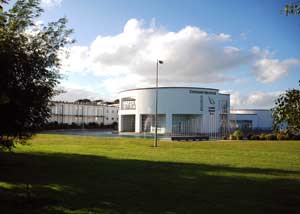 The case for the continued existence of TRBDI is weak. The institute is located near two other IoT’s and has a high complement of staff (100) compared to the number of full-time students (338). The Group recommends that the institution be closed with existing students re-assigned to nearby IoT’s. The campus should be disposed of for the benefit of the Exchequer.
The present development work of the Tipperary Institute includes promoting sustainable social and economic development through providing assistance, advice, mentoring, consultancy, research and training services to communities and businesses in the region, throughout Ireland, and across Europe. Areas of work include community planning and development, business planning and development, environmental management, software development, information and communications technology development and applications, personal development, public sector management, training and research.
Local Independent TD, Deputy Michael Lowry, who presently supports the present Coalition Government, stressed that the report is only a recommendation and not a final political decision.
The Bord, whose official title is the “Special Group on Public Service Numbers and Expenditure Programmes” (SGPSNEP), was chaired by economist Colm McCarthy, assisted by liaison officer Donal McNally, who is Second Secretary General at the Department of Finance. The other members of the Bord include Maurice O’Connell, former Governor of the Central Bank, WilliamSlattery, MD of State Street International, Mary Walsh, a former partner at PriceWaterhouseCoopers, Pat McLaughlin, former Deputy CEO of the Health Services Executive supported by Dept. of Finance officials.
Work is in progress to assign two permanent staff members to Thurles’s Social Welfare Office because of the increased number of claims for jobseeker payments.
Deputy Noel Coonan Fine Gael speaking this morning to Thurles.Info stated:
 “One temporary member of staff has been approved for the Thurles local office pending the assignment of permanent staff. The number of posts allocated to Thurles Local Office since June 2007 has risen from 17.6 to 19.2 but may need to be increased further with 1,417 Jobseeker’s Benefit applications made, up until mid June. North Tipperary’s social welfare staff provide an excellent and efficient service and as their workload increases it’s only right that additional staff are recruited to ease the load. The total number of applications for Job Seeker’s Allowance last year was 2,789. However, 2008 application were received up until 14th June of this year for the same allowance. This is 72% of the total received last year so I can only imagine what the figure will be by year’s end. It is a similar situation with the number of Jobseeker’s Benefits applications received. Three full time and four part time staff have been operating in the Roscrea office since 2008. This number has not increased this year. In Nenagh, one extra member of full-time staff has been allocated this year to bring the number to five. Recent Central Statistic Office figures show that the number signing on continues to rise steeply in North Tipperary. Additional staff are needed to help deal with the rising claim load for jobseekers payments,” concluded Deputy Coonan
In response to a parliamentary question, the Minister for Social & Family Affairs Thurles born Mary Hanafin TD stated:
“Offices in Roscrea and Nenagh are branch offices and operate under a contract for service to the Department. Branch office managers are therefore responsible for recruiting their own staff”.
Deputy Coonan’s remarks are bourne out by recently confirmed official figures.
North Tipperary had the highest percentage increase of people joining the Unemployment Register nationally in the month of June. An additional 489 people signed on, representing an increase of over 8% on the figures for the month of May. Fine Gael Deputy Noel Coonan TD has again called on the Government to immediately adopt Fine Gael policies in order to halt this growing problem.
Deputy Coonan stated:
 “North Tipperary fared worse than any other county last month. We had the highest percentage increase in the number of people joining the dole than in any other area of Ireland. There were 6,024 people on the dole in May. By the end of June an additional 489 had joined this list. Approx 207 joined the dole in Nenagh, 177 in Thurles and 105 in Roscrea. People under the age of 25 are being particularly badly affected. Almost 1,000 people in this age group joined the dole over the last two years in North Tipperary. This represents a 202% increase. CSO figures also show that over the last two years, a whopping 4,051 people have joined the dole in North Tipperary. In the same period, 1,657 more people signed on in Thurles, 1,647 in Nenagh and 747 in Roscrea. A growing number of national and international organisations have criticised Fianna Fáil’s approach recently and with due reason”.
The recent criticisms referred too by Deputy Coonan include:
- The IMF, which described Ireland as ‘the most overheated of all advanced economies’ and warned of the collapse in Irish exports, pointing the finger of blame firmly at Brian Cowen
- The CSO‘s national quarterly accounts, which revealed a staggering 12% slump in Gross National Product
- The OECD, which warned that GDP will have fallen by 14% by 2010;
Deputy Coonan further stated that the Government must now adopt Fine Gael’s policies to restore competitiveness and stimulate consumer demand.
Fine Gael is calling for reductions in spending to allow cuts in VAT and employers’ PRSI, the abolition of the Travel Tax, the creation of a National Recovery Bank to restore credit lines to small business and home-buyers, and a plan to reduce Government-imposed costs on small business.
In a deal secured in Brussels in the past week, by Taoiseach Brian Cowen and Foreign Affairs Minister Micheál Martin, EU leaders have satisfied Irish government’s concerns with an agreement that would not alter “one dot or one a comma” of the EU’s reform treaty.
Minister Martin Mansergh, a Fianna Fail Oireachtas member for Tipperary South, said:
“Tipperary voter’s concerns over the Lisbon Treaty have been robustly addressed. There is now a decision on legal guarantees and a protocol and nothing in the treaty will have an impact on Ireland’s control over it’s tax, neutrality or constitutional provisions on the right to life, family and education.”
Irish voters who rejected the Lisbon Treaty in a referendum almost a year ago can now return to the ballot box in October and recent ‘Opinion Polls’ suggest that voters will vote yes for this package, second time around.
Ireland is now expected to hold a referendum in early October on the Lisbon treaty after winning this “cast-iron legal guarantee” on issues of great concern to the Irish electorate.
Brian Cowen, the Irish Prime Minister (Taoiseach) stated:
 “The deal was brokered following negotiations with the UK, which accepted that Ireland needed a legally binding protocol on tax, ethical issues and neutrality. As requested by Ireland, all 27 member states will ratify the protocol when they approve the next accession treaty, most likely Croatia’s. I would expect to be ready to have a referendum in early October. The deal on the protocol was hugely significant for Ireland and the Union. I am confident we now have a solid basis on which to go to the Irish people. I would expect to be ready to have a referendum in early October.”
British Prime Minister Gordon Brown was concerned that the ratification of a protocol in the House of Commons might re-open the debate on the Lisbon treaty. Irish diplomats stated that he was objecting to the word “protocol” appearing in the European Council conclusions but in the end relented.
Almost all the 27 EU members have now endorsed this treaty, meant to streamline the way the expanding bloc operates. Only the Czech Republic and Poland must complete the technical ratification.
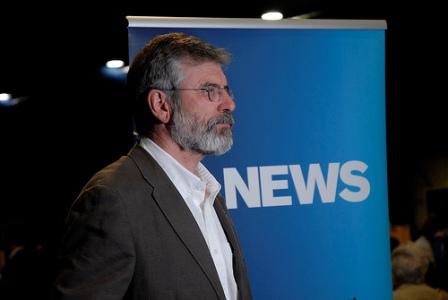 Are Sinn Féin gaining respectability as a political party in Ireland or are we just seeing a backlash from voters protesting against a Fianna Fáil party in power, latter currently unable to demonstrate the slightest semblance of real leadership.
Denied allegation, this week, that Fine Gael, now Ireland’s largest political party in opposition, might be interested in meeting Sinn Féin regarding a possible future coalition partnership, suggests that all political parties are doing their mathematics based on recent election results.
Take a look at the current state of play:
Sinn Féin gained new County Council seats in Carlow, Cavan, Clare, Cork, Kilkenny, Limerick, Mayo, Offaly, Tipperary, Waterford and Wicklow. Sinn Féin held up and improved upon its substantial 2004 performance in local and EU elections. Across the five EU constituencies on this island, Sinn Féin took a massive 331,797 votes and 14.34% of the all-Ireland vote.
In the County Council elections Sinn Féin entered the election with 51 seats and came out of the poll with 54 County Ccouncil seats and 67 Town Council and Borough seats. Seamus Morris was elected on the 9th Count to the Nenagh ward of Tipperary North Council with 8.7% of first preferences, securing Sinn Féin’s first seat on that Council since 1957. Morris also won a seat on Nenagh Town Council. David Doran held on to his seat on Thurles Town Council.
In Tipperary South Kevin Brunnick took 2.8% of the votes in Cahir while in Fethard David Dunne won 5.1% of first preferences.
Liam Walsh held his seat on Carrick-On-Suir Town Council as did Michael Browne in Cashel.
In Northern Ireland Sinn Féin MEP Bairbre de Brún was re-elected to the European Parliament, topping the poll in the Six Counties in last week’s EURO elections. This was indeed a truly historic development as de Brún is the first nationalist to top the poll and Sinn Féin is now the largest party in the North of Ireland. De Brún, elected on the first count, broke a record held by the DUP since 1979. The Sinn Féin MEP got 126,184 votes and was the only candidate to reach the quota on the first count. The Democratic Unionist Party (DUP) had 32% of the entire first-preference vote in 2004; in this election it has fallen to 18.2%.
Results at the next General Election, be it sooner or later, will make for interesting future analysis.
|
Support Us Help keep Thurles.info online by donating below. Thank you.
Total Donated 2026: €300.00
Thank You!
Daily Thurles Mass Livestream
|



Recent Comments