|
|
Millions in Public Funds Lost Amid System Gaps.
Newly emerging data has highlighted significant concerns around public expenditure controls in Ireland, with substantial social welfare overpayments and weaknesses in fraud prevention systems within the Health Service Executive (HSE) drawing increased scrutiny.
Recent figures confirm that millions of euro in social welfare payments have been incorrectly issued, including cases where payments continued after recipients had died. At the same time, a separate audit has identified structural vulnerabilities in the HSE’s payroll systems, raising concerns about the potential for fraud to go undetected.
Social Welfare Overpayments: Scale and Causes.
Official figures show that social welfare overpayments remain a persistent issue, with tens of millions of euro identified annually. In 2025 alone, over €24.6 million in overpayments linked to suspected fraud were recorded across more than 5,000 cases.
However, fraud represents only a portion of the overall problem. The majority of overpayments arise from administrative or customer-related errors. In recent years, over 60% of overpayments were attributed to customer error, such as failing to report changes in income or personal circumstances.
A notable proportion of unrecovered funds relates to payments made after a recipient’s death. Audit data shows that, in certain schemes, up to 85% of written-off debts are linked to deceased claimants, reflecting delays in notification or system updates.
While public discussion has referenced figures as high as €25 million paid to deceased individuals, there is no single official statistic confirming that exact amount. Instead, available data indicates that losses linked to deceased recipients form part of broader overpayment totals accumulated across multiple categories and years.
Recovery Challenges and Financial Exposure.
Recovering overpaid funds remains a significant challenge for the State. As debts age, the likelihood of recovery declines sharply, with only a small percentage typically recouped after several years.
In some cases, recovery may be pursued through estates after death, but where no assets are available or administrative costs are too high, the State may be forced to write off the debt entirely.
The scale of outstanding overpayments; running into hundreds of millions cumulatively, illustrates the ongoing financial exposure facing public finances.
HSE Audit Highlights Fraud Control Weaknesses.
Separate to welfare concerns, a recent audit into HSE payroll systems has identified “significant risks of fraud” due to weaknesses in oversight and governance.
The HSE payroll system manages billions of euro annually, making it a high-risk environment.
Auditors found that:–
- There is no comprehensive fraud risk assessment framework in place.
- Roles and responsibilities for fraud prevention are not clearly defined.
- Existing controls are often informal or inconsistently applied.
These gaps create conditions where fraudulent activity could occur without being promptly detected.
Governance and Accountability Under Pressure.
The findings point to broader governance challenges across public systems. In the case of social welfare, delays in data sharing, particularly around deaths or changes in eligibility, can lead to continued payments that are difficult to recover.
Within the HSE, the absence of structured risk management processes has raised concerns about accountability and oversight in one of the State’s largest financial operations.
Conclusion: Systemic Issues, Not Isolated Incidents
Taken together, the evidence suggests that these issues are not isolated but reflect systemic weaknesses in administrative processes and control systems.
While there is no indication of widespread organised fraud across either system, the combination of high transaction volumes, fragmented oversight, and delayed reporting creates an environment where errors, and potential abuses, can occur.
Strengthening data integration, improving real-time reporting, and implementing robust fraud risk frameworks are likely to be key priorities in addressing these vulnerabilities and protecting public funds going forward.
A major new report from the Ombudsman for Children’s Office has delivered a stark assessment of Ireland’s child care system, describing it as “broken” and failing to act in the best interests of vulnerable young people.
The report finds that, in some cases, children experience greater harm after entering State care. Serious concerns include instances of sexual grooming and assault, children going missing for days, and repeated moves between unregulated placements.
It also highlights situations where children have been held in secure care for extended periods, despite not committing any offences, due to a lack of suitable placements. In one case, two young siblings were placed in a facility with teenagers and a large staff presence because no foster home was available.
The Ombudsman, Dr Niall Muldoon, questioned how the State has reached a point where it cannot guarantee safe and stable care for highly vulnerable children.
The report identifies key systemic issues, including shortages of social workers, insufficient placement options, and ongoing difficulties in recruiting and retaining care staff. It also points to an increasing reliance on private providers and the growing use of unregulated accommodation.
Funding pressures remain a central concern. Despite a significant rise in child protection referrals over the past decade, the agency responsible, Tusla, is described as chronically under-resourced and receiving substantially less funding than required.
With nearly 6,000 children currently in care, the Ombudsman is calling for urgent reform. A forthcoming national consultation and the development of Ireland’s first National Alternative Care Plan are being framed as a critical opportunity to overhaul the system and better protect children’s rights.
What Socrates Might See In Today’s Modern Irish Politics.
Ancient Greek philosopher Socrates, who lived in Athens from 469 to 399 BCE, was one of the most famous thinkers in human history. People call him the ‘Father of Philosophy’. He is remembered as the man who asked uncomfortable questions and forced everyone around him to think much deeper.
But here is the shocking part; Socrates hated and feared democracy.
He thought democracy was actually one of the fastest ways a society could destroy itself. It is about photographs, handshakes, receptions, speeches, media clips, and symbolic moments.
A bowl of shamrock handed over in Washington is not just a diplomatic ritual; it is a political image. A Government Minister appearing abroad under the banner of St Patrick’s Day is not only representing the Irish State; they are also being seen to represent the Irish State and that suttle distinction matters greatly.
Socrates never saw an Irish modern day parliament, a press conference, or a St Patrick’s Day diplomatic tour. But he did understand something timeless about politics; public life is rarely driven by wisdom alone. It is often driven by appearances, persuasion, and performance. That is why his criticism of democracy still feels uncomfortably relevant.
Socrates worried that political systems often reward the people who can present themselves best, not necessarily the people most fit to lead. He feared that politics could become less about truth and judgment, and more about selling an image to the public. In his eyes, the danger was not just bad leadership. The deeper danger was a culture in which style begins to replace substance.
That concern feels familiar when we look at present-day politics, including in Ireland.
Every year, St Patrick’s Day becomes far more than a national celebration. It also becomes a major political and diplomatic season. In 2026, the Government announced its largest St Patrick’s Day outreach programme yet, with senior representatives travelling to more than 50 countries. The official purpose is clear enough: promote Irish interests, strengthen ties, support trade, and connect with the global Irish community. That is the stated case, and in fairness, there is real diplomacy in it.
But politics is never only about the official case.
It is also about optics. It is about photographs, handshakes, receptions, speeches, media clips, and symbolic moments. A bowl of shamrock handed over in Washington is not just a diplomatic ritual. It is a political image.
And that is exactly the kind of thing Socrates would have noticed.
He would likely have asked whether these moments are primarily exercises in good governance, or whether they are also examples of politics as theatre. He would have asked whether voters are being shown serious leadership, or a carefully managed performance of leadership. He would have asked whether the public is meant to judge outcomes, or simply absorb impressions.
The St Patrick’s Day Problem: Diplomacy or Political Theatre?
To be clear, this is not an argument that politicians should never travel abroad, or that St Patrick’s Day diplomacy is meaningless. In fact, current coverage stresses that the Washington visit in particular can carry genuine strategic importance for Ireland, especially in trade, foreign relations, and maintaining access at the highest level of US politics. The Government’s own language around the programme is explicitly about economic diplomacy and international partnerships, not just ceremony.
But Socrates would probably insist that this is precisely why the public should look harder, not softer.
His concern was always that democratic politics makes it too easy to confuse visibility with value. A politician travelling abroad looks active. A politician standing beside world leaders looks important. A politician wrapped in national symbolism looks patriotic. Yet none of those things automatically tells us whether they are governing well.
That is the real point of the comparison.
In modern Irish politics, St Patrick’s Day can serve two purposes at once. It can be genuine diplomacy, and it can be domestic political branding. Those two things are not mutually exclusive. In fact, they often reinforce each other. A successful foreign visit can strengthen Ireland’s position abroad, while also strengthening a politician’s image at home. The public sees confidence, access, prestige and relevance. And once again, Socrates’ old worry returns; are citizens judging leadership by wisdom and results, or by appearances and emotional effect?
He would likely have been especially suspicious of the pageantry. Not because symbols are worthless, but because symbols can make shallow politics look profound. They can turn scrutiny into applause. They can make carefully staged public life feel like evidence of competence, when it may only be evidence of presentation.
That does not mean every ministerial trip is empty. It means democratic citizens should be careful not to stop thinking the moment politics becomes ceremonial.
And perhaps that is where the Irish comparison becomes sharpest.
A modern voter can easily be encouraged to see St Patrick’s Day travel as proof of leadership in itself. Ministers are abroad. Photos are everywhere. Meetings are announced. Statements are issued. Flags, shamrock, receptions and speeches create the sense of national importance. Yet Socrates would ask the most irritating questions of all; what, exactly, was achieved? What changed? What was secured? What problem was solved? What outcome, beyond publicity, can actually be measured?
These are very Socratic questions. They cut through image and force politics back onto the ground of reality.
So if we bring Socrates into present-day Irish politics, the lesson is not that International St Patrick’s Day visits are automatically dishonest. It is that democracy always carries the risk of mistaking spectacle for substance. Politicians may travel abroad in the name of Ireland; in the spirit of St Patrick, and in pursuit of real diplomatic goals, but they also travel in full awareness that public symbolism is politically powerful.
Socrates would have warned us not to be hypnotised by that power.
He would have reminded us that democracy weakens when citizens stop examining what they are shown. The problem is not that politics contains ceremony. The problem begins when ceremony becomes a substitute for judgment.
Socrates did not say this as a theory. He watched political instability and democratic conflict in Athens during his own lifetime, and he was later condemned to death by an Athenian jury in 399 BCE.
And the most tragic part is that Socrates himself became a victim of democracy. He was put on trial by a jury of ordinary citizens. They were not philosophers. They were not trained judges. They were simply a crowd. And that crowd voted to execute him. He died by forced suicide; consuming a poisonous mixture containing hemlock, so in the end, democracy seemed to prove Socrates’ point, in the most brutal way possible.
And in that sense, his criticism still stands, not just in ancient Athens, but also in our modern Ireland. too.
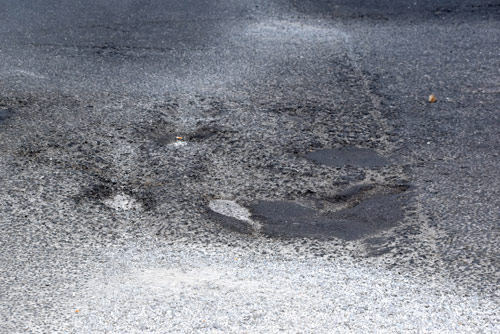
Fresh figures showing compensation paid to motorists for pothole damage underline the continuing burden poor road conditions are placing on drivers across county Tipperary.
Tipperary County Council has paid out €50,105 in compensation for pothole-related vehicle damage since 2023. While this is below the very highest totals seen elsewhere in our emerald isle, it still places Tipperary among the more significant local authority payouts and points to a persistent problem on our counties roads.
These figures must be seen in the wider national context. Local authorities paid approximately €1.3 million in compensation to motorists over the past three years for pothole-related damage. That is a serious cost to the public purse, but it is also a direct cost to families, workers and business owners, latter who rely on safe and passable roads every day.
What is particularly concerning in Co. Tipperary is that the claims issue does not appear to be isolated or short-term. Council management reports have shown an ongoing stream of pothole claims during 2024 and 2025, reinforcing the view that this is a recurring roads maintenance issue, rather than a once-off spike.
There is also concern that some motorists feel they were deliberately ignored or did not receive adequate responses, after raising road damage issues. That only adds to public frustration. When people take the time to report hazardous road conditions or seek redress for damage caused, they are entitled to clear communication, fair treatment and timely follow-up.
It is important to state that councils are not automatically liable for every pothole-related incident. In general, compensation arises where there is evidence of negligence or where repairs or interventions may have been carried out to an insufficient standard. However, that makes it all the more important that repairs are durable, properly inspected and carried out before defects worsen and place more motorists at risk.
The real issue here is not only compensation after the fact. The real issue is prevention.
Tipperary needs a stronger and more proactive road maintenance programme, faster response times to reported defects, better quality control on repairs, and greater transparency for the public on how complaints and claims are handled.
Real Costs of getting behind the wheel of a vehicle here in Ireland.
Irish motorists continue to face an escalating financial burden, with basic motoring-related taxes and charges estimated to generate some €6.2 billion annually for the State. From high fuel costs driven by excise duty, carbon tax, VAT and additional levies, to Vehicle Registration Tax and annual motor tax, drivers are contributing at every stage of car ownership and use. On top of these standard charges, motorists must also absorb insurance levies, tolls, NCT fees, parking charges and a growing range of fines and penalties for road traffic and parking offences, all of which add to the overall cost of getting behind the wheel.
Yes, and I haven’t mentioned property tax which is partially associated in housing same vehicle.
While electric vehicle owners currently benefit from reduced rates in some areas, concern is mounting that further measures, including a proposed weight-based tax on heavier vehicles such as SUVs, could place even more pressure on drivers in the years ahead.
Motorists should therefore not be left paying the price for road failures that could and should have been addressed months earlier.
Motorists are calling on Tipperary County Council to:
- prioritise lasting repairs on known problem routes, the streets of Thurles town being one neglected area
- improve response systems for motorists reporting potholes and road damage,
- ensure all complainants receive timely acknowledgement and follow-up,
- publish clearer local data on pothole complaints, repairs and claims outcomes.
People across Tipperary deserve safer roads, better accountability, and a council response that is effective, transparent and fair.
Tipperary County Council has been allocated €1.4 million under the latest round of the Government’s Voids Programme, in a move expected to help bring more vacant local authority homes back into use across the county.
The funding forms part of a wider €40 million national investment announced by Housing Minister Mr James Browne, which will support the refurbishment and re-letting of around 2,200 local authority homes across the country in 2026.
The latest allocation is expected to provide a significant boost for Tipperary as demand for housing remains strong and pressure continues on local authority stock. The funding will be used to prepare vacant council-owned properties for new tenants, helping to increase housing supply through the reuse of existing homes.
The announcement also signals a major policy shift in how future funding under the Voids Programme will be distributed.
Under a revised performance-based model introduced by the Minister, future allocations will be linked to how effectively local authorities reduce vacancy levels and improve turnaround times for re-letting homes.
From 2027, local authorities, including Tipperary County Council, will be expected to maintain a vacancy rate of no more than 2% and achieve a maximum average turnaround time of 18 weeks for vacant properties. The turnaround target will tighten further to 15 weeks in 2028 and 12 weeks in 2029.
Councils that meet those targets will qualify for full funding under the revised model, placing a stronger emphasis on delivery, efficiency and the rapid reuse of existing housing stock.
The funding will be seen as a positive development for Tipperary, particularly given the ongoing need to maximise available housing and reduce the time homes remain vacant between lettings.
Nationally, the Government says the Voids Programme has played a significant role in bringing empty social homes back into use over the past decade. Since the scheme began in 2014, a total of €385 million has been invested, supporting the return of 27,860 homes to active use.
The 2026 allocation is also a 29% increase on the previous year’s funding, reflecting what the Department says is a continued focus on tackling vacancy and increasing housing availability through refurbishment.
For Tipperary, the €1.4 million allocation is expected to support further progress in returning vacant homes to use, while positioning the local authority to meet the tougher targets that will shape future funding in the years ahead.
|
Support Us Help keep Thurles.info online by donating below. Thank you.
Total Donated 2026: €290.00
Thank You!
Daily Thurles Mass Livestream
|









Recent Comments