One Council Restores History While Another Erases It – The Loss of Thurles’s Famine Double Ditch.
The decision by Dún Laoghaire-Rathdown County Council to spend approximately €660,000plus VAT restoring a historic ha-ha wall in Marlay Park (latter a sunken landscape boundary that uses a hidden trench and a vertical retaining wall), has understandably generated debate. The 197-metre structure, believed to date from the early nineteenth century, was designed to separate landscaped gardens from grazing animals without interrupting views across the estate. Much of its original locally sourced granite survived beneath vegetation, but the wall had fallen into disrepair. Restoration required specialist conservation work, dismantling and rebuilding sections of dry-stone wall, repairing the ditch and incorporating drainage infrastructure. The original contract was valued at €625,398 excluding VAT, with the final estimate rising to €660,374 following delays, unsuitable ground material, severe weather and difficulties obtaining appropriate stone.
Local construction professionals and taxpayers are entitled to question whether that represents value for money. Public bodies must explain how costs are calculated, why projects exceed their initial budgets and whether procurement arrangements adequately protect the public purse. Dún Laoghaire-Rathdown County Council has already faced criticism over the €753,528 cost of works at an entrance to Deerpark in Mount Merrion. That project is frequently described as the construction of “14 steps”, although the council says it also included a wheelchair-accessible ramp, retaining walls, granite paving, seating, landscaping, pedestrian crossings, road resurfacing, drainage, traffic-signal equipment and other public-realm works. The criticism of these costs is legitimate. Nevertheless, one important fact should not be forgotten: Dún Laoghaire-Rathdown County Council recognised that an historic structure was worth preserving.
That approach stands in painful contrast to what happened in Thurles.
The Thurles Great Famine Double Ditch was regarded locally as a rare surviving famine-era landscape feature. Local historical accounts date its construction accurately to 1846 and associate it with relief work provided to men and boys during the Great Famine. Rather than representing the landscaped elegance of a wealthy Dublin estate, this Double Ditch recalled hunger, poverty and the desperate struggle of local families to survive. It was not simply an old embankment. It was a physical connection with one of the darkest periods in Irish history. For generations, the route was also described locally as a public walkway and Mass path. Campaigners argued that it formed part of the social history of Thurles and should have been incorporated into a protected heritage trail.
Despite repeated warnings, the entire section of the Double Ditch was cleared in March 2022 supported by local councillors, as part of works connected with as yet a non existent, only proposed Thurles inner relief road. Contemporary photographs and local reporting showed mature vegetation being removed and the historic landscape feature being levelled by machinery.
Historic Thurles Double Ditch Eradicated in 2022. Pic. G.Willoughby.
Once such a structure is destroyed, it cannot truly be recreated. A replica might reproduce its approximate appearance, but it cannot restore the original stones, soil, boundaries and physical connection with the people who constructed it during the Great Famine.
This is the real loss suffered by Thurles. Tipperary County Council regularly speaks about protecting heritage and connecting communities with their past. Yet the treatment of the Double Ditch demonstrates the gulf that can exist between heritage policies and decisions taken on the ground. Roads and development are necessary, but heritage protection does not require a complete rejection of progress. It requires imagination, consultation and a willingness to examine alternative designs before destruction becomes inevitable.
The contrast between the two councils is striking. In Dublin, hundreds of thousands of euro are being spent restoring an aristocratic landscape feature. In Thurles, a structure associated with ordinary people surviving the Great Famine was treated as totally expendable. The Marlay Park bill deserves detailed scrutiny. So does every major publicly funded project. But the principle of conserving historic structures should be welcomed.
Led by the denials of elected councillors; mainly Mr Michaél Lowry (Non Party), Mr Sean Ryan (FF) and Mr Seamus Hanafin (FF), together with senior council officials, through wilful ignorance, self-deception, blind persistence and despite knowing better oversaw this reckless destruction. Thus the tragedy in Thurles is that the debate never reached the question of restoration costs.
The Double Ditch was not protected long enough for restoration to become an option. Dún Laoghaire–Rathdown County Council may reasonably be criticised for excessive costs. Tipperary County Council should be criticised for allowing irreplaceable local history to be destroyed.
One council appears willing to spend too much preserving history. The other did too little before all of that history was totally eradicated and lost forever.
Neither approach represents good stewardship of public money or public heritage, and the waste continues without the consent of the Irish taxpayer.
Most of Ireland’s Local Authorities Strengthen Environmental Enforcement in 2025.
Ireland’s local authorities delivered a strong environmental enforcement performance in 2025, with 83% of assessments under the National Enforcement Priorities rated Strong or Excellent. The EPA’s latest performance report shows that environmental teams across the country carried out more than 252,000 inspections, responded to 85,500 complaints, took 23,550 enforcement actions and initiated 386 prosecutions during the year.
Dún Laoghaire-Rathdown County Council, Galway City Council and South Dublin County Council achieved the required standard across every National Enforcement Priority. All 31 local authorities also met the required standard for tackling illegal waste. Despite the positive overall results, the EPA identified areas where enforcement must improve. Seventeen per cent of assessments fell below the required standard, while Leitrim County Council and Sligo County Council did not meet the required standard across several priority areas. Particular attention is now needed in relation to waste segregation, discharges to water and transport noise. The EPA has called on local authorities to maintain momentum, allocate sufficient resources and ensure that enforcement is consistent across the country.
Tipperary County Council. While Tipperary County Council recorded positive results across several environmental enforcement priorities in 2025, the EPA assessment indicates that improvement is needed in two important areas.
The council received yellow ratings for its performance under the Environmental Noise Directive and for discharge licences and Misconnections. These ratings indicate that the work carried out did not reach the required Strong or Excellent standard.
The Environmental Noise Directive requires local authorities to identify harmful transport-noise exposure, prepare action plans and demonstrate that appropriate measures are being implemented. Tipperary County Council should clarify what actions are planned, when they will be completed and how progress will be measured.
The rating for Discharge Licences and Misconnections is also a concern. Incorrect wastewater connections and poorly controlled discharges can result in pollution entering surface-water drains, rivers and streams. Stronger inspections, licence reviews, investigations and enforcement follow-up may be required to protect water quality.
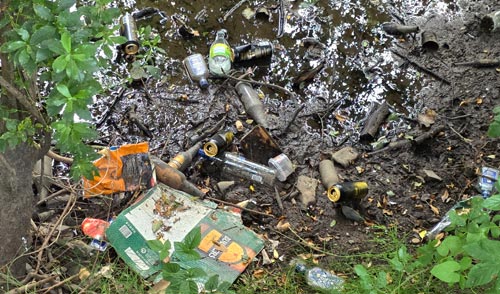
Visual Confirmation:State of the Suir River setin the heart of Thurles today; left uncleared since the recent Liberty Music Festival, which was held on Saturday July 4th and Sunday 5th, 2026 last.
These findings do not suggest failure across the council’s entire environmental programme. They do, however, show that enforcement must be consistent across every priority area. Tipperary County Council should respond by publishing clear corrective actions, measurable targets and realistic timelines for improvement. The report also highlights targeted work carried out in Tipperary’s firewood sector. Eleven firewood producers were contacted and provided with information on their obligations under solid-fuel legislation, including EPA registration and certification requirements. Following this engagement, three producers registered with the EPA and six began working towards certification through the Wood Fuel Quality Assurance Scheme. Two newly identified producers remain subject to further follow-up.
The Tipperary initiative demonstrates how inspections, education and sustained engagement can improve compliance. It also shows that continued oversight is necessary to ensure firewood meets the required quality and moisture standards, protects air quality and supports responsible producers.
The EPA will continue to monitor local-authority performance and work with councils to improve environmental outcomes for communities throughout Ireland.
County Tipperary Chamber is calling on every business in Thurles and the surrounding area to complete the Thurles Bypass Business Impact Survey before Friday, 7 August 2026.
For decades, the people and businesses of Thurles have heard proposals, commitments and political assurances regarding essential road infrastructure. However, the town is still waiting for the completed Inner Relief Road and the long-promised Outer Ring Road or Thurles Bypass.
As recently highlighted by Thurles.info, announcements and expressions of political support are not the same as approved funding, a binding construction programme or a completed road.
Thurles businesses need delivery, certainty and measurable progress. Traffic congestion is not merely an inconvenience. It imposes real and continuing costs on local employers. It delays deliveries, wastes staff time, disrupts logistics, restricts customer access and makes it more difficult for businesses to plan, invest and expand. Every delayed journey affects productivity. Every customer discouraged by congestion represents a potential loss to the local economy. Every infrastructure project that remains uncertain can influence future investment and employment decisions.
This aforementioned survey provides businesses with an opportunity to transform those daily experiences into clear, credible and representative evidence. County Tipperary Chamber recently welcomed Thurles native Mr John O’Shaughnessy CDir MBA LL.B (Hons) Dip IOD, Managing Director of Clancy, as its new President. Mr O’Shaughnessy has taken on the presidency at a critical time for business confidence and regional competitiveness. His focus on delivery, effective advocacy and ensuring that the voice of Tipperary business is heard consistently at local and national level is particularly relevant to the infrastructure challenges facing Thurles.
Under his leadership, the Chamber is determined to ensure that the concerns of local businesses are supported by strong evidence and presented directly to Government and other decision-makers.
That effort now requires the support of the Thurles business community. Whether you operate a retail shop, hospitality venue, professional practice, manufacturing company, transport business or family enterprise, your experience matters.
The survey is open to Chamber members and non-members and to businesses of every size and sector.
Government departments require more than general expressions of concern. They require evidence showing how congestion affects operating costs, staffing, deliveries, customer access, competitiveness, investment and future growth.
The greater the response, the stronger the Chamber’s case will be.
This is not about creating another report that sits on a shelf. It is about establishing a compelling business case for action and demonstrating that Thurles cannot continue to compete effectively without modern, dependable transport infrastructure.
A sincere thanks to every business that has already participated. Your time and first-hand knowledge are all helping to build the evidence needed to secure meaningful progress. To those who have not yet responded, please do not assume that another business will speak for you. Every completed survey adds weight, credibility and urgency to this campaign.
Thurles deserves roads, investment and delivery, not more uncertainty or political promises.
The Ribbon Men in Tipperary; Where They Came From, Where They Went And Why They Are Less Spoken About in Irish History.
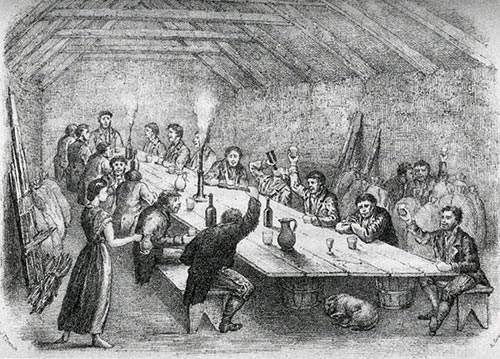
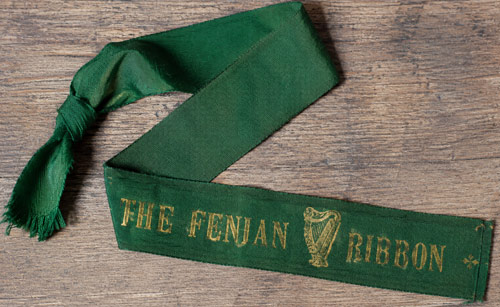
The Ribbon Men were part of the wider movement known as Ribbonism, a Catholic secret-society tradition that grew in Ireland during the late eighteenth and nineteenth centuries. They did not begin in Tipperary alone. Their roots are usually traced to the Defender movement of the 1790s, especially in Ulster, where Catholic communities organised for protection in a time of sectarian tension and political unrest. Over time, Ribbonism spread beyond the north and became associated with rural grievances, tenant rights, resistance to tithes, opposition to evictions, and hostility towards landlords, agents, informers, and process servers. Historians describe Ribbonism as both a secret society and a form of community defence, though government officials often used the name loosely for many kinds of rural disorder.
In Tipperary, the Ribbon Men entered a county already well known for agrarian conflict. Long before them there had been Whiteboys, and later there were Rockites, Terry Alts, Caravats, Shanavests, and other local factions. Tipperary’s land system, poverty, insecurity of tenure, tithes, evictions, competition for farms, and resentment of middlemen created the conditions in which secret societies could take hold. From the 1760s onwards the county was heavily involved in these rural movements, under different names and with changing motives.
Their activities in Tipperary were usually not open political rebellion in the modern sense. They worked in secret and at night. They used oaths, passwords, threatening letters, armed visits to houses, raids for firearms, attacks on property, intimidation of tenants, latter who took land from evicted families, and warnings to employers or landlords. Some actions were violent and sometimes deadly. Others were intended to frighten rather than kill. A National Archives record from 1828, for example, refers to Ballingarry Glebe, (NR), near Borrisokane and the forwarding of new oaths sworn by entrants into the “Ribband System.” This is important because it places Ribbon organisation, not just vague agrarian unrest, in north Tipperary.
The evidence suggests that Ribbon and Ribbon-like activity was strongest in north and mid Tipperary. The Ormond districts, especially around Borrisokane and Nenagh, appear repeatedly in studies of threatening notices and rural intimidation. Daniel Grace’s study of threatening notices in pre-Famine Tipperary found that land was the dominant issue behind such threats, and that the northern baronies of Upper and Lower Ormond produced a particularly high concentration of notices. Other places connected with this wider pattern include Thurles, Roscrea and Ikerrin, Templemore, Borrisoleigh, Cashel, Golden, Bansha, Tipperary town, Killenaule, Mullinahone, Carrick-on-Suir, Cahir, and Clonmel. Some of these places were centres of actual incidents; others were police, court, or administrative centres where cases were reported, tried, or investigated.
Where did they go? In one sense, they did not simply go anywhere. Ribbonism changed shape. Some members emigrated, especially to Britain and America, bringing forms of Irish Catholic fraternal organisation with them. Scholarship on Ribbon societies shows that the tradition did not remain purely rural or purely Irish; it also appeared among Irish migrant communities in Britain and later influenced Catholic fraternal organisations such as the Ancient Order of Hibernians. In Ireland itself, the Ribbon Men faded as new movements took the stage. The Young Irelanders, the Fenians, the Land League, the Irish Parliamentary movement, and later revolutionary nationalism, latter which gave people different languages and structures for protest. The old secret agrarian oath-bound society became less central.
There are several reasons why the Ribbon Men are less spoken about today. First, they were secretive. They did not leave behind manifestos, membership lists, or proud public records in the way later political organisations did. Much of what we know comes from police reports, court records, hostile newspapers, informers, and government correspondence. These sources are useful, but they are also biased and often confused.
Second, the term “Ribbonman” was sometimes used too broadly. Officials could blame almost any unsolved agrarian crime on Ribbonism. This makes it difficult to separate genuine Ribbon organisation from Faction Fights, local feuds, Whiteboy activity, Rockite activity, or ordinary crime. Historians therefore handle the term carefully.
Third, their story is morally uncomfortable. They were not simply heroes or villains. They defended poor Catholic tenants in a harsh land system, but they also used intimidation and violence. That complexity does not fit easily into the cleaner patriotic story often told about later Irish nationalism.
Finally, Tipperary’s later history overshadowed them. The Famine, the Land War, the War of Independence, Soloheadbeg, and the Civil War became larger parts of public memory. Compared with those events, the Ribbon Men belong to a darker, earlier, more secretive world of oath-bound rural resistance.
Yet they matter. To understand Tipperary in the nineteenth century, we must remember not only the famous leaders and public movements, but also the hidden networks of ordinary people who acted from fear, anger, loyalty, and desperation. The Ribbon Men were part of that hidden history.
€17 Million To Maintain Seized Drug Ship – Handed Over for $1 – Irish Taxpayers Deserve Answers.
The seizure of the MV Matthew was an extraordinary success for Ireland’s law-enforcement and Defence Forces. It prevented approximately 2.2 tonnes of cocaine, valued at more than €157 million, from reaching the streets and dealt a serious blow to international organised crime. The members of Revenue, An Garda Síochána, the Naval Service, Air Corps and Army Ranger Wing involved deserve recognition for an exceptionally difficult and dangerous operation.
But praising that operation does not mean taxpayers must remain silent about what happened afterwards. Revenue has now confirmed that safely managing and maintaining the MV Matthew cost the State approximately €17 million. After almost three years in Cork Harbour, the vessel was transferred to an international shipping company for the nominal consideration of just one US dollar.
Cocaine.
That outcome is extremely difficult for ordinary taxpayers to accept. The issue is not that Revenue seized the ship. It was entirely right to seize a vessel being used for international drug smuggling. Nor can we pretend that the ship could simply have been abandoned, ignored or immediately sold. It was evidence in major criminal proceedings, and the State had obligations relating to security, maintenance, ownership, maritime registration, safety and environmental protection. However, €17 million is an enormous amount of public money. At one point, the vessel was reportedly costing around €120,000 every week to manage and maintain. When expenditure reaches that level, the public is entitled to ask whether every reasonable step was taken to reduce the cost.
Why was Ireland apparently unprepared for the financial consequences of seizing a large commercial vessel? Why was there no established procedure allowing the State to secure the necessary evidence digitally and physically, resolve ownership rapidly and seek an earlier sale, scrappage arrangement or cost-sharing agreement? ►Could international partners, insurers, port authorities or maritime agencies have helped reduce the burden? ► Were alternative berthing, crewing and maintenance arrangements properly examined? ► Who monitored the accumulating expenditure, and at what point was ministerial intervention sought?
These questions do not undermine the criminal investigation. Accountability strengthens public confidence in such operations. Revenue has explained that the disposal process was complicated because the ship had been used for international drug smuggling, nobody claimed ownership, and legal and regulatory requirements had to be resolved with international authorities. Those explanations must be considered fairly. Nevertheless, describing the case as “unprecedented” cannot become a complete answer for every euro spent. Public bodies must be prepared for unprecedented events. Once weekly costs began running into six figures, an urgent cross-government task force should have been examining every lawful option to protect the taxpayer.
The State ultimately spent approximately €17 million maintaining an asset from which it recovered a nominal $1. Although the true benefit of the seizure cannot be measured merely by the ship’s sale price, the cocaine was removed, criminals were imprisoned and organised crime was disrupted; the financial outcome still exposes a serious weakness in how seized maritime assets are handled.
The Government should now publish a transparent breakdown of the expenditure, including berthing, crewing, repairs, insurance, security, legal work and professional fees. The Comptroller and Auditor General and the Public Accounts Committee should examine whether the spending represented value for money and whether delays could have been avoided. Most importantly, Ireland needs a permanent protocol for future seizures of ships, aircraft and other high-cost assets. It should establish clear deadlines, ministerial oversight, spending controls, international cooperation arrangements and options for rapid disposal once evidential requirements have been satisfied.
Taxpayers support robust action against drug traffickers. They understand that major operations cost money. What they should not be expected to accept is an open-ended bill without detailed scrutiny. The seizure of the MV Matthew was a victory against organised crime. The €17 million aftermath must now become a lesson in accountability, preparedness and respect for taxpayers’ money; not another example of enormous public expenditure being explained only after the money is gone.
This website uses cookies to improve your experience. We'll assume you're ok with this, but you can opt-out if you wish.AcceptRead More
Privacy & Cookies Policy
Privacy Overview
This website uses cookies to improve your experience while you navigate through the website. Out of these, the cookies that are categorized as necessary are stored on your browser as they are essential for the working of basic functionalities of the website. We also use third-party cookies that help us analyze and understand how you use this website. These cookies will be stored in your browser only with your consent. You also have the option to opt-out of these cookies. But opting out of some of these cookies may affect your browsing experience.
Necessary cookies are absolutely essential for the website to function properly. This category only includes cookies that ensures basic functionalities and security features of the website. These cookies do not store any personal information.
Any cookies that may not be particularly necessary for the website to function and is used specifically to collect user personal data via analytics, ads, other embedded contents are termed as non-necessary cookies. It is mandatory to procure user consent prior to running these cookies on your website.







Recent Comments