The Government’s decision to designate the proposed Shannon water pipeline, as “critical infrastructure”, represents a significant new development in a project that could profoundly affect North Tipperary and the wider Shannon region.
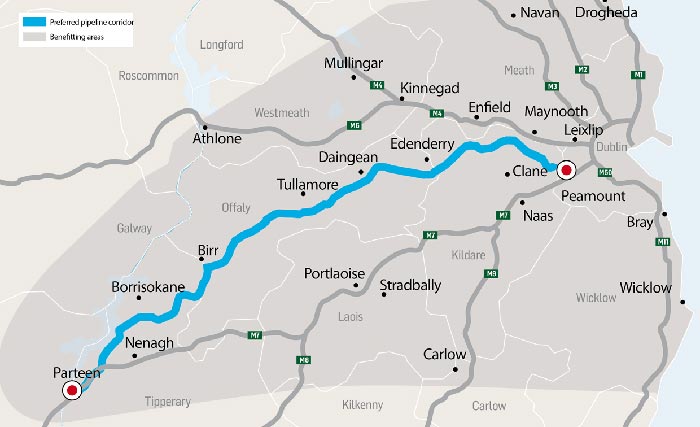
Officially known as the Water Supply Project for the Eastern and Midlands Region, the scheme is now one of the first nine projects placed at the “top of the queue” under the Critical Infrastructure Act 2026. It is one of three water projects selected, alongside the Greater Dublin Drainage Project and the upgrade of the Bunlicky Wastewater Treatment Plant in Limerick. The proposed scheme would take water from the lower River Shannon at the Parteen Basin in County Tipperary, treat it at Birdhill and carry it through a pipeline running across Tipperary, Offaly and Kildare to Peamount in County Dublin. Uisce Éireann says the project would provide a second major water source for the eastern and midlands region, reduce its heavy dependence on the River Liffey and help meet future housing, population and economic demands.
However, the scale of the proposal remains enormous. The planning application involves the abstraction of more than 300 million litres of water on certain days, according to reported project figures. Uisce Éireann describes this as a maximum of approximately 2% of the Shannon’s average flow at Parteen Basin. The utility’s current estimated cost is between approximately €4.6 billion and €6 billion. However, documents previously supplied by the Department of Housing to the Public Accounts Committee indicated that the final bill could exceed €10 billion under a worst-case risk scenario.
This new designation does not automatically grant planning permission, nor does it direct An Coimisiún Pleanála to approve the application. What it does is place a legal obligation on relevant State bodies to prioritise the project, allocate the necessary administrative and technical resources and reduce the time taken to process decisions, licences, consents and other authorisations. Public bodies are also expected, where possible, to carry out different approval processes simultaneously rather than waiting for one process to finish before beginning another.
That distinction is important. The project must still comply with planning law, environmental assessment requirements and Ireland’s obligations under European Union law. The designation is intended to accelerate decision-making, not predetermine its outcome. Nevertheless, from a Tipperary perspective, the Government’s announcement clearly increases the political and institutional pressure surrounding the project. Only weeks ago, An Coimisiún Pleanála postponed its expected decision on the application. Its official case record now states that a decision is due by 2nd July 2027. That postponement is not merely an administrative delay. It provides crucial breathing space for communities, farmers, environmental organisations, public representatives and independent experts to examine the proposal in full.
The central questions have not disappeared simply because the Government has labelled the pipeline nationally important. ► What would sustained abstraction mean for the Parteen Basin, Lough Derg and the lower Shannon during drought or unusually low-flow conditions? ► Have alternatives; including stronger leakage reduction, greater use of existing regional water sources and less centralised supply options, been adequately examined? ► What protections and enforceable guarantees will be provided to communities in Tipperary? ► How reliable are the cost projections for a project stretching approximately 170 kilometres and potentially lasting many years? ► Does placing the project at the “top of the queue” risk creating pressure for speed at the expense of proper scrutiny?
The eastern and midlands region undoubtedly needs a secure and resilient water supply. That need, however, cannot be used to silence legitimate questions from the county, where the water would be taken, treated and initially transported. Critical infrastructure status should demand a higher standard of evidence, transparency and accountability, not a lower one.
The period before July 2027 must therefore be used constructively. Tipperary needs clear hydrological evidence, independent environmental analysis, transparent costings and binding commitments concerning local water security and the protection of the Shannon system.
The Government may have accelerated the project politically, but it has not answered the fundamental questions surrounding it.
For Tipperary, the planning postponement remains a vital opportunity to ensure those questions are heard before any irreversible decision is made.
206 New Gardaí Join the Ranks as Recruitment Drive Builds Momentum.
An Garda Síochána has received a major personnel boost following the attestation of 206 new members at the Garda College in Templemore.
The graduating class, comprising 142 men and 64 women, is the largest single group of Gardaí to attest since 2019. It is also the third attestation ceremony held in 2026, reflecting the continued expansion of recruitment and training activity at the college.
Following their graduation, the probationer Gardaí will be assigned by the Garda Commissioner to divisions throughout the country. Their deployment is expected to strengthen frontline policing, increase visibility in communities and provide additional operational capacity during Ireland’s Presidency of the Council of the European Union.
Almost half of the new members will again serve in the capital. A total of 94 probationer Gardaí have been allocated to the Dublin Metropolitan Region. The Eastern Region will receive 56 members, while 31 will be deployed to the North-Western Region and 25 to the Southern Region.
The new Gardaí will begin their careers at a time when policing responsibilities are becoming increasingly complex. Alongside traditional community and frontline duties, members must respond to organised crime, cybercrime, online offending and evolving national and international security threats. Ireland’s EU Presidency will create further operational demands, with Garda personnel responsible for supporting the security and smooth running of meetings and official events. Extensive planning and coordination have already taken place, and the additional members will help ensure that regular policing services can be maintained while these responsibilities are delivered.
The latest graduation represents another step in the Government’s plan to increase the strength of An Garda Síochána. Three recruitment competitions have taken place during the past 18 months, attracting more than 15,000 applications. The training pipeline is also set to continue growing. More than 200 additional trainees are due to enter the Garda College during the week beginning 27th July, with further classes expected to commence at regular intervals throughout the year.
Budget 2026 provided more than €2.74 billion for An Garda Síochána. The funding supports the recruitment of sworn members and civilian staff, as well as investment in training, technology, equipment and other resources required to deliver modern policing services.
Following the latest attestation, An Garda Síochána has 14,733 sworn members. The organisation also includes 3,683 Garda staff and 304 Garda Reserve members, while another 604 trainees are progressing through their education and training.
The arrival of the 206 probationer Gardaí will provide an immediate increase in personnel across Ireland’s policing regions. Their deployment will also support the wider objective of building a larger and more sustainable Garda workforce capable of meeting the changing safety and security needs of communities throughout the country.
The Local Authority Waters Programme, commonly known as LAWPRO, has now officially become the River Basin Management Service, marking a new chapter in the organisation’s work to protect and restore water quality across Ireland.
The service works on behalf of Ireland’s 31 local authorities and is funded by the Department of Housing, Local Government and Heritage. It supports the protection of rivers, lakes, estuaries, groundwater and coastal waters through scientific catchment assessments, community engagement and coordinated local-authority action. Although the organisation has adopted a new name and visual identity, its mission, structure and responsibilities remain unchanged. The new title is intended to provide a clearer description of its role in supporting Ireland’s national water-quality objectives and the implementation of river basin management plans.
Established in 2016, the organisation has worked with local authorities, government agencies, farmers, landowners, volunteers, environmental organisations and community groups to identify pressures affecting water quality and develop suitable local responses.
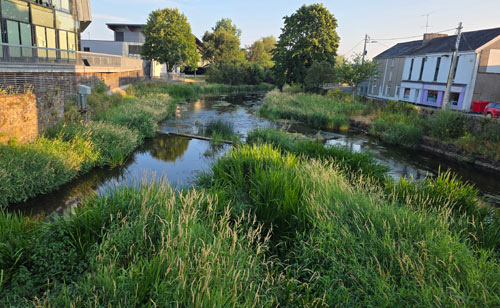
Unsatisfactory state of the River Suir, in Thurles town centre, yesterday. Pic; G. Willoughby.
Minister for Housing, Local Government and Heritage Mr James Browne, TD, welcomed the announcement. He said the new name reflects the organisation’s important role in coordinating and supporting the protection and restoration of water bodies as Ireland prepares its next Water Action Plan. The River Basin Management Service will continue carrying out catchment-science assessments, helping local authorities implement national water policy and providing financial assistance to community organisations working to improve their local waters.
Community participation has been central to the organisation’s activities. Since its establishment, approximately €7.5 million has been awarded to 1,208 projects through the Community Water Development Fund and Catchment Support Fund. Further support has been provided through the Small Grants and Events Scheme and annual Heritage Week funding. These programmes enable communities to organise water-awareness events, citizen-science initiatives, biodiversity projects, environmental surveys and other activities that benefit local rivers, lakes and coastal areas. The organisation’s work is particularly relevant to communities along the River Suir, including Thurles, where residents have raised concerns about declining water quality, excessive aquatic vegetation and changes affecting fish and other wildlife.
At a public meeting in County Tipperary in November 2025, attendees highlighted concerns about the River Suir from Thurles upstream. Issues discussed included nutrient pollution, excessive weed growth and reductions in fish and aquatic life. The meeting also heard that scientific assessments were being conducted across the wider Suir catchment to identify the main pressures affecting its waters.
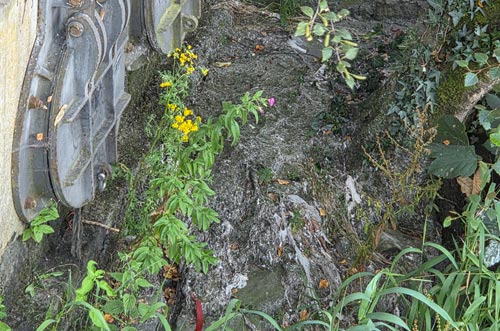
Despite all the talking, no serious effort by Tipperary Co. Council to halt effluent flowing from drainage pipes, easily visible from Thurles Town centre.
Such assessments demonstrate the importance of combining scientific evidence with local knowledge. Information from residents, anglers, farmers and community groups can help specialists understand changes within a river and determine which measures are most likely to improve its ecological condition.
Mr Anthony Coleman, Director of Services at the River Basin Management Service, confirmed that the organisation will continue operating as the same local-authority shared service. Its work will remain focused on catchment science, community engagement, partnership development, funding support and collaborative action. The service will maintain a science-led approach to identifying environmental pressures and targeting solutions. Its specialists examine water bodies and surrounding landscapes to establish which activities may be affecting water quality and where intervention is most urgently needed.
It will also continue developing its Nature-based Solutions programme and the Blue Dot Catchments Programme, which supports the protection of Ireland’s highest-quality waters. In addition, it will coordinate the Farming for Water European Innovation Partnership and expand training programmes for local-authority staff.
By adopting the Local Government Ireland identity, the River Basin Management Service is strengthening its connection with the local-government sector and aligning itself with other shared services. While its name has changed, its central commitment remains the same; bringing together science, local authorities and communities to protect Ireland’s waters and create healthier catchments for future generations.
A major expansion of Cloverhill Prison is set to begin, following the signing of a construction contract for a new accommodation block at the west Dublin facility.
The project, awarded to JJ Rhatigan & Co., is expected to take 22 months to complete. Once finished, it will increase Cloverhill’s capacity from 433 places to more than 700, adding 267 spaces to an institution that has faced sustained pressure from overcrowding.
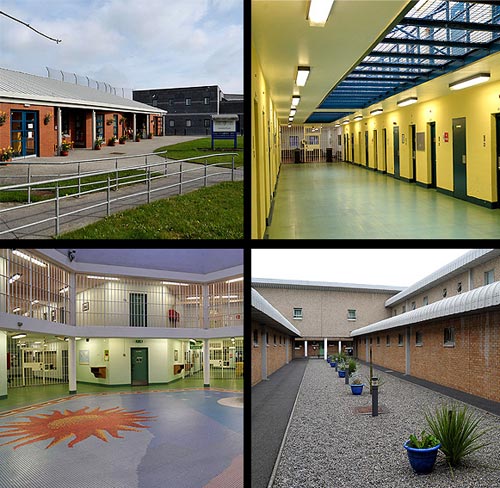
At the centre of the development will be a four-storey extension to Block D. The new building will contain 143 cells and will be designed to accommodate up to 270 prisoners. It represents the largest construction project undertaken by the Irish Prison Service in several years and forms a central part of the State’s wider programme to modernise and expand the prison estate. The expansion is intended to provide safer, more suitable accommodation for people in custody while improving working conditions for prison staff. It is also expected to support rehabilitation services by creating a more modern environment in which education, healthcare and structured prison programmes can be delivered. Cloverhill is one element of a broader capital plan that aims to provide more than 1,500 additional prison spaces between 2024 and 2031. The programme has been developed in response to rising prisoner numbers, overcrowding and the need to replace or extend ageing facilities.
Cloverhill Prison.
Since 2024, some 265 spaces have been completed across the prison system. This includes 126 places delivered in 2024, 106 in 2025 and 33 during the first part of 2026. A further 32 spaces are due to be completed before the end of this year, followed by another 70 in 2027.
Other major projects planned under the programme include a substantial extension to Cork Prison on the site of the former prison, a new accommodation block at Wheatfield Prison and an additional block extension at the Midlands Prison. Further capacity is also being developed at Castlerea, Mountjoy, the Dóchas Centre and Limerick Male Prison.
The Government has allocated €67.9 million in capital funding to the Irish Prison Service for 2026. This forms part of a €528 million investment package covering the period from 2026 to 2030, with €495 million earmarked for prison construction and expansion projects. The investment also reflects a shift toward long-term capacity planning, rather than relying solely on short-term measures to manage growing pressure throughout the prison system.
Planning work is also due to advance on a new prison at the Thornton site in north County Dublin. A master plan is expected to determine how the site will be shared by the Irish Prison Service, International Protection Accommodation Services and An Garda Síochána. Construction work at Thornton is currently planned to begin in 2030.
The Cloverhill contract marks a significant step in the prison building programme. With construction now moving forward, the project is expected to deliver badly needed capacity and help reshape the prison estate for the demands of the coming decade.
Minister for Rural and Community Development and the Gaeltacht, Mr Dara Calleary TD, will visit Tipperary and Clare on Friday, 24 July, for a full programme highlighting newly completed community, recreational and biodiversity projects.
The Minister’s visit begins at 9:00am with the official opening of Thurles Market Quarter, Town Parks, Thurles. He will then open Loughtagalla Biodiversity Play Park, Thurles at 10.30am, followed by Carrig Community Park, Carrig, Co. Tipperary, at 11.50am.
At 12.35pm, Minister Calleary will travel to Lorrha to view the renovated St Ruadhan’s Hall and visit the SCEAL Community Shop and Café, two facilities supporting local services and community life.
The afternoon programme moves to County Clare, beginning in Bunratty at 3.15pm, where the Minister will launch a new boat for Bunratty Search and Rescue Service.At 5.15pm, he will officially open the upgraded Lahinch Playground and launch the Clare Outdoor Recreation Plan on the town’s promenade. The day will conclude at 6.45pm with the opening of Corofin Community Centre.
This series of engagements will recognise the work of local volunteers, community organisations and public bodies involved in bringing the projects to completion.
Together, the developments provide improved parks, play areas, rescue resources, meeting spaces and community services for residents and visitors. They also demonstrate the important role locally led projects can play in strengthening rural towns and villages, supporting wellbeing, protecting biodiversity and creating welcoming public spaces for people of all ages.
This website uses cookies to improve your experience. We'll assume you're ok with this, but you can opt-out if you wish.AcceptRead More
Privacy & Cookies Policy
Privacy Overview
This website uses cookies to improve your experience while you navigate through the website. Out of these, the cookies that are categorized as necessary are stored on your browser as they are essential for the working of basic functionalities of the website. We also use third-party cookies that help us analyze and understand how you use this website. These cookies will be stored in your browser only with your consent. You also have the option to opt-out of these cookies. But opting out of some of these cookies may affect your browsing experience.
Necessary cookies are absolutely essential for the website to function properly. This category only includes cookies that ensures basic functionalities and security features of the website. These cookies do not store any personal information.
Any cookies that may not be particularly necessary for the website to function and is used specifically to collect user personal data via analytics, ads, other embedded contents are termed as non-necessary cookies. It is mandatory to procure user consent prior to running these cookies on your website.





Recent Comments