Today marks the anniversary of the murder of Detective Garda Frank Hand, who was fatally shot by members of the Provisional IRA; latter the paramilitary organisation historically and politically associated with Sinn Féin, while protecting a delivery of pension and social-welfare money in County Meath.
On the morning of August 10th 1984, Detective Garda Hand and his colleague, Detective Garda Michael Dowd, were travelling in an unmarked Garda car as the armed escort for a Post Office mail van. When the vehicles stopped outside Drumree Post Office, they were confronted by an armed Provisional IRA unit attempting to rob the delivery. Gunfire was exchanged between the raiders and the Gardaí. Both detectives were wounded, but Detective Garda Hand’s injuries sadly proved fatal.
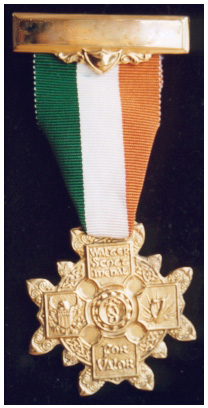
Scott Gold Medal
The stolen money was subsequently recovered. Mr Tony Eccles, Mr Patrick McPhillips and Mr Brian McShane were convicted of Detective Garda Hand’s capital murder. They all received death sentences, which were commuted to 40 years imprisonment. The three men were later released early under the provisions associated with the Belfast Agreement.
Detective Mr Frank Hand was born on August 29th 1957, the fourth of seven children from Ardmullen, Curraghboy, County Roscommon, (near Athlone). He joined An Garda Síochána on July 20th 1977. After completing his training, at the Garda Training Centre in Templemore, County Tipperary, (Today called the Garda College), he was assigned to Donnybrook Garda Station in Dublin. On April 16th 1982, he was appointed to the Central Detective Unit at Harcourt Square.
During his short but distinguished career, he also played an important part in the arrest of murderer Mr Malcolm MacArthur in 1982. Detective Hand played a key role in the August 1982 arrest of murderer Mr MacArthur at the Attorney General’s apartment in Dalkey. Detective Hand had remained stationed at the rear of the property, while other officers moved towards the front; Assistant Garda Commissioner Mr Tony Hickey later recalled that this decision had prevented MacArthur from escaping.
Detective Hand was killed just19 days before his 27th birthday. He had married Ms Breda Horgan; also a member of An Garda Síochána, only five weeks earlier. His newly married wife was then pregnant at the time of his death, and their daughter, Fiona, was born after her father was murdered.
Detective Hand gave his life while protecting his colleagues and the public. Behind the uniform was a young husband, an expectant father and a dedicated Garda whose future was taken from him in an act of criminal violence.
Today, we remember Detective Garda Frank Hand, his widow Mrs Breda Hand, his daughter Fiona, his wider family and all those affected by the attack at Drumree.
The deteriorating condition of the River Suir cannot be treated as a new discovery.
For years, residents, anglers and environmental campaigners have raised concerns about pollution, excessive vegetation, restricted flows and the general neglect of the river through Thurles and surrounding areas. Yet meaningful, coordinated action by elected representatives, Tipperary County Council and the responsible State agencies has been painfully slow. VIEW HERE and note date, November 7th 2013.
Note the dates of the following links published over the past 13 years
Recent statements and a carefully produced publicity videos may create the impression of decisive political intervention. But inspections, promises and political photo opportunities are not substitutes for an agreed restoration programme, clear accountability and work on the ground.
Ministerial Visit Raises More Questions Than It Does Answers. Minister of State Mr Kevin Moran recently visited sections of the Suir in Thurles and Holycross following representations from Independent TD Mr Michael Lowry. Not for the first time Deputy Lowry says the Office of Public Works will support an application from Tipperary County Council, under the enhanced Minor Flood Mitigation Works Scheme. The expanded scheme reportedly allows councils to seek 95% funding for eligible works costing up to €2 million.
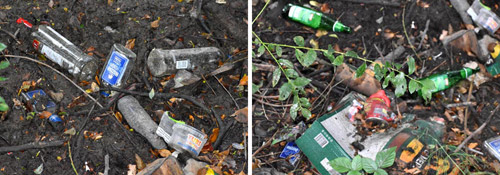
Pictures of the River Suir bed not shown in “Team Lowry’s” promotional video. The litter remains almost six weeks after the Liberty Music Festival, with no proper clean-up and no bin near “Wino’s Corner” despite repeated requests to Tipperary County Council.
All such commitments is welcome, but it remains only a commitment to support an application. The public has not yet been given a detailed proposal identifying:- The exact works to be undertaken. The evidence that those works will improve the river. The environmental assessments required. The project’s anticipated cost and timetable. The agencies responsible for delivering and monitoring it.
After years of warnings, the people of Tipperary are entitled to something more substantial than another announcement.
Where Have Our Representatives and Council Officials Been? The present condition of the Suir did not develop overnight. Local representatives and council officials have had ample opportunity to inspect the river, consult anglers and environmental groups, engage the relevant agencies and develop a long-term plan. Instead, the response has too often appeared fragmented and reactive.
Councillor Micheál Lowry and his father, Deputy Michael Lowry TD, are now drawing attention to conditions that local campaigners say have been evident for more than a decade. Their intervention must therefore be judged by what it delivers, not by the number of statements, videos or the ministerial visits it generates.
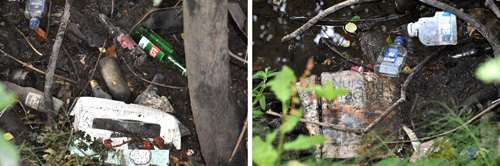
Other pictures of the River Suir bed not shown in “Team Lowry’s” promotional video. The litter remains in the river, together with 6 Supermarket trollies, almost six weeks after the Liberty Music Festival, with no proper clean-up and no bin near “Wino’s Corner” despite repeated requests to Tipperary County Council.
It should be noted:Thurles Town Park bye-laws were formally made by Tipperary County Council acting through the Templemore–Thurles Municipal District, and they came into operation on March 1st 2016. Available evidence indicates that those bye-laws then regulated alcohol consumption in the park, but this bye-law today remains totally ignored by all and sundry.
The same standard must be applied to Tipperary County Council. If the Council intends to seek OPW funding, it should publish its proposal and explain how any vegetation removal, blockage clearance or flood-related work will be reconciled with water quality, fisheries and habitat protection.
This Is More Than a Question of Appearance The problem cannot be reduced to reeds, bulrushes or an untidy riverbank. The Suir catchment covers approximately 3,500 square kilometres. Catchments.ie has previously identified excess phosphorus from sources including wastewater, animal waste and fertilisers as a major water-quality pressure. Excess nutrients can drive eutrophication, damaging aquatic habitats and reducing ecological quality. Catchments.ie’s Suir assessment also shows why pollution sources vary across the catchment and require targeted measures rather than a single cosmetic response.
Low summer flows, pollution, heavy plant growth, sediment and physical obstructions may interact, but they are not necessarily the same problem. Removing vegetation without identifying the underlying causes will not, by itself, restore the river. Any intervention must be scientifically informed and developed with the relevant environmental and fisheries authorities.
Too Many Agencies—and Too Little Accountability Responsibility for the Suir is spread across numerous organisations, including: Tipperary County Council. The River Basin Management Service, (formerly LAWPRO). The Environmental Protection Agency. Inland Fisheries Ireland. The Office of Public Works. Uisce Éireann. The National Parks and Wildlife Service. Local landowners, anglers and recreational organisations.
This above complicated structure cannot continue to provide cover for delay and buck-passing. The public needs to know which body is leading the response, what each agency is responsible for and when measurable improvements will be delivered. The failure to prominently involve or even acknowledge the River Basin Management Service in recent Lowry political presentations is particularly difficult to understand.
Community Initiatives Must Be Supported; but Properly Coordinated. The Cashel, Golden and Tipperary Anglers Association is reportedly considering seeking assistance to hire specialist equipment to remove bulrushes from parts of the riverbed. Separately, NoreVision is reported to be progressing proposals for River Suir and River Barrow trusts. Such trusts could help communities undertake practical restoration, education and awareness projects, provided they have appropriate scientific guidance, sustainable funding and constructive relationships with public agencies. Community organisations can make an enormous contribution, but volunteers should not be expected to compensate indefinitely for failures of statutory responsibility.
Public “Save Our Suir” Meeting in Cahir. A public information meeting is scheduled following a recent committee meeting of the Cashel, Golden and Tipperary Anglers Association. Date: Wednesday, August 26th, 2026. Time: 7:30pm. Venue: Cahir House Hotel. Tel.: 052 7443000. Admission: Open to all. Note: I could not independently locate an official online notice confirming the above event, thus intending attendees should check the organiser’s latest announcement before travelling.
The “Save Our Suir” proposed meeting offers residents, anglers, landowners, recreational users and environmental campaigners an opportunity to hear what is being proposed and to demand answers from those responsible.
The Suir Needs a Plan; NOT Another Vote Catching Publicity Exercise. The River Suir is an ecological, recreational and economic asset belonging to the entire community. Its future cannot be protected through disconnected funding announcements, short-term clearance projects or political sound-bites.
Those attending any Cahir meeting should demand: A published, science-based assessment of the river’s condition. Identification and investigation of pollution sources. A costed restoration and maintenance programme. A clear division of responsibility among the Council and State agencies. Meaningful consultation with anglers, environmental specialists, landowners and residents. Public reporting against firm delivery dates.
After years of warnings, elected representatives and council officials must be held accountable for the absence of effective action. The question is no longer whether the River Suir is under pressure. The question is who will take responsibility and how soon tangible work will begin.
A photograph taken during President Catherine Connolly’s visit to Belfast has reopened one of the most painful cases of the Troubles.
The image shows the Irish President smiling in a group outside the Falls Women’s Centre, with Ms Mary McArdle standing immediately beside her and to her right.
Ms Mary McArdle(Irish republican and former Provisional Irish Republican Army (IRA) member), is the only person convicted of the 1984 murder of Belfast teacher Ms Mary Travers.
President Connolly visited the Falls Women’s Centre on Wednesday, August 5th 2026, during a series of official engagements connected with Fleadh Cheoil na hÉireann. The visit is recorded in the President’s official diary. The photograph shows Ms McArdle standing right, beside the President. It has not been established whether President Connolly knew McArdle would be present, recognised her or deliberately chose to stand beside her. It was a group photograph rather than a private meeting between the two women.
Nevertheless, the image has caused considerable distress to Mary Travers’s family. Mary’s sister, Ms Ann Travers, said she was deeply upset to see the President standing and smiling beside the woman convicted of involvement in her sister’s murder. She has now reportedly called for an apology and asked President Connolly to press Ms McArdle to provide information about the other people involved in that attack.
The reason for that distress goes back to Sunday, 8 April 1984. Ms Mary Travers was walking home from Mass at St Brigid’s Church in south Belfast with her parents, when an IRA unit attacked the family. The intended target was her father, Resident Magistrate Mr Tom Travers. Mr Travers was shot six times but survived. Mary was shot in the back and killed. A gun was also placed close to the face of her mother, Joan, but it jammed when the attacker attempted to fire.
Ms Mary Travers was a young primary-school teacher. Contemporary accounts differ over whether she was aged 22 or 23, but her family describes her as 23 years old. Mary Ann McArdle, then 19 years old, was arrested shortly after the attack. She was found carrying the two handguns used in the shooting, concealed on her person, along with disguise material. Although Ms McArdle was not identified as one of the two male gunmen, the court convicted her of murder for her participation in the IRA operation. She received a life sentence for Ms Mary Travers’s murder and a concurrent 18-year sentence for the attempted murder of Mr Tom Travers. Another defendant, Mr Joseph Patrick Haughey, was accused of being one of the gunmen. He was acquitted after doubts arose over identification and the lack of sufficient forensic evidence. No one else was convicted.
Ms McArdle served approximately only 14 years before being released in 1998 under the early-release provisions associated with the Good Friday Agreement. The case returned to public attention in 2011 when Sinn Féin appointed Ms McArdle as a special adviser to Stormont Culture Minister Carál Ní Chuilín.
Ms McArdle subsequently described Mary Travers’s killing as a “tragic mistake” and expressed regret that it had happened. The Travers family rejected that response as inadequate. Ms McArdle was also reported to have declined to assist the Historical Enquiries Team in identifying the other members of the IRA unit. The controversy surrounding her political appointment ultimately contributed to Stormont legislation restricting people with serious criminal convictions from serving as ministerial special advisers.
President Connolly cannot reasonably be accused of knowingly endorsing Ms McArdle merely because the two appeared beside one another in a group photograph. There is presently no public evidence that the President knew in advance who would be standing beside her. But the President’s office must still answer an important question; what checks, if any, were carried out before an official photograph placed the Irish head of state beside the only person convicted of Ms Mary Travers’s murder?
For the Travers family, this is not an abstract political dispute or an argument about historical symbolism. Mary was their daughter and sister. She was shot in the back while walking home from Mass, and more than 42 years later most of those responsible have never been brought to justice.
Whatever the explanation for the photograph, the hurt it caused was entirely foreseeable, and deserves a direct and compassionate response.
The removal of parking spaces is now harming town-centre businesses in both Cashel and Thurles.
Cllr Roger Kennedy recently raised the alarm at a meeting of the Tipperary – Cahir – Cashel Municipal District. He said road-realignment works in Cashel had removed 12 parking spaces, leaving fewer places for passing customers and discouraging people from stopping in to shop locally.
Thurles traders know this story only too well. Successive traffic and public-realm changes have reduced town-centre parking, while the approved second phase of the Liberty Square scheme will remove further spaces. Traders strongly opposed that plan, warning that it could damage businesses and put further jobs at risk. Nevertheless, it was proposed by Cllr Ms Peggy Ryan, seconded by Cllr Mr Seán Ryan and approved by the municipal-district members. Against this background, Tipperary County Council is pressing ahead with countywide “harmonised” parking charges.
So who came up with that idea? The review began following calls from Clonmel councillors. Former Director of Services, Mr Marcus O’Connor, promised the review, after which the council’s Infrastructure Strategic Policy Committee and officials developed the tiered charging system. The final Parking Bye-Laws 2026 were approved by the full County Council on 13th July 2026.
Background to the parking review. Thurles already had paid parking, it dates back at least to the former Thurles Town Council’s 2005 bye-laws. In April 2025, the elected members of Thurles Municipal District adopted replacement bye-laws retaining paid parking in Thurles. The 2026 countywide scheme now places Thurles in Tier 2 and is intended to standardise parking charges across the county.
The council says parking charges encourage turnover and help make spaces available to shoppers. But that argument becomes increasingly difficult to accept when the council is simultaneously approving schemes that remove the very spaces shoppers need.
You cannot improve parking turnover in spaces that no longer exist.
You cannot encourage people to shop locally while making it progressively more difficult—and more expensive—for them to stop.
You cannot speak about revitalising town centres while ignoring traders who depend on passing customers and convenient short-stay parking.
The issue is not simply parking charges, nor is it simply the removal of spaces. It is the combined effect:
Fewer town-centre parking spaces.
Charges on much of what remains.
Increased competition from out-of-town retailers offering free parking.
Less convenience for older people and those with limited mobility.
Reduced passing trade for independent businesses.
Decisions proceeding despite strong concerns from local traders.
There was significant resistance even among councillors themselves. An amendment allowing municipal districts to provide a one-hour-free-parking option passed by only 19 votes to 17. That close vote shows how divided elected representatives were over the council executive’s original 20-minutes-free proposal.
Cashel and Thurles need a joined-up parking policy based on the actual number of spaces available, business needs, accessibility and independently measured town-centre footfall, not a one-size-fits-all charging exercise.
Before further spaces are removed or new charges take effect, Tipperary County Council should publish:
The total number of spaces removed in each town during the past five years.
The number due to be removed under approved schemes.
The expected effect on footfall and local businesses.
Current occupancy and turnover figures.
A clear plan for replacement parking.
The names and recorded votes of councillors who approved the relevant schemes and bye-laws.
Local businesses are being asked to survive with fewer customers, fewer convenient spaces and additional parking costs. That is not town-centre regeneration, but rather an obstacle to it.
Serious questions must be answered about the Government’s decision to exclude the FalconEye enhanced-vision system from Ireland’s new €53 million Dassault Falcon 6X.
Delivered shortly before Christmas 2025, the aircraft replaced the increasingly unreliable Learjet. It is not merely a ministerial transport. The State acquired it as a multi-purpose Strategic Reach Aircraft capable of undertaking long-distance medical evacuations, repatriating Irish citizens and Defence Forces personnel, and supporting operations in hostile or hazardous locations.
Ireland’s new €53 million Dassault Falcon 6X.
While I haven’t been on board myself; inside the cabin fit-out is understood to show cream coloured executive-style seating, polished wood panelling, cabin tables, and sofa-style seating.
Multiple sources have now reported, that the FalconEye Enhanced-Vision System has been omitted because its acquisition would have required the Irish State to enter into an agreement with its Israeli manufacturer, Elbit Systems.
FalconEye uses cameras, infrared sensors and synthetic imagery to give pilots substantially greater situational awareness in darkness, fog and other low-visibility conditions. Dassault says the system can reveal runways, lighting, airport structures and potential obstacles during final approach. An Air Corps pilot has explained that its practical advantage is enabling landings in weather conditions in which aircraft without it may have to divert.
This does not mean the Falcon 6X is unsafe or incapable of operating in poor weather. The Department of Defence insists that there are “no current limits on the operational capability of the aircraft.” Nevertheless, aviation sources say the omission reduces the options available to pilots in difficult conditions. That distinction demands examination, not evasive wording.
Political and ethical procurement policies are legitimate matters for government. But where a decision may affect the capability of an aircraft used for medical evacuation, emergency transport and the rescue of citizens, operational requirements and expert safety advice must be transparent and demonstrably paramount.
The Government should now disclose who authorised the omission, what operational and safety assessments were obtained, what alternatives were considered, and whether the consequences for emergency missions were fully evaluated. It should also explain the apparent inconsistency whereby other recently acquired Air Corps aircraft reportedly contain Israeli-manufactured technology considered integral to their operation.
Claims that this decision breaches EU procurement law should now be examined independently. Any decision regarding the aircraft’s procurement specification, including the reported request to exclude FalconEye, would have arisen within the Department of Defence procurement process during Mr Micheál Martin’s tenure. (Contract dated December 18th 2024). However, we are unable to establish which individual minister or government official personally authorised that particular exclusion.
This is not principally an argument about Israel. It is about responsible procurement, public safety and democratic accountability. On those matters, the Government owes the public clear answers not carefully constructed silence.
This website uses cookies to improve your experience. We'll assume you're ok with this, but you can opt-out if you wish.AcceptRead More
Privacy & Cookies Policy
Privacy Overview
This website uses cookies to improve your experience while you navigate through the website. Out of these, the cookies that are categorized as necessary are stored on your browser as they are essential for the working of basic functionalities of the website. We also use third-party cookies that help us analyze and understand how you use this website. These cookies will be stored in your browser only with your consent. You also have the option to opt-out of these cookies. But opting out of some of these cookies may affect your browsing experience.
Necessary cookies are absolutely essential for the website to function properly. This category only includes cookies that ensures basic functionalities and security features of the website. These cookies do not store any personal information.
Any cookies that may not be particularly necessary for the website to function and is used specifically to collect user personal data via analytics, ads, other embedded contents are termed as non-necessary cookies. It is mandatory to procure user consent prior to running these cookies on your website.







Recent Comments