Government approves publication of Criminal Law and Civil Law (Miscellaneous Provisions) Bill 2025.
The Government has approved the publication of the Criminal Law and Civil Law (Miscellaneous Provisions) Bill 2025, a wide-ranging package of reforms designed to address urgent pressures across the justice system and deliver key Programme for Government commitments.
The Bill will, among other measures, criminalise “sex for rent” arrangements; strengthen protections for victims in sexual offence trials; support responses to prison overcrowding and violence, and modernise aspects of forensic and court procedures.
Key measures in the Bill
Criminalise the exploitative practice commonly known as “sex for rent”.
Reform the disclosure of counselling records in sexual offence trials.
Expand the use of community service as an alternative to short custodial sentences.
Remove the legal barrier to the regulated use of incapacitant spray by prison officers.
Enable more advanced DNA analysis in missing and unknown persons cases.
Facilitate bail and suspended sentence bonds being taken in custody settings.
Put regulated outdoor seating for licensed premises on a permanent statutory footing.
Allow the Chief Justice to delegate certain non-judicial functions to other judges.
Tackling exploitation: new “sex for rent” offences.
The Bill introduces two specific criminal offences:
Offering accommodation in exchange for sexual activity.
Advertising accommodation in exchange for sexual activity.
These provisions cover both landlord–tenant arrangements and rent-a-room situations. The offences focus on the offer or advertisement itself; there is no requirement to prove that sexual activity occurred. The proposed penalty is a Class A fine of up to €5,000.
Protecting victims: counselling records in sexual offence trials The Bill will amend the law on the disclosure of counselling records in sexual offence trials by requiring a disclosure hearing in all cases, ensuring judicial oversight and that the privacy rights of victims and survivors are fully considered.
Responding to prison overcrowding and violence: Community service in lieu of custody.
To support non-custodial sentencing, the Bill will:
Require courts to consider a community service order (CSO) as an alternative to prison sentences of up to 24 months (currently 12 months)
Require courts to give reasons where a CSO is not imposed
Increase the maximum community service hours from 240 to 480
Incapacitant spray for prison officers
The Bill will also remove the legal barrier to the use of incapacitant spray by prison officers, with use to be regulated under provisions made by the Minister through the Prison Rules. The Department has indicated these provisions are intended to be introduced by Committee Stage amendments.
Improving missing persons investigations: advanced DNA analysis. The Bill amends the Criminal Justice (Forensic Evidence and DNA Database System) Act 2014 by inserting a new definition of “DNA profile” for missing and unknown persons cases. It also provides for more than one DNA profile to be generated from a relevant sample, to support more powerful identification techniques.
Modernising court processes, bail and suspended sentence bonds.
To better support remote/video-link participation in bail and sentencing hearings for people in custody, the Bill will:
Amend the Criminal Procedure Act 1967 to allow bail bonds to be entered before members of An Garda Síochána (where the person is in Garda custody)
Amend the Criminal Justice Act 2006 to allow suspended sentence bonds to be entered before prison governors (where the person is in custody)
These changes are intended to reduce the need for escorts to and from court and deliver time and cost efficiencies.
Civil law measures: outdoor seating for licensed premises: The Bill gives permanent effect to legal provisions for a regulated outdoor seating regime for licensed premises.
Judiciary: delegation of non-judicial functions: The Bill includes provisions to allow the Chief Justice to delegate certain non-judicial functions to other members of the judiciary.
Provisions not proceeding: Measures from the General Scheme relating to the Gambling Regulation Act 2024 are no longer proposed for inclusion in this Bill, as they have been provided for separately, under the Courts and Civil Law (Miscellaneous Provisions) Act 2025.
Tipperary County Council to invite public consultation on Harmonised Parking Bye-Laws 2026.
Tipperary County Council will commence a public consultation on January 12th 2026 regarding the proposed “Harmonised Parking Bye-Laws 2026”. These bye-laws aim to deliver a fair, consistent and modern county-wide parking system, moving away from the nine separate systems, which currently exist in each of our towns where there is a charge for parking.
The key proposed changes are as follows:
Three-tier charging structure for the nine towns reflecting the diverse character of each town.
Formal 20-minute free parking period in short and medium-stay parking zones; (perfect for that person in flat shoes, who can complete a full town-centre errand, involving running at Olympic pace; to post a letter; collect a prescription; grab a loaf; que at a Supermarket check-out; then find the one shop you actually needed is closed, and be back at the car before the engine properly cools). Standard parking location maps for all pay parking areas across all Tipperary towns. Parking zones at different rates will still be decided by the Elected Members at District level, if they can avoid their full time teaching posts and other occupations, in order to attend.
The new county-wide bye-laws seek to:
Support our town centres by encouraging parking turnover and the associated footfall.
Provide equity county-wide with equal charges for similar parking services for the towns in each of the 3 tiers.
Introduce a formal 20-minute free parking period in short and medium-stay town centre zones.
Ensure that off-street car parking will be cheaper than on-street parking.
Provide clarity and consistency with standardised permit categories and charging times county-wide.
Provide clear and consistent mapping of the parking system across all nine towns for public display.
The proposed bye-laws will replace multiple existing regulations and bye-laws and, subject to adoption, are expected to come into effect on September 1st 2026.
In parallel to the new bye-laws a scheme is proposed to return a percentage of parking income to each of the nine towns where that income is generated: same to support and fund town centre projects, initiatives and developments, e.g. Straighten sign posts and replace bollards removed by high sided vehicles the week before, or correct errors previously designed by money wasting town engineers. On wonders where such funds generated were allocated previously. However, focusing on Thurles; many will note a small mathematical complication: you can’t generate much parking income in a town centre where car parks remain unavailable and areas, like our town centre, where there are little to no spaces left to generate it from. It’s a bit like running a swimming pool fundraiser, after the water has been removed.
And while Thurles town centre may be short on parking, retail consumers point out it doesn’t seem short on enforcement, with two traffic wardens still in place, giving the impression that Thurles has perfected a rare civic innovation: a town centre where parking is scarce, but getting a ticket remains reliably available.
Tipperary County Council will have these draft Bye Laws available for inspection from January 12th 2026, for a period of one month, and will be inviting comments and submissions on these bye-law proposals for a further two weeks.
Members of the public are encouraged to participate, safe in the knowledge that their views, as is usual, will be carefully received, respectfully acknowledged, and then placed in the traditional local authority filing system marked as “Please Ignore”.
Politicians who condemn the deaths of children in Gaza, voted to strip protections from children at home, demonstrating a blistering display of hypocrisy.
The vote in Dáil Éireann exposed a stark and shameful contradiction at the heart of Irish political life. Parties and politicians who repeatedly condemn the killing of children in Gaza, and who speak in sweeping moral language about the sanctity of human life, were prepared to back legislation that would remove key safeguards for unborn children in Ireland.
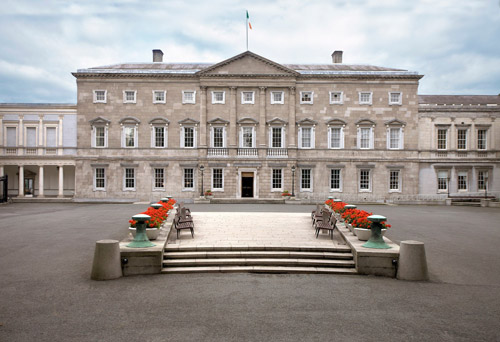
Leinster House, the seat of the Oireachtas, the parliament of Ireland. “Answer not a fool according to his folly, lest thou also be like unto him” – Proverbs 26:4.
The Health (Regulation of Termination of Pregnancy) Bill, brought forward by People Before Profit, sought to abolish the three-day waiting period for abortion on request, permit access to abortion throughout pregnancy, and decriminalise abortion provision within the State. The Bill was narrowly defeated by roll-call vote,73 votes to 71 votes. However, two senior female cabinet members Minister for Health Ms Jennifer Carroll MacNeill and Minister for Foreign Affairs Ms Helen McEntee, together with Minister for Public Expenditure Mr Jack Chambers are understood to have voted in favour of the Bill.
Yet the vote revealed something the public cannot ignore: Sinn Féin, Labour, the Social Democrats and People Before Profit, alongside the above named senior government figures, were prepared to support a far-reaching removal of legal protections for the unborn, while continuing to posture as champions of children’s lives in other international conflicts.
This is not merely inconsistency. It is moral double-standards dressed up as compassion. Time now to take a closer look at candidates before casting future votes.
When children die in Gaza, these parties demand outrage and action. But when asked to defend vulnerable life here at home, many of the same voices moved to weaken the last remaining vestiges of protections for unborn children and to expand abortion access in a way that opponents believe would normalise termination up to birth.
If the death of a child is a moral outrage in Gaza, then the destruction of a child’s life in Ireland cannot be treated as morally weightless simply because it happens quietly, clinically and behind a different set of political slogans.
Yes, time and space do matter in moments of crisis.
This is the core question Irish people deserve answered plainly: How can politicians speak with absolute moral certainty about children’s lives overseas, while voting to diminish protections for children at home in Ireland?
The public are not completely stupid. Voters can see the selective empathy and the convenient moralising. If these parties truly believe every child matters, then that principle must apply consistently, not only when it is politically fashionable, safely distant, or useful for social media outrage.
We call on Sinn Féin, Labour, the Social Democrats, People Before Profit and some government ministers to explain their position honestly, without spin:
Do they believe there should be any legal protection for unborn children?
Do they accept any limit at all on abortion access.
Do they recognise any moral weight in the life of the unborn child?
Until they answer clearly, their condemnations of the deaths of children in Gaza will ring hollow to many Irish people, not because Gaza does not matter, but because their proclaimed moral principles are being applied selectively without using rational, thus making them unfit to run this country.
A Sinn Féin activist is reported to be among three people arrested following the seizure of an estimated €4 million worth of suspected cocaine during searches in the south east of the country.
Gardaí said the operation, involving the Garda National Drugs and Organised Crime Bureau and Revenue Customs, took place on Wednesday, December 17th, as part of Operation Tara targeting organised crime groups. A business premises in Co. Kildare and a residential address in Co. Wexford were both searched, with officers seizing 58kg of suspected cocaine valued at approximately €4.06 million (subject to analysis).
Two men aged in their 30s and 40s and a woman in her 40s were arrested. Gardaí said they were detained under provisions of the Criminal Justice Acts in connection with alleged facilitation of drug trafficking for an organised crime group.
The suspected drugs are to be sent to Forensic Science Ireland, and investigations are continuing.
The Irish Government has agreed to nominate Mr. Mark Dunne, SC and Mr. Micheál O’Connell, SC as Ordinary Judges of the High Court.
Biographical Details of nominees: Mr. Mark Dunne, SC Educated at University College Dublin and the Honourable Society of King’s Inns. Called to the Bar in 1998. Called to the Inner Bar in 2019. Legal practice mostly included Administrative Law, Commercial/Chancery, Dispute Resolution, General Common Law, Judicial Review and Tort & Personal Injury Law.
Mr. Micheál O’Connell, SC Educated at Trinity College Dublin and the Honourable Society of King’s Inns. Called to the Bar in 1999. Called to the Inner Bar in 2018. Legal practice mostly included Commercial/Chancery, General Practice, Conveyancing & Property Law.
One nomination will fill a current vacancy and the second nomination is contingent upon a vacancy arising on 27th day of December 2025.
The current vacancy arises due to the elevation of the Hon. Mr. Justice Alexander Owens to the Court of Appeal, on the 29th day of September 2025. The reasonably anticipated second vacancy arises due to the scheduled retirement of Judge Ms Mary Ellen Ring on the 27th day of December 2025.
This website uses cookies to improve your experience. We'll assume you're ok with this, but you can opt-out if you wish.AcceptRead More
Privacy & Cookies Policy
Privacy Overview
This website uses cookies to improve your experience while you navigate through the website. Out of these, the cookies that are categorized as necessary are stored on your browser as they are essential for the working of basic functionalities of the website. We also use third-party cookies that help us analyze and understand how you use this website. These cookies will be stored in your browser only with your consent. You also have the option to opt-out of these cookies. But opting out of some of these cookies may affect your browsing experience.
Necessary cookies are absolutely essential for the website to function properly. This category only includes cookies that ensures basic functionalities and security features of the website. These cookies do not store any personal information.
Any cookies that may not be particularly necessary for the website to function and is used specifically to collect user personal data via analytics, ads, other embedded contents are termed as non-necessary cookies. It is mandatory to procure user consent prior to running these cookies on your website.








Recent Comments