Tusla chief executive Ms Kate Duggan has warned that a levy on the agency’s 2027 budget could increase risks for vulnerable children and families by restricting services during rising demand. The Irish Times reports that officials informed Tusla of its inclusion in May.
The reason is a wider government savings policy. Departments have been instructed to deliver €446 million in efficiencies and reforms in 2027 to offset part of the previous year’s overspending. The Government has promised protection for some spending areas, including infrastructure, social protection and social housing supports.
The Department of Children faces a €42 million levy across its budget. Tusla’s individual contribution is not specified in the reporting.
Ms Duggan disputes the fairness of including the agency, saying it has controlled pay and staffing expenditure and already delivered savings. She described Tusla as being “penalised for overruns in other sectors”. The reporting does not establish that Tusla was selected because of financial mismanagement, or explain why it has not been exempted.
What services are at stake? Tusla’s responsibilities include:
Child protection and welfare, including responses to abuse and neglect.
Foster care, residential care, special care and aftercare.
Family support, early intervention, parenting support and counselling.
Above are examples of Tusla’s services, not a confirmed list of cuts. No specific service closures, staffing reductions or affected locations are identified in the earlier report.
The Department of Children says negotiations aim to achieve savings without cutting Tusla’s services and supports. Ms Duggan’s warning raises a clear question for Budget 2027; how will those protections be delivered while meeting the levy?
Irish Political Pay, Expenses And Official Cars; What the Published Figures Show.
Ireland’s published salary rates put annual gross pay for the Taoiseach at €256,311, the Tánaiste at €236,427, and a Cabinet minister at €217,136.
Position.
Published Annual Gross Pay.
Ceann Comhairle. (Head of Council – Dail Speaker)
€268,522.
Taoiseach,
€256,311.
Tánaiste.
€236,427.
Cabinet Minister.
€217,136.
Minister of State attending Cabinet.
€181,573.
Minister of State.
€167,759.
Ordinary TD.
€119,467.
These figures above include the basic TD salary and any salaried allowance attached to the listed office. They are before tax and deductions.
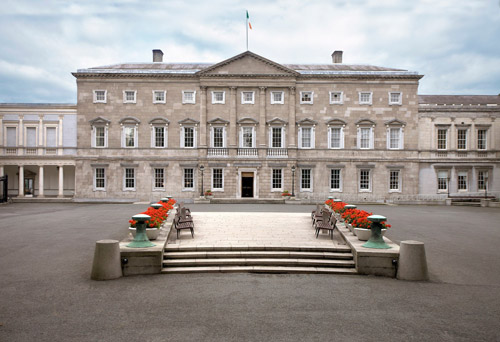
Leinster House.
Constituency and representation expenses are additional. Ordinary TDs can claim up to €20,350 annually, while ministers and ministers of state can claim up to €16,000. These allowances cover eligible work expenses, such as constituency office costs, and are subject to certification and audit. Unspent representation allowances must be repaid.
Ordinary TDs also have a travel and accommodation allowance ranging from €9,000 to €34,065, depending on the distance between their home and Leinster House and supposedly subject to attendance requirements. Ministers and Ministers of State cannot claim this allowance.
At the full allowance amounts, an ordinary TD’s salary plus these expenses totals €148,817 to €173,882 annually. A Cabinet minister’s salary plus the maximum representation allowance totals €233,136, before other eligible expenses or State-funded services. These combined amounts include money allocated for work costs.
Official transport adds a separate public cost. Freedom Of Information (FOI) reporting published on June 3rd, 2026, put the Ministerial Car Service’s cost for the preceding year at approximately €8.4 million, covering the Taoiseach, Tánaiste, ministers and other officeholders.
The reported breakdown was: ► €7.67 million for Garda driver salaries. ► €311,000 for fuel. ► €436,000 for maintenance.
The fleet contained 52 vehicles: 25 diesel vehicles, 25 plug-in hybrids and two fully electric vehicles. Purchase and disposal prices requested in that release were withheld on commercial confidentiality grounds. Certain security-related information was also withheld under Freedom of Information protections.
The available figures do not establish a complete salary, expenses, car and security total for each individual politician. The €8.4 million is a shared transport service cost; it cannot reliably be divided equally between ministers or described as their personal earnings.
An ordinary Irish TD earns €69,467 more per year than an average worker on €50,000; approximately 139% more, or 2.39 times as much. [As already stated the published basic TD salary is €119,467 annually, before tax and deductions.]
Gross Pay Comparison
Irish Worker
Ordinary TD
TD earns extra
Annual.
€50,000.
€119,467.
€69,467.
Monthly equivalent.
€4,166.67.
€9,955.
€5,788.92.
So for every €1 the worker earns, a TD earns approximately €2.39. The above compares only basic salaries. It excludes expense allowances and additional pay for holding office; the difference in take-home pay would depend on tax and other deductions.
Also take into account the €119,467 figure earned, is the TD’s own gross annual salary. It does not include the salaries of constituency staff, parliamentary assistants, private secretaries or ministerial advisers. Under the Oireachtas Scheme for Secretarial Assistance, TDs may employ an administrative assistant and either a parliamentary assistant or use the Special Secretarial Allowance. This support is separate from their personal salary.
Ministers have additional staffing arrangements. Private secretaries and ministerial office staff appear in departmental staffing accounts, while special advisers have their own contracts and pay arrangements. These ministerial roles are not an entitlement of every ordinary TD. My earlier €148,817–€173,882 salary-plus-expenses range also excluded separately funded staff salaries. It was therefore not the full taxpayer cost of supporting a TD’s work.
The comparison with a worker earning €50,000 remains a personal salary comparison; a TD earns approximately 139% more before tax. Staff costs would increase the cost to the State, rather than the TD’s personal earnings.
Fianna Fáil Senator Ms Imelda Goldsboro received €16,779 in travel and accommodation allowances in 2026 during an eight-month absence, through serious illness, according to an Irish Times report published today, 11th September 2026.
Ms Goldsboro said she continued working in Tipperary and while in hospital. Fianna Fáil subsequently said she was engaging with the Oireachtas to ensure her records and payments were accurate.
Ms Goldsboro’s political career includes serving on Tipperary County Council for the Carrick-on-Suir area from May 2014 until February 2025. She unsuccessfully contested the Tipperary constituency in the 2020 general election, Tipperary South in the 2024 general election, and the Agricultural Panel in the 2025 Seanad election. She also served on the South East Regional Drug and Alcohol Task Force. She became a senator in February 2025 last, following her nomination by An Taoiseach Mr Micheál Martin.
Following Ms Goldsboro’s appointment to the Seanad, her daughter Ms Amy Goldsboro, then 21 years of age, won a Fianna Fáil selection convention and was subsequently co-opted unto her mother’s vacant seat on Tipperary County Council, representing the Carrick-on-Suir area.
Travel and accommodation allowance payments continue automatically unless the member gives written instructions to stop them, according to an Irish Times report.
Oireachtas rules allow medically certified illness to be considered when assessing attendance requirements.
“Paper never refused ink,” as the old saying goes. Publication alone does not establish accuracy; public statements should be supported by clear information and visible results. I refer of course to a press release by Refresh Thurles Tidy Towns and published HERE by the Tipperary Star local newspaper.
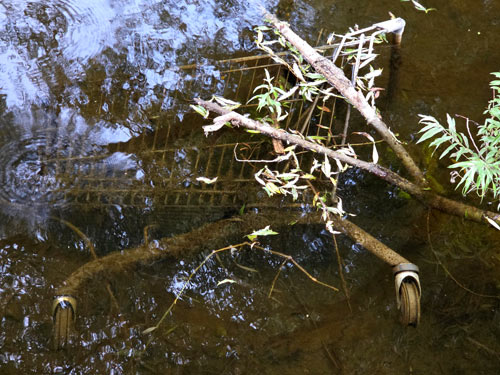
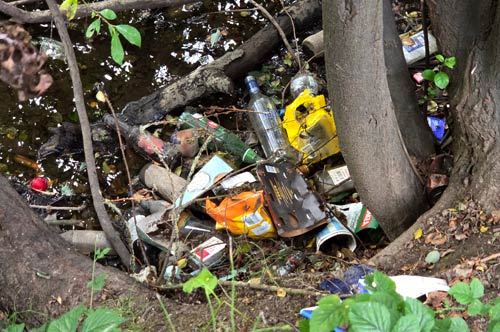
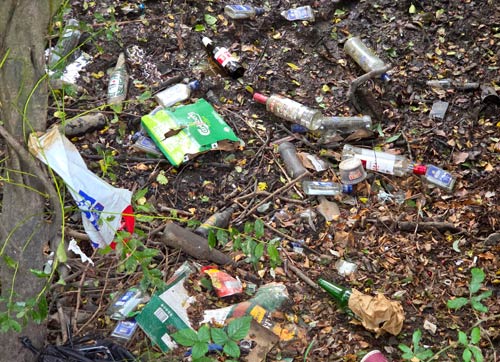
Refresh Thurles Tidy Towns’ concern about the River Suir is, at last, indeed to be welcomed. However, the accompanying photographs show substantial litter; numerous discarded drinks bottles, food wrappers, cartons and other rubbish among the trees and along the bank, together with shopping trolleys submerged beneath branches; today evidenced remaining untouched for almost 2 years.
One supermarket trolley overlooked in River Suir since 2025.
These currently submerged trolleys present another practical question; when were they first reported, who is responsible for arranging their safe removal, and when will that happen? Despite the water being shallow, nobody should expect volunteers to enter the river to retrieve them, but residents deserve a clear answer about who will act.
Litter overlooked in Thurles town park since 2025
The group reports regular litter picks and the recent collection of eight bags of rubbish. That work deserves acknowledgement. Nevertheless, the conditions pictured raise a fair question: when were these particular areas last cleaned, and are they included in the regular litter-picking route?
There is also a question about the photograph accompanying this week recent Tipperary Star report. [See HERE] My understanding is that it previously appeared on Refresh Thurles’ Facebook page on 25th April 2026. If it is an older photograph, its date should be made clear, so readers of local press do not mistake it for evidence of this current week’s activity.
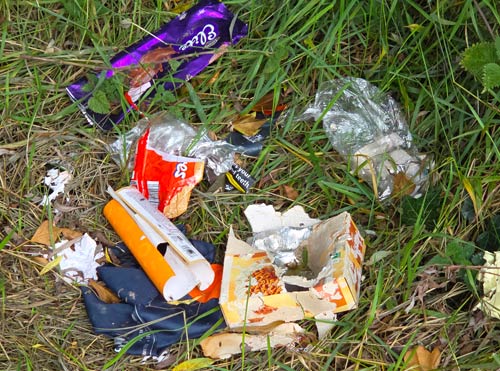
Uncollected litter dumped between 2025/26, due to absence of litter bins.
My concern is that litter problems here, have persisted since the 2025 music festival. These photographs can prove that no cleaning has occurred since then, and they do show places that need immediate attention. If access or safety difficulties prevent volunteers from collecting this rubbish, have those locations been reported to the council, and what response has been received?
The timing of the press statement also merits clarification. Has Refresh Thurles previously raised these concerns publicly or in writing with the relevant authorities? If so, when, and with what outcome?
Please do take the time to fully view the video hereunder, to fully understand what must be observed as Ireland’s shame.
Why Ireland’s Rivers Are Dying?
Finally, the published statement’s reference to installing wildlife information boards needs clarification. My understanding is that Thurles Municipal District Council installed the signage. Could the respective roles in commissioning, funding, designing and installing the boards be explained, so everyone’s contribution is accurately acknowledged?
Uncollected riverbank litter since August 12th, 2026, still visible this wet morning.
These are reasonable questions, not a dismissal of voluntary effort. Those who discard rubbish bear responsibility for their behaviour, and volunteers deserve thanks for the work they do.
But appreciation and accountability can and must sit together. What matters now is an accurate account of the work completed, a clear allocation of responsibility and dates for addressing the problems shown in above accompanying pictures shown here and with no remedial action taken for months.
Some newspapers are happy to publish public relations (PR) material from politicians and other organisations, without verifying the facts. The favourable accounts they present are often far removed from the truth.
Paper may never refuse ink. The River Suir, at this stage, needs more than words.
Farmers Must Be Supported To Prepare For Ever More Compounding Climate Extremes Says Climate Change Advisory Council.
Council calls for farmers to be supported with land-specific climate information, technology and practical advice to prepare for a changing climate.
The Agriculture sector has not met its commitment to reduce emissions by 10% by 2025, and without a stronger push, will not meet its 2030 commitments.
Just 2,527 hectares of new forest were planted in 2025 against an annual target of 8,000 hectares.
Progress on bio-methane remains far behind the pace required.
Mr Alex White – (Chairperson Climate Change Advisory Council).
Launching the Agriculture and Land Use, Land Use Change and Forestry chapter of its Annual Review 2026 today, the Climate Change Advisory Council said farmers are increasingly having to manage very different risks throughout the year due to extreme conditions including excessive rainfall, heatwaves and drought.
Rather than reacting to individual weather crises as they occur, the Council says farmers should be better equipped to understand the long-term risks facing their land and businesses in a climate that is becoming increasingly extreme. It is calling on the Department of Agriculture, Food and the Marine (DAFM) to develop and deploy, within 12 months, a practical climate-risk toolkit tailored to individual land parcels.
Alongside better information, farmers need access to practical advice, financial support and viable alternatives to existing practices that are more climate resilient. Restoring soil, water and ecosystem functions can help farms absorb extreme-weather shocks and maintain productivity, while some farmers may choose to adapt existing practices or diversify into new sources of income.
The Review also warns that Ireland’s reliance on imported fruit and vegetables leaves the food system vulnerable to climate-related crop failures elsewhere and supply-chain disruption, and calls for a review of how domestic horticulture could strengthen food security.
Agriculture emissions fell by just 0.2% in 2025 and are now 4.7% below the 2018 baseline – less than half of the 10% reduction commitment from government for 2025. EPA projections indicate that the ‘with additional measures’ scenario would deliver an approximately 19% reduction in Agriculture emissions by 2030, compared with the 25% target. The Council notes that the 25% target remains achievable if additional diversification measures identified in the Climate Action Plan are also fully implemented.
To close this gap, DAFM should develop and begin implementing, a time-bound and properly resourced plan to accelerate emissions-reduction measures on farms, informed by structured dialogue with farmers, rural communities and workers.
The Forestry sector remains a particular concern. Ireland is not close to meeting its annual afforestation target of 8,000 hectares, leaving Ireland substantially off track for 18% forest cover by mid-century and contributing to a weakening forest carbon sink. The next Forestry Programme must address the financial, administrative and practical barriers preventing greater participation.
Significant public funding has been committed to anaerobic digestion under the Biomethane Strategy, but delays to the Renewable Heat Obligation are holding back the market certainty needed to unlock investment and demand. Progressing the obligation is essential if bio-methane is to support farm diversification and energy security.
Mr Alex White, (Chairperson of the Climate Change Advisory Council), said:
“Farmers are increasingly having to manage extremes – this year we have seen too much water at one time of year and too little at another. We cannot keep treating every prolonged wet period or drought as an isolated crisis. Climate change is challenging some of the established practices involved in agriculture and land management. Practical support will be essential, whether that means making land and farms more resilient, adapting existing practices or pursuing viable opportunities for diversification, including forestry, carbon farming and renewable energy. The transition has to be shaped in collaboration with rural communities and farmers, and not simply designed for them. Policy will be more effective if it reflects the practical realities, costs and opportunities on the ground, while delivering the emissions reductions Ireland needs.”
View News from the Climate Change Advisory Council HERE.
This website uses cookies to improve your experience. We'll assume you're ok with this, but you can opt-out if you wish.AcceptRead More
Privacy & Cookies Policy
Privacy Overview
This website uses cookies to improve your experience while you navigate through the website. Out of these, the cookies that are categorized as necessary are stored on your browser as they are essential for the working of basic functionalities of the website. We also use third-party cookies that help us analyze and understand how you use this website. These cookies will be stored in your browser only with your consent. You also have the option to opt-out of these cookies. But opting out of some of these cookies may affect your browsing experience.
Necessary cookies are absolutely essential for the website to function properly. This category only includes cookies that ensures basic functionalities and security features of the website. These cookies do not store any personal information.
Any cookies that may not be particularly necessary for the website to function and is used specifically to collect user personal data via analytics, ads, other embedded contents are termed as non-necessary cookies. It is mandatory to procure user consent prior to running these cookies on your website.






Recent Comments