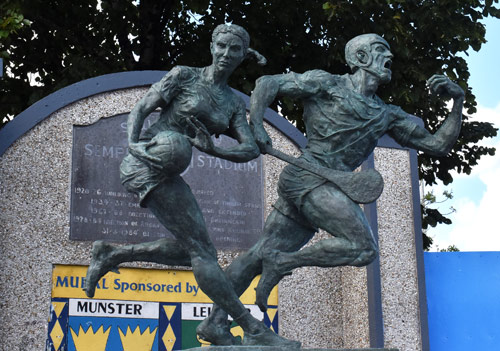
A monumental bronze sculpture by Kilkenny artist Mr Aidan Harte was unveiled outside FBD Semple Stadium in Thurles today, celebrating the town’s unique place in the history of Gaelic Games.
Standing more than three metres tall, Ár gCluichí Féin, (meaning Our Own Games), depicts a male and female player in motion, representing the energy, skill and shared traditions of hurling, camogie and Gaelic football.
Ár gCluichí Féin. Pic: G. Willoughby.
The inclusion of the female figure is particularly significant, making the work the first major GAA statue to portray a female player.
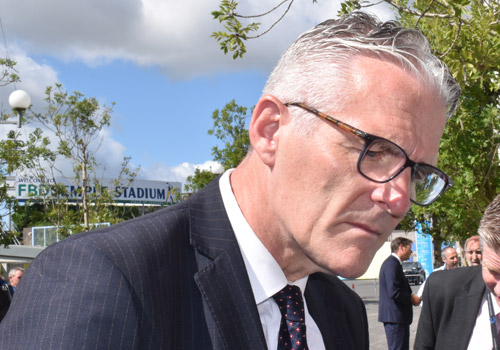
The sculpture honours Thurles as the birthplace of the Gaelic Athletic Association, which was founded at Hayes’ Hotel in the town in 1884. The Ladies Gaelic Football Association was also established at the same location 90 years later, in 1974. GAA President Mr Jarlath Burns attended the unveiling alongside young representatives of the Primary Games and leading Tipperary players, including senior hurling captain Mr Ronan Maher, vice-captain Mr Jake Morris and senior camogie captain Ms Caoimhe McCarthy.
GAA President Mr Jarlath Burns. Pic: G. Willoughby.
Commissioned by Tipperary County Council in partnership with Tipperary GAA and FBD Semple Stadium, the artwork forms part of a wider place making programme for the area. The investment also includes tourism, active-travel, road, cycling and public-realm improvements around the stadium and truly is a must view.
Mr Harte began his career in the arts at Kilkenny-based animation studio Cartoon Saloon, working alongside its founders Tom Moore and Paul Young. He later studied sculpture in Florence and has created several prominent works, including the widely discussed Púca sculpture commissioned for County Clare.
Now permanently positioned beside one of Ireland’s most celebrated sporting grounds, Ár gCluichí Féin provides a striking tribute to the generations of women and men who have played, supported and sustained Ireland’s native games.
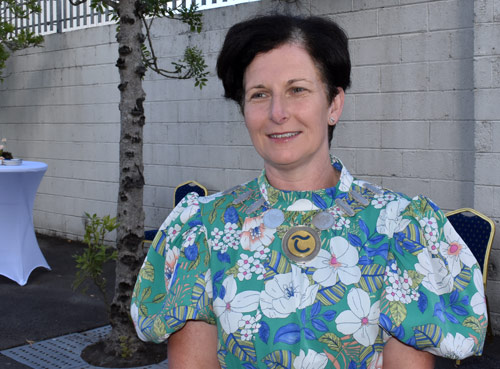
Present Chairperson (Cathaoirleach) of Tipperary County Council, Labour CouncillorMs Fiona Bonfield summed up the occasion in her introductory opening speech stating: “It is wonderful to see such a large attendance here today. Unlike most occasions held in Semple Stadium, there is no debate this morning about team selections, controversial refereeing decisions, or whether the ball went over the bar. For once, we are all gathered in complete agreement to celebrate something truly special. It is a great pleasure to be here today for the unveiling of this remarkable artwork—a piece that celebrates a place of profound importance in Ireland’s sporting, cultural and social history: Thurles, the birthplace of the Gaelic Athletic Association. In a week when we have witnessed at first hand the importance of our national games to our people, and collectively celebrated a historic game last Sunday, (Mayo v Kerry) we have, as a nation, felt a tremendous sense of pride in that journey.
Today, we gather not only to welcome a new artistic creation, but also to honour a story—a story that began here in Thurles in 1884, when a small group of visionaries came together with the ambitious idea of preserving, promoting and strengthening Ireland’s indigenous games and cultural traditions. From that meeting emerged an organisation that would grow beyond anything its founders could ever have imagined. What would those founders think if they could see the GAA today? For more than 140 years, the GAA has helped to shape communities across Ireland and throughout the world. It has nurtured generations of players, volunteers, supporters and families. It has provided places where people belong, where friendships are forged, where leadership is developed and where local pride flourishes.”
Chairperson (Cathaoirleach) of Tipperary County Council Labour CouncillorMs Fiona Bonfield. Pic: G. Willoughby.
“At the heart of that story is Thurles. This town occupies a unique place in our national consciousness. It is where the foundations were laid for a movement that would become one of the largest amateur sporting organisations in the world. It is fitting, therefore, that this artwork should stand here in Thurles as a permanent reminder of that legacy, and of the vision, determination and community spirit that inspired the founders of the Association. Public art has a special role in our communities. It allows us to connect with our shared history, celebrate our identity and tell our stories in a way that resonates across generations. Great artwork, however, endures. It captures the imagination, sparks conversations and leaves a lasting impression. This artwork does precisely that. It honours the past while speaking to the future. It reminds young people of the extraordinary heritage they inherit and encourages them to become the next generation of players, volunteers, artists, leaders and custodians of community life. As we unveil this artwork, we celebrate far more than a historical event. We celebrate creativity. We celebrate artistic mastery. We celebrate community. We celebrate volunteer-ism. We celebrate identity. Above all, we celebrate a town whose name will forever be linked with one of the most influential organisations in Irish life.” continued Ms Bonfield.
While welcoming the many dignitaries and team players in attendance today; Ms Bonfield further stated, “Fittingly, here in Thurles, at the Field of Legends, we celebrate a passion that can unite neighbours, families and entire counties”.
Our Games Began Here — and Today, They Come Home
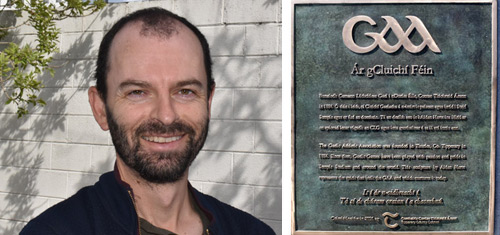
“Ár gCluichí Féin” artist Mr Aidan Harte. Pic: G. Willoughby.
Speaking after the sculpture was revealed, Ár gCluichí Féin artist Mr Aidan Harte described the satisfaction of finally seeing the completed work installed on its plinth. The artist spent much of the previous year modelling the figures in clay at his Kildare studio, before the piece was transferred to a foundry and cast in bronze.
Mr Harte stated, “My father will be the first to tell you that I am Ireland’s worst sportsman. I peaked as a corner-forward at the age of nine. But sculpting this pair of giants was my version of senior hurling. Thank you to Ms Melanie Scott of Tipperary Arts Office for awarding me this commission amid strong competition, and for supporting me throughout its year-long creation.
Thank you to Mr Vincent O’Shea for his good advice, and the occasional kick up the arse when I needed it. Thanks also to sculptors Mr Alan Clarke, Ms Liz O’Kane and Mr Hywel Pratley for their second opinions on anatomy and composition, and to Mr Kieran Riley for his engineering advice on constructing a work of this scale. The Foundry did far more than cast the sculpture; they were co-creators. My thanks to Mr David O’Brien, Jessica, Sandra, Ahmed and Brian for transforming the clay created in my studio into bronze.
The raw materials for the plinth came from Manor Stone, while Thomas Duffy and the County Council team constructed it, along with the elegant space in which the sculpture now stands. Completing everything on time required close coordination between Thurles District Council and Semple Stadium, led by Ms Deirdre Dunne and Mr David Morgan.
Finally, thank you to the people of Thurles for allowing my champions to become part of the Semple Stadium’s story. Our games began here. They thrived here. Today, they come home.
Down in County Clare, my first public sculpture, The Púca, stands in the birthplace of Michael Cusack, founder of the GAA, with FBD Semple Stadium one of the great arenas of Gaelic games, and it is an honour to take part in its continuing story. I hope this sculpture reminds everyone who sees it of how powerful we can be when people unite around the things they love. The two figures do not depict any particular players, because Gaelic games belong to all of us. Thank you to everyone who helped bring this work to life: my wife, Bronagh, who put up with the muddy floors; my neighbour Stuart, who loaned me his football boots; and my models, Natalia Hornet, Noémie Birard, Michael Harte and Pierce Harte. I created the sculpture on top of a steel armature, built by my father Billy, back in the 1970s. Billy himself hurled on these hallowed grounds for Kilkenny.
Thank you all for coming out and sharing this special occasion”, concluded Mr Harte.
Water quality in private water supplies (small private supplies and private group schemes) is not as good as public water supplies.
Small private supplies provide drinking water to, for example, schools, nursing homes and hotels. Private group schemes cover 376 community run supplies.
1,600 small private drinking water supplies are registered, but the total number remains unknown as there is no legal requirement to register.
Unregistered supplies are not sampled by local authorities and may unknowingly be providing unsafe drinking water to consumers.
Failures due to E. coli in private group schemes reduced to 14 in 2025, down from 24 in 2024.
The Environmental Protection Agency (EPA) today released its Drinking Water Quality in Private Group Schemes and Small Private Supplies 2025 report. The report highlights that drinking water quality in private supplies continues to fall short of the standards achieved by public supplies delivered by Uisce Éireann.
There are approximately 370 private group schemes supplying drinking water to more than 194,000 people in rural communities across Ireland. In addition, over 1,600 small private supplies are registered with local authorities, providing drinking water from their own wells to commercial and public activities, such as schools, crèches, nursing homes, hotels, camping sites and sports clubs.
The Department of Housing, Local Government and Heritage (DHLGH) in 2023, identified the need to strengthen the governance, oversight and management of private water supplies. Progress on implementing measures to address this deficit has been slow. The DHLGH must implement these reforms as a priority.
A key first step is to make registration a legal obligation for small private supplies. Currently approximately 1,600 small private supplies are registered, but it is estimated that there are many more not registered.
Launching the report, Mr Pat Byrne, Director, EPA Office of Radiation Protection and Environmental Monitoring said: “It is unacceptable that people visiting a local business or using local amenities could unknowingly consume water from a well that is not registered or sampled, putting themselves and their family’s health at risk. Suppliers should act immediately and register their supplies, so they are monitored by local authorities, giving suppliers and consumers confidence in the quality of their drinking water.”
Small Private Supplies – Water Quality Compliance. The presence of E. coli bacteria in drinking water means it is contaminated and that it poses a risk to people’s health. Small private supplies continue to have poorer E. coli compliance than public water supplies provided by Uisce Éireann, with 67 supplies failing the standard in 2025. This is a compliance rate of 95%.
Private Group Schemes – Water Quality Compliance. Fourteen private group schemes, supplying 1,854 people, had E. coli failures in 2025 – down from 24 in 2024. Six of these, however, had repeat failures of E. coli in both 2024 and 2025 due to a combination of operational and infrastructural issues creating risks for consumers. In 2025, seventeen private group schemes, serving 19,362 people, failed the Trihalomethane (THM) standard. This represents only a minor improvement on 2024, when 19 schemes failed to meet the standard.
Mr Noel Byrne, Programme Manager of the EPA’s Office of Radiation Protection and Environmental Monitoring said: “While there has been some improvement in E. coli compliance in group schemes, the continued failures in several private group schemes shows that more action is needed. Local authorities must work closely with suppliers to identify the causes of failures and ensure corrective actions are put in place. Where suppliers do not act, or where failures persist, local authorities must escalate enforcement action, so consumers are protected.”
The EPA report on Drinking Water Quality in Private Group Schemes and Small Private Supplies – 2025 is available on the EPA Website HERE.
The Government’s decision to designate the proposed Shannon water pipeline, as “critical infrastructure”, represents a significant new development in a project that could profoundly affect North Tipperary and the wider Shannon region.
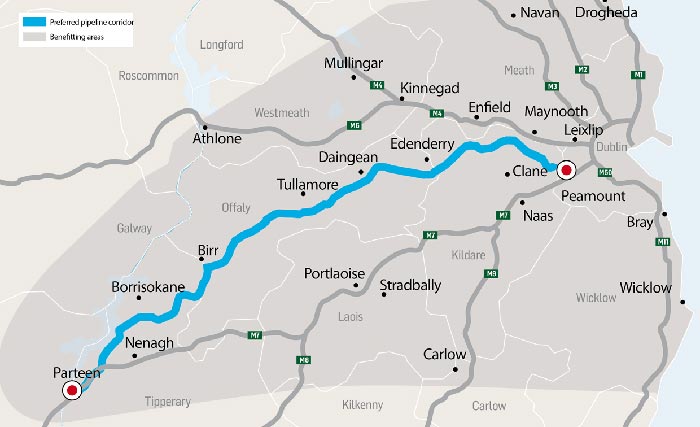
Officially known as the Water Supply Project for the Eastern and Midlands Region, the scheme is now one of the first nine projects placed at the “top of the queue” under the Critical Infrastructure Act 2026. It is one of three water projects selected, alongside the Greater Dublin Drainage Project and the upgrade of the Bunlicky Wastewater Treatment Plant in Limerick. The proposed scheme would take water from the lower River Shannon at the Parteen Basin in County Tipperary, treat it at Birdhill and carry it through a pipeline running across Tipperary, Offaly and Kildare to Peamount in County Dublin. Uisce Éireann says the project would provide a second major water source for the eastern and midlands region, reduce its heavy dependence on the River Liffey and help meet future housing, population and economic demands.
However, the scale of the proposal remains enormous. The planning application involves the abstraction of more than 300 million litres of water on certain days, according to reported project figures. Uisce Éireann describes this as a maximum of approximately 2% of the Shannon’s average flow at Parteen Basin. The utility’s current estimated cost is between approximately €4.6 billion and €6 billion. However, documents previously supplied by the Department of Housing to the Public Accounts Committee indicated that the final bill could exceed €10 billion under a worst-case risk scenario.
This new designation does not automatically grant planning permission, nor does it direct An Coimisiún Pleanála to approve the application. What it does is place a legal obligation on relevant State bodies to prioritise the project, allocate the necessary administrative and technical resources and reduce the time taken to process decisions, licences, consents and other authorisations. Public bodies are also expected, where possible, to carry out different approval processes simultaneously rather than waiting for one process to finish before beginning another.
That distinction is important. The project must still comply with planning law, environmental assessment requirements and Ireland’s obligations under European Union law. The designation is intended to accelerate decision-making, not predetermine its outcome. Nevertheless, from a Tipperary perspective, the Government’s announcement clearly increases the political and institutional pressure surrounding the project. Only weeks ago, An Coimisiún Pleanála postponed its expected decision on the application. Its official case record now states that a decision is due by 2nd July 2027. That postponement is not merely an administrative delay. It provides crucial breathing space for communities, farmers, environmental organisations, public representatives and independent experts to examine the proposal in full.
The central questions have not disappeared simply because the Government has labelled the pipeline nationally important. ► What would sustained abstraction mean for the Parteen Basin, Lough Derg and the lower Shannon during drought or unusually low-flow conditions? ► Have alternatives; including stronger leakage reduction, greater use of existing regional water sources and less centralised supply options, been adequately examined? ► What protections and enforceable guarantees will be provided to communities in Tipperary? ► How reliable are the cost projections for a project stretching approximately 170 kilometres and potentially lasting many years? ► Does placing the project at the “top of the queue” risk creating pressure for speed at the expense of proper scrutiny?
The eastern and midlands region undoubtedly needs a secure and resilient water supply. That need, however, cannot be used to silence legitimate questions from the county, where the water would be taken, treated and initially transported. Critical infrastructure status should demand a higher standard of evidence, transparency and accountability, not a lower one.
The period before July 2027 must therefore be used constructively. Tipperary needs clear hydrological evidence, independent environmental analysis, transparent costings and binding commitments concerning local water security and the protection of the Shannon system.
The Government may have accelerated the project politically, but it has not answered the fundamental questions surrounding it.
For Tipperary, the planning postponement remains a vital opportunity to ensure those questions are heard before any irreversible decision is made.
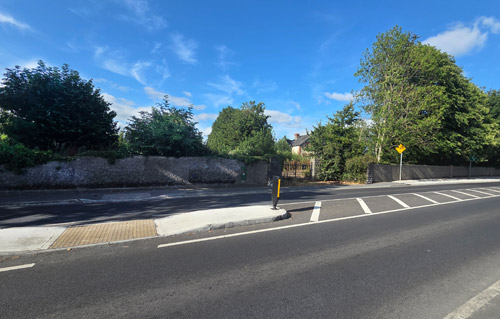
A significant new residential development has been proposed for Kickham Street in Thurles, potentially providing 42 homes close to the town centre.
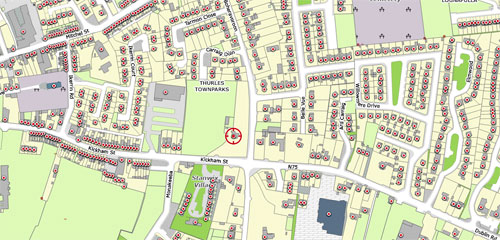
Coolross Homes Ltd has submitted a planning application to Tipperary County Council for the development on lands at Innisfail, Kickham Street, Thurles, (Eircode E41 P8X8). The proposed scheme would offer a varied selection of houses and apartments intended to accommodate individuals, couples and families with different housing requirements.
Plans for the site include two-storey semi-detached houses containing two, three and four bedrooms. A two-storey terraced building incorporating one-bedroom and two-bedroom apartments is also included in the application.
The mixture of property sizes is one of the most notable elements of the proposal. Smaller apartments could provide options for single occupants, couples, older residents or people hoping to establish their first independent home. Meanwhile, the larger houses would be more suitable for families requiring additional bedrooms and living space.
The proposed location could also prove attractive because of its proximity to the centre of Thurles. Residents would potentially be within convenient reach of shops, schools, sporting facilities, public services and other local amenities. Developing homes within or close to an established urban area may also help support local businesses while reducing dependence on longer journeys for everyday needs.
View Identifying Map.
Thurles has experienced continued demand for additional housing, with several public and private residential projects progressing through planning, design or construction in recent years. Recent developments in the town have included homes of different sizes and tenures, demonstrating the need for a broad range of accommodation rather than a single type of property.
However, the submission of an application does not mean that construction has been approved. Tipperary County Council must examine the proposal in detail, including matters such as access, traffic, drainage, public services, residential amenity, landscaping and the development’s relationship with neighbouring properties.
Given the continued failure of local politicians to deliver meaningful progress on either the proposed Inner Relief Road or the long-awaited Outer Ring Road, traffic congestion must now become a central and decisive consideration in the assessment of every future planning application in Thurles. Any further permissions granted, without first addressing the town’s already serious traffic problems, risk placing an intolerable additional burden on an increasingly overstretched road network.
Members of the public will also have an opportunity to examine the planning documents and make observations within the statutory consultation period.
The council’s eventual decision will determine whether the 42-home development can proceed as submitted, requires amendments or is refused permission.
The Local Authority Waters Programme, commonly known as LAWPRO, has now officially become the River Basin Management Service, marking a new chapter in the organisation’s work to protect and restore water quality across Ireland.
The service works on behalf of Ireland’s 31 local authorities and is funded by the Department of Housing, Local Government and Heritage. It supports the protection of rivers, lakes, estuaries, groundwater and coastal waters through scientific catchment assessments, community engagement and coordinated local-authority action. Although the organisation has adopted a new name and visual identity, its mission, structure and responsibilities remain unchanged. The new title is intended to provide a clearer description of its role in supporting Ireland’s national water-quality objectives and the implementation of river basin management plans.
Established in 2016, the organisation has worked with local authorities, government agencies, farmers, landowners, volunteers, environmental organisations and community groups to identify pressures affecting water quality and develop suitable local responses.
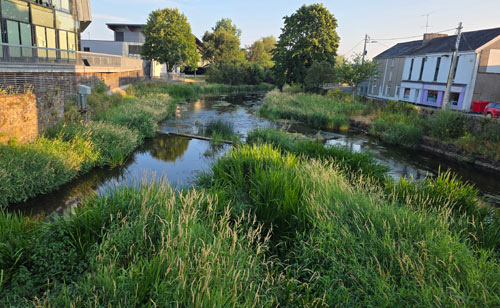
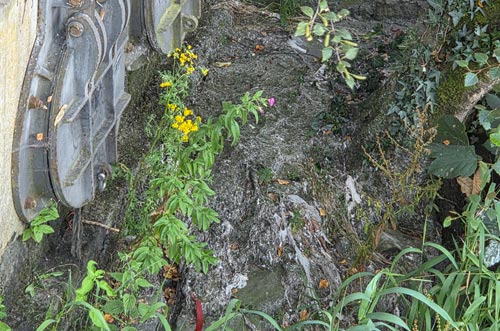
Unsatisfactory state of the River Suir, in Thurles town centre, yesterday. Pic; G. Willoughby.
Minister for Housing, Local Government and Heritage Mr James Browne, TD, welcomed the announcement. He said the new name reflects the organisation’s important role in coordinating and supporting the protection and restoration of water bodies as Ireland prepares its next Water Action Plan. The River Basin Management Service will continue carrying out catchment-science assessments, helping local authorities implement national water policy and providing financial assistance to community organisations working to improve their local waters.
Community participation has been central to the organisation’s activities. Since its establishment, approximately €7.5 million has been awarded to 1,208 projects through the Community Water Development Fund and Catchment Support Fund. Further support has been provided through the Small Grants and Events Scheme and annual Heritage Week funding. These programmes enable communities to organise water-awareness events, citizen-science initiatives, biodiversity projects, environmental surveys and other activities that benefit local rivers, lakes and coastal areas. The organisation’s work is particularly relevant to communities along the River Suir, including Thurles, where residents have raised concerns about declining water quality, excessive aquatic vegetation and changes affecting fish and other wildlife.
At a public meeting in County Tipperary in November 2025, attendees highlighted concerns about the River Suir from Thurles upstream. Issues discussed included nutrient pollution, excessive weed growth and reductions in fish and aquatic life. The meeting also heard that scientific assessments were being conducted across the wider Suir catchment to identify the main pressures affecting its waters.
Despite all the talking, no serious effort by Tipperary Co. Council to halt effluent flowing from drainage pipes, easily visible from Thurles Town centre.
Such assessments demonstrate the importance of combining scientific evidence with local knowledge. Information from residents, anglers, farmers and community groups can help specialists understand changes within a river and determine which measures are most likely to improve its ecological condition.
Mr Anthony Coleman, Director of Services at the River Basin Management Service, confirmed that the organisation will continue operating as the same local-authority shared service. Its work will remain focused on catchment science, community engagement, partnership development, funding support and collaborative action. The service will maintain a science-led approach to identifying environmental pressures and targeting solutions. Its specialists examine water bodies and surrounding landscapes to establish which activities may be affecting water quality and where intervention is most urgently needed.
It will also continue developing its Nature-based Solutions programme and the Blue Dot Catchments Programme, which supports the protection of Ireland’s highest-quality waters. In addition, it will coordinate the Farming for Water European Innovation Partnership and expand training programmes for local-authority staff.
By adopting the Local Government Ireland identity, the River Basin Management Service is strengthening its connection with the local-government sector and aligning itself with other shared services. While its name has changed, its central commitment remains the same; bringing together science, local authorities and communities to protect Ireland’s waters and create healthier catchments for future generations.
This website uses cookies to improve your experience. We'll assume you're ok with this, but you can opt-out if you wish.AcceptRead More
Privacy & Cookies Policy
Privacy Overview
This website uses cookies to improve your experience while you navigate through the website. Out of these, the cookies that are categorized as necessary are stored on your browser as they are essential for the working of basic functionalities of the website. We also use third-party cookies that help us analyze and understand how you use this website. These cookies will be stored in your browser only with your consent. You also have the option to opt-out of these cookies. But opting out of some of these cookies may affect your browsing experience.
Necessary cookies are absolutely essential for the website to function properly. This category only includes cookies that ensures basic functionalities and security features of the website. These cookies do not store any personal information.
Any cookies that may not be particularly necessary for the website to function and is used specifically to collect user personal data via analytics, ads, other embedded contents are termed as non-necessary cookies. It is mandatory to procure user consent prior to running these cookies on your website.




Recent Comments