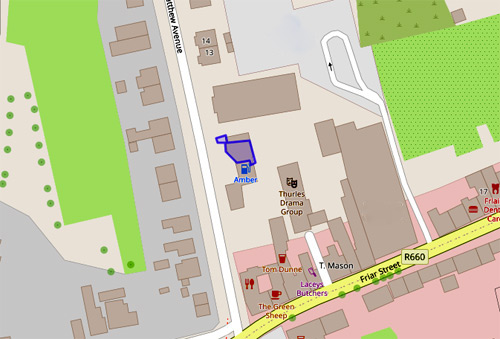
Rasbee Limited has applied to Tipperary County Council for permission to introduce an off-licence and pizza takeaway at the existing Inver service station on Mathew Avenue in Thurles.
The proposed development would occupy a 96-square-metre corner unit within the service station shop. Plans include a designated area for the sale of beer and spirits for consumption off the premises, along with an in-store pizza takeaway facility and associated site works.
Ten car-parking spaces are identified as serving the property, and the council recorded the application as received and validated on July 28th 2026 under Article 28 of the Planning and Development Regulations 2001. Its validity remains dependent on the site notice meeting the relevant regulatory requirements. A site inspection is due to take place during the statutory assessment period. Submissions or observations received up to and including August 31st will be considered, with a decision scheduled for September 21st.
Planning Application Location Outlined In Blue.
Application records can be checked through the Tipperary County CouncilHERE(File Number: 2660735)
Any new takeaway would enter a crowded Thurles food market. If approved, the proposed pizza facility would join an already substantial food-service sector in Thurles. Current online directories identify Thurles already has a sizeable selection of restaurants, cafés, hotels and Takeaway businesses. Online directories list several dozen food-serving establishments across the town itself and surrounding area, with at least eight businesses specifically listed as Takeaways.
While our figures are approximate, and some businesses appear in both categories. Nevertheless, they indicate that the proposed outlet would enter a competitive local market in which customers already have a broad range of dine-in, collection and delivery options. Whether the development would contribute to the closure of an existing business cannot be established from the planning application. Competition alone does not mean closures are inevitable, and the proposed facility may attract passing trade associated with the service station, rather than relying entirely on town-centre customers.
However, the possibility of further closures cannot be dismissed. The Restaurants Association of Ireland reported that 150 restaurants closed nationally during the first quarter of 2025, attributing the losses to rising operating costs. The association has identified labour, food, energy, insurance and taxation as significant pressures on food-led businesses. The Government subsequently restored the 9% VAT rate for food-led hospitality from July 2026, offering some relief to the sector.
Against that background, an additional takeaway could place further pressure on some established operators, particularly where businesses compete for the same evening pizza and fast-food trade. It would nevertheless be speculative and potentially unfair to suggest that any named Thurles restaurant or takeaway is likely to close without evidence from the businesses concerned.
Application Ref: 2660611. Applicant: Mary Hosty. Development Address: Beakstown, Thurles, Co. Tipperary. Development Description: an extension to the front of the dwelling house, extensions to the rear of the dwelling house consisting of a sunroom and two open-sided shelters, an extension and open-sided shelter to the rear of the garage, a glasshouse and all associated site works. Status: Conditional. Application Received: 22/06/2026. Decision Date: 06/08/2026. Further Details:http://www.eplanning.ie/TipperaryCC/AppFileRefDetails/2660611/0
The deteriorating condition of the River Suir cannot be treated as a new discovery.
For years, residents, anglers and environmental campaigners have raised concerns about pollution, excessive vegetation, restricted flows and the general neglect of the river through Thurles and surrounding areas. Yet meaningful, coordinated action by elected representatives, Tipperary County Council and the responsible State agencies has been painfully slow. VIEW HERE and note date, November 7th 2013.
Note the dates of the following links published over the past 13 years
Recent statements and a carefully produced publicity videos may create the impression of decisive political intervention. But inspections, promises and political photo opportunities are not substitutes for an agreed restoration programme, clear accountability and work on the ground.
Ministerial Visit Raises More Questions Than It Does Answers. Minister of State Mr Kevin Moran recently visited sections of the Suir in Thurles and Holycross following representations from Independent TD Mr Michael Lowry. Not for the first time Deputy Lowry says the Office of Public Works will support an application from Tipperary County Council, under the enhanced Minor Flood Mitigation Works Scheme. The expanded scheme reportedly allows councils to seek 95% funding for eligible works costing up to €2 million.
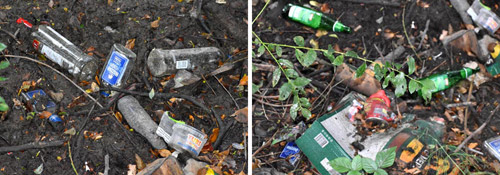
Pictures of the River Suir bed not shown in “Team Lowry’s” promotional video. The litter remains almost six weeks after the Liberty Music Festival, with no proper clean-up and no bin near “Wino’s Corner” despite repeated requests to Tipperary County Council.
All such commitments is welcome, but it remains only a commitment to support an application. The public has not yet been given a detailed proposal identifying:- The exact works to be undertaken. The evidence that those works will improve the river. The environmental assessments required. The project’s anticipated cost and timetable. The agencies responsible for delivering and monitoring it.
After years of warnings, the people of Tipperary are entitled to something more substantial than another announcement.
Where Have Our Representatives and Council Officials Been? The present condition of the Suir did not develop overnight. Local representatives and council officials have had ample opportunity to inspect the river, consult anglers and environmental groups, engage the relevant agencies and develop a long-term plan. Instead, the response has too often appeared fragmented and reactive.
Councillor Micheál Lowry and his father, Deputy Michael Lowry TD, are now drawing attention to conditions that local campaigners say have been evident for more than a decade. Their intervention must therefore be judged by what it delivers, not by the number of statements, videos or the ministerial visits it generates.
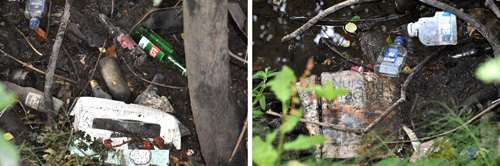
Other pictures of the River Suir bed not shown in “Team Lowry’s” promotional video. The litter remains in the river, together with 6 Supermarket trollies, almost six weeks after the Liberty Music Festival, with no proper clean-up and no bin near “Wino’s Corner” despite repeated requests to Tipperary County Council.
It should be noted:Thurles Town Park bye-laws were formally made by Tipperary County Council acting through the Templemore–Thurles Municipal District, and they came into operation on March 1st 2016. Available evidence indicates that those bye-laws then regulated alcohol consumption in the park, but this bye-law today remains totally ignored by all and sundry.
The same standard must be applied to Tipperary County Council. If the Council intends to seek OPW funding, it should publish its proposal and explain how any vegetation removal, blockage clearance or flood-related work will be reconciled with water quality, fisheries and habitat protection.
This Is More Than a Question of Appearance The problem cannot be reduced to reeds, bulrushes or an untidy riverbank. The Suir catchment covers approximately 3,500 square kilometres. Catchments.ie has previously identified excess phosphorus from sources including wastewater, animal waste and fertilisers as a major water-quality pressure. Excess nutrients can drive eutrophication, damaging aquatic habitats and reducing ecological quality. Catchments.ie’s Suir assessment also shows why pollution sources vary across the catchment and require targeted measures rather than a single cosmetic response.
Low summer flows, pollution, heavy plant growth, sediment and physical obstructions may interact, but they are not necessarily the same problem. Removing vegetation without identifying the underlying causes will not, by itself, restore the river. Any intervention must be scientifically informed and developed with the relevant environmental and fisheries authorities.
Too Many Agencies—and Too Little Accountability Responsibility for the Suir is spread across numerous organisations, including: Tipperary County Council. The River Basin Management Service, (formerly LAWPRO). The Environmental Protection Agency. Inland Fisheries Ireland. The Office of Public Works. Uisce Éireann. The National Parks and Wildlife Service. Local landowners, anglers and recreational organisations.
This above complicated structure cannot continue to provide cover for delay and buck-passing. The public needs to know which body is leading the response, what each agency is responsible for and when measurable improvements will be delivered. The failure to prominently involve or even acknowledge the River Basin Management Service in recent Lowry political presentations is particularly difficult to understand.
Community Initiatives Must Be Supported; but Properly Coordinated. The Cashel, Golden and Tipperary Anglers Association is reportedly considering seeking assistance to hire specialist equipment to remove bulrushes from parts of the riverbed. Separately, NoreVision is reported to be progressing proposals for River Suir and River Barrow trusts. Such trusts could help communities undertake practical restoration, education and awareness projects, provided they have appropriate scientific guidance, sustainable funding and constructive relationships with public agencies. Community organisations can make an enormous contribution, but volunteers should not be expected to compensate indefinitely for failures of statutory responsibility.
Public “Save Our Suir” Meeting in Cahir. A public information meeting is scheduled following a recent committee meeting of the Cashel, Golden and Tipperary Anglers Association. Date: Wednesday, August 26th, 2026. Time: 7:30pm. Venue: Cahir House Hotel. Tel.: 052 7443000. Admission: Open to all. Note: I could not independently locate an official online notice confirming the above event, thus intending attendees should check the organiser’s latest announcement before travelling.
The “Save Our Suir” proposed meeting offers residents, anglers, landowners, recreational users and environmental campaigners an opportunity to hear what is being proposed and to demand answers from those responsible.
The Suir Needs a Plan; NOT Another Vote Catching Publicity Exercise. The River Suir is an ecological, recreational and economic asset belonging to the entire community. Its future cannot be protected through disconnected funding announcements, short-term clearance projects or political sound-bites.
Those attending any Cahir meeting should demand: A published, science-based assessment of the river’s condition. Identification and investigation of pollution sources. A costed restoration and maintenance programme. A clear division of responsibility among the Council and State agencies. Meaningful consultation with anglers, environmental specialists, landowners and residents. Public reporting against firm delivery dates.
After years of warnings, elected representatives and council officials must be held accountable for the absence of effective action. The question is no longer whether the River Suir is under pressure. The question is who will take responsibility and how soon tangible work will begin.
The removal of parking spaces is now harming town-centre businesses in both Cashel and Thurles.
Cllr Roger Kennedy recently raised the alarm at a meeting of the Tipperary – Cahir – Cashel Municipal District. He said road-realignment works in Cashel had removed 12 parking spaces, leaving fewer places for passing customers and discouraging people from stopping in to shop locally.
Thurles traders know this story only too well. Successive traffic and public-realm changes have reduced town-centre parking, while the approved second phase of the Liberty Square scheme will remove further spaces. Traders strongly opposed that plan, warning that it could damage businesses and put further jobs at risk. Nevertheless, it was proposed by Cllr Ms Peggy Ryan, seconded by Cllr Mr Seán Ryan and approved by the municipal-district members. Against this background, Tipperary County Council is pressing ahead with countywide “harmonised” parking charges.
So who came up with that idea? The review began following calls from Clonmel councillors. Former Director of Services, Mr Marcus O’Connor, promised the review, after which the council’s Infrastructure Strategic Policy Committee and officials developed the tiered charging system. The final Parking Bye-Laws 2026 were approved by the full County Council on 13th July 2026.
Background to the parking review. Thurles already had paid parking, it dates back at least to the former Thurles Town Council’s 2005 bye-laws. In April 2025, the elected members of Thurles Municipal District adopted replacement bye-laws retaining paid parking in Thurles. The 2026 countywide scheme now places Thurles in Tier 2 and is intended to standardise parking charges across the county.
The council says parking charges encourage turnover and help make spaces available to shoppers. But that argument becomes increasingly difficult to accept when the council is simultaneously approving schemes that remove the very spaces shoppers need.
You cannot improve parking turnover in spaces that no longer exist.
You cannot encourage people to shop locally while making it progressively more difficult—and more expensive—for them to stop.
You cannot speak about revitalising town centres while ignoring traders who depend on passing customers and convenient short-stay parking.
The issue is not simply parking charges, nor is it simply the removal of spaces. It is the combined effect:
Fewer town-centre parking spaces.
Charges on much of what remains.
Increased competition from out-of-town retailers offering free parking.
Less convenience for older people and those with limited mobility.
Reduced passing trade for independent businesses.
Decisions proceeding despite strong concerns from local traders.
There was significant resistance even among councillors themselves. An amendment allowing municipal districts to provide a one-hour-free-parking option passed by only 19 votes to 17. That close vote shows how divided elected representatives were over the council executive’s original 20-minutes-free proposal.
Cashel and Thurles need a joined-up parking policy based on the actual number of spaces available, business needs, accessibility and independently measured town-centre footfall, not a one-size-fits-all charging exercise.
Before further spaces are removed or new charges take effect, Tipperary County Council should publish:
The total number of spaces removed in each town during the past five years.
The number due to be removed under approved schemes.
The expected effect on footfall and local businesses.
Current occupancy and turnover figures.
A clear plan for replacement parking.
The names and recorded votes of councillors who approved the relevant schemes and bye-laws.
Local businesses are being asked to survive with fewer customers, fewer convenient spaces and additional parking costs. That is not town-centre regeneration, but rather an obstacle to it.
Application Ref: 2660753. Applicant: Martin Campbell. Development Address: 37 Sean Tracey Avenue, Thurles, Co. Tipperary. Development Description: for a new extension to the side of my existing dwelling and all associated siteworks. Status: N/A. Application Received: 31/07/2026. Decision Date: N/A. Further Details:http://www.eplanning.ie/TipperaryCC/AppFileRefDetails/2660753/0.
Application Ref: 2660550. Applicant: Jason Heskin. Development Address: Brittas Road, Thurles, Co. Tipperary. Development Description: extension to rear of house and permission for new domestic shed to rear of site and all associated site works. Status: Conditional. Application Received: 05/06/2026. Decision Date: 28/07/2026. Further Details:http://www.eplanning.ie/TipperaryCC/AppFileRefDetails/2660550/0.
Application Ref: 2660391. Applicant: Brendan Maher of BMA Performance LTD. Development Address: Railway Road, Thurles, Co. Tipperary. Development Description: the change of use from a light industrial unit to that of a gym/wellness facility, to include an open gym area, pilates studio, within the existing building along with associated car parking and site access. Status: Conditional. Application Received: 01/05/2026. Decision Date: 30/07/2026. Further Details:http://www.eplanning.ie/TipperaryCC/AppFileRefDetails/2660391/0.
This website uses cookies to improve your experience. We'll assume you're ok with this, but you can opt-out if you wish.AcceptRead More
Privacy & Cookies Policy
Privacy Overview
This website uses cookies to improve your experience while you navigate through the website. Out of these, the cookies that are categorized as necessary are stored on your browser as they are essential for the working of basic functionalities of the website. We also use third-party cookies that help us analyze and understand how you use this website. These cookies will be stored in your browser only with your consent. You also have the option to opt-out of these cookies. But opting out of some of these cookies may affect your browsing experience.
Necessary cookies are absolutely essential for the website to function properly. This category only includes cookies that ensures basic functionalities and security features of the website. These cookies do not store any personal information.
Any cookies that may not be particularly necessary for the website to function and is used specifically to collect user personal data via analytics, ads, other embedded contents are termed as non-necessary cookies. It is mandatory to procure user consent prior to running these cookies on your website.






Recent Comments